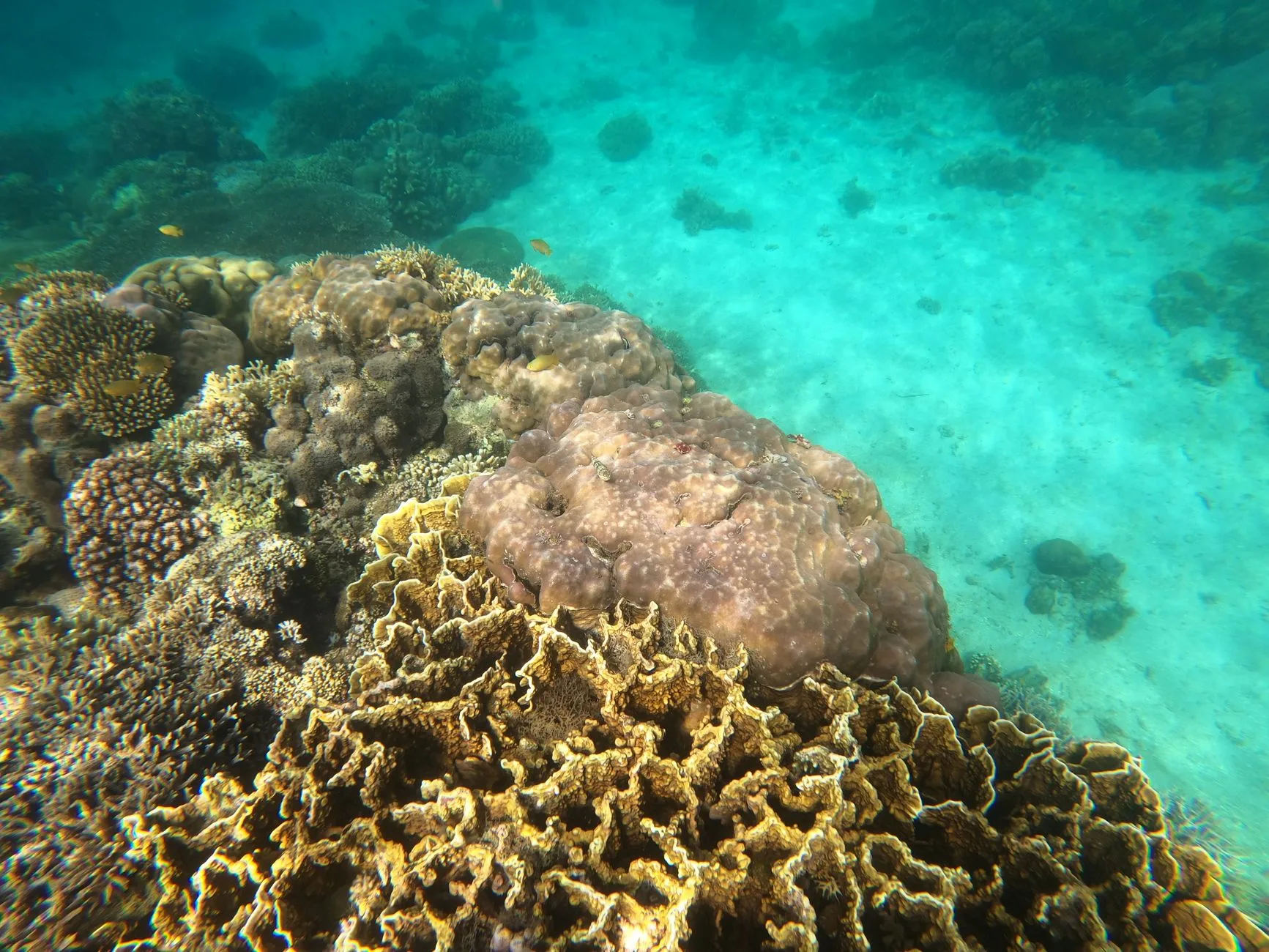
The boat leaves Panagsama Beach in Moalboal a little after seven, when the water still has that flat, pewter calm before the wind picks up. Ten minutes out, the boatman cuts the engine over a wall that drops from three metres to sixty, and the briefing — mostly hand signals, because the outrigger’s diesel motor makes conversation pointless — covers exactly one hazard: the current, which can turn a lazy drift dive into a workout without warning. Then everyone rolls backward off the gunwale, and the noise stops.
What replaces it is a sardine run — millions of them, packed so densely they blot out the sun in moving columns, parting around divers like a curtain. It’s one of the most reliable big-marine-life spectacles in Southeast Asia, and you don’t need more than an open-water certification to see it. That’s the thing about diving in the Philippines: some of its best sites are genuinely beginner-friendly, not just technically permitted for beginners.
The Philippines has over 7,000 islands and, by most estimates, sits at the edge of the Coral Triangle — the region with the highest marine biodiversity on the planet. For a first-time diver, that translates into warm water (typically 26–29°C, no thick wetsuit required), decent visibility much of the year, and dive operations that are cheaper and less bureaucratic than comparable spots in Southeast Asia. It is not, however, uniformly excellent — some reefs are recovering from bleaching, some islands are overrun with dive boats in peak season, and a few operators cut corners on equipment maintenance. This guide is about where the beginner experience is genuinely good, not just marketed that way.
Getting Certified: Where and How
Most people start with a PADI Open Water course, which typically runs three to four days and covers pool sessions (confined water), classroom theory (now mostly done online before you arrive), and four open-water dives. You can find affiliated shops through PADI’s own dive centre finder, which is useful for checking accreditation before you book anything in person.
Moalboal, Cebu, is the most practical place to certify. It’s compact, walkable, and the shore diving means you don’t lose half your course to boat transfers. Course prices run around $350–420, less than equivalent certification in Thailand or Indonesia’s Gili islands. Dauin, just south of Dumaguete on Negros, is quieter and more focused on muck diving — a slower, more technical style of diving that beginners can still do but that rewards patience over adrenaline. Puerto Galera on Mindoro is the most established dive hub in the country, with dozens of shops clustered around Sabang and White Beach, which means competitive pricing but also more variability in quality — ask to see a shop’s equipment servicing logs if you’re unsure.
Certification requires basic swimming ability and a medical declaration; if you have asthma, high blood pressure, or are on certain medications, get a diving medical clearance before you fly, not after.
Where Beginners Should Actually Dive
Moalboal’s Pescador Island is the standout beginner site nationally — not just for the sardine run but for the wall itself, a sheer coral drop dense with turtles, at depths a new diver can manage comfortably (12–18 metres). Currents can be strong on the south side, so guides usually keep first-timers on the sheltered face.
Dauin’s muck sites, like Masaplod and Ceres, are shallow (often under 15 metres), current-free, and slow-paced — ideal for a diver still building buoyancy control. What you find isn’t reef spectacle but small, strange things: frogfish, mimic octopus, ornate ghost pipefish, ribbon eels. It rewards divers who like looking closely rather than covering distance.
Apo Island, a short boat ride from Dauin, is a marine sanctuary with genuinely healthy hard coral cover and a resident turtle population dense enough that sightings are close to guaranteed. There’s a modest marine park fee (roughly $2–4), collected on the beach before you board.
Malapascua, off northern Cebu, is famous for Monad Shoal, where thresher sharks surface from the deep at dawn to be cleaned by small reef fish. It’s a genuinely thrilling dive, but it’s also a deep dive by beginner standards (18–30 metres) with a 5am boat departure, so it suits a diver who has a handful of logged dives already, not someone on their first day of certification.
El Nido and Coron, in Palawan, are better known for their lagoons and limestone cliffs than for beginner reef diving, though Coron’s shipwreck sites — Japanese vessels sunk in 1944 — are a different kind of draw. Most are deeper, silty, and better suited to advanced or wreck-specialty divers, though a few, like the Skeleton Wreck, sit shallow enough for open-water divers with a guide.
Tubbataha Reefs, a UNESCO World Heritage-listed marine park in the Sulu Sea, is the country’s most celebrated dive destination — but it’s accessible only by liveaboard, only from mid-March to mid-June, and it is not a beginner site. Strong currents, open-ocean drop-offs, and remote logistics mean most liveaboards require at least 50 logged dives. It’s worth knowing about as something to grow into, not a starting point.
What Certification and Diving Actually Costs
| Region | Best for | Open Water course cost | Fun dive (per dive) | Getting there |
|---|---|---|---|---|
| Moalboal, Cebu | Certification + sardine run | $350–420 | $25–35 | 2.5hr bus/van from Cebu City |
| Dauin, Negros | Muck diving, slow pace | $380–450 | $30–40 | 20min from Dumaguete airport |
| Apo Island | Turtles, healthy reef | day trips only | $35–45 + park fee | Boat from Dauin/Dumaguete |
| Malapascua, Cebu | Thresher sharks | $400–480 | $35–45 | 3hr van + boat from Cebu City |
| Puerto Galera, Mindoro | Established infrastructure | $330–400 | $25–35 | 2hr bus + 1hr ferry from Manila |
| Tubbataha | Advanced pelagics | liveaboard only | $3,000–4,500 (7-night package) | Liveaboard from Puerto Princesa |
Prices fluctuate with season and shop, and liveaboards in particular vary widely depending on boat standard. Always ask what’s included — tanks, weights, and nitrox are sometimes extra even in an advertised “all-inclusive” course.
Season and Water Conditions
Diving is possible year-round, but conditions shift by region. The southwest monsoon (roughly June to September) brings rain and rougher seas to the western coasts, including Palawan, while the Visayas — Cebu, Negros, Bohol — stay comparatively calm. The dry season, November to May, is the most reliable window nationally, and it’s also when Tubbataha liveaboards operate at all, since the park closes outside that period to let the reef rest and to avoid the worst of the weather. Visibility in the Visayas can run 15–25 metres in good conditions, dropping noticeably during and after heavy rain, when runoff clouds the water near river mouths.
Typhoon season overlaps with the wet months and can shut down boat operations for days at a time, particularly in the Visayas and northern Luzon. It’s worth building a couple of buffer days into any dive-focused itinerary rather than flying in for a tight three-day window.
What You’ll Actually Encounter
Reef health in the Philippines is a mixed picture, and it’s worth going in with accurate expectations rather than the postcard version. Some sites — Apo Island, parts of Moalboal, Tubbataha — are actively managed marine protected areas with visible, healthy coral cover. Others show clear bleaching scars from past El Niño events and damage from dynamite fishing decades ago that reefs are still recovering from. Dive operators affiliated with local marine conservation groups are generally more transparent about this than those purely chasing bookings, and it’s a fair question to ask a shop before you sign up: which sites are marine protected areas, and what’s the entry fee structure.
Crowding is real in peak months (December to April) at the well-known sites — Pescador Island can have four or five boats moored at once by mid-morning, which is part of why early departures matter as much for avoiding crowds as for calm water. Malapascua’s shark dive, by contrast, self-limits its crowd simply by requiring a 5am wake-up.
Practical Notes Before You Book
Bring your own mask and, if you have one, your own dive computer — rental gear quality varies significantly between shops, and a mask that leaks constantly will ruin a dive faster than any marine hazard. Reef-safe sunscreen isn’t just good practice here; some marine parks, including sections around Apo Island, actively discourage oxybenzone-based products. Cash is still king outside Cebu City and Manila — bring pesos, since rural dive shops rarely take cards reliably.
Anyone building a longer Philippine itinerary around diving should also read up on general logistics for a first visit to the country, since inter-island travel — ferries, budget flights, van transfers — eats more time than it looks like on a map, and diving days need to be planned around it rather than squeezed in as an afterthought. For travellers weighing the Philippines against other Coral Triangle options, it’s also worth comparing notes with destinations like Indonesia, where sites such as Komodo and Raja Ampat offer a different flavour of beginner-to-advanced diving at a different price point.
The Bottom Line
- Certify in Moalboal or Dauin, not Boracay or Manila — the water access is better and the course prices are lower without sacrificing instructor quality.
- The sardine run at Pescador Island and the turtles at Apo Island are two of the rare “spectacular but genuinely beginner-appropriate” experiences in Southeast Asian diving — don’t assume you need advanced certification to see something remarkable.
- Save Malapascua’s thresher sharks and Tubbataha for after you’ve logged a dozen or so dives; both reward — and in Tubbataha’s case, require — more experience than an open-water card alone provides.
- Book dive days with a buffer either side during wet season (June–September); boats cancel more often than schedules admit.
- Ask direct questions about marine park status and gear maintenance before booking — the honest shops answer without hesitating, and it’s the best filter available for quality.
Keep reading: What to expect on a first trip to the Philippines