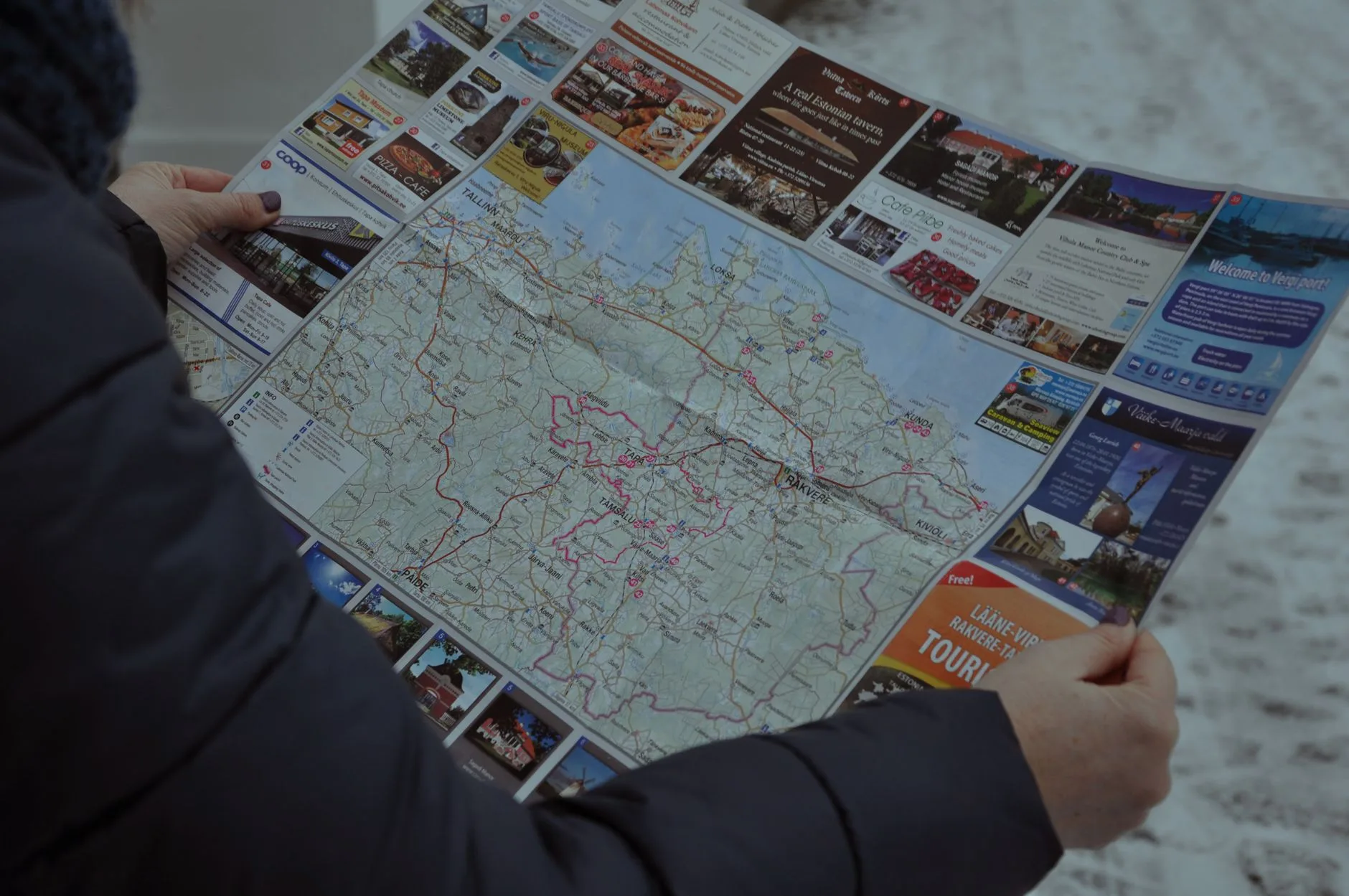
Photo by Kseniia Bezz on Pexels
The road out of Vilnius toward Trakai starts ordinary enough — ring road, petrol stations, a Maxima supermarket with a car park full of dented Volkswagens — and then, within twenty minutes, the forest closes in and the lake appears, and Trakai Castle sits on its island looking like something from a story someone told you as a child and you half-believed. Red brick, dark water, swans that don’t move for anyone. It’s a fifteen-minute detour from the main route north, and it’s also a fair preview of what this road trip actually is: long stretches of pine forest and flat farmland interrupted, every hour or so, by something that stops you cold.
A road trip through the Baltic states — Lithuania, Latvia, Estonia — rewards patience more than ambition. The distances are shorter than people expect (Vilnius to Tallinn is around 600 km, doable in a hard day but better spread over a week or two), the roads are generally good, and the three capitals are different enough in character that lumping them together does all three a disservice. This is a guide to doing it properly: where to cross, what to drive, what to eat, and what to skip.
Renting the car and crossing the borders
All three Baltic states are in the EU and the Schengen Area, so once you’re in, there are no border checks between Lithuania, Latvia, and Estonia — you’ll know you’ve crossed only because the road signs change language and the phone network pings a welcome text. This is one of the quiet joys of the route: no queues, no passport stamps, just a change in the timbre of place names from -as and -is endings in Lithuania to the throatier Latvian and the entirely different, Finnic-rooted Estonian.
Renting is easiest out of Vilnius or Riga, both of which have decent airport rental desks (Sixt, Europcar, and local operators like Rentalcars-affiliated agencies tend to be cheaper than the big international brands once you’re off the airport concession). A compact car runs roughly €25–40/day depending on season; book manuals unless you specifically need automatic, since they’re cheaper and more available. Fuel is comparable to Western European prices, slightly cheaper in Lithuania. Winter tyres are compulsory from November to March or April depending on the country, and rental companies fit them automatically in that window — worth knowing if you’re pricing a summer trip against a winter one, since summer rentals with standard tyres are marginally cheaper.
One genuine headache: one-way rentals across the three countries (pick up in Vilnius, drop off in Tallinn) attract a drop-off fee that can be steep, sometimes €150–300. It’s often cheaper to do a loop — Vilnius to Tallinn and back down through inland Estonia and Latvia — than to pay that fee, unless you’re flying out of Tallinn anyway, in which case it’s usually worth it.
The coastal route vs the inland route
There are two honest ways to link the three capitals, and the choice shapes the whole trip.
| Route | Distance | Time (driving only) | Highlights | Trade-offs |
|---|---|---|---|---|
| Coastal (via Klaipėda, Pärnu) | ~750 km | 9–10 hrs | Curonian Spit, Baltic Sea beaches, Pärnu’s beach resort town | Longer, more ferry logistics, better in summer |
| Inland (via Šiauliai, Rundāle, Sigulda) | ~600 km | 7–8 hrs | Hill of Crosses, Rundāle Palace, Gauja National Park | Faster, fewer sea views, works year-round |
| Split route (both, doubling back) | ~950 km | 11–12 hrs | Everything above | Needs 10+ days to not feel rushed |
Most travellers with two weeks do a hybrid: inland from Vilnius to Riga, then out to the coast around Pärnu and up into Estonia’s islands before finishing in Tallinn. That gives you the Hill of Crosses (Šiauliai) — an unsettling, moving field of tens of thousands of crosses left by pilgrims since the 19th century, free to visit, open always, best at dawn when the mist is still on the fields — and Rundāle Palace, Latvia’s answer to Versailles in miniature, without adding the extra days a full coastal loop demands.
Lithuania: Vilnius, Kaunas, and the Curonian Spit
Vilnius’s Old Town is compact enough to walk in a day but deserves two: the Gothic red-brick spire of St. Anne’s Church, the courtyards of Užupis (a self-declared “republic” with its own tongue-in-cheek constitution posted on a wall, now more café district than bohemian squat but still worth the wander), and the Bernardinai Garden for a break from cobblestones. Drive out to Kaunas — 45 minutes on the A1 motorway — for the Devil’s Museum (genuinely odd, thousands of devil figurines collected obsessively by one man) and the pastel Art Deco streets of Laisvės Alėja.
From Kaunas or Vilnius, it’s a 3.5–4 hour drive west to Klaipėda, the gateway to the Curonian Spit — a UNESCO-listed sand dune peninsula shared with Russia’s Kaliningrad, with pine forests, shifting dunes at Nagliai Nature Reserve, and the postcard fishing village of Nida, where the sand dunes rise nearly 60 metres. You’ll need to take a short ferry from Klaipėda to reach the spit by car (a few euros, runs frequently, no booking needed in most seasons but expect queues in July and August). Readers who’ve enjoyed coastal walking routes elsewhere in Europe will find the spit’s dune trails a strange, quiet cousin to those — sandier, quieter, and colder even in summer.
Latvia: Riga’s Art Nouveau and the Gauja Valley
Riga rewards slow footwork more than driving. Alberta iela and Elizabetes iela in the Art Nouveau quarter hold some of the most ornate building facades in Europe — carved faces, peacocks, sphinxes — a district that’s easy to miss if you head straight for Old Town’s more obvious charms. The Central Market, housed in five former Zeppelin hangars near the train station, is one of the largest and cheapest markets in the region: smoked fish stalls, barrels of pickled vegetables, and a produce section that shifts with the season. It sits comfortably alongside other great European food markets for anyone building a food-focused itinerary around this trip.
An hour’s drive northeast on the A2 brings you to Sigulda, in the Gauja National Park — sometimes called “Latvian Switzerland,” which oversells the topography but undersells the charm. Turaida Castle, the bobsled track (used by the Latvian Olympic team, open to tourists for a genuinely fast, slightly terrifying ride), and hiking trails through sandstone cliffs make it worth a full day, not a drive-through.
Estonia: Pärnu, Tallinn, and the Lahemaa forests
Pärnu, Estonia’s summer capital, is a low-key beach town best visited June through August when the promenade fills with families and the water — cold, but swimmable — draws crowds down from Tallinn for weekends. Outside summer, it’s sleepy in a pleasant way: good for a coffee stop and a walk, not a destination in itself for most itineraries.
Tallinn’s Old Town is the most preserved medieval core of the three capitals, and also the most visited — cruise ship crowds can be heavy from late morning, so mornings before 9am or evenings after 6pm are when the cobbled streets around Raekoja plats actually feel like a functioning city rather than a film set. Beyond Old Town, the Kalamaja district — old wooden houses, the Telliskivi Creative City complex of converted factory buildings, now full of breweries and design shops — gives a better sense of contemporary Tallinn.
An hour east of the capital, Lahemaa National Park offers boardwalk trails through bog landscapes (the Viru Bog trail is short, flat, and genuinely strange terrain — dark water, stunted pines, total silence) alongside manor houses like Palmse and Sagadi that tell the story of the Baltic-German nobility who once ran these estates. It’s an easy half-day loop from Tallinn and a good final stop before flying out, according to the Estonian national parks authority, which manages the trail network and marks seasonal closures.
Food, cost, and what to actually eat
Budget for the Baltics sits comfortably below Western Europe: a sit-down meal runs €10–20, a night in a mid-range guesthouse €50–90, fuel and tolls modest (Lithuania and Latvia have no significant road tolls for cars; Estonia none at all). It’s one of the more affordable road trip regions left in the EU, similar in spirit — if not landscape — to the kind of value-conscious slow travel favoured by readers drawn to underrated cities in Portugal or the Balkans.
Eat cepelinai in Lithuania — dense potato dumplings stuffed with pork, served with sour cream and bacon bits, heavy enough to end a driving day early. In Latvia, look for grey peas with speck (pelēkie zirņi ar speķi), a dish that sounds austere and tastes like it. Estonia leans into rye bread, smoked fish from coastal towns like Käsmu, and — if the season’s right — forest mushrooms sold roadside from car boots on the road to Lahemaa.
The Bottom Line
- Two weeks is the sweet spot — enough time for the hybrid inland/coastal route without every day becoming a transit day; a week is workable but means picking two capitals, not three.
- Book winter tyres or check the season before you rent if travelling October through April; summer trips need no special gear but expect ferry queues to the Curonian Spit in July and August.
- Don’t rush Vilnius for the sake of reaching Tallinn faster — it’s the least visited of the three capitals and, for many travellers, the most rewarding to walk slowly.
- A one-way rental fee across all three countries can eat €150–300 of your budget; weigh that against the time saved versus looping back.
- The real texture of this trip is inland and coastal in equal measure — skip either entirely and you’ll leave with only half the story.
Keep reading: Planning a slower route through Europe’s cities