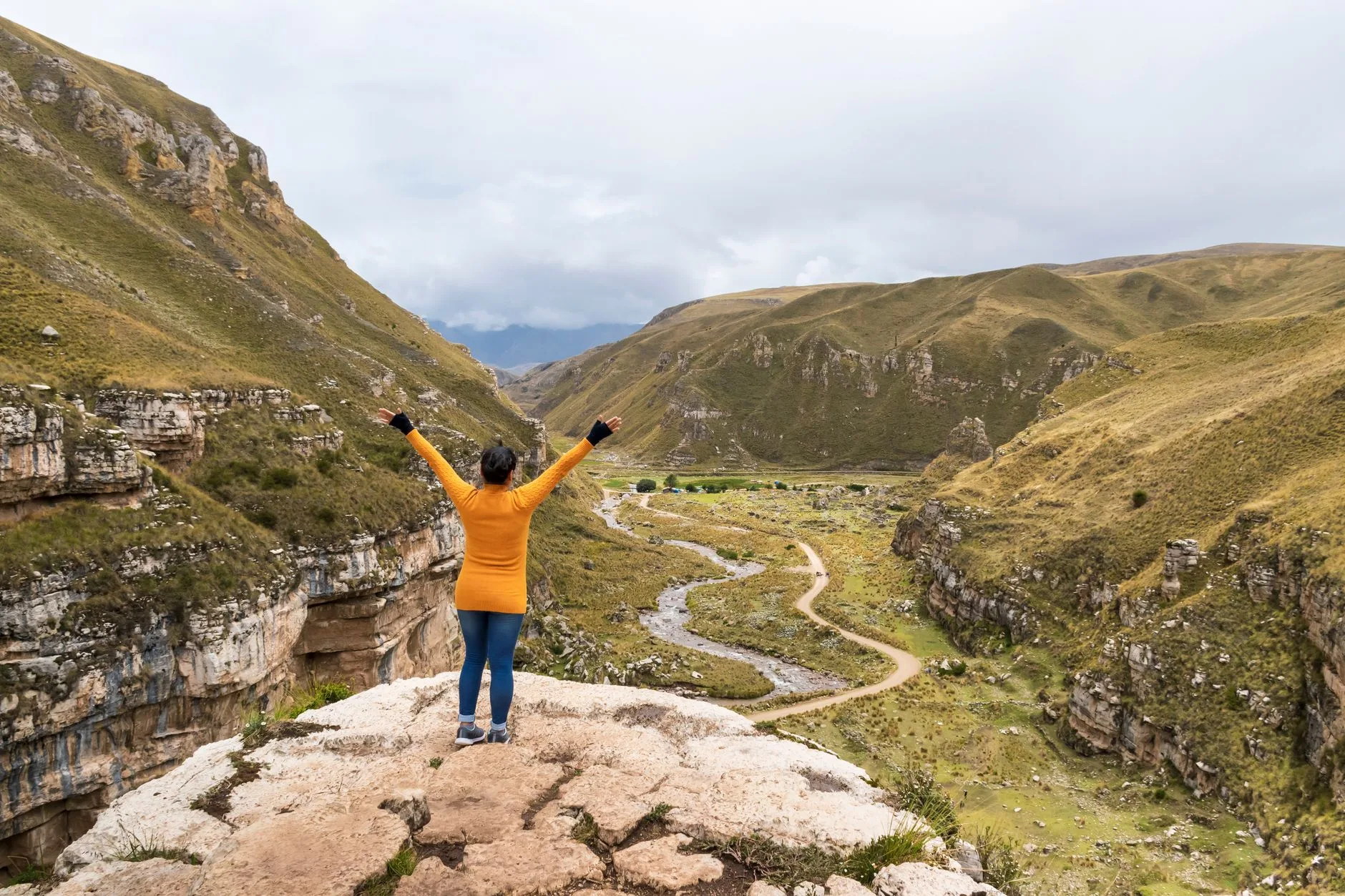
Photo by Gilmer Diaz Estela on Pexels
The 6am bus from Baños to Quito smells like diesel and boiled corn, and the woman two seats ahead has her backpack looped through her arm and clipped to the seat frame with a carabiner — a habit you’ll see repeated on every overnight route from Ecuador to Argentina. Outside, the Andes are still black against a grey sky, and the driver’s assistant is calling out stops in a rapid Spanish that blurs the vowels. Nobody on this bus looks nervous. They look tired, and prepared.
That’s the honest starting point for solo female travel in South America: it is neither the horror story your relatives imagine nor the frictionless, empowering montage of a travel influencer’s reel. It’s a continent where the biggest risks are usually mundane — a snatched phone on a crowded Transmilenio bus, a taxi that takes the long way, a hostel dorm with a broken lock — and the biggest rewards come from moving through it with a bit more preparation than you’d use in, say, Lisbon or Seoul.
Choosing your route: some countries make this easier than others
Not every country in South America presents the same level of difficulty, and pretending otherwise does nobody any favours. Colombia, Peru, Ecuador, and Argentina have well-established backpacker infrastructure, strong hostel networks, and enough solo travellers — many of them women — that you’re rarely the only one figuring things out. Venezuela’s ongoing instability and parts of Brazil’s larger cities require a different, more cautious approach, and are better suited to travellers with some regional experience already under their belt.
A common and sensible route runs Bogotá → Medellín → Cartagena in Colombia, then a flight to Lima, on to Cusco for Machu Picchu, across to La Paz or Sucre in Bolivia, and down into Argentina via Salta or Mendoza. This path follows the well-worn Gringo Trail, which sounds like an insult but is actually an asset — it means guesthouses know what solo travellers need, night buses run frequently, and other travellers are easy to find if you want company for a few days. For a country-by-country breakdown of what’s worth your time in Colombia specifically, the guide to the best places to visit in Colombia is a useful companion to this one.
Getting there and around: buses, flights, and the taxi rules that matter
South America runs on buses, and long-distance coach travel here is genuinely good — reclining “cama” seats, onboard bathrooms, sometimes a meal service on the pricier lines like Cruz del Sur in Peru or Andesmar in Argentina. The honest complication is border crossings and overnight timing, which is covered in more depth in the honest guide to bus travel in South America — worth reading before you book anything.
For solo women specifically, three rules hold up across the whole continent:
- Never hail a taxi from the street in Lima, Bogotá, or São Paulo. Use an app — Cabify and Didi operate widely, Uber works in most major cities despite its patchy legal status. The driver’s name, photo, and licence plate are logged, which matters if anything goes wrong.
- Book night buses through reputable companies, not the cheapest option at the terminal. Cruz del Sur, Oltursa, and Movil Tours in Peru; Berlinas del Fonce in Colombia — these have a track record. Bus terminals themselves (Lima’s Plaza Norte, for example) are where bag theft is most common, not the buses.
- Arrive in a new city before dark whenever the schedule allows it. This isn’t about the city being unsafe at night — it’s about not navigating an unfamiliar bus terminal, unfamiliar taxi queue, and unfamiliar hostel entrance all in the dark, with luggage, for the first time.
City by city: what the guidebooks don’t quite tell you
Bogotá — La Candelaria is atmospheric and historic but empties out fast after dinner; Chapinero and Zona T are livelier at night and better lit. The Transmilenio bus system is efficient but a known spot for phone theft during rush hour — keep valuables in a front pocket or a bag worn across the body, not a backpack.
Lima — Miraflores and Barranco are the two neighbourhoods where most solo travellers base themselves, both walkable and well-patrolled. The clifftop Malecón path between them is genuinely one of the better free things to do in the city, especially at sunset when paragliders launch off the cliffs above Playa Waikiki.
Cusco — Plaza de Armas is safe and constantly busy, but the altitude (3,400m) will hit you before any street does. Give yourself two full days to acclimatise before attempting the Inca Trail or even a lot of walking uphill; altitude sickness doesn’t discriminate by fitness level.
Buenos Aires — San Telmo’s Sunday market is one of the best in the city and completely safe by day; the same streets at 2am are a different proposition. La Boca is worth a daytime visit for the Caminito and nowhere near it after dark.
La Paz — the cable car system (Mi Teleférico) is not just transport but one of the best views in South America, and far safer than the minibuses it partly replaces. The Zona Sur is the wealthier, quieter base if you want a calmer few days.
What locals actually mean when they warn you
Ask someone in Bogotá or Lima for safety advice and they’ll usually say some version of “no dar papaya” — don’t give papaya, Colombian slang for don’t make yourself an easy target. It’s not fatalistic; it’s specific. It means: don’t have your phone out while walking and looking at a map, don’t wear visible jewellery on public transport, don’t count cash in public, don’t leave a drink unattended in a bar. These aren’t rules unique to solo women, but they land harder when you’re travelling alone, because there’s no one else watching your bag while you check the map.
Machismo culture is real and worth naming plainly rather than dancing around. Catcalling and unsolicited comments happen, more in Peru, Ecuador, and parts of Colombia than in Argentina or Chile, and the useful response in almost every case is the same one locals use: no engagement at all. A flat, uninterested face and continued walking ends most of these interactions faster than a confrontation does.
Money, phones, and the small logistics that prevent big problems
| Country | Solo female traveller ease | Currency & cash tips | Notable risk to plan for |
|---|---|---|---|
| Colombia | High — strong hostel network, active solo travel scene | Pesos; carry small bills, cards widely accepted in cities | Bag snatching on Transmilenio and in Getsemaní, Cartagena |
| Peru | High | Soles; ATMs inside banks safer than street ATMs | Altitude sickness in Cusco/Puno; taxi scams at airports |
| Ecuador | Medium-high | US dollars — no exchange needed | Quito’s Mariscal district at night; petty theft in markets |
| Argentina | High — one of the safest for solo women | Pesos; bring USD cash for better exchange rates via casas de cambio | Inflation makes card rates unpredictable; carry small notes |
| Bolivia | Medium | Bolivianos; cash-based economy outside La Paz | Rougher infrastructure; slower emergency response times |
| Brazil (Rio/São Paulo specifically) | Medium, requires more caution | Real; avoid displaying phones on beaches | Higher rates of street robbery in specific tourist zones |
A local SIM card (Claro, Movistar, or Tigo, depending on the country) costs very little and matters more than almost any other safety item — it means you can call a taxi, share your location, and access maps without relying on hostel wifi. Buy one at the airport on arrival rather than waiting.
Health, altitude, and the paperwork nobody enjoys
Yellow fever vaccination is required or recommended for parts of the Amazon basin, and some countries check certificates at land borders — check current requirements with a source like the UK government’s foreign travel advice pages, which are updated country by country and free to search. Travel insurance that explicitly covers high-altitude trekking is worth the extra cost if Cusco, La Paz, or the Bolivian salt flats are on the itinerary — standard policies sometimes exclude altitudes above 3,500m.
Altitude sickness deserves more respect than most first-time visitors give it. Coca tea, slow ascents, and two acclimatisation days before any strenuous hike make the difference between a manageable headache and a genuinely miserable 48 hours. If Patagonia is on the route, the practicalities of multi-day trekking are covered separately in the guide to multi-day hikes in Patagonia for beginners, which is worth reading before committing to anything longer than a day walk.
For up-to-date, country-specific safety advisories rather than general impressions, the US State Department’s travel advisory page ranks every country by risk level and explains why — useful for deciding, for example, whether a particular Venezuelan border crossing is worth the detour this year.
Accommodation: what actually matters more than star ratings
Female-only dorms exist in most major hostels across Peru, Colombia, and Argentina, and booking one adds negligible cost for meaningfully better sleep and fewer awkward moments. Beyond that, the details that matter more than reviews or photos: a lock on the dorm door itself (not just individual lockers), 24-hour reception rather than a night bell, and a location within walking distance of the town’s main square rather than a “quiet” street ten minutes out that turns out to be genuinely quiet in the unnerving sense after 9pm.
The Bottom Line
- The Gringo Trail exists for a reason — Colombia, Peru, Ecuador, and Argentina have the infrastructure, hostel culture, and traveller density that make solo female travel considerably more straightforward than the continent’s reputation suggests.
- Most real risk is opportunistic theft, not violent crime — a crossbody bag, an app-based taxi, and a bit of situational awareness address the majority of it.
- Altitude, not crime, causes the most ruined days — build in acclimatisation time before Cusco, La Paz, or any trek above 3,500m.
- Night buses are safe and efficient if booked through reputable companies; terminals, not the buses themselves, are where bags go missing.
- If South America is a first solo trip rather than a seasoned one, easing in with Colombia or Argentina before Bolivia or Brazil’s larger cities is a reasonable, unglamorous, sensible call — and one worth cross-checking against the wider list of best countries for solo travel.
Keep reading: Bus travel in South America: the honest guide