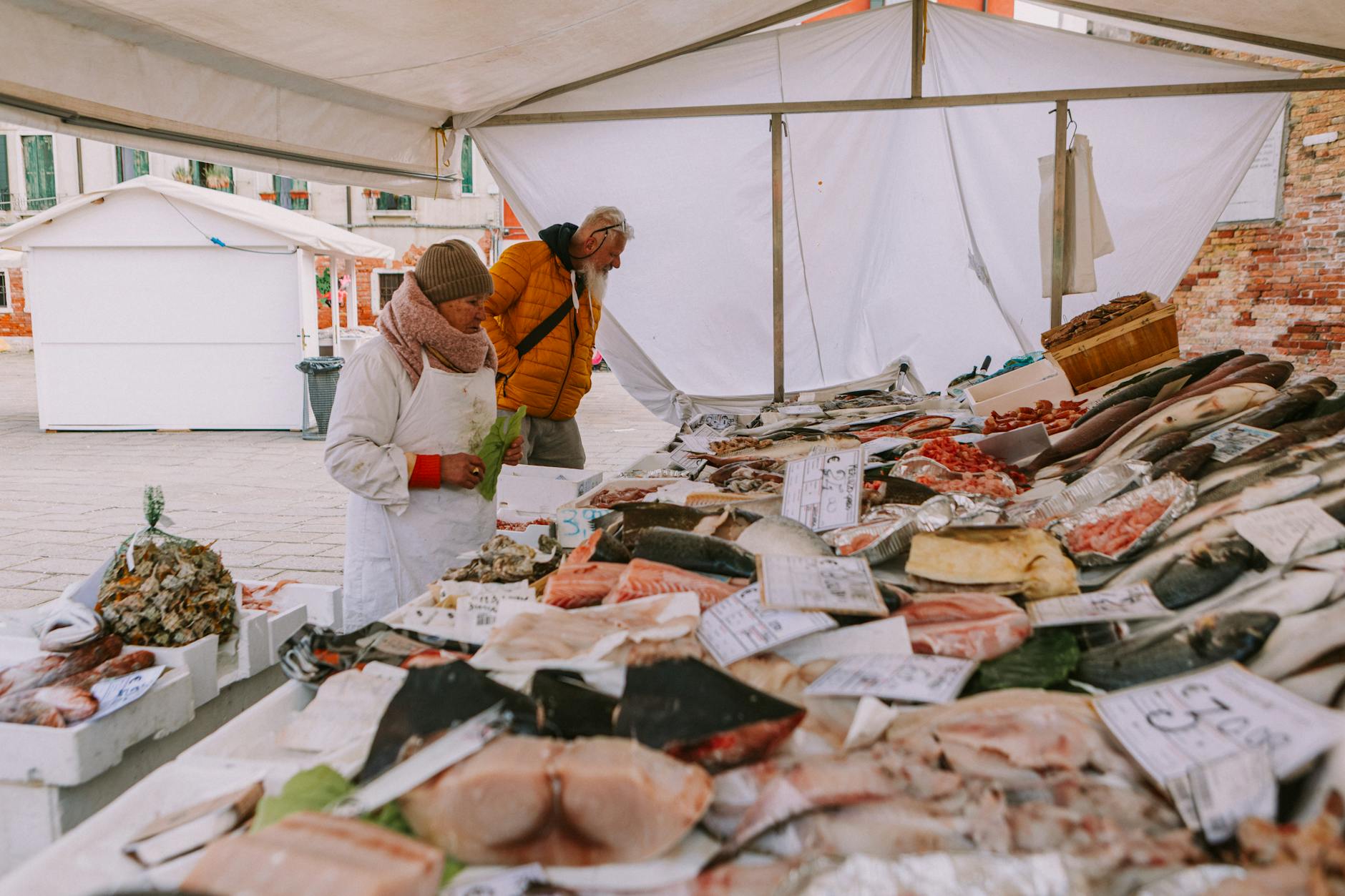
Photo by Helena Jankovičová Kováčová on Pexels
Best local food markets in Europe for travellers
The clock in Ljubljana’s central market reads 7:14 a.m. and the cheese vendor on the eastern colonnade is already negotiating with a woman who has her own container. She’s brought it from home. The vendor ladles in something soft and white — skuta, a fresh sheep’s curd — and they agree on a price without a receipt. The whole transaction takes forty seconds. This is what a working food market looks like before tourism finds it: purposeful, perishable, slightly chaotic, completely alive.
Europe has hundreds of markets that describe themselves as “traditional.” Most have adjusted their hours, their signage, and their price points toward visitors. That’s not a moral failure — it’s economics. But the best ones still function as genuine supply chains for the people who live nearby. You can tell by who’s arguing, who’s regulars, and whether anything smells like it might not last the afternoon.
What follows is a tightly edited list: six markets across Europe that are worth building itineraries around, not just dropping into. They vary in scale, accessibility, and culinary focus. None of them require you to arrive at dawn to feel the point.
Ljubljana Central Market, Slovenia
Where: Pogačarjev trg and the Vodnik colonnade, Old Town Ljubljana
When: Monday–Saturday, 6 a.m.–4 p.m. (quieter afternoons; Saturdays are fullest)
Ljubljana’s market runs along the east bank of the Ljubljanica River in two parts: an open square with seasonal produce and a covered colonnade designed by Jože Plečnik in the 1940s. The colonnade section houses cheese, cured meats, and honey vendors who sell year-round. Look for kraški pršut (Karst dry-cured ham, similar to prosciutto but leaner), brinjevec (juniper brandy), and buckwheat honey from the Loška Valley.
Prices are sharp by Western European standards. A 200g wedge of aged tolminc cheese runs around €3–4. The market is five minutes’ walk from the main bus and train stations. No tram needed.
Mercado de la Boqueria, Barcelona — with an honest caveat
Where: La Rambla 91, El Raval, Barcelona
When: Monday–Saturday, 8 a.m.–8:30 p.m.
Yes, La Boqueria is overrun. The central stalls near the entrance — fruit cups in plastic, €5 smoothies, jamón sliced for photos — exist entirely for tourists. Acknowledge that and walk past them. The working market is in the back third: the fishmongers with ink-black sepionets (tiny cuttlefish), the pork butchers with botifarra negra (blood sausage), and the two or three produce stalls where restaurant buyers still show up at 8 a.m.
The strategy: arrive before 9 a.m. on a weekday, ignore the front half, eat croquetes de bacallà (salt cod croquettes) at Bar Pinocho — counter seats only, cash preferred, around €4–5 each. Take Metro Line 3 to Liceu station.
According to UNESCO’s intangible heritage documentation on Mediterranean diet culture, market-based food trading in Catalonia has roots stretching back to the 13th century. Boqueria’s shell is still that structure, even if the interior has shifted.
Naschmarkt, Vienna, Austria
Where: Between Karlsplatz and Kettenbrückengasse, Mariahilf and Naschmarkt districts
When: Monday–Friday 6 a.m.–7:30 p.m., Saturday 6 a.m.–5 p.m.
Vienna’s Naschmarkt stretches 1.5 kilometres along the former bed of the Wien River. It splits clearly: the western end (toward Kettenbrückengasse U-Bahn) has Turkish, Persian, and Balkan stalls selling dried fruit, sumac, preserved lemons, and fresh flatbreads. The eastern end tilts Austrian — Grüner Veltliner wine by the bottle, local Styrian pumpkin oil, and smoked fish from the Salzkammergut.
On Saturdays, a flea market runs alongside the food stalls from Kettenbrückengasse toward Pilgramgasse. The combination makes Saturday morning the most interesting time, though also the most crowded. Get there before 9 a.m. if you want to eat Leberkäse (a kind of Austrian meatloaf, served warm in a bread roll for around €3.50) without queuing.
U-Bahn: U4 to Kettenbrückengasse or Karlsplatz, depending on which end you want to start.
Mercado do Bolhão, Porto, Portugal
Where: Rua Formosa, downtown Porto (Baixa district)
When: Monday–Friday 8 a.m.–8 p.m., Saturday 8 a.m.–6 p.m.
Bolhão reopened in 2022 after a long restoration and is now, architecturally, the most beautiful market building on this list — a two-storey iron-and-granite structure from 1914 with a central courtyard open to the sky. The restoration maintained the original vendors where possible: the same families selling presunto (smoked ham), alheira (a smoky, garlicky sausage made from poultry and bread), fresh bacalhau (salt cod), and loose-leaf herbs.
Prices are reasonable but not cheap: alheira runs about €3–4 per link. The best eating move is to buy ingredients here and picnic on the Douro waterfront, 15 minutes’ walk south. Alternatively, the small café inside the building serves francesinha — Porto’s infamous beer-and-meat-sauce sandwich — for around €10.
Metro: Line D or E to Bolhão station, directly outside.
Ballarò Market, Palermo, Sicily
Where: Albergheria neighbourhood, between Piazza Casa Professa and Piazza Ballarò
When: Daily, roughly 7 a.m.–2 p.m. (tapering off midday)
Ballarò is the oldest and largest of Palermo’s three historic street markets and the one that still functions most like a neighbourhood food supply rather than a destination. The route through it isn’t obvious — you follow the noise and the smell of charcoal. Vendors grill stigghiola (grilled lamb intestines wrapped around spring onions, around €2–3 per skewer) over open coals. Others sell pani câ meusa (spleen sandwiches, a Palermo street staple, around €3) from converted three-wheelers.
[BBC Travel’s coverage of Sicily’s street food scene](https://www.bbc.com/travel/article/20191104-