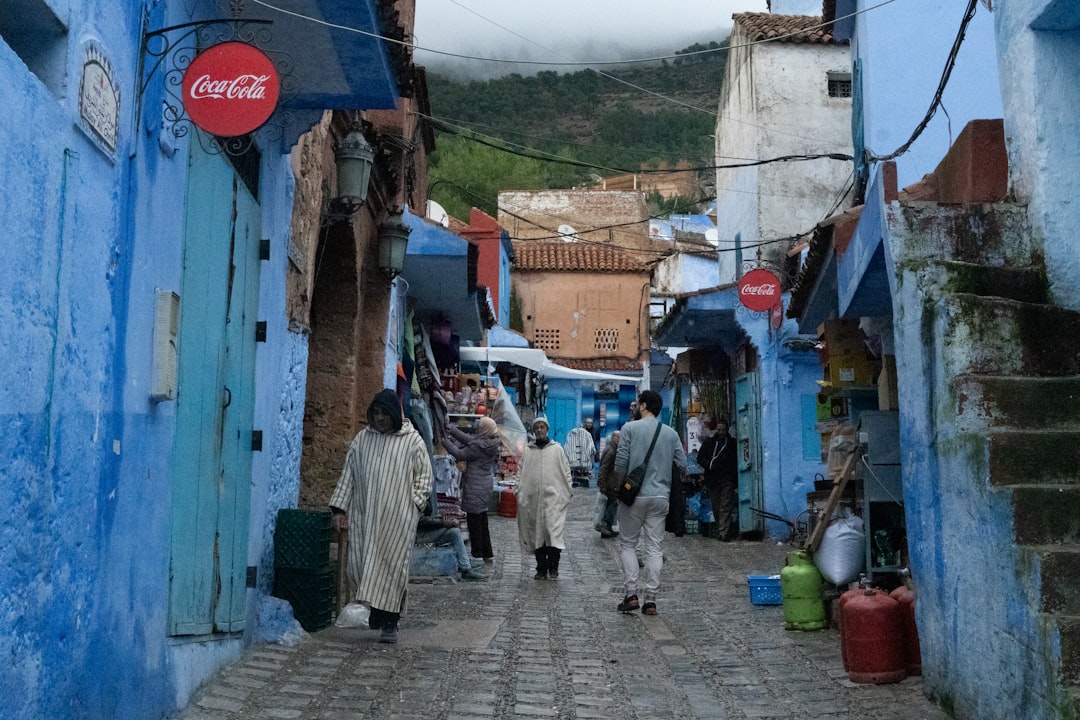
Photo by Youssef Mubarak on Unsplash
Morocco’s Medinas: Where Life Happens Away from the Crowds
The muezzin’s call echoes across Fès el-Bali at 5:15am. By 6:30, the main souks are already alive — men wheeling barrows of fresh bread, boys on bicycles balancing metal trays, women in djellabas moving with purpose through passages only locals use. This is what the medinas actually are: working neighbourhoods where thousands of people live, work, cook, pray and navigate the same labyrinth you’re trying to solve with a map.
The medinas aren’t museums. They’re not picturesque. They’re dense, confusing, sometimes smelly, and entirely functional. What tourists see is real — but it’s about 15% of what’s actually happening. The difference between walking Fès el-Bali as a tourist and actually understanding it comes down to three practical questions: where are you entering, who are you walking with, and where are locals actually eating?
The Three Medinas: What You’ll Really Find
Fès el-Bali (Old Medina): This is the largest medina in the Arab world and the one most guides put at the top of lists. The statistics are real — 9,000 shops, narrow passages, UNESCO World Heritage site. What they don’t tell you is that about 40% of what tourists see is the leather tanneries (which smell like ammonia and generate most of the “Instagram magic”) and the main souks running from Bab Boujloud to the water fountains. The actual medina — where families live in stacked riads, where repair shops work on everything from shoes to lanterns, where the hammam is a daily social ritual — starts where most tours end.
The main tourist entry is Bab Boujloud (the blue gate on the west side). Walk in and you’ll be immediately offered “free” tours, which funnel you toward leather tannery photo stops and carpet shops. The locals? They use Bab Guissa on the east (near the Andalusian Quarter) or walk in from the Ville Nouvelle at the north. If you want to understand the medina instead of traverse it like a checklist, hire a fixer — a local who knows the neighbourhood and isn’t selling anything.
A fixer costs 200–300 MAD (£15–23) for three hours. This isn’t cheating; it’s how you access the actual place. Ask your riad owner or call ahead to a local tour operator like Fes Medina Guide (they can arrange it). A good fixer walks you past the tourist loops and takes you to where people actually are: the fondouks (ancient merchants’ houses with workshops still operating), the souks selling spices and preserved lemons to restaurants, the hammam where men and women use different sections and it costs 15 MAD (£1.15) to enter.
Marrakech’s Medina: Djemaa el-Fna is the largest open square in the Arab world and the worst place to get to know Marrakech. It’s acrobats, snake charmers, food stalls catering to tour groups and the concentrated energy of every tour operator in Morocco trying to sell you something. Walk away from it immediately.
The actual Marrakech medina exists in the neighbourhoods south and east: Derb Dabachi, where artisans still make traditional zellige (tile work), Mellah (the historic Jewish quarter), Riad Zitoun el-Qedim heading toward the Saadian Tombs. This is where local restaurants are (not the overpriced tagine spots facing the square), where families actually shop, where the rhythm of daily life — not tourism — drives things. The souk here is real commerce: the spice souk (Souk des Epices) has been operating for centuries and still primarily sells to cooks and restaurants, not tourists buying 5 MAD bags of saffron they’ll never use.
Chefchaouen: The blue city is entirely Instagram now, but Chefchaouen the actual place — a working market town for the Rif region — still exists if you stay a night and wake early. The medina is maybe eight blocks. Tourists crowd it between 9am and 4pm. From 6am–8am and after 5pm, it’s local women buying bread and vegetables, men sitting at cafés reading the news, school kids going home.
The real Chefchaouen is the Uta el-Hammam square, not as a photo stage but as an actual social centre where locals gather. The medina’s souks sell practical goods — fabrics, kitchenware, produce — because locals still need to eat and dress and cook. Climb the Spanish Mosque for a view that doesn’t involve anyone else, not because it’s hidden but because it requires actual walking rather than posing.
Navigating the Souks: What You’re Actually Seeing
A souk is a market. It’s organized by trade: leather workers in one cluster, spice dealers in another, metalworkers, textile shops, butchers, bakers. The tourist version of a souk is a shop that sells “Moroccan goods” — it stocks things from various trades in one space and marks them up 300–400%. The real souk is where professionals buy and sell.
In Fès el-Bali, the souk where locals buy fabric is the Souk el-Attarin (spice market) — walk past the tourist-facing stalls and you’ll find men unloading sacks of paprika, cumin and dried chillis from vans. The price for a small bag here is what you’d pay for a tourist souk, but you’re buying the actual product, not the story. Ask a shopkeeper for “harissa” (the spice, not the dish) and they’ll give you the real thing — intensely red, fiery, used in cooking. Buy 100 grams for 15 MAD.
The leather tanneries are real, but the experience is staged. You’ll be taken to a tannery, shown the pits of coloured liquid (real, but mostly for show now — most leather is treated before it arrives), told stories about traditional methods, and guided toward the leather shop attached to the tannery where a bag costs 200–500 MAD. The same leather, unmarked, costs 80–150 MAD in a local shop that caters to Moroccans buying practical items, not tourists buying “authentic” goods.
The rule: if a shop seems designed to be photographed, it’s priced for tourists. If it’s a functioning workspace with chaos and no English-language signs, the prices are real.
Where Locals Actually Eat (Specific Dishes and Stalls)
This is where the real medina reveals itself. Every neighbourhood has a budget restaurant where workers eat lunch, families eat dinner, and food cost 25–40 MAD (£1.90–£3.05). These aren’t atmospheric; they’re functional. They’re also where you eat well because you’re eating what people actually cook.
In Fès el-Bali, find a comedor — a no-frills workers’ restaurant — near the Souk el-Attarin. Look for a small shop with plastic chairs and a display case of tagines. Order bissara (broad bean soup, creamy, spiced with cumin) for 10 MAD. Order harira (tomato, chickpea and lentil soup, served at dusk during Ramadan and often available year-round) for 12 MAD. Order msemen (folded fried flatbread, cooked in front of you, sometimes filled with cheese) for 8 MAD. These three dishes, eaten at a table with plastic napkins and strong coffee, cost less than 40 MAD total and are what people actually eat.
In Marrakech, skip Djemaa el-Fna’s food stalls (which are touristy and mediocre) and eat in Riad Zitoun el-Qedim‘s neighbourhood. There’s a small restaurant (search “Marrakech riad zone comedor”) that serves tajine of chicken with preserved lemon and green olives — a dish tourists talk about but rarely eat made this way — for 45 MAD. The quality varies because it’s cooked fresh based on the day’s ingredients. That’s how you know it’s real.
In Chefchaouen, eat in the medina cafés (the ones serving local workers) and ask for rfissa — a Rif specialty of shredded pancake with chicken, lentil broth and sometimes eggs — for 35 MAD. It’s messy, it’s filling, and it’s what the town actually cooks.
Hammam Culture: How It Actually Works
A hammam is a bathing ritual and a social space. The one tourists see is often a tourist-facing “hammam spa” charging 150–250 MAD for a tourist experience. The real hammam is where locals go and it costs 10–20 MAD. It’s single-sex (separate times for men and women), it’s not about relaxation in the Western sense (it’s about cleansing and quick efficiency), and the experience is entirely functional — sometimes chaotic, usually crowded, always real.
To find a local hammam: ask your riad owner where they go, or walk through a residential neighbourhood and look for a building with steam coming out and an unmarked door. There will be a small room with a few wooden benches. Women sit around the edges, usually semi-clothed or wrapped in towels. You pay the attendant (usually a woman) and enter the hot room (heated by a furnace underneath the building). You scrub yourself, pour water over your body using a plastic bowl, and leave after 15–30 minutes. Bring your own towel and soap — don’t expect amenities.
The purpose is practical: it gets you clean, it relaxes muscles, it’s a social gathering space. Tourists often misunderstand the experience as a spa — it’s not. It’s a communal bath that’s been central to Islamic life for over a thousand years and still functions that way in the medinas.
Getting Genuinely Lost: The Route That Makes Sense
The medinas are designed to confuse. The passages are narrow, they branch without logic, and most street names exist only on official maps (locals use landmark descriptions instead: “near the fountain,” “past the spice souk”). This is intentional — it’s a security feature from historical times. But it’s also the reason most visitors stay on the main souks and miss the medina entirely.
The best way to navigate is to pick a starting point, a general direction (south, north, east), and walk with a map but without the obsession of “getting somewhere.” The medina rewards wandering. You’ll find workshops where men are repairing copper pots, schoolyards where kids are playing football, residential areas where life happens completely outside the tourist view. You’ll get lost — everyone does. When you do, use landmarks (a mosque, a fountain, a shop sign you recognize) to reorient, not turn-by-turn directions.
Bring a basic offline map (download from Google Maps before you go). The medinas have spotty cell signal. Wear comfortable shoes (the passages are uneven and sometimes slippery). Carry water — a litre bottle costs 10 MAD at any shop. Don’t carry a big camera or backpack — it marks you as a tourist and makes you less likely to be ignored.
The best time to walk is early morning (before 8am) or late afternoon (after 4pm). This is when locals are moving through the medina without performing for tourists. You’ll see the actual rhythm of the place.
The Fixer Route: What You’ll Actually Learn
If you hire a fixer (which I’d recommend), here’s what a three-hour tour might look like:
Start at a small fondouk (an ancient inn with a central courtyard and workshops above) where craftspeople are still working. Your fixer will know the owner and can often get you inside. You’ll see where leather workers, metalworkers, or carpet makers actually operate — not the sanitized tourist version, but the real workshop. Ask about the process; real craftspeople like explaining their work to people who are actually interested.
Move to a spice market where your fixer buys his own groceries. Watch how he selects items, what he pays, how he negotiates. This teaches you how to read prices and quality in real markets.
Visit a hammam in the early afternoon (they’re often quiet then) and your fixer can explain how the space is organized and what you’d actually do if you went alone.
End at a small restaurant or café where locals eat. Your fixer will likely order food his family makes at home, or food his favourite cook makes. This is how you eat something genuinely representative, not “authentic” but actually what people cook and eat.
Cost: 200–300 MAD for the three hours. Worth every dirham if you want to understand the medina as a place instead of viewing it as a tourist attraction.
Chefchaouen’s Reality vs. The Instagram Version
Chefchaouen is worth visiting, but only if you understand what you’re looking at. The blue paint is real (it’s been applied since the 1930s) but it’s increasingly maintained for tourists — houses are repainted, shop signs are adjusted for photos, the square is swept more thoroughly than it would be otherwise. This doesn’t make it fake, but it does make it curated.
To see the real Chefchaouen: stay overnight. Eat dinner at a neighbourhood comedor at 7pm, when tourists have mostly left. Walk the medina at 7am, before anyone’s awake except people buying bread. Visit on a weekday instead of the weekend if you can. Climb to the Uta el-Hammam or the Spanish Mosque at odd hours (11am, 3pm) when you won’t be in anyone’s photo.
Talk to people who actually live there. The overwhelming majority of residents are friendly and used to polite tourists. Ask where to eat, what the town is like in winter (it’s cold and quiet), what it was like before Instagram. You’ll get honest answers and a better sense of what’s real and what’s performed.
The Bottom Line
The medinas are genuine places where people live and work. What tourists see is real — the souks are real, the crafts are real, the food is real — but it’s an extremely limited slice of what’s actually there. The difference between a tourist’s medina and an actual medina comes down to effort: entering through local gates instead of tourist entrances, hiring a local guide, eating where workers eat, getting lost on purpose, and spending time when you don’t feel rushed.
The medinas aren’t hidden — they’re not even secret. They’re simply the everyday spaces that exist outside the curated tourist path. You can see them immediately if you stop looking for the “authentic experience” and start looking for where people actually are. That’s where the medinas come alive.