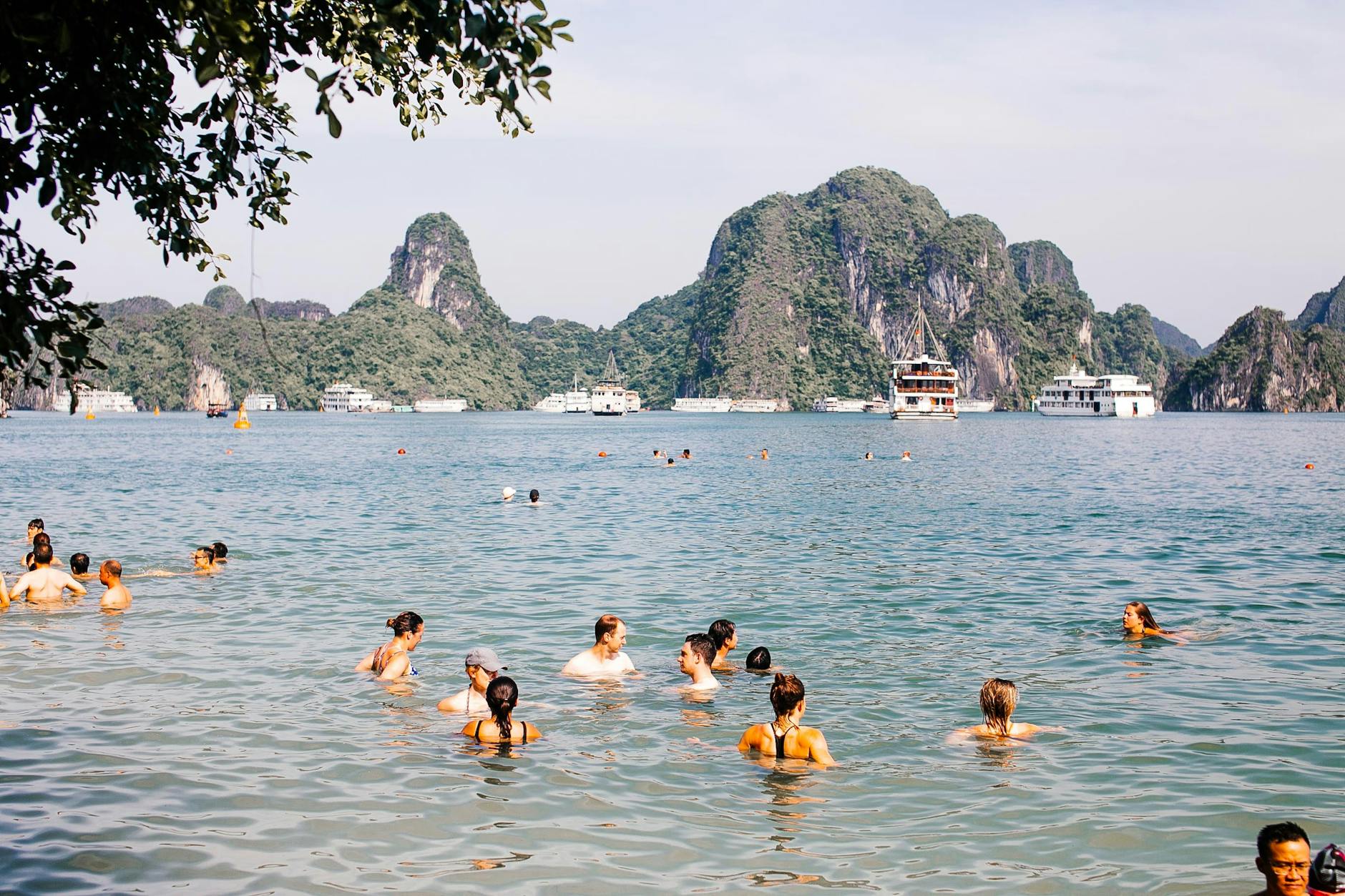
Photo by Rachel Claire on Pexels
Avoiding overtourism in Southeast Asia: where to go
The night bus from Hanoi drops you in Ninh Binh at 5am. The town is grey and damp, roosters already working, a woman frying bánh mì over a gas ring on the pavement. You’re the only foreigner at the bus stop. Forty kilometres south, in Tràng An, the karst landscape is identical to Halong Bay — same limestone fingers, same green-black water — but you’ll share a rowboat with three Vietnamese families and a man in a conical hat who falls asleep mid-stroke.
That’s the texture of the alternative. Not hardship, not secrecy. Just choosing the second name on the list rather than the first.
Southeast Asia’s overtourism problem is concentrated and predictable: Angkor Wat between 5–8am, Halong Bay’s cruise corridor, Koh Samui in December, Luang Prabang’s main alms-giving street at sunrise, Bali’s Ubud rice terraces on any given Tuesday. The solution isn’t to avoid the region. It’s to understand which specific node is overwhelmed and route around it deliberately.
Swap Halong Bay for Ninh Binh and Lan Ha Bay
Halong Bay receives over 3 million visitors annually. The UNESCO core zone between Cat Ba Island and the mainland is a traffic jam of identical white cruise boats from October to March.
Ninh Binh (3.5 hours by bus from Hanoi’s Giap Bat station, 80,000–120,000 VND) gives you the same karst topography on land and river. Take a rowing boat through Tràng An Landscape Complex — also UNESCO-listed, far less photographed — for around 200,000 VND per boat. The caves at Mua are climbable; the view from the top at 7am is genuinely empty.
Lan Ha Bay, south of Cat Ba Island, is geologically continuous with Halong but sits outside the heavily managed cruise corridor. Kayak hire on Cat Ba Town’s waterfront runs about $15/day. You paddle out yourself. No PA system, no buffet lunch announcement.
Swap Angkor Wat for Preah Vihear and Koh Ker
Angkor draws 2–3 million annual visitors to a single 400km² zone. The temples are magnificent. They’re also so crowded at dawn that the experience is largely photographic — you’re documenting, not inhabiting.
Preah Vihear sits on a cliff edge on the Thai-Cambodian border, a 10th-century Khmer temple with a UNESCO designation and almost no visitors. Getting there requires a shared taxi from Tbeng Meanchey (roughly $25–30 for the taxi, 4 hours of rough road) or a hired car from Siem Reap ($80–100 return). The border area has been stable since 2011, but check your government’s current advisory before going — the road infrastructure is basic.
Koh Ker, 120km northeast of Siem Reap, is a 10th-century temple complex with a seven-tiered sandstone pyramid, Prasat Thom, that you can still climb. A half-day tuk-tuk trip from Siem Reap costs around $35–45. Admission is $10. On a weekday morning in low season, you may have it nearly to yourself.
Swap Koh Samui and Koh Phi Phi for the Trang Islands
The Gulf of Thailand islands get the headlines; the Andaman coast south of Krabi gets the Instagram overflow. Both are saturated from November through February.
Koh Muk, Koh Kradan, and Koh Libong in Trang Province operate at a fraction of the capacity. Koh Libong has a dugong sanctuary — one of the last viable populations in Thailand — and a single tarmac road. Ferries from Kantang Pier (1.5 hours south of Trang city, which is 12 hours by overnight train from Bangkok’s Hua Lamphong, around 800–1,100 THB) run twice daily. Bungalows on Koh Libong start at 600 THB a night.
Swap Luang Prabang’s main streets for Nong Khiaw and Muang Ngoi
Luang Prabang deserves its reputation. It also has a serious overtourism problem concentrated in a 600-metre radius: the night market, the Mekong-facing cafés, Wat Xieng Thong. The alms-giving ceremony at dawn is now partially staged for cameras.
Nong Khiaw, 4 hours north by minivan (70,000–80,000 LAK), sits in a limestone valley above the Nam Ou River with a handful of guesthouses, good noodle soup from the morning market, and two trek routes into Hmong villages that take most of a day. No sunset cocktail bars. The suspension bridge over the Nam Ou costs 5,000 LAK and leads to a village where children are in school and adults are farming.
Muang Ngoi is a further hour upstream by slow boat (30,000 LAK). There’s no road access. The village has electricity for a few hours each evening. Caves nearby are unlit and require a torch. Bungalows cost $5–8 a night and are clean if basic.
Swap Ubud’s rice terraces for Flores and Sumba
Bali’s overtourism is now structural — 6 million arrivals annually into an island of 4,000km². The Tegalalang rice terraces charge entry, have Instagram swing installations, and are photographed from drone height daily.
Flores receives a fraction of Bali’s traffic. Fly Bali to Labuan Bajo (1 hour, $40–90), then hire a motorbike ($8/day) to reach Ruteng’s spider-web rice fields — a traditional lingko system unique to the Manggarai people, best seen from a hilltop near Cancar village. No entry fee. Nobody trying to sell you a photo opportunity.
Sumba, one island further east, has traditional rumah adat villages — Ratenggaro and Praijing are the most accessible — where megalithic tombs stand in village centres and horse culture is genuinely central to life, not performative. As UNESCO notes in its Intangible Cultural Heritage documentation, Sumba’s Pasola festival involves real risk and real ritual. Plan around it in February–March if you can.
Costs and logistics comparison
| Destination | Crowded alternative | Cost (budget/day) | Transport from hub | Honest difficulty |
|---|---|---|---|---|
| Ninh Binh | Halong Bay | $25–40 | 3.5h |