Photo by Jean-Baptiste NORE on Unsplash
The Mekong Slow Boat: Journey and Destination
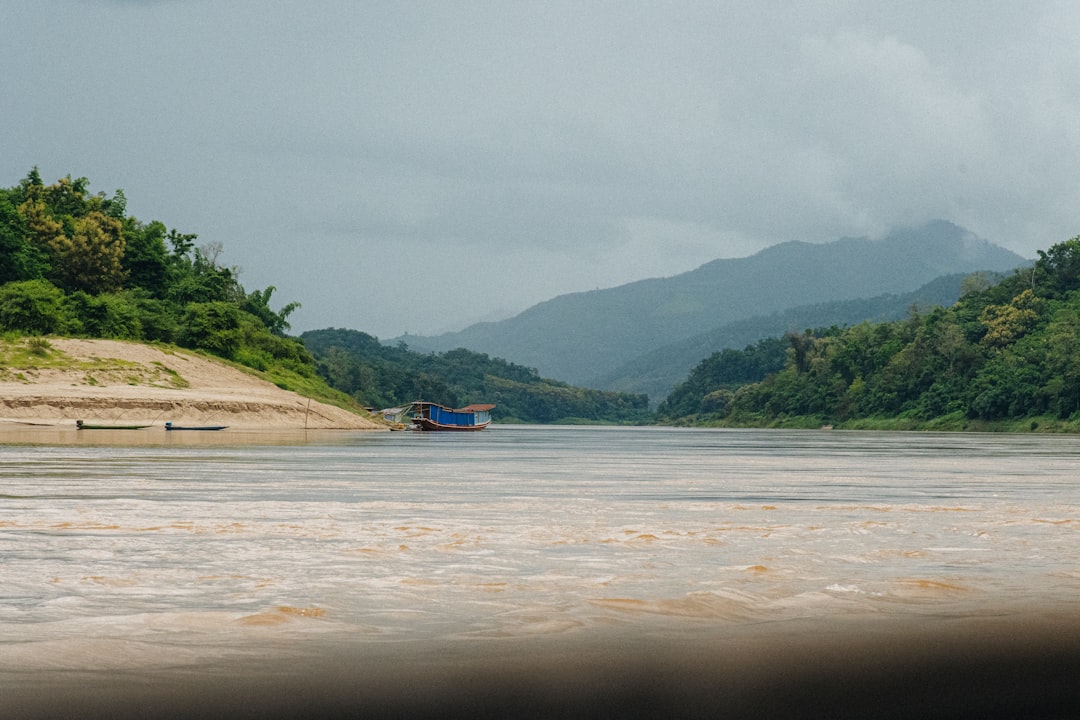
The wooden boats are long and narrow, with bench seating along the sides and a small cabin. At 8am from Huay Xai (Laos, on the Thai border), the slow boat leaves for a two-day journey downriver to Luang Prabang. The journey covers roughly 250 kilometers of the Mekong River, passing small villages, jungle, limestone cliffs, and the rhythm of river life. It’s slower than taking a bus (a bus covers it in 20 hours), it’s less comfortable than flying, and it’s entirely worth it because the journey itself is the experience.
The Mekong slow boat is famous on Southeast Asian travel circuits. It’s also genuine — it’s how Laotians travel between these cities. The tourism hasn’t destroyed it because it can’t be optimized. You’re on a boat for two days, so either you accept the pace or you fly instead.
Booking the Slow Boat: Practical Details
Where to book: In Huay Xai, every guesthouse books slow boats. There’s no central booking; operators run daily boats and guest houses are agents. Prices are standardized: no need to shop around.
Cost: Huay Xai to Luang Prabang, two-day journey:
– Speed boat (goes in one day, expensive, loud, rough): 1,200–1,500 THB ($34–43), not recommended
– Slow boat (two days, comfortable pace): 600–800 THB ($17–23)
The slow boat is the one to take. Booking: go to a guesthouse, say your dates, pay the day before or morning of departure. They’ll give you a ticket and a seat number.
Boat times: Depart 8–9am daily (timing varies). Arrive Pak Beng (overnight stop) around 4pm. Depart Pak Beng next morning at 8am, arrive Luang Prabang around 4pm.
Getting to Huay Xai: How to Arrive
From Chiang Rai (Thailand): The standard route. Bus from Chiang Rai to Chiang Khong (2 hours, 40 THB/$1.14), then cross the bridge into Laos (called the Thai-Lao Friendship Bridge, technically). Immigration on both sides takes 30 minutes. Your visa situation matters here.
If you’re getting a Lao visa on arrival (available at Huay Xai immigration, 140–150 USD for a standard tourist visa), you can enter Laos here. If you have an e-visa (recommended, 40–45 USD, get it before you go), you just present it.
From Chiang Mai: Direct bus to Chiang Rai (3–4 hours), then onward. Or fly Chiang Mai → Chiang Rai (1 hour, 80–150 THB/$2.30–4.30), then bus. Total: 5–6 hours door to door.
Timing: Arrive Huay Xai the afternoon before, spend a night (guesthouses range from 150–400 THB/$4.30–11.40). Slow boat departs next morning. This gives you time to adjust and book with clarity.
The Two-Day Journey: What It’s Actually Like
Day 1 (Huay Xai to Pak Beng): The boat leaves around 8–9am with 30–50 passengers (mix of tourists and Laotians). Seats are wooden benches along the boat’s sides. The cabin (small, in the centre) has some shade but is hot and cramped. Most people sit outside.
The first few hours are scenic — passing villages, small towns, jungle-backed river. By mid-morning, the novelty wears off and the bench-sitting becomes uncomfortable. The boat stops at villages (passengers get off, locals get on/off). The stops are functional, not scenic — a minute or two of commercial activity.
Lunch: The boat doesn’t stop for lunch. You’re expected to bring food or buy from vendors at village stops (instant noodles, fruit, drinks, snacks). Most travellers buy a package of instant noodles and water before boarding.
Around 4pm, you arrive at Pak Beng, a small town on the river. The boat company has a guesthouse arrangement. You’re ushered to a guesthouse (200–300 THB/$5.70–8.57 per night, basic but clean). You have 2–3 hours of free time. Eat dinner, walk the village, rest. The guesthouse provides dinner (basic) and breakfast (basic) — included or cheap add-on (50–100 THB).
Day 2 (Pak Beng to Luang Prabang): Depart 8–9am, same seating arrangement. The journey is less scenic than Day 1 (more open river, less jungle). By late morning, anticipation builds — Luang Prabang is approaching. The boat arrives around 3–4pm.
What to Bring for Two Days
Essentials:
– Hat or cap (sun exposure for 8 hours daily is real)
– Sunscreen (reapply every 2 hours; the reflection off water intensifies UV)
– Water bottle (refill at stops or bring 2 litres)
– Instant noodles or snacks (the boat doesn’t provide lunch)
– Phone/camera (boat is a photo opportunity; keep it dry)
– Toiletries and medications
Optional but helpful:
– Earplugs (the boat engine is noisy)
– Neck pillow (bench sitting is uncomfortable for neck/shoulders)
– Sleeping bag or sarong (for warmth if air gets cold at night — unlikely but possible)
– Entertainment (book, music, games) — the journey is long and there’s downtime
Leave behind:
– Large backpacks (keep them with you on the boat). If you have luggage, it goes under the boat with other baggage.
– Expectations of comfort (this is transportation, not a luxury experience)
Luang Prabang: What to Do Once You’re There
Luang Prabang is a UNESCO World Heritage city, the heart of Laos tourism, and genuinely interesting if you navigate beyond the tourist loop.
The morning alms-giving: At dawn, Buddhist monks walk through the city receiving alms (food offerings from devotees). This is a daily ritual and genuinely spiritual. Tourists sometimes watch this — many guides sell “alms-giving tours” ($10–20).
How to actually do it: Wake up at 5:30am, walk to the main streets where monks pass (Sakkaline Road). Stand respectfully to the side and observe. It’s free and you’re not intruding if you’re quiet and respectful. The difference between a “tour” and just watching is that a tour is framed as a performance. Going yourself, you’re observing a real ritual.
The Old Town: A maze of narrow streets, wooden houses, temples, cafés. Most tourism happens here, which means it’s expensive and curated. But within the Old Town, streets away from the main square are actual residential areas.
Kuang Si Waterfall: 30km outside the city, a series of turquoise pools and waterfalls. Accessible by minibus or local tour. Cost: 50,000 LAK ($3.15) for transportation, waterfall is free. The waterfall is genuinely beautiful. Go early (8am bus) to avoid crowds.
Getting around: Rent a bicycle (10,000–20,000 LAK/$0.60–1.25 per day) and explore the city beyond tourist routes. Walk, observe, eat at small local restaurants.
Where to eat: The tourist restaurants are expensive ($5–8 for a meal). Local restaurants serve similar food for 15,000–25,000 LAK ($0.95–1.60). A simple noodle soup costs 15,000 LAK. This is where you’ll actually eat.
Cost Breakdown for the Journey
| Item | Cost (USD) |
|---|---|
| Slow boat (Huay Xai to Luang Prabang) | 17–23 |
| Overnight guesthouse in Pak Beng | 5.70–8.57 |
| Food on the boat (instant noodles, snacks) | 3–5 |
| Meals in Pak Beng (dinner, breakfast) | 3–5 |
| Total transport + accommodation + food | 28–41 |
This covers the entire two-day journey. Add Luang Prabang accommodation (guesthouse 15–30 USD per night) and activities.
Alternative to Slow Boat
If you don’t have two days, flying Bangkok/Chiang Rai to Luang Prabang is 1.5 hours and costs $50–80. Buses also run (roughly 20 hours, cheap). The slow boat is slower than either but it’s the journey itself that’s the point.
Why the Slow Boat Matters
Most of Southeast Asian travel is optimized for speed — fly, get to the destination, take photos, move to the next place. The Mekong slow boat is one of the last genuinely slow ways to move through the region. You can’t check email (no internet on the boat), you can’t optimize the experience, and you’re forced to sit with the experience.
The landscape reveals itself slowly. The rhythm of the river, the villages, the other passengers — these become the content instead of your speed-optimized itinerary. Two days of sitting on a bench seems uncomfortable in theory but becomes meditative in practice.
The Bottom Line
Book the slow boat from Huay Xai to Luang Prabang (two days, 600–800 THB). It costs less than flying, it takes longer than any other method, and the journey is better than the destination alone. Bring sun protection, accept the bench seating, and embrace the pace.
Luang Prabang itself is worth 3–5 days — visit temples, watch the morning alms-giving ritual, eat at local restaurants, hike to Kuang Si Waterfall. But the slow boat is what you’ll remember — the sound of the Mekong, the limestone cliffs, the small river villages, the rhythm of a day without schedule.
It’s one of the last genuinely slow travel experiences in a region that’s rapidly being packaged and optimized. Do it before it changes.