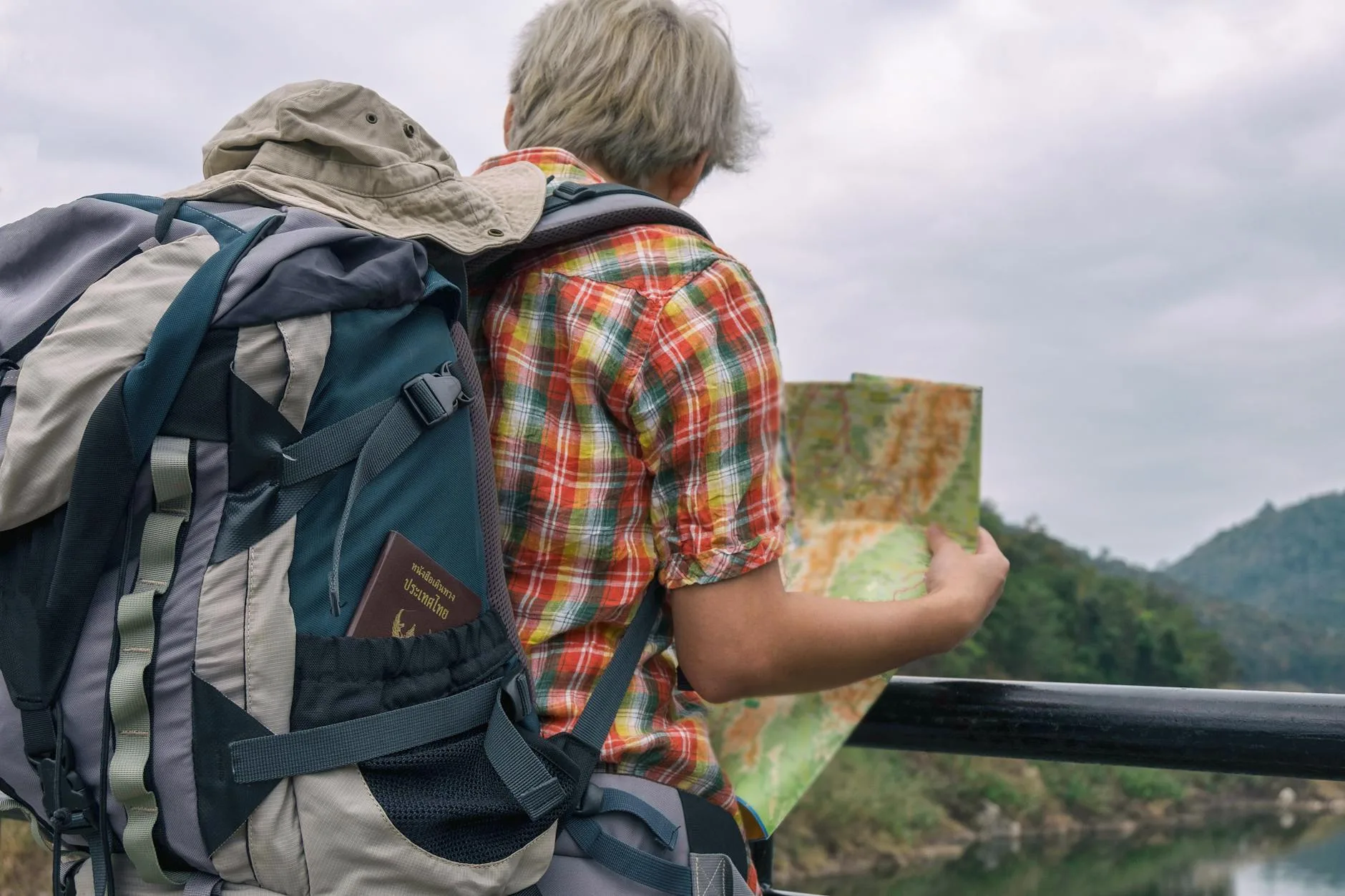
Photo by veerasak Piyawatanakul on Pexels
Best countries for solo travel: top 10 picks
There’s a particular kind of clarity that arrives on the second or third day of travelling alone — when you’ve stopped second-guessing your itinerary, eaten something unfamiliar from a market stall, and realised that the person you asked for directions ended up showing you something you’d never have found on your own. Solo travel isn’t a personality type or a feat of daring. It’s just a different way of being in a place: slower, more porous, more open to the unplanned.
But the destination matters. Some countries make solo travel feel like a flowing conversation; others make it feel like negotiating a maze while jet-lagged. The ten countries on this list earned their place not because they’re flawless, but because they combine safety, navigability, social infrastructure, and genuine depth — the kind of depth that rewards a traveller who is paying attention.
The list draws on a range of travel styles and budgets. Some entries are budget-friendly; others are not. Some are straightforward for first-time soloists; others reward a bit of experience. What they share is this: you will come away having genuinely understood something about a place.
How these countries were selected
Each country was assessed across five factors: safety and infrastructure (transport, accommodation, healthcare access), ease of navigation (language, signage, getting between places), social openness (how easy it is to meet people, find community, connect with the place), solo-specific value (hostels, solo-friendly eating, activities that work for one), and depth (the capacity to go beyond surface-level tourism). Cost was noted but not used as a ranking factor — value looks different depending on your circumstances.
1. Japan
Japan is one of the most consistently excellent solo travel destinations in the world, and it earns that reputation through sheer functional excellence. The train network — anchored by the shinkansen but extending down to rural single-track lines — goes almost everywhere, runs on time, and is comprehensible even without Japanese literacy. Station signage is in romaji as well as kanji. Google Maps works flawlessly.
Solo eating is structurally embedded in Japanese culture. Ramen counters, standing sushi bars in Tsukiji Outer Market, and single-seat ichiran booths in Fukuoka allow you to eat very well, very cheaply, without the mild social awkwardness that solo dining can produce elsewhere. In Osaka, eat takoyaki at Dotonbori and kushikatsu in Shinsekai. In Tokyo, the Yanaka neighbourhood — a surviving pre-war district north of Ueno — rewards slow walking.
The honest caveat: Japan is not cheap. Budget ¥7,000–12,000 per day (roughly USD 45–80) if you’re mixing hostels and mid-range meals. The Japan National Tourism Organization publishes reliable logistics information. English is less prevalent outside the major tourist corridors, so downloading an offline translation app before you go is practical preparation, not paranoia.
2. Portugal
Portugal absorbs solo travellers with unusual ease. The country is compact enough to cross by train in a few hours, the hostel culture — particularly in Lisbon and Porto — is some of the best in Europe, and the cost of living remains lower than most of Western Europe. A glass of wine costs €1.50 at a tasca in Mouraria; a bowl of caldo verde is less than €3.
What makes Portugal particularly good for solo travel is the range of pace it accommodates. Lisbon’s Alfama district rewards afternoons with no plan — tram 28 runs through it, though it’s better walked. Porto’s Bonfim neighbourhood, east of the centre, is quieter and more residential than the riverfront and gives a clearer sense of daily life. Further afield, the Douro Valley is navigable by regional train from Porto (the CP Douro line, roughly €15 each way to Pinhão), and the Alentejo — cork oak plains, white villages, absolute quiet — is best explored with a rental car.
For anyone considering a longer stay, best places for slow travel in Portugal covers the towns and rhythms that suit a more immersive pace than a quick city break allows.
3. Taiwan
Taiwan is underrated for solo travel in a way that feels almost deliberate — as if it prefers visitors who found it themselves. The High Speed Rail runs the western spine of the island from Taipei to Zuoying (Kaohsiung) in 90 minutes for around NT$700 (~USD 22). Local buses and the TRA regional rail network fill in the rest. An EasyCard, loaded at any convenience store, works on most urban transit.
Taipei’s Da’an District has an excellent concentration of independent cafés where solo travellers work for hours over a NT$150 coffee without being moved along. The night market circuit — Shilin, Ningxia, Raohe — is best navigated with no agenda and a loose stomach. Outside the capital, Tainan is the oldest city on the island, denser in temples and street food lanes than anywhere else, and slow enough to absorb properly over three or four days. The east coast — Hualien, the Taroko Gorge, the Cycling Route 9 down to Taitung — is genuinely spectacular and requires a little more planning than the west.
Taiwan is also notably safe, with low violent crime and a culture of helpfulness that extends to strangers with confused faces and paper maps.
4. Georgia (the country)
Georgia is one of the best-value solo travel destinations available to most passport holders in 2026. Most nationalities enter visa-free for up to a year — check your specific passport on the Georgian e-Visa portal before travelling. Tbilisi is affordable: a bed in a good guesthouse in the Fabrika or Marjanishvili area runs around 40–60 GEL (~USD 14–22) per night; a full meal with wine at a neighbourhood sakhachapure costs about the same.
The city rewards walking. The Old Town (Abanotubani and Metekhi) is compact and hilly, with sulphur baths, Armenian churches, and the Narikala fortress ruins in close proximity. The marshrutka network — shared minibuses — connects Tbilisi to Kazbegi (3.5 hours), Kutaisi (3 hours), and the wine region of Kakheti (2 hours to Sighnaghi) for under 20 GEL each way. Getting to Kazbegi requires a change at Stepantsminda; drivers at the Didube marshrutka station in Tbilisi can point you in the right direction.
For a deeper look at costs, logistics, and where to stay outside the capital, budget travel in Georgia covers the country honestly and specifically.
5. Vietnam
Vietnam’s 1,600-kilometre north-south corridor — from Hanoi to Ho Chi Minh City — is one of the best-designed solo travel routes in Asia. The Reunification Express train runs the full length in 30–40 hours (or in comfortable day-sized chunks), and the Open Bus ticket, available from any travel agent in Hanoi or Hội An for around USD 30–40, lets you hop between stops. The country is cheap: USD 25–35 per day covers a dorm bed, three meals, and local transport without difficulty.
Hanoi’s Old Quarter is dense and navigable on foot; Hội An’s Phố Cổ (Ancient Town) is better in the early morning before the day-trippers arrive; HCMC’s District 3 and Bình Thạnh are more revealing of daily urban life than the backpacker District 1. Food is central to the experience — bún chả in Hanoi, cao lầu in Hội An, bánh mì from the carts on Huỳnh Thúc Kháng in HCMC. Night buses and trains mean you can move between cities without losing a day to transit.
The honest complication: Vietnam’s main tourist corridor is genuinely busy, and some of its most famous spots have been stretched thin by volume. Knowing when and where to step sideways makes a significant difference.
6. Colombia
Colombia has shifted dramatically as a solo travel destination over the past decade. Medellín’s transformation is real — the city now has a metro system (one of only two in Colombia), an efficient cable car network reaching the hillside comunas, and a dense culture of cafés, co-working spaces, and cultural centres around El Poblado and Laureles. Cartagena’s Getsemaní neighbourhood, once rough around the edges, is now the most interesting part of the walled city to stay in — cheaper than the Casco Antiguo and more authentically inhabited.
The coffee region — specifically the towns of Salento and Jardín — is logistically easy and visually overwhelming: wooden balconied buildings, wax palms in the Cocora Valley, and some of the best coffee in the country drunk at source for a few thousand pesos a cup. Buses between Medellín, Pereira (gateway to Salento), and Bogotá run frequently and are inexpensive (COP 50,000–80,000 for most routes).
Safety requires honest acknowledgement: Colombia is not uniformly safe, and some regions remain genuinely risky. The cities named above, and the coffee zone, are well-established and increasingly tourist-comfortable. Staying informed through your government’s travel advisory before and during your trip is basic preparation.
7. New Zealand
New Zealand is arguably the best-structured country in the world for independent outdoor travel. The Department of Conservation (DOC) maintains a network of Great Walks — Milford Track, Routeburn Track, Abel Tasman Coast Track, Tongariro Alpine Crossing among them — all of which can be booked online, have hut infrastructure, and are graded clearly by difficulty. The Tongariro Alpine Crossing in the North Island takes 7–8 hours, costs NZD 0 in entry (but requires a shuttle from Whakapapa Village, around NZD 35), and delivers volcanic terrain that feels genuinely extraordinary.
For solo travellers who want more flexibility, the InterIslander ferry between Wellington and Picton (around NZD 55–80 booked in advance) connects the two islands cleanly, and campervans — rented through companies like Jucy or Spaceships for NZD 70–120 per day — give total schedule independence. Freedom camping is permitted in designated areas; the CamperMate app maps them accurately.
New Zealand is not cheap. Budget NZD 100–150 per day (USD 60–90) for a van-based trip with modest eating. But the infrastructure means almost nothing goes genuinely wrong, which has real value for solo travellers managing everything alone.
8. Morocco
Morocco is a more complex solo travel proposition than the others on this list, and that complexity is part of what makes it worthwhile. The country’s medinas — Fès, Marrakech, Chefchaouen, Essaouira — are dense, disorienting, and designed for a pre-GPS world. Getting lost in the Fès el-Bali medina, which has over 9,000 streets and lanes, is less a risk than a certainty. That is not a problem if you have time and patience; it can be frustrating if you have neither.
Transport between cities is reliable and cheap. CTM buses (the main intercity operator) connect Marrakech, Casablanca, Fès, and Tangier efficiently; the ONCF rail network runs the Atlantic coast route from Tangier to Marrakech via Casablanca and Rabat. A Marrakech–Fès train ticket costs around MAD 130 (~USD 13). Accommodation in riads — traditional courtyard guesthouses — is abundant at every price point and significantly more characterful than a hotel corridor.
Solo women should read practical, current accounts before visiting. Attention and persistence from strangers is a real feature of medina travel, particularly in Marrakech and Fès, and knowing how to manage it — direct refusals, walking with purpose, knowing your riad’s address in Arabic — makes the experience substantially better.
9. Thailand
Thailand has absorbed decades of mass tourism without losing the texture that makes it worth visiting, largely because there is so much of it that the crowds and the quiet exist in parallel. Bangkok’s BTS Skytrain and MRT make the city navigable without a taxi. The overnight sleeper trains from Hua Lamphong station (Bangkok) to Chiang Mai — departing around 6 pm, arriving at 7 am — cost 600–1,300 THB (~USD 16–36) for a second-class sleeper and are one of the genuinely pleasant long-distance journeys in Southeast Asia.
Chiang Mai functions exceptionally well as a solo base: the Sunday Walking Street on Wualai Road, the Nimmanhaemin café strip, and the day trip circuits to Doi Inthanon (Thailand’s highest peak, 2,565m) or the Mae Klang waterfall are all manageable independently. For those staying longer, digital nomad life in Chiang Mai provides an honest, detailed look at the city as a long-term base rather than a transit point.
The south’s islands are a different proposition — some, like Koh Phi Phi, are genuinely overcrowded; others, like Koh Lanta or Koh Yao Noi, offer quieter alternatives. Budget travellers can live well on USD 30–40 per day; spending more buys comfort rather than a fundamentally different experience.
10. Iceland
Iceland makes this list not despite being expensive but because of what the expense buys: almost total freedom of movement, extreme safety, and a landscape that can be experienced almost entirely independently without guides, agencies, or group tours. Road 1, the Ring Road, circles the entire island (about 1,332 km) and passes glaciers, lava fields, waterfalls, and fjords. Renting a small car from Reykjavík — expect ISK 8,000–15,000 per day (~USD 55–105) — and driving it in sections is entirely feasible alone.
The key logistics: the Ring Road is passable in summer (June–August) in a standard car; winter driving requires a 4WD and experience with ice. The Safetravel Iceland website (safetravel.is) is a mandatory stop before any driving — it tracks road conditions in real time and lets you register your itinerary. Accommodation ranges from Reykjavík’s relatively pricey guesthouses (ISK 10,000–18,000/night for a private room) to camping (ISK 1,500–2,000 at most sites, with a tent).
Reykjavík itself — particularly the area around Laugavegur and the Grandi harbour district — is compact and walkable. But the honest reason to come to Iceland is the landscape, and that is best accessed by driving into it alone.
Comparison table: solo travel at a glance
| Country | Budget/day (USD) | Solo ease | Best season | Visa for most | Standout base |
|---|---|---|---|---|---|
| Japan | 45–80 | Very high | Mar–May, Oct–Nov | 90 days visa-free | Osaka, Fukuoka |
| Portugal | 50–80 | Very high | Apr–Jun, Sep–Oct | Schengen 90 days | Porto, Évora |
| Taiwan | 30–55 | Very high | Oct–Apr | 90 days visa-free (most) | Tainan, Taipei |
| Georgia | 25–45 | High | May–Jun, Sep–Oct | Visa-free 1 year (most) | Tbilisi, Sighnaghi |
| Vietnam | 25–40 | High | Nov–Apr (varies by region) | 45 days visa-free (many) | Hội An, Hanoi |
| Colombia | 35–60 | Medium–high | Dec–Mar | 90 days visa-free (most) | Medellín, Salento |
| New Zealand | 60–100 | Very high | Nov–Mar | 90 days visa-free (most) | Queenstown, Nelson |
| Morocco | 35–65 | Medium | Mar–May, Sep–Nov | 90 days visa-free (most) | Fès, Essaouira |
| Thailand | 30–55 | High | Nov–Mar | 60 days visa-free (most) | Chiang Mai, Koh Lanta |
| Iceland | 100–160 | Very high | Jun–Aug (driving); Nov–Feb (aurora) | Schengen 90 days | Reykjavík + Ring Road |
Budget estimates are approximate for a mid-range solo traveller — private room or dorm, eating well, using public transport. Verify current visa rules with official sources before travelling.
According to the World Economic Forum’s Travel & Tourism Competitiveness Index, safety, infrastructure, and cultural resources are the three strongest predictors of positive travel experience — all three of which informed the selections above.
The Bottom Line
Japan and Taiwan are the most frictionless solo travel experiences on this list — safe, logical, deeply interesting, and structured in ways that seem almost designed for a person travelling alone. Start here if you want to build confidence before tackling more complex destinations.
Portugal and Georgia offer the best value in their respective hemispheres right now — both with excellent social infrastructure (hostels, guesthouses, café culture) and enough off-the-beaten-path depth to reward returning visits.
Morocco and Colombia require more awareness and preparation than the others, but the payoff — in texture, culture, and the sense of genuine encounter — is proportionally higher. Neither is a destination to approach passively.
New Zealand and Iceland are the picks for anyone who wants to be physically active and largely self-directed. Both reward renting a vehicle and making it up as you go, within sensible safety parameters.
Vietnam and Thailand remain two of the most practical, affordable, and endlessly varied destinations in Southeast Asia. They are not undiscovered, but they are far from exhausted — the depth is there for anyone willing to look past the obvious path.
Finally: whatever your destination, the quality of your solo trip scales directly with your willingness to slow down and be slightly uncertain for a while. The countries on this list all reward that patience.
Keep reading: Solo female travel in Jordan: safety tips and real advice