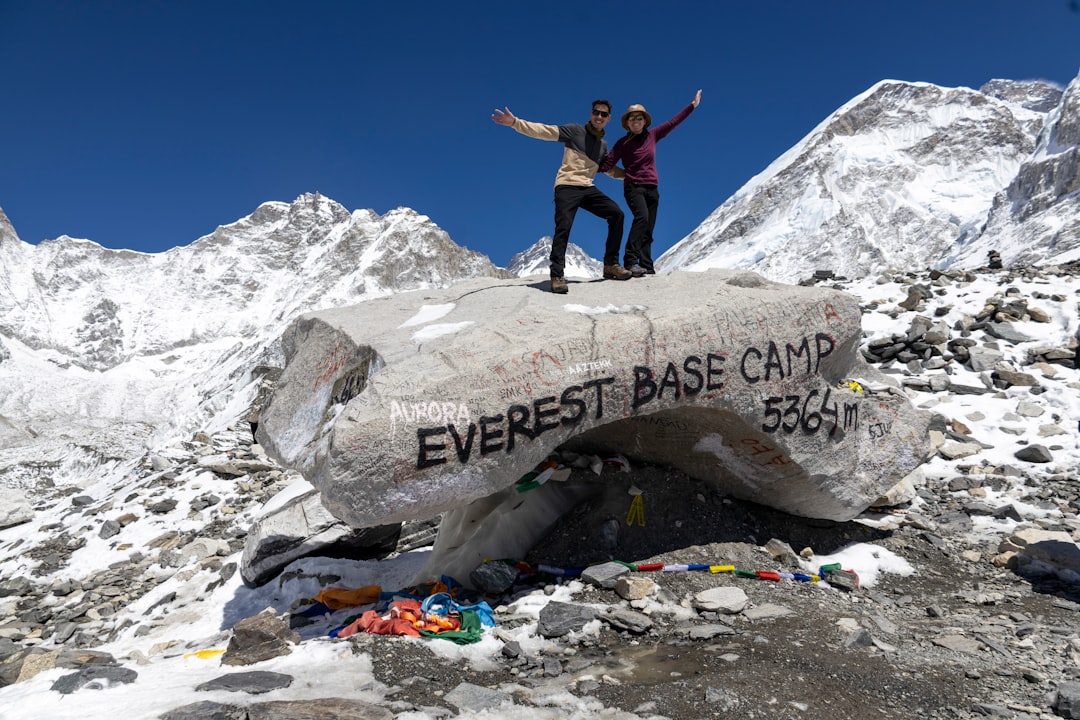
Photo by Thomas de Fretes on Unsplash
Everest Base Camp Trek: Season, Crowds, and the Commercial Reality
The Lukla airstrip is a 460-meter runway on a mountainside. Your plane (a small Twin Otter, 17 seats) descends at a steep angle and lands abruptly — often the scariest two minutes of the trek. From Lukla (2,680 meters), the trail heads north toward Namche Bazaar, then higher to Everest Base Camp (5,364 meters). The trek is straightforward physically (it’s ascending, not technical climbing) but exposure and altitude affect people differently. Understanding when to go matters because the difference between pre-monsoon May and post-monsoon October is crowd level, cost, and safety.
The Everest Base Camp trek is the most popular high-altitude trek globally — roughly 40,000–50,000 people trek it annually. Most guides will never tell you this. They’ll talk about the achievement, the views, the Sherpas, and rarely mention that you’re one of thousands moving through the same teahouses on the same days. Understanding this commercial reality changes how you approach it.
Month-by-Month Breakdown: When to Go
| Month | Temperature (°C) | Clouds | Crowds | Cost | Best For |
|---|---|---|---|---|---|
| Jan–Feb | -5 to 5 | Clear | Very low | Very cheap | Experienced trekkers, clear views |
| Mar–May | 5 to 15 | Clear → Cloudy | Low → High | Cheap → Expensive | Best compromise: April (clear, fewer crowds than May) |
| Jun–Aug | 10 to 20 | Cloudy | Very high | Peak price | Least recommended: rain, clouds, crowds |
| Sep–Oct | 5 to 15 | Clear | High → Declining | Expensive → Moderate | Second-best: October (clear, less crowded than Sept) |
| Nov–Dec | -5 to 10 | Clear | Very low | Very cheap | Good if you can handle cold |
Pre-monsoon (March–May): Clear skies, warm days, cold nights. This is peak season — thousands of trekkers daily, all teahouses full, prices elevated, Lukla flights overbooked. March is manageable; May is chaos. A teahouse bed costs 400–500 NPR ($3–4) off-season, 800–1,200 NPR ($6–9) in May. The crowds are the downside; you’ll meet other trekkers constantly, teahouses are loud until midnight, trails are crowded enough that you’re rarely alone.
April is the best pre-monsoon option. Weather is still clear (snow clears at higher elevations by then), crowds are moderate (not yet May levels), and costs are reasonable. This is the objective best month overall.
Monsoon (June–August): Wet, cloudy, leeches in lower elevations. The trail becomes muddy and slippery. Views are often obscured. Teahouses are cheaper because fewer tourists come. The weather is least predictable — you might have clear days or days where you can’t see 50 meters ahead. The trail is genuinely less pleasant. Only come here if dates are fixed and other seasons don’t work.
Post-monsoon (September–November): Clear, cool, moderate crowds. September has crowds remaining from peak season; October is clearer and less crowded; November is clear and quiet but getting cold. October is excellent — weather is crisp, visibility is usually good, crowds are declining (schools in Western countries are in session), and costs are moderate. If you can’t go in April, October is the second-best choice.
Winter (December–February): Clear, extremely cold (high passes can drop to -20°C at night), very few trekkers, rock-bottom prices. Teahouses have minimal heating. Most trekkers aren’t prepared for this cold. It’s worth considering if you’re an experienced mountaineer comfortable with extreme cold. February is slightly warmer than January. The views are exceptional because the air is clearest in winter, but the cold is real — many teahouses close in January.
What the Trail Actually Looks Like: Day by Day
Day 1 (Lukla to Phakding, 8km, 2 hours): You land in Lukla, acclimatize for a few hours, then walk down to Phakding village (2,610 meters). The trail is obvious — everyone’s walking it. You’ll see prayer flags, basic teahouses, and yak herds. This day feels easy because the elevation gain is minimal. Teahouse cost: 400–500 NPR. Food (dal bhat, noodle soup): 200–400 NPR per meal.
Days 2–3 (Phakding to Namche Bazaar, 11km): The trail climbs to Namche Bazaar (3,440 meters), the “capital” of the Khumbu region. This is a real town — shops, restaurants, internet cafés, tourist services. Namche is where trekkers acclimatize for a day before going higher. It’s also incredibly touristy: teahouses cater entirely to tourists, prices are highest on the trek, and the place exists primarily as a tourist hub. A teahouse here costs 600–800 NPR, meals are 300–500 NPR, and you’ll see backpackers, digital nomads, and organized tour groups constantly. The acclimatization day is real — your body adjusts to altitude by staying still. Do this rather than pushing higher.
Days 4–5 (Namche to Tengboche via Khumjung, 13km, 2,000m+ cumulative): The trail climbs to Khumjung (3,623 meters), then descends and climbs again to Tengboche (3,860 meters), where the famous Tengboche Monastery sits overlooking the Everest massif. This is where views become serious — Everest, Ama Dablam, Nuptse become visible. Tengboche is genuinely impressive. The monastery is still active; prayers happen (you can attend), the setting is dramatic. A teahouse costs 500–700 NPR. Meals are pricey here (400–600 NPR) because everything’s carried up. The monastery view at sunrise is worth setting an alarm for.
Days 6–7 (Tengboche to Dingboche, 13km): Climb to Deboche, continue to Dingboche (4,360 meters). This is a longer day with significant elevation gain. Dingboche is a working village (not purely for tourists) — locals farm, own teahouses, live here. There’s an acclimatization day recommended here. The teahouses are simpler (no toilet seat lids, no hot showers, basic heating), prices drop slightly (500–600 NPR), and the place feels more authentic because fewer tour operators use it. This is where you start feeling altitude.
Days 8–9 (Dingboche to Lobuche East, 10km): Cross the Nangka La pass (5,096 meters) or stay at lower altitude. Lobuche East (4,980 meters) is the staging point for Everest Base Camp. The trail becomes rockier, vegetation disappears, altitude is significant. Dingboche → Lobuche is a day most trekkers do but some struggle with (oxygen is thin). The teahouse at Lobuche is basic (500–600 NPR), heating is minimal, and many people experience some altitude sickness here (headache, nausea). Push fluids, eat carbs, don’t push.
Day 10 (Lobuche to Gorak Shep to EBC, 10km): Lobuche to Gorak Shep (5,160 meters) is the last teahouse. From there, most people hike to Everest Base Camp (5,364 meters) the same day or early the next morning. The trail is rocky, steep in sections, and objectively less interesting than lower sections (it’s tundra, no vegetation, views are now of the Khumbu Icefall and base camp itself rather than dramatic mountains). Everest Base Camp itself is a collection of tents (climbing season) or empty rockfield (off-season). The achievement is real but the place itself is less dramatic than Tengboche. A teahouse at Gorak Shep costs 600–800 NPR (it’s sparse and cold — bring a sleeping bag even if sleeping in a bed).
Day 11 (Gorak Shep to Kala Patthar, back to Gorak Shep): Most trekkers go to Kala Patthar (5,545 meters) instead of sleeping again at altitude. This is a barren rocky outcrop with views of Everest. The walk takes 2–3 hours. This is where the best photos of Everest happen — the mountain is visible, the sky is often clear, and you’re at maximum altitude for maximum impact.
Days 12–14 (Return): Most trekkers descend quickly to Namche Bazaar in one or two days, then back to Lukla. The descent is genuinely difficult on knees and ankles — the trail is often steep and rocky. Descending fast increases injury risk; most guides encourage slow days. Budget 3 days to return to Lukla.
Total trek time: 12–14 days. You can do it in 10 (rushing) or 16 (leisurely with extra acclimatization).
Altitude and Acclimatization: What Your Body Actually Experiences
The trek tops out at 5,364 meters (Everest Base Camp) or 5,545 meters (Kala Patthar). For context: many people experience altitude sickness starting around 2,500 meters. At Everest Base Camp, oxygen is roughly 50% of sea-level oxygen. Your body notices.
Mild altitude sickness (most common): Headache, nausea, fatigue, insomnia. Happens to 50–70% of trekkers at higher altitudes. It’s uncomfortable and makes sleep difficult but doesn’t stop you. Rest, hydrate, eat carbs. It usually improves within 1–2 days as your body acclimates.
Serious altitude sickness (moderate AMS, High Altitude Cerebral Edema — HACE, High Altitude Pulmonary Edema — HAPE): Rare in EBC trekking because the climb is gradual. These conditions involve confusion, fluid in the lungs, and require immediate descent. They’re more common on faster ascents (like climbing peaks from base camp) or in people who don’t acclimatize properly.
Prevention: Ascend gradually (the itinerary does this). Sleep lower than you walk (walk to Everest Base Camp, sleep at Gorak Shep, not vice versa). Drink 3–4 liters of water daily (altitude dehydration is real). Eat more carbs than usual. Don’t overexert on acclimatization days. If you feel seriously ill (confusion, difficulty walking, severe shortness of breath), descend.
Diamox (acetazolamide) is a medication that helps prevent altitude sickness. Discuss with a doctor before going — it has side effects (tingling in fingers, altered taste) but works for some people. It’s not essential; many trekkers go without.
Permits, Costs, and the Guide Question
Sagarmatha National Park permit: 3,000 NPR ($23) for foreign adults. This is required and covers the entire park region from Lukla to Everest Base Camp.
TIMS card (Trekker’s Information Management System): 2,000 NPR ($15). Required in theory, enforced sporadically. Get it at the Kathmandu trekking office before you go.
Total permits: 5,000 NPR ($38).
Teahouse accommodation: 400–800 NPR per night ($3–6). Budget $60–100 for 10–14 nights.
Food: 200–500 NPR per meal ($1.50–4). Budget $200–300 for the trek.
Transport to/from Lukla:
– Flight Kathmandu → Lukla (one-way): $150–180
– Flight Lukla → Kathmandu (one-way): $150–180
– Bus/drive as alternative: 8–10 hours, 500–1,000 NPR (cheaper, longer, requires early morning from Kathmandu)
Total cost (budget trekker):
– Flights: $300
– Permits: $38
– Accommodation: $70–100
– Food: $200–300
– Total: $600–800 for the trek (not including Kathmandu)
Guides and porters:
The trek can be done without a guide (trails are well-marked, teahouses have beds, and backpacker infrastructure is dense). If you hire a guide: $15–25 per day. If you hire a porter (carries 15kg): $10–15 per day. Many solo trekkers skip both and save money. This means carrying your own pack and navigating independently.
Guides provide value if you want cultural context, help with altitude issues, or prefer not trekking alone. They’re not essential for the route itself.
The Commercial Machine: What They Don’t Tell You
The Everest Base Camp trek is a business. Teahouse owners are part of the Sherpa culture but also running commercial operations. Guides are professional guides. The “experience” is somewhat performed. This isn’t wrong, but it’s worth understanding.
A few realities:
– Teahouses compete for customers, which means guides often have relationships with specific teahouses and earn commissions for bringing clients. This affects recommendations.
– The “traditional Sherpa experience” is partly marketed; many Sherpas now live in Kathmandu or abroad and return seasonally for trekking work.
– The route is heavily touristed, which means environmental impact is real (waste management is ongoing; the Sagarmatha Pollution Control Committee removes tons of trash annually).
– Local communities have mixed feelings about tourism — it brings income but also environmental and cultural pressure.
None of this makes the trek bad. Understanding it means you can make better choices: use local guides from the region, patronize teahouses that are locally owned, be respectful of the environment (pack out trash), and pay fairly.
The Bottom Line
Best time: April or October. April has clear skies and moderate crowds. October is equally clear with even fewer trekkers. Both are $600–900 total cost, teahouses are reasonably full but not chaotic, and flight schedules are reliable.
Challenging but viable: May or September. May is crowded and expensive; September starts post-monsoon and transitions into best season. Both work if dates are fixed.
Avoid: June–August. Monsoon makes views poor and trails muddy. December–February is extremely cold and many teahouses close.
What to expect: 12–14 days of steady climbing, altitude effects (likely headache/nausea), amazing views, crowded teahouses, and a sense of genuine achievement. The trek isn’t technically difficult but is cumulative in its challenge — altitude, carrying a pack, and sustained physical effort combine to make it a real feat. It rewards rebuilding your aerobic base in the months before you go.
Skip the organized groups. Book flights independently, get permits in Kathmandu, and either trek alone or hire a local guide. This costs 1/3 less than a package tour and gives you actual autonomy.
The trek is worth doing. Going in the right season — April or October — makes the experience immensely better.