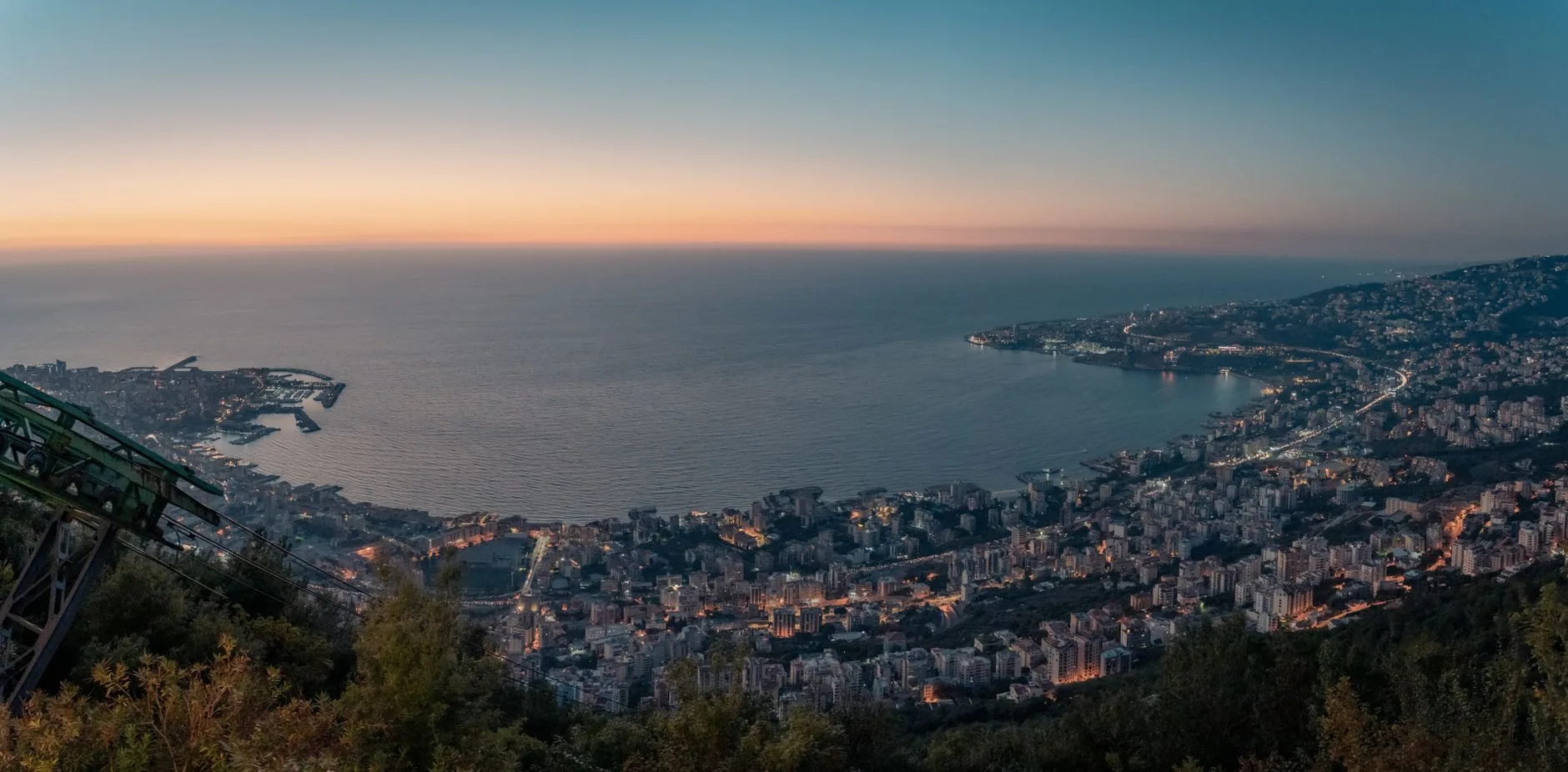
Photo by Soly Moses on Pexels
At six in the morning, the manakish ovens in Beirut’s Mar Mikhael neighbourhood are already going, flatbreads blistering on domed stone, the air thick with za’atar and melting akkawi cheese. A baker slides one across the counter wrapped in wax paper, folds it in half, and hands it over for the equivalent of about a dollar. Down the street, generators hum behind grated storefronts — a sound you’ll learn to tune out within a day, because Lebanon’s power grid still can’t be relied on, and everyone from the corner shop to the five-star hotel runs on private diesel subscriptions.
This is Lebanon’s particular contradiction: a country with some of the best food in the Mediterranean, Roman ruins that rival anything in Italy, and mountain villages that feel untouched by the twentieth century — all wrapped around an economy that collapsed so completely in 2019 that the local currency lost more than 90% of its value and never really recovered. For the budget traveller, that collapse is oddly good news. Lebanon is now one of the cheapest countries in the Eastern Mediterranean to visit, provided you understand how money actually moves here and you go in with realistic expectations about infrastructure and safety.
This guide covers what you need to know to travel Lebanon on a modest budget: how to get in, how to move around without a rental car, where to sleep and eat cheaply, and the honest caveats that most guides skip over.
Getting there and entry requirements
Beirut–Rafic Hariri International Airport (BEY) is essentially the only practical entry point. Land borders with Syria are open at crossings like Masnaa on the Beirut–Damascus highway, but conditions there shift with Syria’s own instability, and this is not a route to plan around casually. The border with Israel is closed and has been for decades — do not expect to cross overland from the south.
Many nationalities, including US, UK, EU, Canadian, and Australian passport holders, can get a visa on arrival at Beirut airport, typically free for a stay of up to a month. Check current requirements before flying, since Lebanon’s bureaucracy can change rules with little public notice. One detail that trips people up: if your passport shows any evidence of travel to Israel — even an old stamp — you may face questioning or be refused entry. If that applies to you, request a separate paper stamp from Israeli border control in advance, though this is now less commonly offered.
Flights into Beirut are usually cheapest via Istanbul, Doha, or Amman, and connecting through Jordan makes sense if you’re combining Lebanon with a wider Levant trip — Jordan’s own practical logistics are a useful comparison for how differently the two countries handle tourism infrastructure despite their shared region.
Money: the part nobody explains well
Lebanon runs on a strange dual system. The official currency is the Lebanese pound (LBP), but after the 2019–2020 financial collapse, the pound became so volatile that US dollars are now used openly for almost everything — rent, taxis, restaurant bills, hotel rooms. Locals call this cash-dollar economy “fresh dollars,” distinct from money trapped in Lebanese bank accounts, which is effectively worthless to access.
Practical takeaway: bring US dollars in cash, in small denominations ($1, $5, $10, $20 notes). ATMs are unreliable, often charge steep fees, and sometimes dispense pounds at unfavourable rates. Credit cards are accepted at higher-end restaurants and hotels in Beirut but rarely elsewhere. Budget travellers should plan on carrying most of their trip’s cash in dollars and changing only small amounts into pounds for minor purchases like service taxi fares or manakish.
A rough daily budget: $25–35/day covers a hostel bed, three meals of street food or casual restaurants, and local transport. $50–70/day gets you a private room, sit-down meals, and the occasional taxi instead of a shared service.
Getting around: service taxis and minibuses
Lebanon has no real train network and no centralized bus company website to book through, which makes transport feel more improvised than in neighbouring countries. The workhorse is the service taxi — an old Mercedes, usually beige, running a fixed route and picking up multiple passengers along the way. You flag one down, say your destination, and pay a set local fare (commonly 100,000–150,000 LBP or $1–2 within Beirut, more for longer intercity routes). If the driver quotes a much higher number, they’re offering you the whole car privately — clarify “service?” before getting in.
For intercity travel, minibuses depart from informal hubs rather than a proper terminal:
- Charles Helou station in Beirut (near the port) has minibuses to Tripoli, Byblos, and the north.
- Cola roundabout in Beirut is the departure point for the south — Sidon (Saida), Tyre (Sour), and onward toward the Naqoura area near the border.
- Minibuses to the Bekaa Valley, including Baalbek and Zahle, generally leave from the Dawra area northeast of central Beirut.
None of these run to a fixed timetable — they leave when full, usually every 20–30 minutes during the day. Expect a Tripoli or Byblos run to cost $2–4 and take 45–90 minutes depending on traffic and how many stops the driver makes to pick up more passengers.
Beirut on a budget
Split roughly into east and west, Beirut’s most walkable, hostel-friendly neighbourhoods are Hamra (west, more bohemian, near the American University of Beirut) and Gemmayze/Mar Mikhael (east, nightlife-heavy, rebuilt after the 2020 port explosion but still visibly scarred in places — cracked facades, boarded windows a few streets back from the bars). Budget hostels in both areas run $12–20 for a dorm bed.
Downtown Beirut (Solidere) is polished and mostly empty of ordinary life — worth an hour’s walk to see the Roman baths and the Mohammad Al-Amin Mosque, but not somewhere to base yourself. For a sense of the city as it’s actually lived, walk the Corniche at sunset, when Beirutis fish off the seawall and smoke shisha on plastic chairs, or visit Souk el Tayeb, the Saturday farmers market, for produce, arak, and manoushe from small producers.
For food, skip restaurant mezze spreads aimed at tourists and eat where locals do: a shawarma wrap from a stand in Hamra costs about $2–3; a full plate of hummus, foul, and fresh bread at a no-frills spot rarely exceeds $5. Sahtein, a modest Armenian-Lebanese joint in Bourj Hammoud, does excellent soujouk and basterma for a few dollars — Bourj Hammoud itself, the Armenian quarter, is worth a wander for its narrow lanes, jewellery workshops, and completely different rhythm from the rest of the city.
Byblos, Tripoli, and the northern coast
Byblos (Jbeil), about 40 minutes north of Beirut by minibus, is one of the oldest continuously inhabited cities in the world and a UNESCO World Heritage Site, its layered ruins spanning Phoenician, Roman, and Crusader periods stacked on a low bluff over the harbour. Entry to the archaeological site runs around $8–10. The old souk nearby is small enough to see properly in an hour, with stalls selling soap, spices, and inexpensive silver jewellery — a gentler shopping experience than Beirut’s more aggressive markets.
Tripoli, further north, is Lebanon’s second city and its most overlooked — poorer, rougher around the edges, and far less visited, which means its Al-Mina souk and Mamluk-era architecture feel genuinely unpolished rather than staged. The knafeh here, a syrup-soaked cheese pastry, is considered the best in the country; a plate at Hallab Sweets costs a couple of dollars and is worth the trip alone. Tripoli has had periods of sectarian tension historically, so it’s worth checking current conditions before visiting, but day trips have generally been calm in recent years.
South to Sidon, Tyre, and the coast road
Sidon (Saida) and Tyre (Sour), both reachable from Beirut’s Cola roundabout by minibus in 45 minutes to an hour and a half, offer Roman and Phoenician ruins with a fraction of the visitors you’d find at comparable sites in Jordan or Egypt. Tyre’s Roman hippodrome, another UNESCO-listed site, is one of the largest and best-preserved in the world, and you can often walk it in near solitude on a weekday afternoon.
The south is also the part of Lebanon most affected by recent instability along the border with Israel. Areas south of Tyre toward Naqoura and the border zone have seen periods of active conflict, and conditions change quickly. Consult your government’s travel advisory — the UK Foreign Office’s Lebanon page is a reasonable place to check current risk levels — before planning anything beyond Tyre itself.
The Bekaa Valley and the mountains
Baalbek, in the Bekaa Valley near the Syrian border, holds the largest Roman temple complex ever built — the scale of the Temple of Jupiter’s remaining columns is genuinely startling, taller than most cathedrals. Minibuses from Dawra take about two hours and cost $4–6; entry to the site is around $15. Because Baalbek sits in an area with a strong Hezbollah presence and proximity to Syria, check current advisories before going, though day trips have remained largely uneventful in most recent years.
For hiking, the Qadisha Valley in the north — also UNESCO-listed, home to centuries-old monasteries carved into cliff faces and the last accessible groves of Lebanon’s namesake cedar trees near Bcharre — offers some of the most rewarding low-cost trekking in the Levant. Trails between the monasteries can be walked independently with a decent map or GPS app; a full valley traverse takes 6–8 hours. The Chouf Mountains south of Beirut, home to the Chouf Cedar Reserve and the Ottoman-era Beiteddine Palace, make an easier half-day trip by service taxi and shared minibus combination, with entrance to the palace around $8.
| Region | Time from Beirut | Cost estimate (round trip) | Highlight | Best for |
|---|---|---|---|---|
| Byblos | 40 min | $3–5 transport + $10 entry | Phoenician/Roman ruins, souk | Easy half-day trip |
| Tripoli | 1.5–2 hrs | $6–8 transport | Souk, Mamluk architecture, knafeh | Full day, food focus |
| Sidon/Tyre | 45 min–1.5 hrs | $5–10 transport + $8 entry | Roman hippodrome, sea castle | History without crowds |
| Baalbek | ~2 hrs | $8–12 transport + $15 entry | Roman temple complex | Ambitious day trip |
| Qadisha Valley | 2–2.5 hrs | $10–15 transport | Monastery hikes, cedar groves | Hiking, multi-day option |
| Chouf Mountains | 1–1.5 hrs | $6–10 transport + $8 entry | Cedar reserve, Beiteddine Palace | Nature and architecture combined |
Safety, honesty, and what to actually expect
Lebanon’s instability is real and shouldn’t be waved away. The 2020 Beirut port explosion killed over 200 people and devastated entire neighbourhoods; the economic collapse has pushed a large share of the population into poverty; and border tensions in the south flare periodically. None of this means the country is unsafe to visit as a rule, but it does mean conditions can shift faster than in more predictable destinations, and you should check advisories close to your travel dates rather than relying on anything written months in advance, this article included.
Central Beirut, Byblos, the Chouf, and the Qadisha Valley have generally remained calm and welcoming to visitors even through periods of broader instability. The far south near the Israeli border and areas close to the Syrian border are where caution is most warranted. Talk to your accommodation hosts on arrival — Lebanese hospitality culture means people will generally tell you plainly if somewhere is a bad idea that week, and this local read is often more current than any advisory.
Power cuts, patchy WiFi, and cash-only payment structures are simply part of the texture of travelling here, not signs of danger. If you’ve found value in guides to budget travel in Egypt beyond the pyramids, Lebanon asks for a similar tolerance for improvisation, rewarded with a density of history and food that’s hard to match for the money spent.
The Bottom Line
- Bring US dollars in small bills — this is the real functioning currency for travellers, and the collapsed Lebanese pound makes Lebanon unusually cheap if you’re paying in dollars.
- Skip the rental car unless you’re confident with unmarked roads and aggressive driving; service taxis and minibuses from Charles Helou, Cola, and Dawra cover the whole country for a few dollars a trip.
- Base yourself in Hamra or Mar Mikhael in Beirut, then day-trip to Byblos, Tripoli, Sidon, Tyre, and the Bekaa Valley rather than trying to move accommodation constantly — distances are short and transport is cheap.
- Check a current government travel advisory before heading south of Tyre or east toward Baalbek and the Syrian border; conditions there change faster than in the rest of the country.
- Eat where the queue is Lebanese, not where the menu is in three languages — the best manakish, knafeh, and mezze in the country rarely comes with an English sign.
Keep reading: What to see and how to get around in Jordan