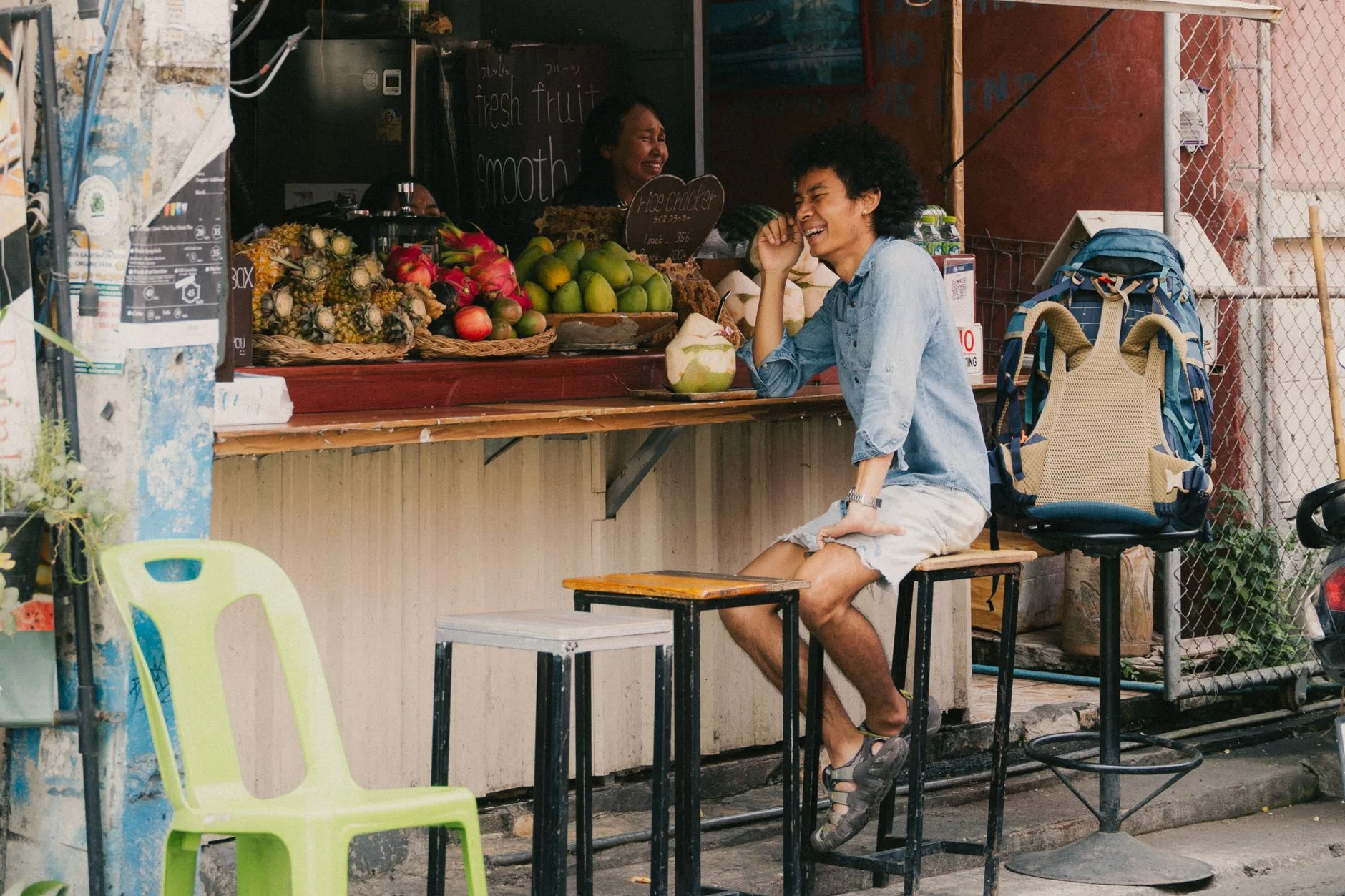
Photo by Aakash Goel on Pexels
It’s 7:45am on Nimmanhaemin Road and the heat hasn’t arrived yet. A woman in an apron is setting up a cart of khao soi outside her shophouse, the smell of coconut curry and crispy noodles cutting through the diesel fumes of the first songthaews rumbling past. Inside Ristr8to Coffee, laptops are already open — half a dozen of them, headphones in, someone on a client call in hushed German. By 9am the café is full. By 10, there’s a queue for tables.
This is the rhythm that’s made Chiang Mai one of the longest-running digital nomad hubs in Asia, going back well over a decade now. It’s cheaper and slower than Bangkok, greener and more livable than most Southeast Asian capitals, and it has built an entire ecosystem — coworking spaces, visa agents, muay thai gyms, vegan cafés, Thai language exchanges — around people who work from laptops and stay for months rather than days. None of that means it’s effortless. The visa situation has changed significantly in the past two years, the air quality turns genuinely hazardous for a few months, and the “nomad scene” itself has become crowded enough that some long-timers complain it’s lost its edge. All of that is worth knowing before you book anything.
Getting the visa right
This is the part people get wrong most often, and it’s worth doing properly rather than relying on forum advice from three years ago.
As of 2026, the most relevant option for most remote workers is Thailand’s Destination Thailand Visa (DTV), introduced in 2024. It allows stays of up to 180 days per entry, is renewable, and is explicitly designed for remote workers and freelancers (Thailand calls them “digital nomads” in the visa literature itself), not just tourists. You’ll need proof of remote employment or freelance income, a bank statement showing a reasonable balance, and to apply through a Thai embassy or consulate — not on arrival. Processing varies by consulate but budget two to four weeks.
The older route — stacking 60-day tourist visas with a 30-day extension at the Chiang Mai Immigration Office on Mahidol Road, then doing a border run to Mae Sai or across the Mekong to Laos via the Chiang Khong–Huay Xai crossing — still works, but it’s more precarious than it used to be and immigration officers have gotten stricter about repeated extensions. If you’re planning to stay more than a few months, the DTV is worth the paperwork. Check current requirements directly with Thai immigration before you commit to a plan, since visa categories here shift more often than most government websites admit.
Where to base yourself
Chiang Mai isn’t one neighbourhood — it’s several distinct ones, each with a different pace.
Nimmanhaemin (Nimman) is the default for first-time nomads, and for good reason: it’s dense with coworking spaces, specialty coffee, and co-living buildings, all within walking distance. It’s also the most expensive and, by Chiang Mai standards, the most crowded — Soi 1 and Soi 9 can feel like a laptop-lined food court by midday. Santitham, just north of the Old City, has become the quieter alternative: cheaper condos, a strong local market (Thanin Market, open from dawn, excellent for produce and cheap cooked food), and a 10-minute scooter ride to Nimman when you need the coworking density.
The Old City, inside the square moat, is atmospheric — temple bells, narrow sois, Wat Chedi Luang looming over backpacker guesthouses — but noisier and more tourist-driven, with short-term rentals priced accordingly. Further out, Mae Rim and Hang Dong suit people who want space, mountain views, and a motorbike commute rather than a walkable one; rent is lower, but you’ll need your own transport and a higher tolerance for isolation.
| Neighbourhood | Vibe | Monthly rent (1BR) | Best for |
|---|---|---|---|
| Nimman | Dense, café-driven, social | 15,000–25,000 THB | First-timers, networking |
| Santitham | Quieter, local, budget-friendly | 8,000–15,000 THB | Longer stays, lower cost |
| Old City | Historic, touristy | 12,000–20,000 THB | Short stays, atmosphere |
| Mae Rim / Hang Dong | Rural, spacious | 8,000–18,000 THB | Families, quiet, scooter-owners |
Coworking spaces and where to actually get work done
Punspace (locations in both Tha Phae Gate and Nimman) remains the most established coworking chain in the city — fast fibre internet, proper desks, quiet rooms, and a day rate around 150–250 THB if you don’t want a monthly membership. Yellow Coworking in Santitham has a loyal following for its rooftop and cheaper rates. CAMP at One Nimman is flashier — part coworking, part event space — and attracts a younger, more startup-adjacent crowd. If you prefer café culture to formal coworking, Graph Cafe and The Barn: Eatery Design both tolerate laptop squatters reasonably well outside peak lunch hours, though neither has the bandwidth or power sockets of a dedicated space.
Internet in Chiang Mai is genuinely good by regional standards — fibre connections in most condos run 100–300 Mbps — but it’s worth testing your specific building before signing a lease, since older shophouse conversions sometimes have patchier wiring than the listing suggests.
The burning season nobody mentions in the brochures
Here’s the honest part: from roughly late February through April, Chiang Mai’s air quality can become genuinely bad. Agricultural burning across northern Thailand and in neighbouring Myanmar and Laos sends PM2.5 levels well above what the World Health Organization considers safe, and on the worst days the mountains around the city simply disappear into haze. Locals and long-term residents often leave for the coast or go abroad during these months; others invest in air purifiers and N95 masks and ride it out. If you have respiratory issues, this is a dealbreaker season, not an inconvenience.
The upside is that the rest of the year is genuinely pleasant. November through February brings cool, dry mornings and blue skies — the best stretch for working outdoors on a café terrace or taking weekend trips into the mountains. May through October is the rainy season: hot, humid, with dramatic afternoon downpours that tend to clear by evening. It’s workable, just sweatier.
Food, markets, and the eating rhythm of the city
Chiang Mai’s food culture is one of its quiet strengths, and it’s cheap enough that cooking for yourself often costs more than eating out. Khao soi — the turmeric-yellow coconut curry noodle soup topped with crispy noodles — is the dish most associated with the north; Khao Soi Mae Sai near the Old City and Khao Soi Khun Yai in Santitham are two reliable, unglamorous versions worth seeking out over the tourist-oriented restaurants on Nimman’s main strip. For something more everyday, sai oua (herb-packed grilled sausage) and nam prik noom (roasted green chili dip, eaten with sticky rice and vegetables) turn up at almost any northern Thai restaurant and most night markets.
Warorot Market, near the river in the old commercial district, is the city’s largest and most working market — produce, dried goods, textiles, and food stalls that serve locals rather than tourists. The Saturday Walking Street on Wualai Road and the Sunday Walking Street running the length of Ratchadamnoen inside the Old City are more geared toward visitors, with handicrafts and street food, and are worth an evening each even if you find them crowded. For general produce and the cheapest cooked meals in town, the smaller neighbourhood markets — Thanin in Santitham, or the morning market near Chang Phuak Gate — are where residents actually shop, and the same principles that apply to eating at local markets across Southeast Asia hold here: eat where there’s turnover, watch what’s busy, and don’t be afraid of a stool and a folding table.
Health, insurance, and the unglamorous logistics
Bangkok Hospital Chiang Mai and Chiang Mai Ram Hospital are both well-regarded, English-speaking, and significantly cheaper than equivalent private care in the US, UK, or Australia — a GP consultation typically runs 500–1,000 THB, far less than most Western co-pays. That said, travel insurance that explicitly covers remote work and longer stays (rather than a standard two-week holiday policy) is worth sorting before you arrive, since claims processes differ and some providers exclude extended stays by default.
A local SIM from AIS or dtac, available at the airport or any shopping mall counter, costs a few hundred baht for a month of generous data — essential given how much of daily nomad life here (Grab rides, food delivery via LINE MAN, banking apps) assumes a working phone connection. Renting a scooter runs roughly 3,000–4,000 THB a month, though you’ll want an international driving permit and genuine caution: Chiang Mai’s roads, especially the Super Highway ring road, see frequent accidents involving foreign riders who’ve underestimated local traffic patterns.
Cost of living, realistically
Chiang Mai’s reputation as one of the cheapest nomad bases in Asia is still mostly accurate, though less dramatically so than a decade ago. A single person living reasonably — a one-bedroom condo in Santitham, regular café work sessions, eating out most meals, the occasional weekend trip — can expect to spend somewhere between 30,000 and 45,000 THB a month (roughly $850–$1,300 USD). Living more frugally, cooking at home and skipping the imported-beer bars of Nimman, brings that down considerably. Living in a serviced Nimman condo with a gym, pool, and daily coffee-shop habit pushes it well past that range.
It’s still considerably cheaper than comparable nomad hubs in Europe, and the broader pattern — Southeast Asia offering better value than it did a decade ago while individual hotspots get more expensive — shows up across the region, which is part of why some long-term travellers are now exploring destinations further off the familiar circuit while avoiding overtourism in Southeast Asia altogether, spreading time between Chiang Mai, Chiang Rai, and smaller towns rather than concentrating entirely in Nimman.
Weekend trips and getting out of the city
Part of what keeps people in Chiang Mai long-term is how easy it is to leave for a weekend without losing a workday. Pai, three to four hours north by minibus along a famously winding mountain road, is the classic escape — hot springs, a laid-back night market, and a cooler climate, though it’s become busy enough on weekends that some prefer midweek visits. Doi Inthanon National Park, home to Thailand’s highest point, makes for a manageable day trip by rented car or organised tour, with waterfalls and hiking trails that are genuinely worth the early start. For something slower, the drive toward Mae Hong Son loops through some of the most dramatic mountain scenery in the country, best done over two or three days rather than rushed.
The Bottom Line
- The DTV visa has made long-term stays genuinely easier since 2024 — sort it before arrival rather than planning to improvise with border runs.
- Pick your season deliberately: November to February is the sweet spot, and burning season (roughly late February to April) is a real reason to leave, not an exaggeration.
- Santitham offers most of Nimman’s convenience at a noticeably lower cost, and it’s worth the extra ten-minute commute for anyone staying more than a few weeks.
- Budget 30,000–45,000 THB a month for a comfortable, unspectacular lifestyle — cheaper than most of Europe, no longer the bargain-basement rate it was a decade ago.
- The food alone — khao soi, sai oua, the morning markets — is reason enough to stay longer than a typical two-week trial run most nomads give the city.
Keep reading: Read our honest review of digital nomad life in Chiang Mai