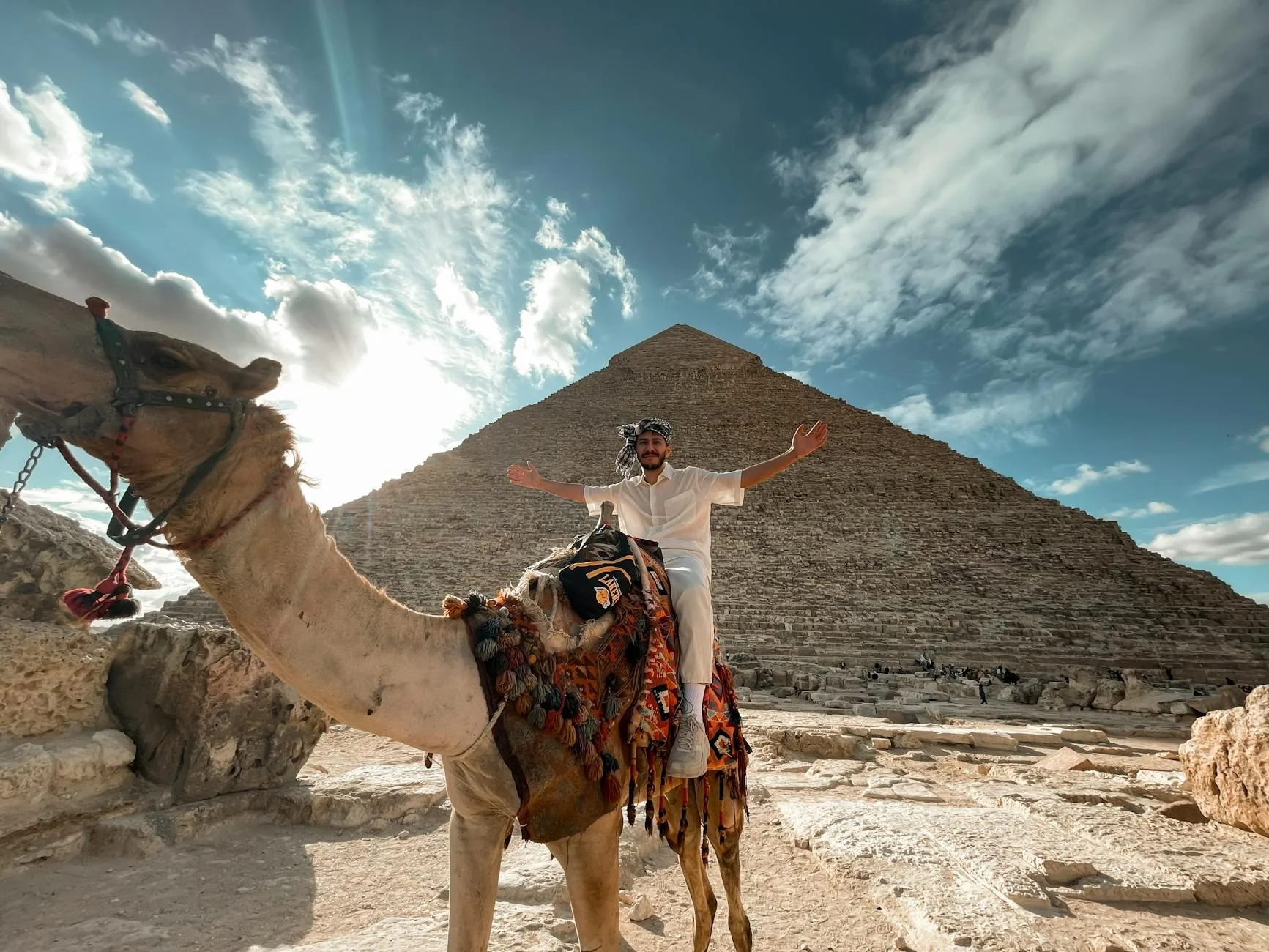
First time visiting Egypt: Cairo and beyond
The call to prayer from the minarets of Al-Azhar reaches you before the light does. You’re standing in the narrow lanes of Islamic Cairo — Khan el-Khalili to your left, a spice seller arranging turmeric and dried hibiscus to your right — and the city is already at full volume. Motorbikes thread through gaps that don’t exist. Someone presses a glass of karkadeh (hibiscus tea) into your hand without asking. This is not a city that eases you in gently.
Egypt rewards preparation and punishes vagueness. Know your neighbourhoods, know your routes, know what a fair price looks like — and you’ll find a country of staggering depth. Arrive without any of that, and Cairo in particular can feel like a wall of noise and competing demands. This guide is for first-time visitors who want more than the highlights reel: the practical logistics, the real food, the decisions between Luxor and Abu Simbel, and the honest assessment of what this trip actually takes.
Practical entry and when to go
Most nationalities can obtain an Egyptian e-visa in advance through the Egyptian government’s official e-visa portal. The process takes 3–7 business days and costs USD 25 for a single-entry 30-day visa. Some nationalities (including US, UK, EU, and Australian passport holders) can alternatively purchase a visa on arrival at Cairo International Airport for USD 25, but the e-visa removes the queue. Do it in advance.
Best months: October through April. Egypt in summer is genuinely punishing — Luxor regularly exceeds 43°C in July and August, and Aswan goes higher. October and November are ideal: manageable heat, relatively fewer visitors than December, and the Nile is high and clear after the flood season. February and March bring cooler evenings and excellent light. Ramadan is worth noting — it isn’t a reason to avoid Egypt, but it changes the rhythm of the day significantly, with many restaurants closed until Iftar.
Currency: Egyptian Pound (EGP). ATMs in Cairo, Luxor, and Aswan are widely available. Carry cash for markets, smaller restaurants, and transport. USD is accepted in tourist-facing businesses but at poor rates. Don’t rely on cards outside major cities. As of 2026, the exchange rate has stabilised following several years of significant fluctuation — check a reliable source before you travel, as the official and informal rates have historically diverged.
Cairo: the neighbourhoods that matter
Cairo is not one city. It is several cities laid across each other — Pharaonic, Coptic, medieval Islamic, nineteenth-century French-colonial, and contemporary megacity — and knowing which one you’re in at any given moment changes what you’re looking at.
Islamic Cairo (Al-Qahira) is the place to start. The area around Al-Muizz li-Din Allah Street contains the highest concentration of medieval Islamic architecture in the world, and much of it is simply open — no ticket, no queue, walk straight in. Bab Zuweila, a surviving gate of the Fatimid city, offers a rooftop view over the minarets for a few pounds. Khan el-Khalili bazaar runs east of Al-Azhar mosque and is unabashedly touristy in its front lanes, but walk two minutes deeper in any direction and you’re in working markets selling spices, copper, fabric, and car parts to actual Cairenes. The souk al-Fustat area (between Khan el-Khalili and the Citadel) is less visited and quieter.
Coptic Cairo (Misr al-Qadima) is a short metro ride south (Line 1, Mar Girgis station). The walled compound contains the Hanging Church (Al-Mu’allaqa), one of Egypt’s oldest Christian churches, along with the Ben Ezra Synagogue and the Church of St Sergius, built over a crypt where the Holy Family is said to have sheltered. It’s compact, manageable in two hours, and genuinely atmospheric — cool stone, incense, and near-silence compared to the street outside.
Zamalek, on Gezira Island in the Nile, is the neighbourhood where Cairo exhales. It’s where many diplomats and long-term expats live, with tree-lined streets, independent bookshops, good coffee, and restaurants that aren’t aimed at tour groups. The Cairo Tower on the island’s south end offers a panoramic view worth the EGP 200-ish admission.
Downtown Cairo (Wust el-Balad) deserves more attention than it gets from first-timers. The area around Talaat Harb Square still shows the bones of Khedive Ismail’s nineteenth-century vision of a Haussmanian Cairo — peeling art-deco facades, old patisseries, and the legendary Café Riche, which has been serving coffee and fuul since 1908.
The Giza Plateau: honest expectations
Yes, you must go. No, the photos don’t prepare you for the scale. The Great Pyramid of Khufu is the oldest of the Seven Wonders of the Ancient World and the only one still standing, and when you stand at its base and look up at 2.3 million limestone blocks, no amount of prior exposure to images makes it ordinary.
Practical points: The plateau sits at the edge of Giza, a suburb roughly 20 kilometres from central Cairo. The most reliable transport is a metered ride via Uber or Careem (Egypt’s dominant rideshare app) — budget EGP 150–250 from Downtown depending on traffic. Taxis without meters require negotiation; agree the price before entering. Cairo’s metro does not reach the plateau.
Tickets are layered. The site entrance covers the pyramid exterior and the Sphinx. Entering the Great Pyramid interior is a separate ticket (limited daily slots, purchase at the site early in the morning). The Solar Boat Museum (Khufu Ship) charges an additional fee. Budget roughly USD 15–25 total depending on which interiors you enter. The Sound and Light Show at night is kitsch but also, in its way, worth experiencing once — the plateau emptied of day visitors, the monuments lit in gold.
Arrive at opening time (8am) to avoid the midday heat and coach groups. The plateau receives thousands of visitors daily; the experience at 8am and at noon are categorically different. Bring water, sun protection, and low expectations of solitude — but the site is large enough that you can find quieter corners near the smaller queens’ pyramids.
What to eat in Cairo
Egyptian food is filling, cheap, and frequently excellent, and most first-time visitors don’t eat nearly enough of it because they default to hotel restaurants.
Fuul and ta’ameya are the breakfast of Cairo. Fuul is slow-cooked fava beans with cumin, lemon, and olive oil — served with bread, it costs EGP 10–20 at a street cart and will hold you through a morning of walking. Ta’ameya (the Egyptian version of falafel, made from fava beans rather than chickpeas) is crispier and more herbed than its Levantine cousin. Any neighbourhood bakery opens by 6am.
Koshary is Cairo’s definitive street dish: pasta, rice, lentils, tomato sauce, crispy fried onions, and a vinegar-garlic dressing in proportions you control. Abou Tarek on Champollion Street in Downtown is the most famous koshary restaurant in Cairo, a multi-storey operation that has been running since 1950. A large bowl costs around EGP 40–60.
Grilled meats and mezze: Kebabs and kofta are ubiquitous, but Karam el-Sham in Islamic Cairo does a good version with proper mezze. For a sit-down meal with atmosphere, Naguib Mahfouz Café inside Khan el-Khalili is slightly overpriced but reliable — named after Egypt’s Nobel laureate, whose novels are set in these exact streets.
For a deeper guide to navigating markets and street food in the region, our piece on how to eat at local markets in Southeast Asia covers principles — hygiene, ordering, prices — that translate well to Egypt’s market eating culture.
Beyond Cairo: Luxor, Aswan, and the south
Most first-time visitors combine Cairo with Upper Egypt — the stretch of the Nile from Luxor to Aswan — and with good reason. These cities contain the bulk of ancient Egypt’s surviving monuments.
Getting there: The overnight train from Cairo (Ramses Station) to Luxor takes roughly 9–11 hours and costs USD 25–40 in first class (air-conditioned sleeper cabins for two, bedding included). Book through the Egyptian National Railways website or in person at Ramses. The 1st class express trains (Nos. 81 and 82) are the most reliable. Flying Cairo to Luxor takes one hour and costs USD 40–80 with EgyptAir on a good day; convenient but you miss the Nile valley from the train window.
Luxor sits on the site of ancient Thebes, and its monuments are divided by the Nile. The East Bank holds Karnak Temple Complex — the largest ancient religious structure ever built, covering two square kilometres — and Luxor Temple, which sits in the centre of the modern city and is dramatically floodlit at night. Tickets for Karnak cost around USD 12. The West Bank is where the dead were buried: the Valley of the Kings (tomb entry tickets are priced per tomb, roughly USD 6 each, with Tutankhamun costing more), Hatshepsut’s Mortuary Temple at Deir el-Bahari, and the Colossi of Memnon, which are free and impressive at dawn. Cross the Nile by local ferry (a few pounds) rather than tourist boat.
Aswan is quieter and more manageable than Luxor — a city you can actually sit in and enjoy. The Nubian villages on the west bank are accessible by felucca (traditional sailboat), and an hour drifting on the Nile at sunset costs around USD 5–10 per person in a shared boat. The Philae Temple, relocated stone by stone to Agilkia Island after the Aswan High Dam flooded the original site, is one of the most intact temple complexes in Egypt. Take the boat from the Shellal dock, roughly 10 minutes from Aswan city.
Abu Simbel is a four-hour drive south of Aswan through open desert, close to the Sudanese border, and the temples of Ramesses II are among the most visceral monuments Egypt has to offer — carved directly into a cliff face, then moved 65 metres uphill in a UNESCO operation in the 1960s. National Geographic’s coverage of the Abu Simbel relocation gives good background on what you’re actually looking at. Organised minibuses leave Aswan at 3–4am in convoy (a requirement until recently, though check current requirements as this policy has shifted). The drive back, across featureless desert scrub in afternoon heat, is part of the experience.
Cairo to Luxor: the route options compared
| Route | Duration | Cost (approx) | Best for |
|---|---|---|---|
| Overnight train (1st class) | 9–11 hours | USD 25–40 | Scenery, budget, experience |
| Domestic flight (EgyptAir) | 1 hour | USD 40–80 | Speed, convenience |
| Nile cruise (Cairo–Luxor) | 3–4 days | USD 80–200/day | Immersion, slow travel |
| Private car | 8–9 hours | USD 80–150 | Flexibility, stops en route |
A short Nile cruise — typically Luxor to Aswan or the reverse over 3–4 nights — is an option worth considering even if you’re not a cruiser by instinct. The felucca-style boats take a week; motorised dahabiyas (traditional two-masted boats) take three to four days and are chartered privately. The experience of watching the agricultural strip on each bank narrow to a thread, and then vanish into desert, tells you more about Egypt’s geography than any amount of reading.
Religious sites, dress, and cultural logistics
Egypt is a predominantly Muslim country with a significant Coptic Christian minority — roughly 10 percent of the population. Both traditions are visibly present in daily life, and both merit respect when you visit their sites.
For mosques: remove shoes, cover shoulders and legs (both men and women), and carry a light scarf. Women will usually be offered a robe at major tourist mosques if needed, but bringing your own is faster and more comfortable. Outside of prayer times, most large mosques in Cairo welcome visitors — Al-Azhar, Ibn Tulun, and the Mohammed Ali Mosque in the Citadel are all accessible. For a broader guide to navigating this kind of cultural protocol, how to respectfully visit religious sites abroad covers the practical and social dimensions clearly.
Egyptians are, in general, exceptionally hospitable to foreigners — offers of tea, directions, and conversation are genuine more often than not. The difficulty for first-timers is separating this from the hustling that occurs around major tourist sites, which can be persistent. At the Giza Plateau, the Sphinx, and Karnak, you will be approached frequently by guides, camel operators, and vendors. A calm, direct “La, shukran” (No, thank you) repeated without irritation is the most effective response. Engaging even partially tends to restart the conversation.
Getting around in Egypt
Cairo’s metro is genuinely useful and very cheap — a single journey costs EGP 8. Line 1 runs north-south through the city; Line 2 connects the west bank to Shubra. The metro has women-only carriages (the first carriage is typically reserved). It gets crowded during rush hour, but it moves.
Uber and Careem function reliably in Cairo, Alexandria, and to some extent Luxor. They are significantly easier than haggling with taxis for most first-time visitors, and prices are reasonable. In smaller towns and villages, microbus routes and tok-toks (three-wheeled auto-rickshaws) fill the gaps.
Intercity buses: GoBus and BlueBus run air-conditioned coaches between Cairo, Luxor, Hurghada, and Sharm el-Sheikh. Reliable, cheap, and bookable online.
The Bottom Line
- Start with Islamic Cairo and Coptic Cairo before tackling the Giza Plateau — getting your bearings in a walkable historic neighbourhood first makes the larger site feel less overwhelming.
- The overnight train to Luxor is worth taking at least one way: it’s comfortable in first class, inexpensive, and puts you in the Nile valley at dawn. Book it early in peak season.
- Carry Egyptian pounds in cash — ATMs are available in all major cities, but many smaller transactions (street food, ferry crossings, site tip jars) don’t accept cards and don’t give change easily.
- Two weeks is the minimum to do Cairo, Luxor, and Aswan without rushing. Add three or four days if you want Abu Simbel and any time on the Sinai coast. Egypt is large and the distances are real.
- Heat is a genuine variable. October to February are categorically different months to June to August. If you have any flexibility on timing, travel in the cooler months — not for comfort alone, but because you’ll be able to cover more ground and spend more time outdoors without the trip becoming an endurance event.
Keep reading: Solo female travel in Jordan: safety tips and real advice