Street food etiquette every traveller should know
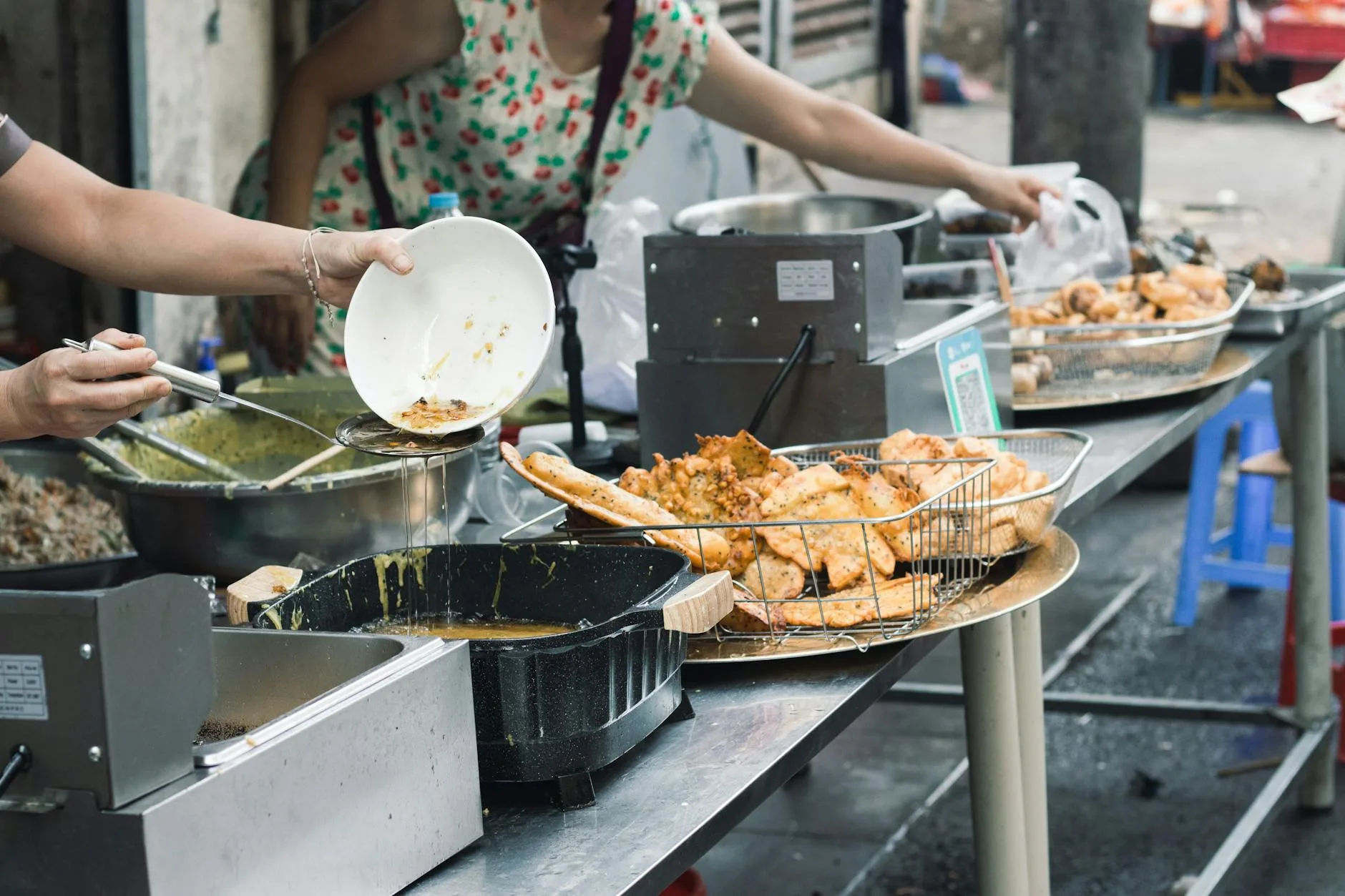
The first sign that you’ve found the right stall is the queue. Not a long, organised line, but the informal cluster of people who’ve pulled their scooters half onto the pavement, leaned against the wall, and are clearly not going anywhere until they’ve eaten. At a jok (rice porridge) cart on Bangkok’s Charoen Krung Road at 7am, the vendor works without looking up — ladling, garnishing, handing out — because everyone already knows the drill. Except, possibly, you.
That moment of not knowing the drill is universal. It’s not a failure; it’s just the entry point. Street food culture across the world — from the tlayuda stalls in Oaxaca’s Mercado 20 de Noviembre to the lamb skewer carts outside Marrakech’s Djemaa el-Fna — runs on unspoken conventions that locals absorbed over years. The good news is that most of those conventions are simple, and learning them changes the experience entirely. You stop hovering and start eating.
This guide is for any destination where street food is central to daily life. The specifics vary by country — and the regional sections below address those — but the underlying logic is consistent: pay attention, be patient, stay flexible, and respect the space.
Read the queue and ordering system before you join it
Every food stall has a system, and no two are identical. Some operate on a first-come-first-served queue that’s obvious. Others run on a shout-and-wave system where you catch the vendor’s eye and call your order. A few — particularly in hawker centres in Singapore and Penang — use a “chope” system where you reserve a seat by leaving an umbrella or packet of tissues on it before queuing.
Before you do anything, spend 60 seconds watching. Where do people stand? Do they pay before or after eating? Are they calling their order from a distance, or approaching the cart directly? In Hanoi’s bún chả stalls in the Hoàn Kiếm area, customers typically sit down first and the vendor brings food to the table. In a Mumbai vada pav stall near Dadar station, you order standing at the counter and pay when you receive it.
The biggest mistake is assuming the system you know from home applies here. If you push to the front in a system that rewards patience, you create friction. If you hang back in a system that requires assertive eye contact, you’ll wait indefinitely.
When in doubt: mimic, then ask. Pull out your phone and point at what someone else is eating. Most vendors work with this fluently — they’ve seen it before.
Understand the payment moment
The question of when to pay causes more awkward standoffs than almost anything else. The answer varies by country and stall type, but there are patterns:
| Region | Typical payment timing | Notes |
|---|---|---|
| Thailand, Vietnam, Laos | After eating | Common at sit-down stalls; pay when you’re done |
| India (street carts) | As you receive the food | Especially for snacks and chai — cash upfront |
| Mexico (taquerías) | After eating, at a central till | Track what you ate; it’s honour-system in smaller spots |
| Morocco (Djemaa el-Fna) | Before or after, but discuss first | Prices at tourist-facing stalls can shift — agree upfront |
| Malaysia/Singapore (hawker centres) | At the stall before eating | Each stall takes separate payment |
| Japan (yatai stalls, festival food) | Immediately on receipt | Cash only at most; exact change appreciated |
In Morocco specifically, particularly around Djemaa el-Fna in Marrakech, the vendor pressure to sit down and eat can be intense, and prices aren’t always displayed. Agree on the price before you commit, or walk 200 metres into the medina’s side streets — Rue Riad Zitoun el Kedim and the area around Mellah market — where the same harira and msemen cost a fraction of what you’ll pay in the square, and the dynamic is entirely different.
Pointing, gesturing, and ordering without a shared language
Street food is one of the most language-forgiving environments in travel. Vendors deal in objects, not descriptions. You can point at a dish, hold up fingers for quantity, and be understood in almost any country. But a few specifics help.
Numbers are worth learning first. Knowing how to say “one”, “two”, and “how much” in the local language goes a long way. It’s not about performing cultural fluency — it’s practical. In Thailand, knowing nueng (one) and song (two) is immediately useful. In Vietnam, một and hai. These take ten minutes to learn and save ten minutes of fumbling every day.
Dietary restrictions require more care. “No meat” is not universally understood to mean “no fish sauce, no shrimp paste, no meat stock”. In Thailand, Cambodia, and Vietnam, dishes described as vegetarian often contain fish sauce as a base flavour. If you’re vegetarian or vegan for health or ethical reasons, learning the specific phrase — gin jay in Thai for a strict Buddhist-style vegan diet, which is understood and catered to at specific stalls — is more reliable than generic requests. UNESCO’s Intangible Cultural Heritage listings for culinary traditions can also give context for how deeply embedded certain ingredients are in specific food cultures.
Allergies are more serious still. In high-volume street environments, cross-contamination is common and often unavoidable. If an allergy is severe, pre-printed cards in the local language (available through allergy translation services online) are worth carrying.
Hygiene: what to assess and what to let go
This is the section where people want a definitive answer, and there isn’t one — but there are useful heuristics.
The most reliable indicator of safety is volume. A stall with constant turnover means ingredients don’t sit, oil gets changed, and the vendor is experienced. The lonely stall at the edge of the market with flies on the protein is the one to skip — not because it’s “local” but because the food hasn’t moved.
Watch the temperature of cooked food. Satay should come off a grill that’s actively burning. Pad thai should be wok-hot. Cold fried things that have been sitting under a heat lamp since lunchtime are risky anywhere in the world.
Produce-based dishes — som tam (green papaya salad) in Thailand, ceviche from a cart in Lima’s Barranco district — involve raw or acid-marinated ingredients. These are generally fine at busy, reputable stalls but carry more inherent variability than fully cooked food. Neither is a reason to avoid them; they’re a reason to choose the stall with the highest throughput.
The article on eating at local markets in Southeast Asia goes deeper on food safety specifics for that region, including which types of stalls carry higher risk and how to assess them quickly.
Water and ice deserve separate attention. In countries where tap water is unsafe to drink, ice served at street stalls is almost always commercially produced (cylindrical ice with a hole through the centre is the standard commercial form in Southeast Asia) and generally safe. But in rural or very remote settings, ask or skip it.
How to behave at the stall itself
The physical space around a street food stall is a working environment with tight margins. A few habits keep things smooth.
Don’t linger at the ordering point once you’ve ordered. Step aside. The vendor needs that space to move, and other customers need to get to them.
Don’t negotiate the price of cooked food. Ingredients were bought at a fixed cost. The price is the price. Bargaining at a market stall selling crafts or clothing is a different matter — but asking for a discount on a bowl of pho or a plate of mole is not appropriate and tends to be experienced as disrespectful rather than savvy. If a price genuinely seems wrong, ask to clarify — politely.
Eat nearby, not at the stall if there’s no seating. If the stall has a couple of plastic stools, they’re for customers. If there’s no seating, step a short distance away to eat. Blocking the stall while you eat makes it harder for the vendor to work and other customers to approach.
Handle packaging carefully. Street food generates a lot of single-use plastic and foam containers — this is an unavoidable reality in many countries. Refuse extra bags when you don’t need them, don’t drop packaging on the ground, and use any bins provided. The responsibility for this lies largely with systems and infrastructure, but individual habits matter in aggregate.
Country-specific customs worth knowing
General principles cover most situations, but some contexts have specific norms that aren’t intuitive.
Japan (yatai stalls and matsuri festivals): The convention at festival food stalls (yatai at events like Hakata Gion Yamakasa in Fukuoka) is to eat standing near the stall, finish, and dispose of your own packaging before moving on. Eating while walking (aruki-gui) is considered bad manners in many contexts — acceptable at festivals but frowned upon on regular streets. The article on understanding Japanese customs before you visit covers the broader cultural context in more detail.
India: At chaat and pani puri stalls, particularly in Mumbai’s Chowpatty Beach area or Delhi’s Chandni Chowk, service is fast and rhythmic. The vendor will often hand you one piece at a time and watch you eat it before handing you the next. Go with the pace — trying to stockpile pieces breaks the rhythm and doesn’t work well with the dish anyway.
Mexico: At taco stalls in Mexico City’s Colonia Roma or the outdoor taquerías near Mercado de Jamaica, the convention is to tell the taquero what fillings you want (they’ll run through the options quickly), then dress your own tacos from the salsa spread on the counter. Don’t wait for someone to dress them for you — that’s your job. Keep it moving.
Morocco: At medina food stalls in Fes’s Bou Jeloud area or Chefchaouen’s market square, it’s common for vendors to be more insistent and sales-oriented than in East or Southeast Asia. A calm, firm “la shukran” (no, thank you) works. You are not obliged to engage, and walking away is not rude.
Street food is also one of the most honest windows into a place’s daily life — more so than most things you’ll do as a traveller. That’s worth treating with some care, whether you’re eating injera with tibs from a roadside stall in Addis Ababa or a currywurst from a kiosk in Berlin’s Prenzlauer Berg at midnight. The food exists on its own terms, not as a performance for visitors. BBC Travel’s guide to street food cultures offers a useful cross-regional overview of how these traditions developed and what they mean to the communities they feed.
The bottom line
- Watch before you order. Every stall has a system. Sixty seconds of observation tells you more than any guidebook entry about how to slot in without disrupting the flow.
- Volume and turnover are your most reliable safety signals. A busy stall with fast-moving food is almost always a better choice than a quiet one with ingredients sitting in the heat.
- Agree on prices before eating at tourist-adjacent stalls, particularly around major landmarks in Morocco and parts of Southeast Asia. Everywhere else, the price is the price — don’t negotiate for cooked food.
- Learn five words of numbers and courtesy in each country’s language. It changes the transaction from a tourist interaction to a human one, and it’s an hour’s work at most.
- Eat at the pace of the place. Some stalls want you in and out in three minutes. Some want you to sit, order another round of skewers, and stay. Reading which is which is part of the experience.
Keep reading: How to eat at local markets in Southeast Asia