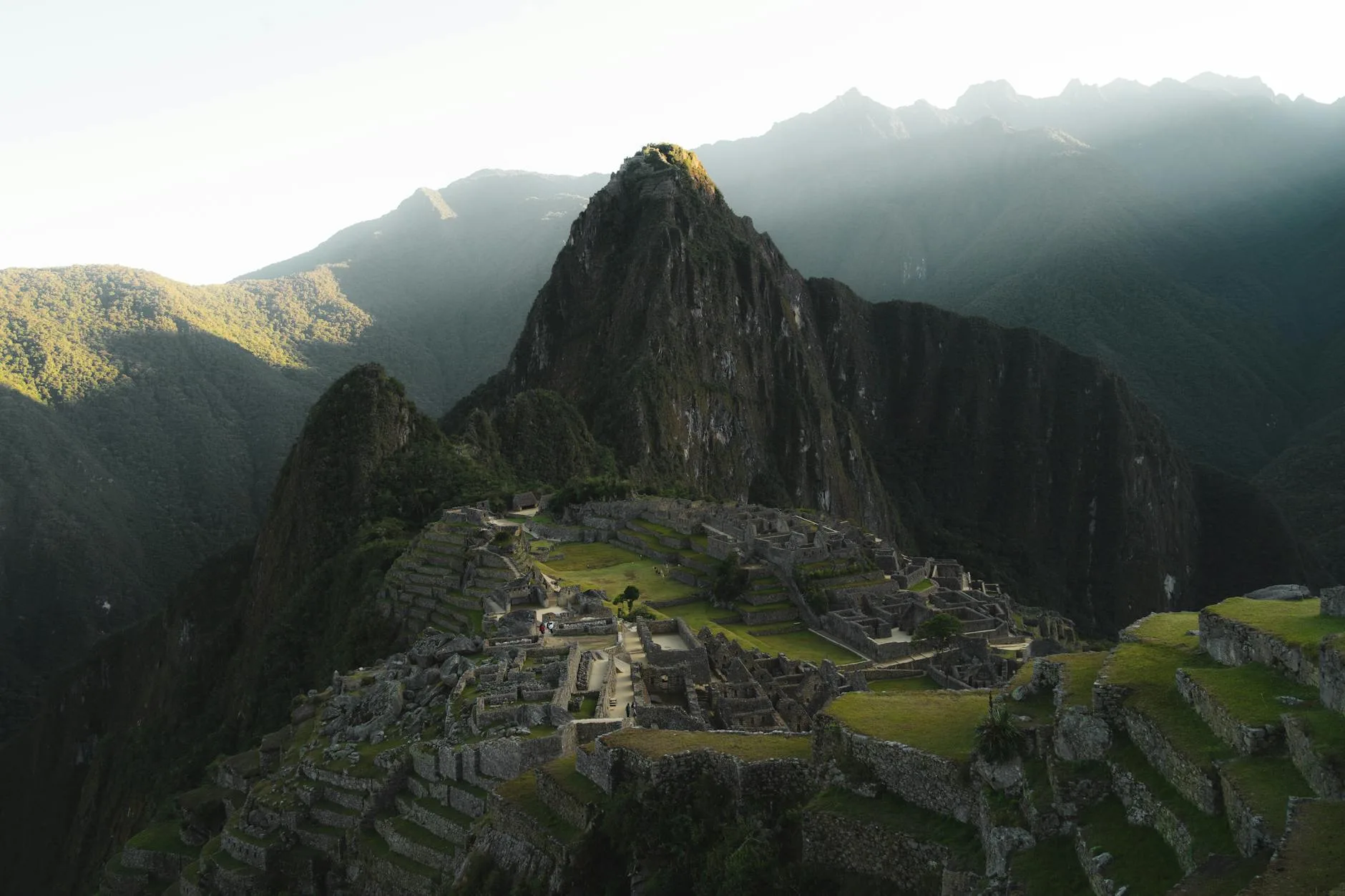
Photo by Lars Mulder on Pexels
Hiking the Inca Trail without a tour agency
The bus from Cusco’s Terminal Terrestre leaves before dawn. By the time it pulls into Ollantaytambo, the valley is just beginning to fill with pale light, the snow-capped ridgeline of Veronica appearing above the cloud like something staged. The market stalls near the ruins are already setting out — tamales wrapped in banana leaf, cups of api morado steaming in the cold — and the first organised trekking groups are already massing near the trailhead with matching duffel bags and laminated itineraries.
This is where you’ll face the central reality of the Inca Trail: Peru’s government has made it effectively impossible to walk the Classic Inca Trail as a completely independent hiker. The trail is a controlled heritage corridor, and since the early 2000s, the rules have required every trekker to be accompanied by a licensed, registered guide. There is no permit category for solo independent hikers. This is not a loophole someone hasn’t found yet — it is the policy, enforced at the Km 82 or Km 88 checkpoint, and it is not negotiable.
What is negotiable is the degree of agency, flexibility, and cost you bring to the experience. Hiking without a full-service tour agency — meaning without the packaged groups, the buffet tents, the rigid group schedules — is entirely possible. And for stretches of the broader Inca Trail network, genuine independent hiking is not only possible but richly rewarding.
What the rules actually say: permits, guides, and the checkpoint
The Classic Inca Trail — the four-day, three-night route from Km 82 to Aguas Calientes, passing through Dead Woman’s Pass and arriving at Machu Picchu through the Sun Gate — is managed by Peru’s Ministry of Culture. Entry permits are capped at 500 people per day (including guides and porters), which in practice means the roughly 200 trekker slots sell out months in advance, often by January or February for the dry season peak months of May through September.
Every permit is issued to a named individual tied to a passport number. They are non-transferable and non-refundable. To obtain a permit, you must book through a licensed Peruvian trekking agency — the Ministry does not sell directly to individuals. The agency books the permit on your behalf and assigns a registered guide. This is the legal bottleneck.
What this does not mean: you have to buy a fully packaged, all-inclusive, group-of-sixteen experience. Many agencies in Cusco will arrange a private guided trek — just you (or your group) plus a guide and the porters you choose to hire. Costs are higher than group treks, typically USD $700–1,100 per person for a private four-day arrangement, versus USD $350–600 in a standard group. But you control the pace, the start time each morning, the campsite stops. It is the closest thing to hiking independently that the Classic Trail legally permits.
Agencies worth knowing in Cusco: smaller, more flexible operators
The San Blas neighbourhood in Cusco — the cobblestoned barrio above the Plaza de Armas, full of ceramic workshops and guesthouses spilling down steep lanes — is where most of the smaller, locally owned trekking operators are based. These are not the large wholesale agencies on Avenida del Sol that fill sixteen-person groups for $350 a head; they are outfits with five to fifteen guides on staff, often founded by former porters or guides themselves.
A few names that consistently come up among travellers who want more flexibility: Alpaca Expeditions (porter-welfare certified, founded by former Inca Trail porters), SAS Travel (long-established, strong on customisation), and Llama Path (known for transparency around porter pay and equipment standards). None of these are affiliate recommendations — check current reviews on forums like TrekEarth or the Lonely Planet Thorntree, and verify their SERNANP licensing status before booking.
Book directly via email or in person when you arrive in Cusco — you will almost always get a better rate and more flexibility than booking through an international aggregator. Arrive in Cusco at least three to four days before your intended trek start, both to acclimatise to the altitude (3,400m) and to sort permits. If you arrive in May hoping to walk in May, you will likely find the Classic Trail sold out.
The Salkantay Trek: full independence, no permit required
Here is where genuine independent hiking becomes possible. The Salkantay Trek — a five-day route that crosses the 4,630m Salkantay Pass before descending through cloud forest to Aguas Calientes — is not a controlled heritage corridor. There are no checkpoints requiring a licensed guide. You can walk it entirely independently, carrying your own gear, staying in the network of small guesthouses and basic lodges that have grown up along the route over the past decade.
The route starts at Mollepata, a village reachable by collectivo from Cusco’s Arco Punku terminal (roughly 3–4 hours, S/15–20). From Mollepata, the trail climbs through the Soraypampa valley — the snowfields of Salkantay filling the horizon ahead — to the high camp at Soraypampa (3,900m), where the Salkantay Lodge and several cheaper alternatives sit beside a glacial lagoon. The second day is the hardest: the pass itself, where temperatures drop sharply even in July, and a long descent to the warmer Wayra camp near Chaullay.
Days three through five drop progressively into the cloud forest zone around La Playa and Lucmabamba, where the air thickens with humidity, the trail narrows through coffee farms, and you can buy a bag of freshly dried café orgánico directly from families along the path. The final approach to Aguas Calientes — via the hydroelectric plant and the rail track — takes about three hours and involves no checkpoints.
Total independent costs on the Salkantay: accommodation S/30–80 per night at basic lodges, meals S/15–30. Budget roughly USD $80–130 for the full five days, not counting transport to/from Cusco or entry to Machu Picchu (currently USD $65 for the mountain circuit entry, booked in advance through the official Machu Picchu ticketing portal).
The Lares Trek and other network routes
The broader Inca road network — the Qhapaq Ñan, a UNESCO World Heritage site — extends far beyond the Classic Trail corridor, and most of it is unwalled by permit requirements. The Lares Trek runs through high Andean communities north of Ollantaytambo, passing through villages where Quechua is the first language and where the textile cooperatives in Patacancha and Lares produce some of the finest weaving in the Sacred Valley. You can walk sections of this independently, though hiring a local guide from Ollantaytambo is both practical and meaningful — the paths are unmarked in places and the communities themselves benefit directly from guide fees staying local. For advice on finding reputable independent guides rather than agency intermediaries, the guidance in how to find a good local guide without an agency applies directly here.
The Choquequirao Trek — a four-to-five-day route to a Inca citadel larger than Machu Picchu and visited by a fraction of the number — requires no permit at all. The trailhead starts at Cachora, reached by bus from Cusco via Abancay. The route is steep, hot in its lower sections, and genuinely demanding. There are basic camping spots and a few rustic hospedajes along the way. At Choquequirao itself, the site has a campground. This is perhaps the most rewarding independent trekking option in the entire region precisely because almost nobody is there: you arrive at terraces thick with cloud and silence, the kind that the Classic Trail — however beautiful — stopped being able to offer years ago.
Season, altitude, and what to actually carry
| Month | Conditions | Classic Trail availability | Salkantay (independent) |
|---|---|---|---|
| Jan–Mar | Wet season; heavy rain, lush, leeches | Limited; some closures in Feb | Passable but muddy; carry gaiters |
| Apr | Shoulder; some rain, greener trails | Permits available, book ahead | Good conditions |
| May–Jun | Dry season begins; cold nights | High demand — book 3–4 months ahead | Excellent |
| Jul–Aug | Peak dry season; cold at altitude | Sold out fastest; book in January | Excellent but crowded at lodges |
| Sep | Still dry; slightly less crowded | Book 2–3 months ahead | Very good |
| Oct–Nov | Transition; occasional rain | Easier to find permits last-minute | Generally fine |
| Dec | Wet season begins | Quietest month; some permit availability | Wet but walkable |
Altitude is the variable most first-timers underestimate. Cusco sits at 3,400m. Salkantay Pass is at 4,630m. Dead Woman’s Pass on the Classic Trail reaches 4,215m. Acclimatise properly: spend at least two full days in Cusco before attempting any high-altitude day hike, drink coca tea (mate de coca is available everywhere, including your hotel), and consider a day hike to Sacsayhuamán (3,700m) above Cusco to test your body’s response before committing to a multi-day route.
What to carry independently on the Salkantay: a three-season sleeping bag rated to at least -5°C, trekking poles (the descent from Salkantay Pass to Chaullay is brutal on knees without them), a water filter or iodine tablets (streams are generally reliable above the farmland zones, but treat everything below), and layers that function in both rain and sun, often on the same afternoon. A poncho bought in Cusco’s Mercado San Pedro for S/20 is more practical than an expensive rain jacket in the cloud forest sections.
If you’re weighing this Andean route against other multi-day independent options in South America, the best multi-day hikes in Patagonia for beginners offers useful comparison — the logistical patterns have similarities, including the need to book key huts and passes months ahead.
Getting to the trailheads: transport logistics from Cusco
For the Classic Trail (Km 82): Agencies handle transport as part of the package. If arranging a private guided trek, confirm whether the minibus pickup is included or extra.
For Salkantay (Mollepata start): Collectivos leave from Cusco’s Arco Punku terminal on Avenida Arcopata. Ask locally for the current departure times — they typically leave between 6am and 9am. The journey takes 3–4 hours along a winding mountain road. Alternatively, shared transport to Soraypampa directly can be arranged with guesthouses in Cusco for around S/50–70 per person.
For Choquequirao (Cachora start): Take a bus from Cusco to Abancay (departing from Terminal Terrestre, roughly 4–5 hours, S/20–30), then a collectivo from Abancay to Cachora (1.5 hours, S/10–15). Cachora has two or three basic hospedajes where you can spend the night before the early start down to the Apurímac canyon.
The Bottom Line
-
The Classic Inca Trail legally requires a licensed guide — there is no independent permit option. The workaround is booking a private guided trek through a smaller Cusco-based agency rather than a large group package. This costs more but gives you genuine flexibility over pace and schedule.
-
The Salkantay Trek is fully independent-accessible, requires no permit, and delivers comparable high-Andean drama with a richer cloud-forest descent. Budget USD $80–130 for five days of hiking plus simple accommodation and food along the route.
-
Choquequirao is the most rewarding permit-free option for anyone prepared for a serious four-to-five-day undertaking. The citadel is vast, largely unrestored, and almost empty. It will not stay that way indefinitely.
-
Book Machu Picchu entry tickets in advance, directly through the official government portal. The daily visitor quota means same-day tickets are often unavailable during peak season, and the site no longer permits walk-up entry.
-
Acclimatise properly before any high-altitude trekking. Two full days in Cusco is the minimum. The mountain will still be there on day three.
Keep reading: Self-guided trekking in Nepal: routes, permits & teahouses