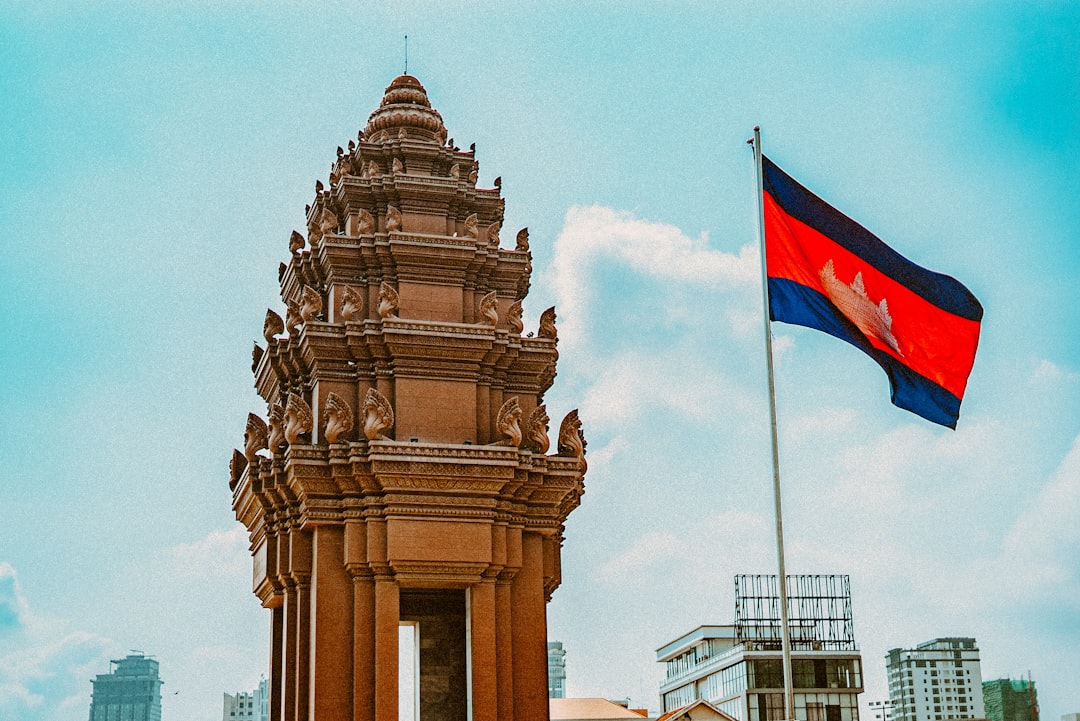
Photo by Daniel Bernard on Unsplash
Cambodia Visa: Arrival Process and What to Do Once You’re In
The bus pulls into Poipet, Cambodia’s busiest overland border crossing (from Thailand). Your passport is in your bag and you’re unsure if you should have gotten a visa before arriving. This is fine — Cambodia issues tourist visas on arrival (VOA) and through e-visa before arrival. Both work. The question is which is more practical and how to avoid the scams that operate at this border.
Cambodia tourism is set up for overlanders and last-minute arrivals. Unlike some countries, you don’t need a visa before you leave home, though getting one before arrival is an option. Understanding the current process (2026) and knowing how to navigate it prevents unnecessary stress and expense.
E-Visa vs. Visa on Arrival: Which to Choose
E-Visa (before you arrive):
– Apply online at the official Royal Government of Cambodia e-visa website
– Cost: 36 USD (plus 3–5 USD for the website’s handling fee, total 39–41 USD)
– Processing time: 3 days, though you can pay for next-day processing (+5 USD)
– You receive a digital e-visa by email, print it and bring it with you
– Entry is pre-approved at any official border crossing
Visa on Arrival (at the border):
– Apply at the border when you arrive
– Cost: 40–50 USD (official price) though scams charge more
– Processing time: immediate to 15 minutes at official counters
– Requires a passport photo (bring one, or pay extra for them to take it)
– Valid at official border crossings (Poipet, Bavet, Siem Reap airport, Phnom Penh airport, Koh Kong)
Which is better: If you know your exact arrival date and have 3+ days before arrival, get the e-visa (it’s cheaper and pre-approved, so border processing is faster). If you’re arriving spontaneously or arriving within 3 days, get the VOA at the border.
Border Crossings: Where They Are and How They Work
Poipet (Thailand-Cambodia border): The busiest overland crossing. Reached from Thailand (Bangkok via bus, or direct from Aranyaprathet). The border is known for scams — both Thai and Cambodian sides have unofficial “helpers” who take your passport and extract extra fees.
Official process at Poipet:
1. Your bus stops at the Thai immigration office. You exit, have your passport stamped out of Thailand (free).
2. Walk 200 meters across no-man’s-land.
3. Arrive at Cambodian immigration office.
4. Submit your passport + visa application form (they provide it or you’ve pre-filled).
5. If e-visa: show your printed e-visa. They process in 5 minutes.
6. If VOA: pay 40–50 USD, provide a passport photo, wait 15 minutes.
7. Passport returned, stamped. You’re in Cambodia.
The scam: Unofficial “helpers” or “agents” approach you at the border claiming they’ll process your visa faster. They charge 15–50 USD extra (“fees,” “processing,” “facilitation”). Your passport is in their hands temporarily. Avoid this entirely. Use only the official window. If you don’t speak the language, ask another traveller to point you to the official window. It’s marked and obvious.
Bavet (Vietnam-Cambodia border): East of Phnom Penh. Less crowded than Poipet. The process is identical. Same scams exist but are less aggressive. Visa on arrival is straightforward here.
Siem Reap airport (air arrival): You can get a VOA at the airport. Processing is in a dedicated window, straightforward, no scams (airports are more controlled). Cost is the same (40–50 USD). Takes 15 minutes while you wait. This is actually the cleanest border crossing for VOA.
Phnom Penh airport: Same as Siem Reap. Safe, no scams, straightforward.
Koh Kong (coastal border with Thailand): Smaller, less touristy. Process is the same. Fewer scams because fewer scam operators work remote areas.
The Visa: Duration, Extensions, and What It Covers
Tourist visa:
– Duration: 30 days from entry
– Extension: Can be extended at any immigration office in Cambodia for another 30 days (costs $45–50 and takes 1–3 days)
– Extensions beyond 30 days require applying to authorities (involves paperwork, is slower)
Business visa: Available but requires more documentation. Not worth getting for tourism.
Most tourists do the initial 30 days, and if staying longer, extend once (total 60 days). This covers extended travel through Cambodia and neighbouring countries if you exit and re-enter.
What Happens After You Enter: Phnom Penh, Siem Reap, and Beyond
Phnom Penh (capital): Where most people arrive via Poipet. It’s a working capital city — it’s chaotic, not picturesque, full of motorcycles and markets. Tourist infrastructure exists but it’s light compared to other Southeast Asian cities.
Real Phnom Penh (avoiding the tourist loop):
– Walk the riverfront area (Sisowath Quay) for coffee and people-watching, not as a tourist attraction
– Visit the Central Market (Phsar Thmei) to see the actual city — not Instagram-worthy but genuinely interesting. Buy nothing, just observe.
– Eat in local restaurants, not tourist restaurants. A full meal: 3–5 USD.
Tourist tours focus on the Tuol Sleng Genocide Museum and Choeung Ek killing fields memorial. These are historically significant and worth visiting, but often delivered with unnecessary melodrama. Visit respectfully, with a guide who doesn’t sensationalize.
Siem Reap (Angkor Temples): Most tourists arrive here for Angkor Wat, the massive temple complex. It’s the most-visited destination in Cambodia. Understanding it properly requires time and context.
What tourists usually do: Pay a tour operator for a 3-day temple pass, get rushed through temples following a guide with a flag. It’s tourism theatre.
What actually works:
– Buy a 3-day temple pass (72 USD for 3 consecutive days, 62 USD for 3 days within 10 days, can be bought at the temple entrance)
– Hire a tuk-tuk driver (ask your hotel for a recommendation, costs 12–15 USD per day)
– Start early (5am) to watch sunrise at Angkor Wat (most people do this; it’s crowded but genuinely stunning)
– Plan your own route. The temples span a large area. Don’t try to see everything.
Specific temples worth time:
– Angkor Wat: the main temple, massive, stunning, crowded
– Angkor Thom: the ancient city ruins, less photographed than Angkor Wat, more interesting
– Pre Rup: smaller, less crowded, good for sunset
– Banteay Srei: 30km away, requires an extra fee (9 USD), smaller temple with detailed carvings, genuinely beautiful
Get away from Siem Reap touristy core: The town centre is full of bars and backpacker hostels (80s parties, pub crawls). It’s not terrible but not Cambodia. Eat in neighbourhoods away from the tourist strip. Take a bicycle to explore (5 USD per day rental). Walk the night market (authentic market, real vendors, fresh food).
Extended Travel in Cambodia: What Works Beyond the Tourism Triangle
Kampot (coastal town): 4 hours south of Phnom Penh. It’s a slower place, with a riverfront, pepper plantations nearby, and a backpacker community that’s less hedonistic than Siem Reap. Stay 3–5 days. Base for Bokor National Park hikes or pepper farm tours. Cost: 10–20 USD per night, 3–5 USD per meal.
Koh Rong and Koh Rong Sanloem (islands): Beach destinations. Genuine islands, not extremely touristy (yet). Accommodation is bungalows and hostels (15–40 USD). Swimming, diving, relaxing. The ferry from Sihanoukville takes 1–2 hours.
Battambang (northwest): A colonial-era town, river-based, less visited than Siem Reap. It’s genuinely interesting for its architecture, silence, and locals who actually interact with visitors (vs. customers at tourist venues). Stay 2–3 days. Cost: 10–20 USD per night.
Mondulkiri (northeast highlands): Rubber plantations, waterfalls, trekking. Very few tourists. Getting there requires buses and patience. If you want to experience Cambodia beyond tourism infrastructure, this is it.
Getting Around Cambodia: Transport Between Cities
Buses: Most practical for long distances. Mekong Express (private buses, reasonably comfortable) is the main operator. Bookings through Busbud or directly at stations. Prices: Phnom Penh to Siem Reap (6 hours): 12–18 USD.
Minibuses: For shorter distances. Cheaper (half the price of full buses) but slower (they take longer routes, stop frequently). Share taxis are even cheaper and faster if you’re willing to be uncomfortable.
Tuk-tuks and local taxis: In cities, tuk-tuks are the default transport. Cost: $1–3 USD depending on distance. Negotiate price before entering.
Boats: The Mekong slow boat from Siem Reap to Phnom Penh (2 days) is a famous journey. It’s slow, scenic, and offers a different experience of the country. Cost: 35–50 USD depending on class.
Costs: Monthly Budget for Cambodia
| Category | Daily | Monthly |
|---|---|---|
| Accommodation (guesthouse) | 10–20 USD | 300–600 USD |
| Food (eating locally) | 5–10 USD | 150–300 USD |
| Transport | 3–5 USD | 90–150 USD |
| Activities/tours | 3–5 USD | 90–150 USD |
| Total | 21–40 USD | 630–1,200 USD |
Cambodia is very cheap. You can live well on $30–40 per day, including accommodation and activities.
Safety and Practical Realities
Safety: Phnom Penh and tourist areas are generally safe. Petty theft (pickpocketing, bag snatching) is the main risk. Violent crime against tourists is rare. Don’t walk alone at night in unfamiliar areas. Use taxis or ride-sharing apps (Grab, Uber).
Scams: Beyond the border scams, be aware of:
– Fake tour operators offering “deals” (book through your hotel)
– Overcharging at restaurants without menus (ask price before ordering)
– Gem scams (if someone on the street offers to take you to a gem dealer, it’s a setup)
Language: Khmer is the language. English is spoken in tourist areas and by younger people. Translation apps (Google Translate, Papago) work reasonably well for written Khmer. Learning a few words helps.
Practical matters:
– ATMs are everywhere (mostly Acleda Bank). Withdrawal fees are 2–3 USD per transaction.
– Currency is Cambodian riel (4,000 riel ≈ 1 USD) but USD is accepted everywhere and often preferred.
– Electrical outlets are the same as North America (two flat pins).
– Internet is decent in cities, slow in villages.
The Bottom Line
Cambodia visa is straightforward: get the e-visa online if you have time, or get it on arrival at the border (avoid helpers, use official windows). Once in the country, understand that the tourism infrastructure is light — you’re not following a well-marked trail like Thailand or Vietnam. This is actually the appeal. Cambodia rewards slow travel and independent exploration.
A month in Cambodia costs $600–1,200 including accommodation, food, transport, and activities. Most of the country is affordable and relatively unmapped by mass tourism. Get your visa, head inland from the tourist triangle, and experience a country that’s still genuinely different.