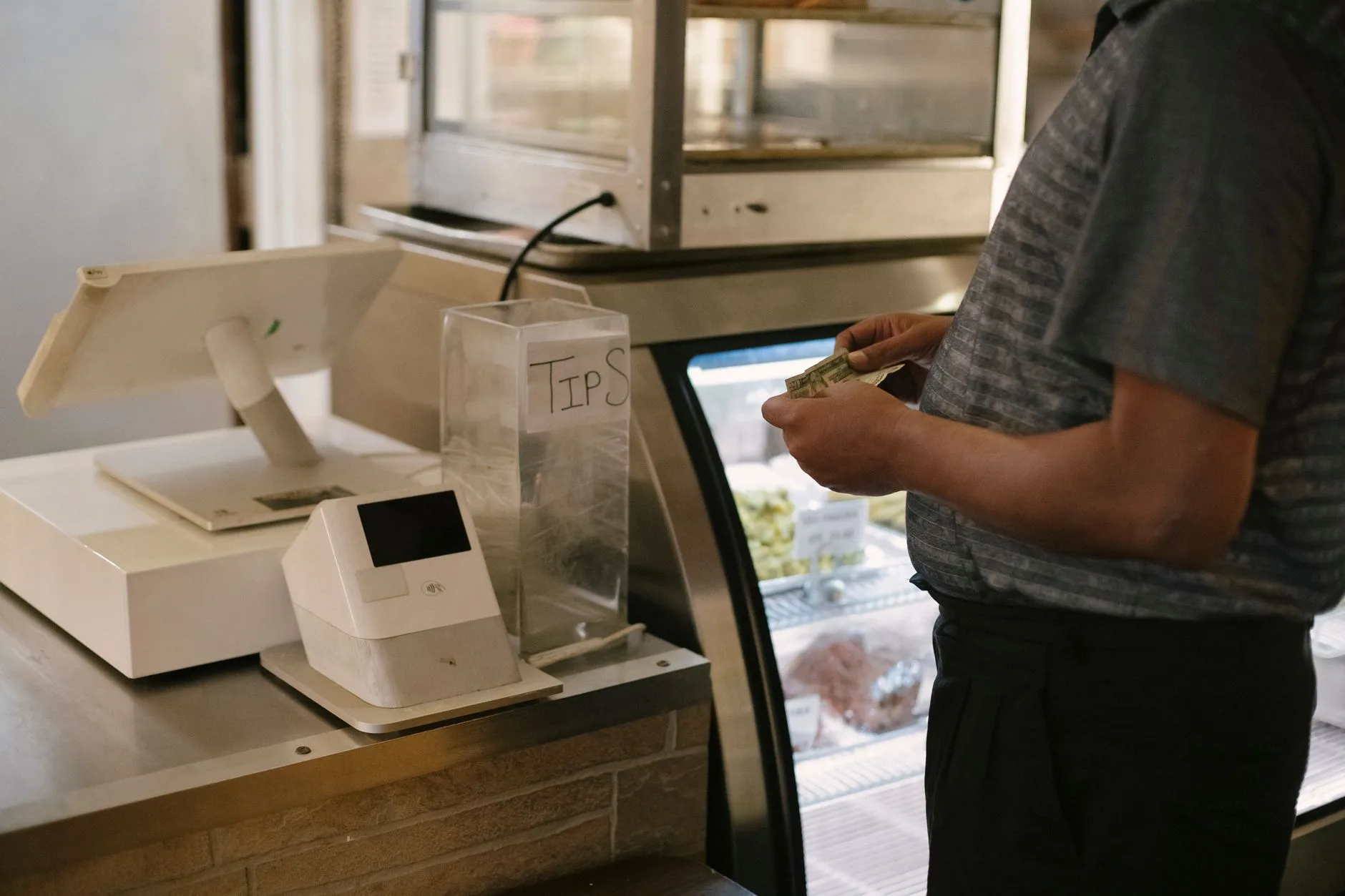
Photo by Tim Samuel on Pexels
In a small izakaya on a side street off Dotonbori in Osaka, I once tried to leave a few hundred yen on the table after a meal of grilled skewers and cold Asahi. The owner came out from behind the counter, picked up the coins, and pressed them back into my hand with a slight bow — not rude, just firm. Three weeks later, in a diner in Queens, a waitress watched me calculate a 15% tip with visible disappointment, because in New York, 15% reads as an insult and 20–22% is the baseline.
Tipping is one of the few travel customs that can genuinely embarrass you in either direction — tip too little in the United States and you’ve stiffed someone whose wage depends on it; tip in the wrong context in Japan or South Korea and you’ve implied the service was transactional rather than a matter of pride. Learning how to handle tipping etiquette around the world isn’t about memorising a percentage for every country. It’s about understanding why tipping exists — or doesn’t — in a given place, because that logic tells you what to do even in situations no guidebook covers.
Why tipping customs vary so much in the first place
Tipping exists, historically, where service wages are low and gratuities are expected to fill the gap. That’s the American model: servers in most US states can legally be paid a “tipped minimum wage” as low as $2.13 an hour federally, with tips expected to close the difference. In countries where service staff earn a full, legal wage — much of East Asia, Scandinavia, and increasingly Western Europe — tipping isn’t structurally necessary, and offering one can feel like you’re suggesting the person needs charity.
The other variable is cultural attitude toward money changing hands directly. In Japan and South Korea, this exchange is seen as slightly crude — service is a matter of professional pride, not a paid extra. In much of the Middle East and North Africa, small cash tips (often called baksheesh) are woven into daily interactions far beyond restaurants — for the man who watches your shoes at a mosque, the porter who carries your bag, the person who shows you where the toilet is. Neither approach is “right.” They’re just different economic logics, and travelling well means reading which one you’re in.
East Asia: put your wallet away
Japan, South Korea, and Taiwan share a near-universal no-tipping norm. In Japan, service charges are baked into the price, and tipping a taxi driver, hairdresser, or restaurant server will usually be politely declined — sometimes the money is chased after you down the street. The exception is high-end ryokan (traditional inns), where a small gift of cash in an envelope for exceptional, personalised service is occasionally accepted, but this is a nuanced custom, not a default expectation for casual travellers. If you’re building out a longer itinerary, our guide on first time in Japan covers this and other etiquette points worth knowing before you land.
South Korea and Taiwan follow similar rules: restaurant bills often include a 10% service charge already, and tipping outside of that is unnecessary and occasionally confusing for the recipient. Hong Kong sits in a middle ground — a 10% service charge appears on restaurant bills, and rounding up a taxi fare is normal but not expected.
Southeast Asia: modest, appreciated, not obligatory
Thailand, Vietnam, Cambodia, and Laos don’t have a deep-rooted tipping culture, but tourism has shifted expectations in places with heavy foreign visitor traffic. In Bangkok and Chiang Mai, rounding up a restaurant bill or leaving 20–50 baht is common and welcomed, though street food vendors rarely expect it. In Vietnam, tour guides and drivers on multi-day trips increasingly expect a tip — often 50,000–100,000 VND per day for a guide — because this has become standard practice in group tourism, even if it isn’t a local custom outside that industry.
Bali and the rest of Indonesia sit somewhere similar: hotel staff and drivers appreciate small tips, but the pressure isn’t the same as in the Americas. If you’re island-hopping through the region and want quieter alternatives to the well-trodden Bali circuit, the guide to island alternatives to Bali is worth a look before you build your route — many of those destinations have even lighter tipping expectations than Bali’s tourist zones.
The Middle East and North Africa: baksheesh is a system, not a suggestion
In Morocco, Egypt, and Jordan, small cash tips move through daily life constantly, and this is worth planning for logistically — you need a steady supply of small notes, because handing someone a large bill when a coin would do creates an awkward moment on both sides. In Egypt, it’s common to tip the person who unlocks a tomb chamber at a site like the Valley of the Kings, the felucca boatman on the Nile, and hotel housekeeping — typically 5–20 Egyptian pounds per small interaction. Our guide on first-time visits to Egypt covers exactly where these moments come up and how much is reasonable.
In Morocco, riad staff, hammam attendants, and guides in the Fez or Marrakech medinas all work within a baksheesh economy — 10–20 dirhams for small services, more for a half-day guide. Jordan follows a similar pattern, especially around Petra, where tipping the person who helps you find the best light for a photo, or a Bedouin guide on the trail up to the High Place of Sacrifice, is customary and modest.
Europe: read the receipt before you tip
Europe is genuinely inconsistent, which is exactly why it trips up travellers moving between countries on the same trip. In France, Italy, and Spain, a service charge (service compris, servizio incluso) is usually already included in the bill, and any extra tip is a small rounding gesture — a euro or two, not a percentage. In the UK, tipping 10% at sit-down restaurants is common but not legally required, and it’s increasingly absorbed into a discretionary “service charge” line that you can ask to have removed if service was poor.
Scandinavia and Germany lean toward the no-tipping-necessary end, similar to East Asia, because service wages are higher — though rounding up a bill in Germany (saying “stimmt so” when handing over cash) is a polite, low-key gesture rather than an obligation. Eastern and Southeastern Europe — Albania, Romania, Georgia — sit closer to the baksheesh model in spirit: modest cash tips of 5–10% are appreciated in restaurants and for taxi drivers, and cash is still king outside major cities. If you’re building a longer route through the region, the guide to budget travel in Albania and the one on hiking the Carpathian Mountains in Romania both touch on the cash-heavy, tip-light economics of that corridor.
The Americas: tipping is not optional in the US
The United States is the extreme case, and it catches even experienced travellers off guard. Restaurant tipping of 18–22% is now standard in most cities (server wages are legally tied to it in most states), bartenders expect $1–2 per drink, and even coffee shop tip jars carry quiet social pressure. Taxi and rideshare drivers, hairdressers, and hotel housekeeping ($2–5 per night, left daily rather than at checkout since staff rotates) are all part of the expected structure.
Latin America is considerably lighter. In Mexico, a 10–15% restaurant tip is standard in tourist areas but less rigid elsewhere; in Colombia, restaurant bills often include a voluntary 10% service charge (propina voluntaria) that you can decline by asking the server to remove it, and tipping outside restaurants — drivers, guides — is appreciated but modest. The guide on first-time visits to Colombia and the one on budget travel in Colombia both go into this in more detail, since it changes slightly by region and city.
A quick reference for the road
| Region | Restaurant tip | Taxi / driver | Hotel staff | Cash or card? |
|---|---|---|---|---|
| Japan, South Korea, Taiwan | None expected | None expected | Rare, only high-end ryokan | N/A |
| Thailand, Vietnam, Cambodia | 20–50 baht / round up | Round up fare | 20–50 baht per bag/day | Cash preferred |
| Egypt, Morocco, Jordan | 10–15% or round up | Small cash tip | 10–20 EGP/MAD per service | Cash, small notes essential |
| Western Europe (France, Italy, Spain) | Included; round up | Round up fare | €1–2 per bag | Either |
| UK | 10% if not included | Round up fare | £1–2 per bag | Either |
| United States | 18–22% | 15–20% | $2–5 per night | Card is fine, cash appreciated |
| Mexico, Colombia | 10–15% | Round up / small tip | 20–50 MXN or 2,000–5,000 COP | Cash preferred for small tips |
The practical habits that actually solve this
The single most useful travel habit isn’t memorising percentages — it’s carrying small denominations of local currency at all times, because the moments that require a tip are rarely predictable and rarely convenient. In Egypt and Morocco especially, running out of small notes mid-trip creates genuinely awkward standoffs at temple entrances and riad checkouts.
The second habit is watching what locals around you do before acting — at a restaurant counter in Seoul, at a taxi stand in Lisbon, at a market stall in Hanoi. Tipping culture reveals itself faster through observation than through any app or article, including this one.
According to the US State Department’s travel guidance, tipping norms are one of the most frequently misunderstood aspects of cross-border travel precisely because Americans export their own high-tipping habits into places where it creates confusion rather than goodwill. Meanwhile, BBC Travel’s reporting on global tipping customs has repeatedly noted that overtipping in no-tip cultures like Japan can be read as condescending — treating a professional service like charity rather than a skill.
The Bottom Line
- Default to observation, not assumption: watch what the table next to you does before deciding whether to tip at all.
- Carry small local-currency notes in cash-tip regions (Egypt, Morocco, Jordan, much of Southeast Asia) — this matters more than knowing the “correct” percentage.
- In the United States, tipping 18–22% at sit-down restaurants isn’t generous, it’s baseline; anything less is read as a genuine complaint about service.
- In Japan, South Korea, and Taiwan, don’t tip at all in ordinary settings — it can embarrass the person you’re trying to thank.
- When in doubt in Europe, check the bill for “service compris” or “servizio incluso” before adding anything extra; the tip is often already there.
Keep reading: First time in Japan: what to actually expect