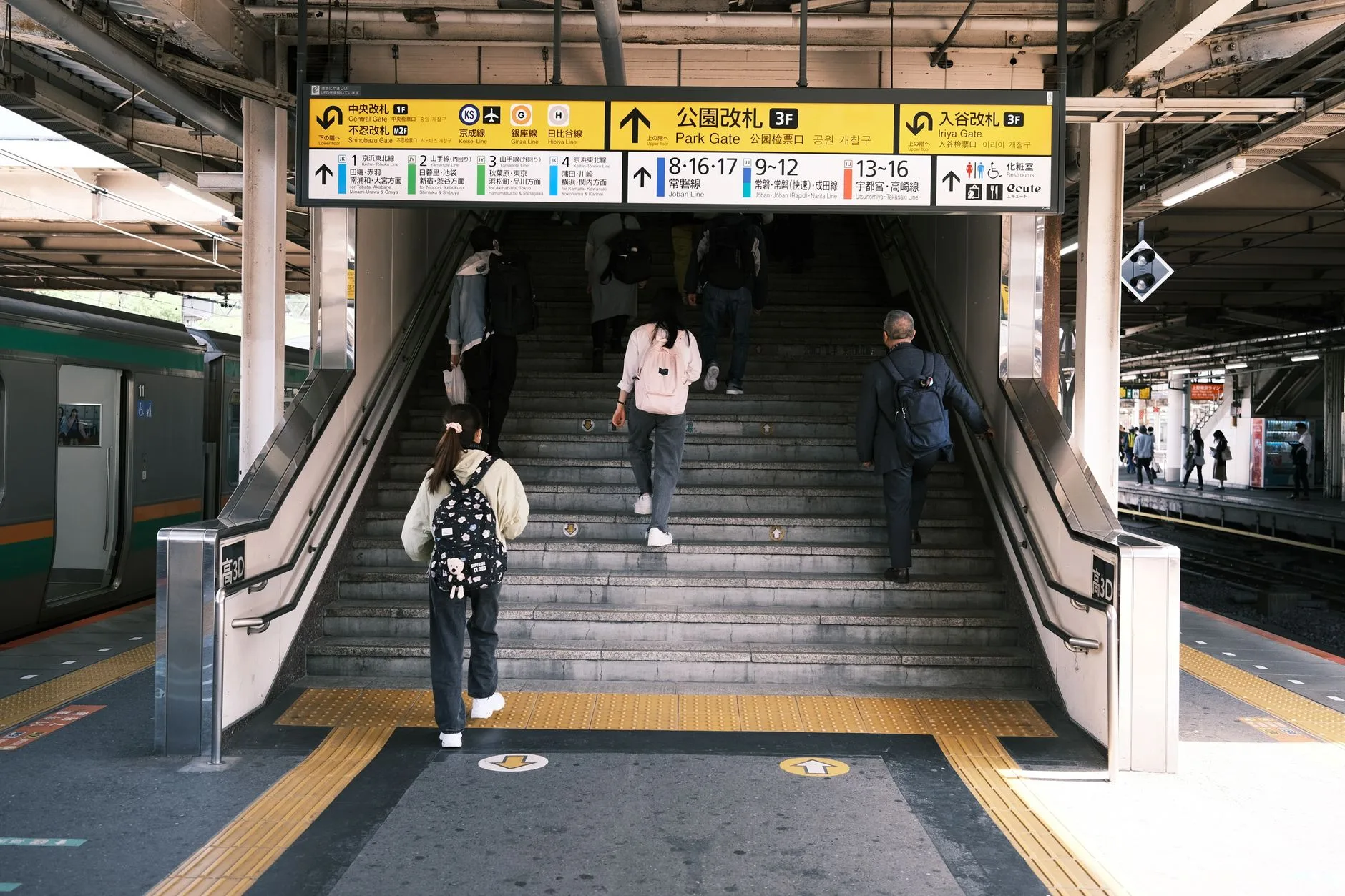
Japan is extraordinary but not intuitive. The country rewards visitors who arrive prepared — those who don’t can find it confusing, expensive, and frustrating. Here’s what you actually need to know before your first trip.
Visas
UK passport holders get visa-free entry to Japan for up to 90 days. You’ll receive a stamp on arrival at the airport. No prior application required.
Getting Around: The Train System
Japan’s train network is the backbone of travel. It’s fast, punctual, clean, and covers virtually the whole country. It’s also complex, expensive without the right pass, and confusing for first-timers.
IC Cards (Suica or Pasmo): Rechargeable travel cards that work on trains, buses, and subways in most Japanese cities. Load yen, tap in and tap out. Essential for urban travel — buy at any major train station machine on arrival.
Japan Rail Pass (JR Pass): A flat-rate pass covering unlimited travel on most JR trains, including the shinkansen (bullet trains). Purchased before arrival in Japan (available online or through travel agents). Cost-effective if you’re doing multiple long-distance legs (Tokyo–Kyoto–Osaka–Hiroshima–Tokyo, for example). Not worth it for a single-city trip.
Shinkansen: Bullet trains connecting major cities. Tokyo to Osaka takes 2h 15m; Tokyo to Kyoto 2h 20m. Faster and often cheaper than flying domestic once transfer times are included.
Money
Japan remains heavily cash-based. Many restaurants, small shops, temples, vending machines, and local businesses operate cash-only. Carry enough yen at all times.
7-Eleven and Japan Post ATMs reliably accept foreign cards. Airport ATMs also work. Other ATMs may not.
Japan is not as expensive as its reputation suggests for travellers who eat at local spots, use trains, and avoid luxury hotels. Budget travel is around ¥8,000–12,000/day (£40–60). Mid-range: ¥15,000–25,000/day.
Where to Go
Tokyo: Vast, overwhelming, endlessly interesting. Plan at least 4–5 days. Shinjuku, Shibuya, Asakusa, Harajuku, Tsukiji outer market, Yanaka (old Tokyo neighbourhood), day trip to Nikko or Kamakura.
Kyoto: The cultural heart of Japan. Temples, shrines, geisha districts (Gion), bamboo groves (Arashiyama). Two to three days minimum, four is better. Book accommodation far in advance — Kyoto fills up months ahead.
Osaka: Food-obsessed city; considerably more relaxed and cheaper than Tokyo. Dotonbori street food district, Namba, Kuromon Ichiba market. Easy day trip base for Nara (deer park) and Kobe.
Hiroshima and Miyajima: Hiroshima Peace Memorial Museum is one of the most important museums in the world. Miyajima island (torii gate in the water) is a short ferry away.
Hakone: Mountain resort area with views of Mount Fuji (weather-dependent) and excellent onsen (hot spring baths). Easy day trip or overnight from Tokyo.
Japan off the beaten track: Kanazawa (preserved geisha districts, excellent food market), Takayama (historic mountain town, best accessed by limited express train), Naoshima (contemporary art island in the Seto Inland Sea).
Accommodation
Capsule hotels: Small sleeping pods, not claustrophobic as you might imagine (modern ones are spacious). Good showers, lockers, social common areas. ¥3,000–5,000/night. Single-sex floors are the norm.
Hostels: Well-developed in major cities and tourist towns. Book months ahead for Kyoto and Tokyo in peak seasons (spring cherry blossom, November autumn foliage).
Ryokan: Traditional Japanese inn with tatami floors, futon bedding, and usually dinner and breakfast included. A quintessential Japan experience — not cheap (¥10,000–30,000/person) but worth at least one night.
Food
Japanese food culture is built around specialisation. Most restaurants do one thing. Ramen shops serve ramen, not sushi. Sushi restaurants don’t serve ramen. This is a feature, not a limitation — specialists produce better results.
Where to eat cheaply:
– Convenience stores (7-Eleven, FamilyMart, Lawson) — onigiri, sandwiches, hot foods, fresh sushi. Genuinely good.
– Standing sushi bars — rotate-belt sushi restaurants (kaiten-zushi) and standing ramen counters are cheap and excellent.
– Depachika — basement food halls of department stores, often with pre-made meals and lunch specials.
Etiquette: Don’t eat while walking. Don’t tip — it’s considered rude. Slurping noodles is fine and even encouraged (it shows appreciation). No shoes inside most traditional restaurants and ryokan.
Cultural Norms
Quiet in public: Japan’s trains and public spaces operate at a low noise level. Keep phone calls off the train; speak quietly.
Tattoos: Onsen (public baths) often prohibit tattoos — check the specific facility policy before arriving. This is changing slowly but is still the rule at many traditional establishments.
Queuing: Japan queues with exceptional orderliness. Follow the marked queue lines at train platform doors.
Rubbish: There are almost no public rubbish bins in Japan. Carry your rubbish with you until you find a convenience store bin (7-Eleven bins are usually accessible).
Connectivity
A pocket Wi-Fi or SIM card is essential in Japan. Options:
– eSIM: Most convenient for modern phones — activate before arrival (Airalo, Ubigi, local providers)
– SIM card from airport vending machines: Data-only, available immediately on arrival
– Pocket Wi-Fi rental: Allows multiple devices; collect at airport counter
Best Time to Visit
Spring (late March–early April): Cherry blossom season — beautiful but extremely crowded, expensive, and booked out months ahead.
Autumn (October–November): Autumn foliage (koyo) — similarly beautiful, similarly busy.
May/June and September/October (outside peak periods): Better value and fewer crowds, while still having good weather.
Summer (July–August): Hot, humid, typhoon risk. Not the best time for most visitors.
Winter: Cold but not extreme in most of Honshu. Skiers visit Hokkaido (Niseko). Fewer tourists, lower prices.
Summary
First-time Japan travel:
- Get a Suica or Pasmo IC card at the airport — essential for all urban transport; load ¥5,000–10,000 immediately
- Carry cash at all times — many places remain cash-only; use 7-Eleven ATMs for reliable foreign card access
- Book Kyoto accommodation months in advance — it genuinely fills up, especially during cherry blossom and autumn foliage
- Eat at convenience stores without shame — 7-Eleven, FamilyMart, and Lawson sell genuinely good, cheap food
- Give Tokyo more time than you think you need — 3 days is not enough; 5–6 starts to scratch the surface
Keep reading: Backpacking in South Korea: practical guide