How to spend two weeks in Vietnam: a practical itinerary
The overnight train from Hanoi to Đà Nẵng departs Ga Hà Nội station just after 9pm. By the time you’ve found your berth, stuffed your bag under the bunk, and watched the city’s sodium-orange glow dissolve into dark countryside, something useful happens: you stop rushing. The train rocks south through mountain passes you can’t see but can feel — the engine straining, the air cooler at altitude — and sixteen hours later you step onto a platform in central Vietnam with the particular alertness that only an overnight journey produces. That’s Vietnam in miniature. The country rewards the patient and punishes the schedule-obsessed, but it also has the infrastructure, the food, and the sheer geographic variety to justify every kilometre.
Two weeks is enough to cover the country’s three main regions — north, centre, and south — if you choose your stops deliberately and don’t try to see everything. This itinerary runs Hanoi to Hồ Chí Minh City (HCMC) on a north-to-south spine, which aligns with most international flight connections and the country’s natural rhythm. It’s not a checklist. It’s a route designed to give you depth in a handful of places rather than a photo at every landmark.
A note on timing: Vietnam’s climate is regional and counterintuitive. The south is dry November–April; central Vietnam is best February–August; the north has a distinct cool-dry season October–March. The itinerary below suits November to April best, when you can move through all three regions in reasonable conditions.
Days 1–3: Hanoi — the north’s dense, contradictory capital
Fly into Nội Bài International Airport and take the 86 bus (around 9,000 VND, roughly $0.35) or a fixed-rate taxi (around 250,000–300,000 VND, ~$10–12) into the city. Avoid airport transfer touts; the official taxi rank is outside arrivals.
Base yourself in or near the Old Quarter (Hoàn Kiếm District), the 36-street neighbourhood whose lanes were historically organised by trade — silk on Hàng Gai, paper on Hàng Giấy, tin on Hàng Thiếc. It’s dense and loud and occasionally maddening, but it’s also the most walkable part of the city and central to most of what you want. Guesthouses and boutique hotels here run 400,000–900,000 VND ($16–36) per night for something clean and decent.
Spend your first morning doing nothing more structured than walking. Start at Đồng Xuân Market — the north’s biggest covered market, open from dawn, selling everything from plastic buckets to dried shrimp — and work south through Hàng Buồm and Hàng Ngang toward Hoàn Kiếm Lake. The lake is neither spectacular nor particularly quiet, but it anchors the city’s geography and the morning tai chi sessions around its edge are worth pausing for. Eat breakfast at a street stall on Cầu Gỗ or Lý Quốc Sư: phở bò (beef noodle soup) if you want the classic, or bún chả — grilled pork patties with cold noodles and herbs — which is Hanoi’s own. A bowl costs 40,000–60,000 VND ($1.60–2.40).
On day two, hire a bicycle (guesthouses often loan them; rental shops around the Old Quarter charge 50,000–80,000 VND/day) and ride west to the Tây Hồ District, which wraps around West Lake — the city’s largest lake, less visited than Hoàn Kiếm and significantly calmer. The neighbourhood has a different texture: wide, tree-lined streets, low-rise cafés, Vietnamese families eating bánh tôm (crispy shrimp cakes) at the lakeside stalls on Thanh Niên road. The Trấn Quốc Pagoda, on a small peninsula jutting into the lake, is one of the oldest Buddhist temples in Vietnam and worth entering with appropriate attire. For guidance on visiting religious sites respectfully — shoes off, shoulders covered, quiet in prayer halls — this guide to visiting religious sites abroad is worth reading before you go.
Reserve day three for the Vietnam Museum of Ethnology in the Cầu Giấy District (80,000 VND entry, ~$3.20). It’s one of Southeast Asia’s best ethnographic museums, covering 54 ethnic groups with full-scale reconstructed houses, textiles, and tools in the outdoor garden. It takes a full half-day to do properly. Afterwards, eat lunch at a bún bò Nam Bộ stall on Hàng Điếu street — cold rice vermicelli with beef, herbs, and peanuts — before heading back toward the Old Quarter for your evening train south.
Days 4–5: Hội An — the most manageable of Vietnam’s historic towns
The overnight train from Hanoi arrives into Đà Nẵng station (not Hội An, which has no rail link). From Đà Nẵng, grab a taxi or a yellow Grab (Vietnam’s ride-hailing app) to Hội An — about 30km south, 250,000–350,000 VND (~$10–14), 45 minutes. Don’t bother with Đà Nẵng itself unless you have a specific reason; the city is a sprawl of resort hotels aimed at domestic tourists.
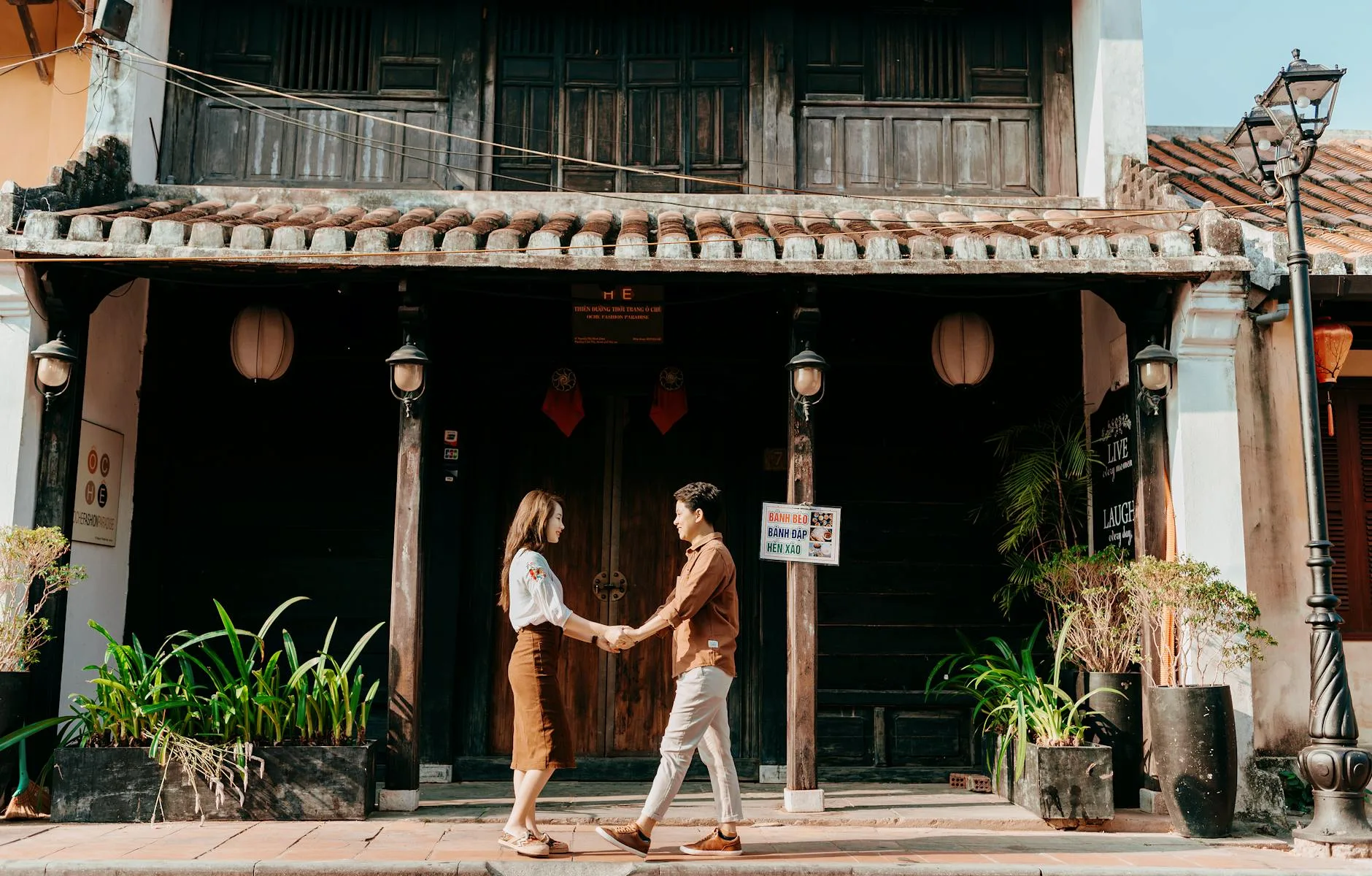
Hội An’s Ancient Town is a UNESCO-listed 15th-century trading port, and it is genuinely beautiful — lantern-hung merchant houses, the Japanese Covered Bridge, tailor shops that have been here for generations. It is also one of Vietnam’s most-visited places, and by mid-morning the lanes around Trần Phú Street are thick with tour groups. The practical solution: be there at 7am, when the town is quiet, light-dappled, and completely different. The combined ticket for Ancient Town monuments costs 120,000 VND (~$4.80) and covers five sites.
What the entry fee doesn’t buy is the food, which is the real reason to linger. Hội An has three dishes you should eat properly, not as a rushed lunch:
- Cao lầu — thick rice noodles with pork, crispy croutons, and herbs, made with water supposedly drawn from an ancient Cham well. Available at any stall in the covered market on Trần Phú; around 35,000–50,000 VND.
- White rose dumplings (bánh vạc) — translucent steamed dumplings with shrimp. Try Nhà Hàng Bạch Đằng on Lê Lợi Street.
- Bánh mì — the Vietnamese sandwich perfected over decades of French and local influence. Phượng’s bakery on Phan Châu Trinh Street usually has a short queue and earns it.
For accommodation, stay outside the Ancient Town proper — in the An Hội neighbourhood across the Thu Bồn River, or in the quieter streets west of the centre. You’ll pay less and hear the town rather than be inside its noise.
Days 6–7: The countryside around Hội An and Mỹ Sơn
Two days is not enough if you stay in the Ancient Town. The better use is to get out of it. Rent a bicycle (50,000–80,000 VND/day from guesthouses) and ride the 4km to Làng Rau Trà Quế — a village of herb gardeners who have supplied Hội An’s restaurants for centuries. The farming commune is small and genuinely working; you can arrange a 90-minute guided farming experience for around 150,000 VND ($6) through the village cooperative. Continue east to Cửa Đại Beach, around 5km from the centre, though note that significant erosion has reduced the beach considerably in recent years — the sea is still swimmable but the sand is narrow.
On day seven, take an early minivan to Mỹ Sơn (organised through any guesthouse, or go independently by motorbike — about 40km west, toward Duy Xuyên). Mỹ Sơn is a complex of 4th–14th-century Hindu Cham temple towers set in a narrow jungle valley, genuinely evocative and far less visited than Angkor Wat in Cambodia, though the American bombing in 1969 destroyed several of the finest towers. Arrive at opening time (7am) and you’ll have the paths largely to yourself for the first hour. Entry is 150,000 VND (~$6).
Days 8–9: Huế — the imperial city that most people rush through
Huế is 120km north of Đà Nẵng — take the train (from Đà Nẵng station, 2–3 hours, SE class seats from around 70,000–120,000 VND) rather than backtracking from Hội An. The rail line north from Đà Nẵng to Huế crosses the Hải Vân Pass, one of the most dramatic stretches of railway in Southeast Asia: the track clings to a mountainside above the South China Sea, the coastline unrolling below through tunnels and bridges. The local SE trains take this route; the faster express tunnels through it. Take the slow one.
Huế was the seat of the Nguyễn Dynasty from 1802 to 1945, and the Imperial Citadel — a walled complex of palaces, pavilions, and gates modelled loosely on Beijing’s Forbidden City — still dominates the north bank of the Perfume River. Entry is 200,000 VND (~$8). Don’t rush it: the complex is large and many sections remain damaged from the 1968 Tết Offensive, when the city was held by North Vietnamese forces for 25 days. The damage is visible and historically important — don’t look for immaculate restoration. The Thế Tổ Miếu (Ancestral Temple) and the Cần Chánh Palace gardens are the most atmospheric sections.
Huế’s food culture is distinct and worth paying attention to. The city is famous for its refined, often complex flavours — a legacy of royal court cuisine. Eat bún bò Huế (spiced beef and pork noodle soup, sharper and more complex than Hanoi’s phở) at any morning market stall; try bánh khoái (crispy filled pancakes) at the Truong Tien food stalls along the Perfume River embankment; and find cơm hến (rice with baby clams, herbs, and chilli) at the small stalls near Cồn Market. Portions are small by design — Huế is a city for eating multiple small meals.
Stay in the Phạm Ngũ Lão or Lê Lợi Street areas south of the river. Guesthouses are abundant and clean; 300,000–500,000 VND ($12–20) is a fair price.
Days 10–11: Hồ Chí Minh City — loud, layered, and completely its own thing
Fly south from Đà Nẵng or Huế (Vietnam Airlines, VietJet, or Bamboo Airways all fly the route; fares are 300,000–800,000 VND booked a few days out). The train is theoretically an option but takes 19+ hours from Huế — better spent elsewhere. Budget around 30 minutes for the airport transfer into central HCMC; Grab is reliable and significantly cheaper than metered taxis.
HCMC is not a city that reveals itself quickly. The tourist orbit — Bến Thành Market, the Reunification Palace, the War Remnants Museum — is worth doing, but none of it captures what the city actually is. For that, spend an afternoon in District 4, immediately south of the centre across the Bến Nghé Channel: a dense, mostly residential district of alley kitchens, motorbike workshops, and hủ tiếu noodle shops where lunch costs 40,000 VND and tables are plastic stools on the pavement. Or go to Bình Tây Market in Chợ Lớn (District 6) — the Chinese quarter’s wholesale market, far less curated than Bến Thành, where the business is actual commerce rather than souvenir sales. When navigating markets like this in Southeast Asia, knowing a few basics about eating safely and confidently at street food stalls makes a real difference — this guide to eating at local markets in Southeast Asia covers the practicalities well.
The War Remnants Museum (200,000 VND, ~$8) in District 3 is grim and essential. The photography floors — much of it American photojournalism from the war — are among the most affecting documentary collections in Asia. Go on a weekday morning when it’s quieter.
Days 12–13: The Mekong Delta — Cần Thơ and the floating markets
Most visitors to the Delta take a day trip from HCMC, which is the least useful way to see it. Take the express bus from HCMC’s Miền Tây bus station (Quận Bình Tân) to Cần Thơ: 3.5–4 hours, around 130,000–170,000 VND ($5–7), departures roughly every 30 minutes. Stay two nights — this is the Delta’s largest city and the best base for the Mekong’s actual rhythms.
The Cái Răng floating market operates from around 5am to 9am on the Cần Thơ River, about 6km from the city centre. Go by hired boat (250,000–350,000 VND for 2 hours from the Ninh Kiều waterfront), and be there by 6am before the market dissolves. Wholesale traders on large wooden boats advertise their produce by hanging samples on bamboo poles — pineapples, pomelos, coconuts, watermelons. The commerce is real, not a performance, though the outer layer of coffee boats and souvenir sellers is increasingly tourist-facing. The inner market is still worth seeing.
Beyond Cái Răng, ask a guesthouse to arrange a half-day motorbike or bicycle tour of the surrounding waterway villages — the maze of channels south and west of Cần Thơ toward Phụng Hiệp is where the Delta’s actual agricultural texture is most visible: fish farms, rice fields, longan orchards, floating houses. This kind of community-level encounter, where tourism actually benefits local households, reflects a broader model discussed in these community-based tourism examples worth reading before your trip.
Day 14: Return to HCMC for departure
Bus back to HCMC takes 3.5–4 hours; morning departures from Cần Thơ’s bus station leave from 5am. Allow half a day in HCMC before an evening flight — enough for a final bowl of bún mắm (fermented fish broth noodles, a southern specialty) in District 4, or a walk through the French-colonial Lê Lợi Boulevard toward the Municipal Theatre. The city makes more sense on the last day than the first.
Practical logistics table
| Leg | Transport | Duration | Approx. cost |
|---|---|---|---|
| Hanoi airport → Old Quarter | Bus 86 or taxi | 45–60 min | $0.35–12 |
| Hanoi → Đà Nẵng (overnight) | SE train, soft sleeper | 16–17 hrs | $20–30 |
| Đà Nẵng → Hội An | Taxi/Grab | 45 min | $10–14 |
| Hội An → Đà Nẵng → Huế | Taxi + train (SE class) | 3–4 hrs total | $14–20 |
| Huế or Đà Nẵng → HCMC | Domestic flight | 1–1.5 hrs | $12–35 |
| HCMC → Cần Thơ | Express bus | 3.5–4 hrs | $5–7 |
| Cần Thơ → HCMC | Express bus | 3.5–4 hrs | $5–7 |
Costs in USD approximate, based on 2026 rates. Train soft sleeper prices vary by booking window; book via Vietnam Railways (dsvn.vn) or a ticketing agent in Hanoi.
Entry requirements and money
As of 2026, citizens of most Western countries (UK, EU, US, Australia, Canada) can enter Vietnam visa-free for 45 days under the e-visa exemption or apply for a 90-day e-visa online before travel — check the official Vietnam Immigration Portal for current requirements, as policies have shifted several times in recent years.
Vietnam runs almost entirely on cash (Vietnamese đồng). ATMs are widespread in cities but less reliable in rural areas; carry enough dong before heading to Cần Thơ or Mỹ Sơn. Vietcombank and Techcombank ATMs typically have the lowest foreign transaction fees. Credit cards are accepted in hotels and some restaurants but not at markets or street stalls.
For a detailed breakdown of what to read before travelling — including how Vietnam fits into the broader Southeast Asia picture, how much time to allocate, and how the country compares to its neighbours — this guide to how long to spend in each country in Southeast Asia is a useful reference.
Costs: what two weeks actually runs
Vietnam is affordable but not free. Budget travellers staying in guesthouses, eating street food, and taking buses can comfortably manage $35–45/day. Mid-range travellers (boutique guesthouses, restaurant meals, occasional taxis) should budget $65–90/day. The overnight train, domestic flight, and museum entries account for perhaps $80–100 of fixed costs across the two weeks regardless of how you travel otherwise.
Street food meals: 35,000–80,000 VND ($1.40–3.20). Restaurant meals: 120,000–300,000 VND ($4.80–12). A Vietnamese coffee (cà phê đá, iced black with condensed milk): 15,000–25,000 VND ($0.60–1). The Lonely Planet Vietnam guide has current cost benchmarks that are updated more frequently than print editions.
The Bottom Line
- Fly into Hanoi, out of HCMC. The north-to-south direction lets you follow the weather, avoid backtracking, and end on the Delta — Vietnam’s most distinctive and under-visited region.
- Take at least one overnight train. The Hanoi–Đà Nẵng sleeper and the Đà Nẵng–Huế coastal daytime train are two of the best rail journeys in Southeast Asia. They are also genuinely practical, saving you a night’s accommodation.
- Slow down in Huế. Of all the stops on this itinerary, Huế suffers most from being rushed. Two nights lets you eat properly, cycle to the Royal Tombs, and actually sit with the Citadel rather than photograph it.
- Don’t skip the Mekong. Cần Thơ is a 3.5-hour bus ride from HCMC, not a distant excursion. Two nights there are more rewarding than two extra nights in Hội An.
- Book trains in advance. Soft sleeper berths on the overnight Hanoi–Đà Nẵng train sell out 1–2 weeks ahead, particularly November through February. The dsvn.vn website works for online booking; many guesthouses can also book for a small fee.
Keep reading: How to travel Vietnam like a local: neighbourhoods, food and real routes