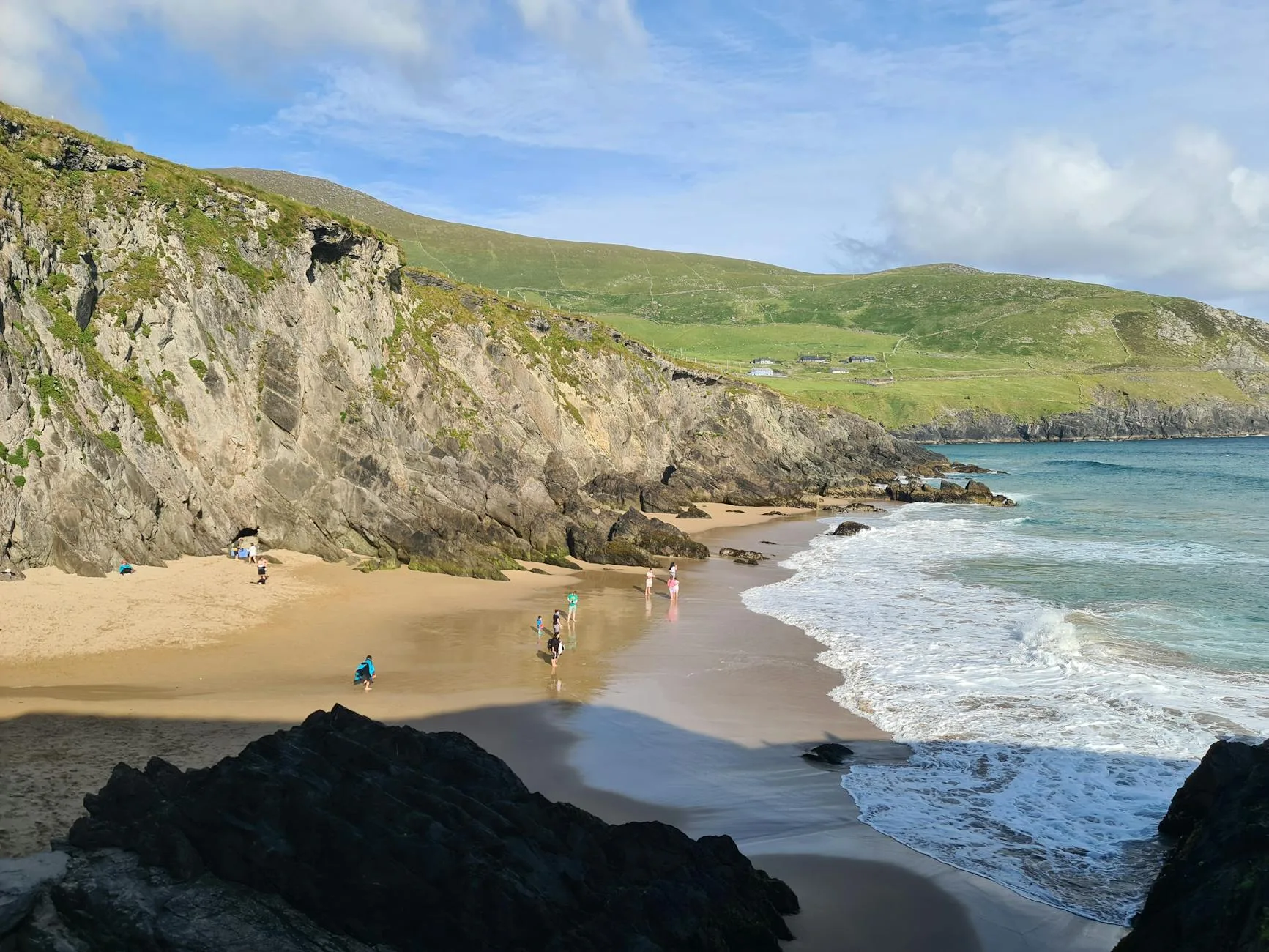
Photo by Zeeshan Kundi on Pexels
Wild swimming in Ireland: best spots and tips
The first thing you notice at Trá an Dóilín — the “coral strand” on the south shore of Connemara’s Lettermore Island — is the colour of the water. It shouldn’t look like that this far north: a shallow, almost Caribbean turquoise sitting above a beach made not of sand but of pink-white maerl, a calcified seaweed that crunches softly underfoot. A couple of women from the mainland are already in, standing waist-deep and chatting with the relaxed fluency of people who do this every week. The air is cold enough that your breath shows. The water, in July, is about 15°C.
That combination — startling beauty, bracing cold, and a complete absence of fuss — is more or less the template for wild swimming in Ireland. The country has over 2,500 kilometres of coastline, several hundred lakes in Connacht alone, and a culture of outdoor bathing that predates the word “wellness” by several centuries. What it doesn’t always have is warm water, reliable parking, or an obvious entry point. This guide is for anyone who wants to know which spots are worth the effort, how cold is actually cold, and what you need to bring.
Understanding the water: temperature, seasons, and what “cold” means here
Irish sea temperatures range from roughly 7–9°C in February to a peak of 16–18°C in August and September. Inland lakes and rivers warm faster and can reach 20°C in a good summer — though a “good summer” in Ireland is not guaranteed. For most people unfamiliar with cold-water swimming, anything below 15°C requires acclimatisation. The instinct to gasp when you enter is real, involuntary, and occasionally dangerous if you go in fast.
The practical advice Irish sea swimmers give is consistent: enter slowly, keep your head above water for the first minute, and stay within your depth until your breathing normalises. A wetsuit extends your comfortable range by several degrees — a 3mm suit is standard for summer, 5mm for winter. Many regulars swim without one year-round, but that takes months of gradual adaptation. There’s no shame in neoprene.
Best season: Late June through September gives the warmest water and longest daylight. May is cold but frequently uncrowded and beautiful — still bright until 9pm. Winter swimming has a devoted following, particularly around the Christmas Day dip tradition held at dozens of spots across the country (Forty Foot in Dublin, Strandhill in Sligo, Tramore in Waterford), but that’s a different pursuit entirely.
The wild Atlantic coast: Connemara and County Clare
Connemara, the coastal stretch of west Galway running from Clifden down to the Galway Bay islands, is probably the densest concentration of worthwhile swimming spots in Ireland. The water is clean, the scenery is severe and beautiful, and the area is small enough to cover several spots in a single day.
Trá an Dóilín (Coral Strand), Lettermore is reached via the R336 south from Galway city — about 45 minutes by car. There’s a small car park at the end of the road. The strand itself is shallow and sheltered, which makes it safer and warmer than fully exposed Atlantic coves. The maerl underfoot is fragile; avoid walking on it unnecessarily.
Glassilaun Beach, Renvyle Peninsula sits at the end of a single-track road off the N59 between Clifden and Westport. The beach faces north into the open Atlantic and is rarely busy even in summer. The entry is sandy and gradual, the water is clear to about four metres, and the mountains of Connemara close in on three sides. From Clifden town, it’s roughly 25 minutes by car.
In County Clare, the Burren coastline between Ballyvaughan and Doolin is less obvious for swimming — the shoreline here is mostly limestone karst running straight into the sea — but Bishop’s Quarter Beach near Ballyvaughan is a quiet, sheltered crescent of sand that works well for an uncomplicated swim. Drive north from Ballyvaughan on the coast road for about 3km; the beach is signed. Fanore Beach, a few kilometres further, is longer and gets more wind, which makes it better for swimming when the swell is low.
Kerry and Cork: warmer water, more variety
The southwest coast benefits from the tail end of the Gulf Stream and typically runs 1–2°C warmer than the west coast in summer. The Ring of Kerry and the Beara Peninsula both have good spots, though the Ring of Kerry route (the N70) can be heavily touristed in summer. The Beara Peninsula, shared between Kerry and Cork, is less trafficked and more rewarding for independent swimming.
Garnish Cove near Allihies village at the tip of Beara is a short walk from the road (park in Allihies, follow signs for the beach, about 10 minutes on foot over rocky ground). The cove is sheltered on three sides by low headlands, the water is deep green and very clear, and there’s a slipway into the water which makes entry easier. Allihies itself has a pub, a small shop, and the Allihies Copper Mine Museum if you want context for the industrial history of the peninsula.
In West Cork, Barleycove Beach near Mizen Head is one of the longest beaches in Cork and has clear, calm water when the swell is low. It’s a Blue Flag beach, which means facilities (toilets, lifeguards in summer), but it’s large enough that the crowds thin quickly beyond the main access point. The approach is via the R591 from Schull — about 25 minutes.
For river swimming in Cork, the Owenabue River near Carrigaline has calm pools used by locals for decades, though signage and access vary. The Owvane River near Ballylickey in the Beara area is better: a series of deep, clear freshwater pools below small waterfalls, accessible from the road between Ballylickey and Glengarriff. This is the kind of spot that involves scrambling over wet rocks; wear appropriate footwear.
Sligo and Donegal: dramatic and demanding
The northwest requires more effort to reach — Donegal in particular is a long drive from almost anywhere — but the swimming here is in a different register entirely.
Streedagh Beach in north Sligo, near Grange village, is a 3km-long strand backed by dunes, facing the open Atlantic. It’s signed from the N15 north of Sligo town. The beach is exposed and the surf can be substantial; check conditions before entering. At the southern end, the sea caves visible at low tide are worth the walk along the beach. There’s a small car park and nothing else.
Fintra Beach near Killybegs in south Donegal is a compact, horseshoe-shaped cove with calm water most days and views across Donegal Bay. It’s reached on a small road off the R263, about 6km west of Killybegs town. In peak summer, a few families and anglers; most other times, empty.
Further north, Maghera Beach near Ardara is one of the most remarkable spots in Ireland: a wide strand at the base of sea caves carved into quartzite cliffs, visible only at low tide. The access road is narrow and the 15-minute walk across dunes is rough. Tide times matter here — check before you go. The caves are not safe to enter at or near high tide. The water off the main beach is clean and swimmable when the swell permits.
Lake swimming: Lough Corrib and the Wicklow Mountains
Lake swimming in Ireland has fewer hazards than open-water sea swimming and generally warmer temperatures by August. Lough Corrib, north of Galway city, is the largest lake in the Republic and has dozens of accessible entry points along its eastern and western shores. The village of Oughterard on the western shore (about 28km from Galway on the N59) has a public pier and a long tradition of summer swimming. The lakebed is mostly weed and silt rather than sand; water shoes are useful.
The Wicklow Mountains, about an hour south of Dublin, offer a different experience: dark, peaty, upland lakes that are cold even in summer but extraordinarily clear. Lough Dan, reachable via a 2km walk from the car park near Roundwood (off the R759), is a long glacial lake surrounded by heather and forestry. The water is brown from peat but clean — tested regularly as a Dublin water source catchment. Entry points are rocky; a wetsuit makes the experience more sustainable. Lough Tay (sometimes called the “Guinness Lake” for the colour and the white-sand beach resembling a pint glass) is on private land and not accessible for swimming, despite the photographs you may have seen.
Practical logistics: what to know before you go
Getting to most of these spots requires a car. Public transport in rural Ireland is improving but remains limited; Bus Éireann serves Sligo, Galway, and Killarney from Dublin, but the final 20–40km to most swimming spots needs a vehicle. Car rental from Dublin, Shannon, Cork, or Knock airports typically runs €40–80/day in summer, more in peak July/August. Book well in advance.
The Irish Water Safety Authority publishes water quality data and safety guidelines for outdoor swimming, and their advice on cold water shock is worth reading before your first dip.
There are no entry fees to any of the spots listed in this article. Some have facilities (toilets, lifeguards at Blue Flag beaches in summer); most have only a car park or roadside lay-by. Leave no trace is not a suggestion — litter is a genuine problem at accessible coastal spots in summer.
| Spot | County | Water type | Best for | Nearest town | Drive from nearest city |
|---|---|---|---|---|---|
| Trá an Dóilín (Coral Strand) | Galway | Sea, sheltered | Beginners, families | Lettermore | 45 min from Galway |
| Glassilaun Beach | Galway | Sea, open | Clear water, scenery | Clifden | 25 min from Clifden |
| Bishop’s Quarter Beach | Clare | Sea, sheltered | Easy access, quiet | Ballyvaughan | 10 min from Ballyvaughan |
| Garnish Cove | Cork/Kerry | Sea, sheltered | Clear water, solitude | Allihies | 90 min from Killarney |
| Barleycove Beach | Cork | Sea, long strand | Facilities + space | Schull | 25 min from Schull |
| Streedagh Beach | Sligo | Sea, exposed | Dramatic scenery | Grange | 20 min from Sligo |
| Maghera Beach | Donegal | Sea + caves | Sea caves, adventure | Ardara | 30 min from Donegal town |
| Lough Dan | Wicklow | Mountain lake | Upland scenery, clarity | Roundwood | 60 min from Dublin |
What to bring and how to prepare
A wetsuit is not mandatory, but it transforms the experience if you’re not an experienced cold-water swimmer. Bright swim caps make you visible to boat traffic — relevant on Lough Corrib particularly. A tow float (a dry bag on a leash that floats behind you) is standard for sea swimming and keeps your phone and keys dry. Bring a changing robe or a dry towel and warm layers for immediately after — the post-swim chill sets in fast when the wind picks up.
If you’re combining wild swimming with coastal walking, the kind of slow, attentive travel that makes places stick — the Beara Peninsula and Connemara both reward exactly that pace. Anyone who finds this mode of engagement compelling might recognise a similar spirit in slow travel in rural Italy, where the route is the point, not just the destination.
Wild swimming in Ireland sits in the same tradition as any place-based activity that costs nothing and rewards patience. It is also, frankly, more accessible than its reputation sometimes suggests — you don’t need a specific level of fitness or experience to stand waist-deep in a Connemara cove and feel thoroughly alive. For travellers drawn to water-based exploration more broadly, the free diving in the Maldives beginner’s guide covers the deeper-water counterpart to the still, meditative quality of a cold Irish lake.
The Bottom Line
-
Go in summer, but manage your expectations of warmth. Peak water temperatures (July–September) reach 15–18°C on the coast — refreshing, not tropical. A wetsuit extends your range and your time in the water.
-
Connemara and Beara are the highest-density spots. Both offer multiple swimmable beaches and coves within short driving distances, plus accommodation, food, and walking routes that justify a multi-day stay.
-
You need a car for almost everything listed here. Rent in advance, particularly in July and August. Budget for €50–80/day and accept that rural Irish roads are narrow, unsigned, and occasionally contested by sheep.
-
Tide and swell conditions change everything. Spots like Maghera Beach are only accessible at low tide; exposed Atlantic beaches can be unsafe in any swell above 1.5m. Check Magic Seaweed or Windy.com before heading to open-coast spots.
-
The infrastructure is minimal by design. Bring everything you need — food, water, a change of clothes, a bag for rubbish. Most of the best spots have no bins, no cafés, and no lifeguards. That’s what makes them worth going to.
Keep reading: Slow travel in the Azores: a month on São Miguel