Photo by Nilanjan Haldar on Pexels
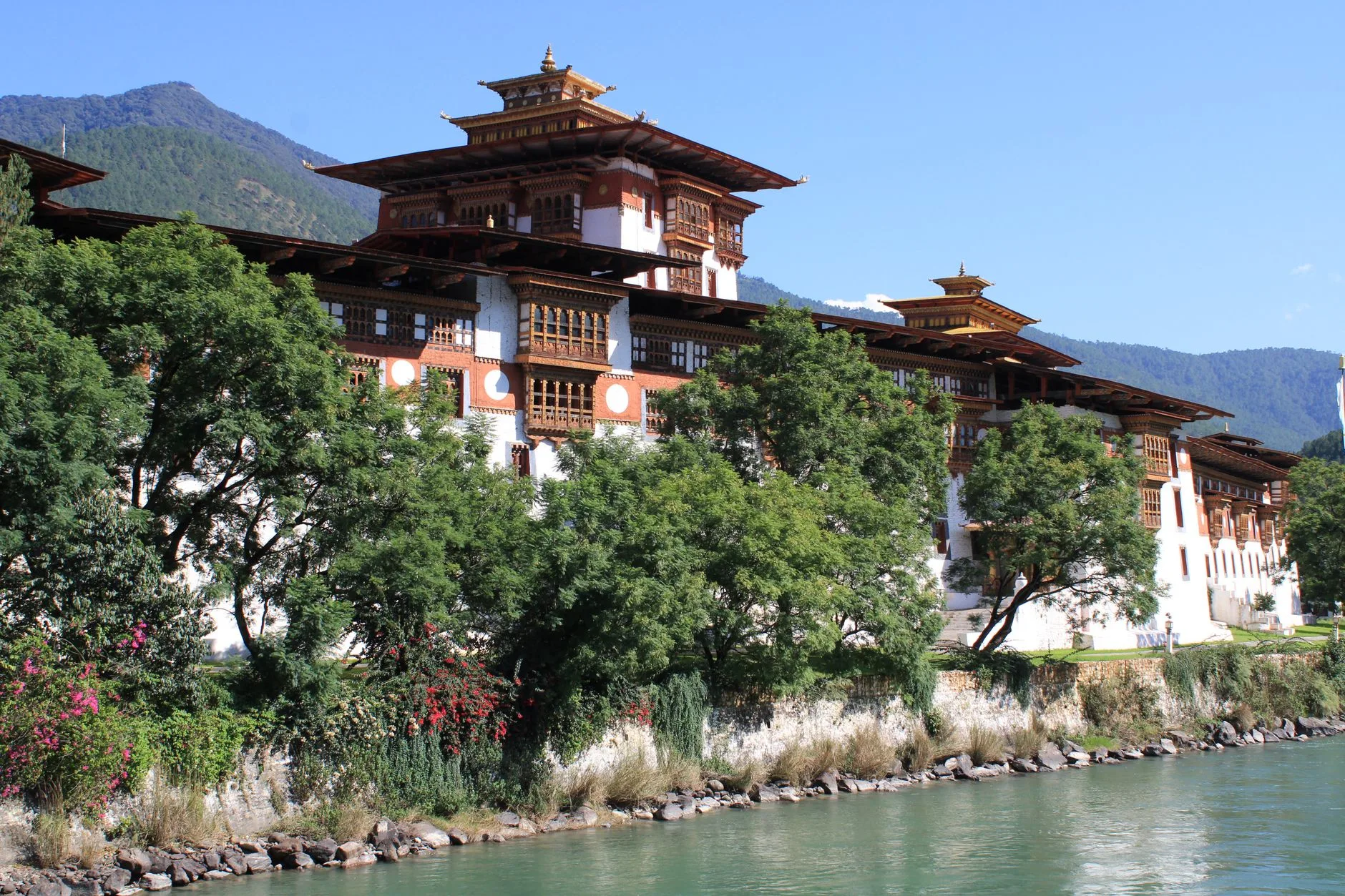
The road from Paro airport climbs through terraced rice paddies before it even reaches town, and the first thing you notice isn’t the mountains — it’s the quiet. No horns. No touts. A farmer in a gho, the traditional knee-length robe, walks a cow along the shoulder as if the twin-engine ATR that just landed behind him were a minor weather event. Paro Dzong, the whitewashed fortress-monastery above the river, catches the last light while monks in maroon robes cross the courtyard carrying stacks of folded prayer flags.
This is the postcard version of Bhutan, and it’s real. What’s less well understood, especially by travellers used to booking a flight and figuring the rest out on the ground, is that Bhutan does not work that way — and it hasn’t for a long time, regardless of what the word “independent” might suggest. There is no walk-in visa, no wandering off to find a cheaper guesthouse, no deciding on day three to skip the organised itinerary and take a local bus instead. Independent travel in Bhutan means something narrower and more specific than it does almost anywhere else on earth, and understanding exactly what it does and doesn’t allow is the difference between a trip that goes smoothly and one that falls apart at immigration in Paro.
The permit system, plainly explained
Every foreign traveller to Bhutan (Indian, Bangladeshi and Maldivian nationals follow separate rules) must enter through a licensed Bhutanese tour operator, who arranges your visa and your Sustainable Development Fee, commonly shortened to SDF. As of 2026 the SDF sits at USD 100 per person per night for most nationalities, a figure the government slashed from its earlier USD 200 rate to revive tourism numbers after the pandemic years. The fee funds healthcare, education and environmental programmes, and it’s non-negotiable — it’s collected regardless of your budget or itinerary.
Here’s the part that trips people up: “independent” in Bhutan doesn’t mean you avoid a guide entirely. It means you can now design your own route, choose your own pace, pick your own hotels at any price point, and skip the old requirement for a fixed, pre-approved package with a mandatory USD 65/day tariff bundled in. Since the 2022 reforms, travellers can book accommodation and transport themselves and hire a guide only where required — which, for most of the country, is now optional for day trips but still mandatory for overnight treks and visits to certain dzongkhags (districts) near the Indian and Chinese borders.
The Tourism Council of Bhutan’s official portal is the place to start, and it’s worth reading directly rather than relying on secondhand summaries, since the rules have shifted twice in the last four years.
What a realistic daily budget looks like
The SDF is the fixed cost everyone quotes, but it’s not the whole picture. Budget accommodation in Bhutan runs from around USD 25–40 a night for a simple guesthouse room in Thimphu or Paro, rising sharply for anything resembling a boutique farmhouse stay. Meals at local eateries — ema datshi (chilli and cheese stew, the national dish, eaten with red rice) at a Thimphu canteen, or a bowl of thukpa in a Punakha roadside stall — cost USD 3–6. A private car with driver for a day’s sightseeing between Paro and Thimphu runs USD 50–80; shared taxis between towns are far cheaper but infrequent and not always easy to arrange without some Dzongkha or a willing hotel front desk to call ahead.
Add it up and a modest but comfortable independent trip — budget lodging, local food, a guide only where mandatory, SDF included — lands somewhere around USD 150–180 per person per day. That’s considerably less than Bhutan’s reputation as one of the world’s most expensive destinations would suggest, but it’s still well above budget travel in neighbouring Nepal or northern India, and the gap is intentional: “high value, low volume” tourism is the government’s explicit policy, not a marketing phrase.
| Cost category | Typical range (per person) | Notes |
|---|---|---|
| Sustainable Development Fee | USD 100/night | Waived or reduced for children under 6–12 depending on age bracket |
| Visa processing | USD 40 one-time | Arranged through your licensed operator, not on arrival |
| Budget guesthouse | USD 25–40/night | Thimphu and Paro have the most options |
| Mid-range hotel | USD 60–120/night | Punakha and Bumthang have good value options |
| Local meal | USD 3–6 | Canteens and small restaurants, not hotel buffets |
| Guide (where mandatory) | USD 25–35/day | Required for treks and restricted areas |
| Internal transport (shared) | USD 5–15/journey | Infrequent; private car is the practical default for most |
Thimphu: the capital that isn’t trying to impress you
Thimphu doesn’t have traffic lights — a white-gloved officer directs the main intersection by hand near the clock tower, a small daily performance that draws its own quiet crowd of onlookers. The Centenary Farmers’ Market, held through the weekend on the banks of the Wang Chhu river, is the best place to understand what Bhutanese households actually eat: mounds of dried chillies, blocks of chugo (hard yak cheese, chewed like gum), river weed, betel nut wrapped in leaves, and more varieties of rice than most visitors expect from a mountain kingdom.
The Memorial Chorten, built in honour of the third king, draws a steady circuit of elderly Thimphu residents spinning prayer wheels clockwise from morning until dusk — a good place to sit for twenty minutes and watch a city practice its faith as a form of daily exercise rather than ceremony. Tashichho Dzong, the fortress housing the throne room and central monk body, is only open to visitors in the late afternoon once government offices close for the day, which is the kind of scheduling detail that a self-arranged itinerary needs to account for and a rigid package tour sometimes doesn’t bother explaining.
Paro and the Tiger’s Nest: the hike everyone comes for
Paro Taktsang, the cliffside monastery known as the Tiger’s Nest, is the single most photographed site in the country and worth the reputation. The hike to the viewpoint café takes roughly ninety minutes up a switchbacking dirt trail through blue pine forest; reaching the monastery itself adds another hour of steeper, stepped ascent and a final descent into a gorge before climbing back up to the entrance. Horses can be hired for the first stretch to the café, though most riders dismount before the trail gets technical.
Go early — by 7:30am if you can manage it — both for the cooler temperature and to avoid sharing the narrow final staircase with the mid-morning crowd that arrives once the day-tour groups from Thimphu reach the trailhead around 9am. Entry to the monastery itself costs a separate fee on top of the SDF, and photography isn’t permitted inside the temple halls, a rule enforced seriously by the resident monks.
The restricted zones and where a guide is non-negotiable
Beyond the Paro–Thimphu–Punakha triangle that most visitors see, Bhutan opens more conditionally. Trekking routes like the Druk Path Trek (a moderate five-day route between Paro and Thimphu past alpine lakes) or the longer Snowman Trek, widely considered one of the most demanding treks anywhere, require a licensed guide and a registered trekking agency regardless of how experienced the hiker is — there is no self-guided trekking permit in Bhutan, unlike in parts of the Nepalese Himalaya where regulations have loosened. Border areas near Trashigang in the east and the Lunana region in the north require special permits that only operators can process, often with several days’ lead time.
This is a meaningfully different system from somewhere like Everest Base Camp, where independent trekkers can now navigate permits themselves if they’re willing to deal with the bureaucracy — a comparison worth understanding if you’re deciding between Himalayan destinations for a given trip.
Food, altitude and the small daily frictions
Bhutanese food runs hot — not warm, properly hot — with dried and fresh chillies treated as a vegetable rather than a seasoning. Phaksha paa (pork with chillies and radish), momos filled with cheese or beef, and red rice grown at altitude with a distinct nutty bite form the backbone of most meals. Hotel restaurants tend to mute the spice for foreign guests unless you ask otherwise; local canteens don’t.
Most of the tourist circuit sits between 2,200 and 2,700 metres, enough that some travellers feel short of breath on the Tiger’s Nest climb even without technical altitude sickness. Punakha, lower and warmer at around 1,200 metres, is a welcome contrast after a few days in Thimphu’s cooler air, and its dzong — at the confluence of the Pho Chhu and Mo Chhu rivers — is arguably more striking architecturally than Paro’s, without the crowds.
Connectivity is patchy outside the main towns: a local SIM (Bhutan Telecom or TashiCell, bought on arrival at Paro airport with your passport) covers Thimphu and Paro reliably, but drops to nothing in mountain valleys and on trekking routes, which is worth planning around if you need to stay reachable.
Getting in and getting around
Druk Air and Bhutan Airlines operate the only flights into Paro, one of the more technically demanding commercial approaches in the world, threading between ridgelines on the descent — only a small number of pilots are certified for it, which is part of why fares stay high and seats fill early during peak season (March–May and September–November). The overland alternative is entering via Phuentsholing on the Indian border, a longer but considerably cheaper route for travellers already in West Bengal or Assam, though it adds a day of road travel to reach Thimphu.
Within the country, self-driving isn’t an option for foreign tourists — all vehicles come with a driver, booked either through your operator or arranged locally once you’re there. This is less a restriction than a practicality: Bhutan’s mountain roads are narrow, frequently affected by landslides in monsoon months (June–August), and signage assumes local knowledge of the route.
The Bottom Line
- Independent travel in Bhutan means designing your own itinerary and choosing your own accommodation, not travelling without a licensed operator — that requirement hasn’t gone away, and anyone implying otherwise is misunderstanding the 2022 reforms.
- Budget realistically for USD 150–180 a day once the SDF, lodging, food and occasional transport are factored in; it’s cheaper than the old fixed-tariff system but still a premium destination by regional standards.
- Treks and border-area visits still require a guide and advance permits with no exceptions — if the Snowman Trek or Lunana region is the goal, book months ahead through a registered operator.
- Shoulder months — March, April, October, November — offer the clearest mountain views and the most manageable crowds at the Tiger’s Nest; monsoon season brings landslide risk on mountain roads and should be avoided for anyone on a tight schedule.
- Treat the SDF as a conservation fee rather than a tourist tax: it’s directly tied to Bhutan’s stated goal of staying carbon-negative, a policy choice UNESCO has noted as unusual among tourism-dependent nations, and one that shapes almost every other rule on this list.
Keep reading: Planning a Himalayan trek with its own permit maze