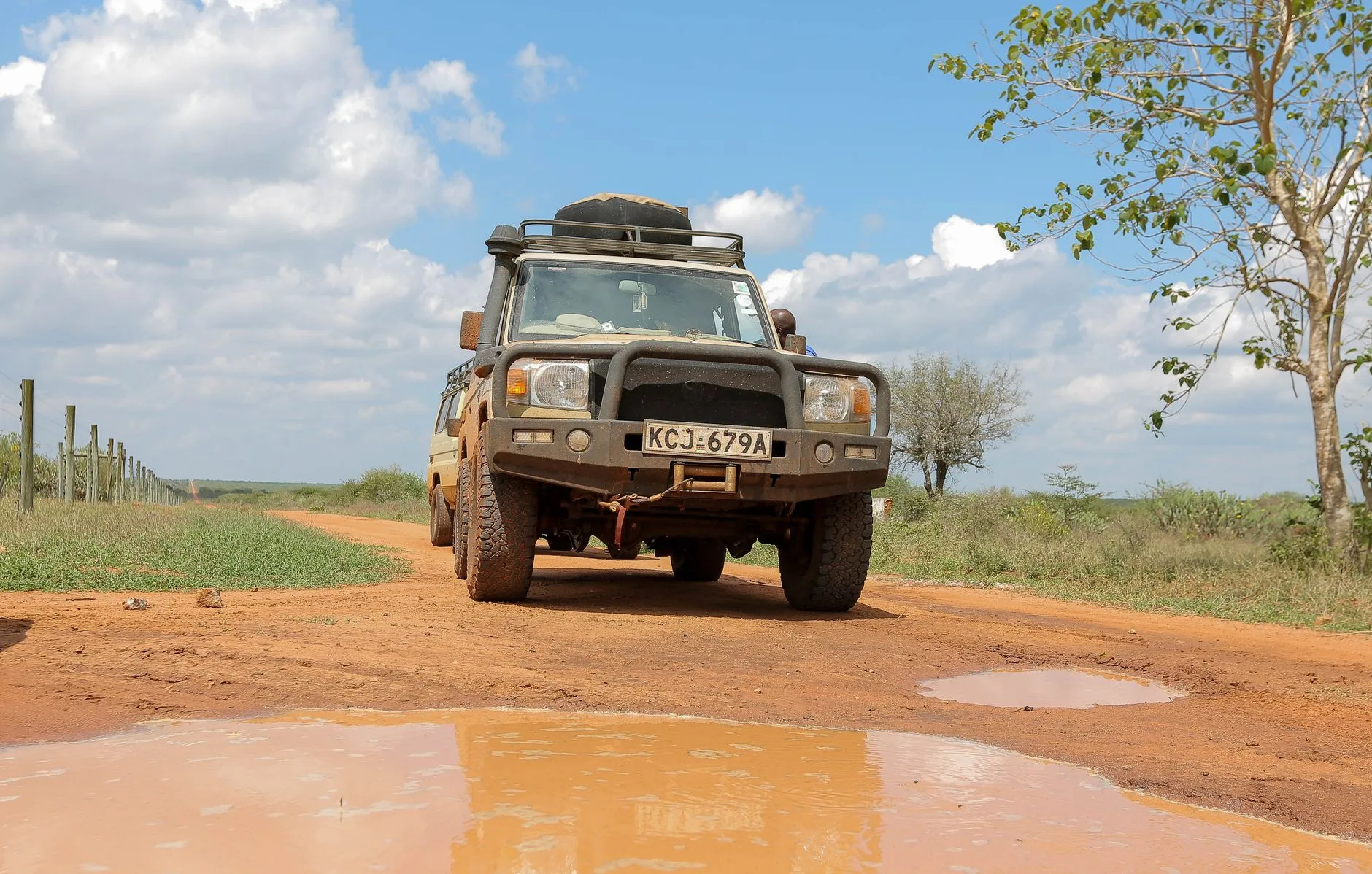
Photo by Twilight Kenya on Pexels
The matatu to Nyahururu leaves when it’s full, not when the timetable (there is no timetable) says it should. You’ll wait on a patch of red dirt outside Nyamakima stage in Nairobi, wedged between a woman transporting three live chickens in a feed sack and a university student scrolling TikTok with his earbuds in, while the conductor leans out the sliding door shouting the destination like an auctioneer. Forty minutes later, once eleven seats hold fourteen people, the vehicle pulls out into traffic with gospel music turned up loud enough to feel in your sternum.
This is not the Kenya of the brochure — the one with a Land Cruiser idling at a conservancy gate and a G&T waiting at golden hour. That Kenya is real and worth doing, and the country’s parks earn every bit of their reputation (the Mara, Amboseli, Samburu — covered well elsewhere, including in our rundown of the best national parks in Africa). But Kenya is also a country of 50 million people with its own public transport network, its own market towns, a 500-kilometre coastline, and a highland interior that most safari itineraries never touch. Travelling it independently means slower days, more waiting, and a much better sense of what the country actually is.
Start in Nairobi, but not where the itineraries tell you to
Most visitors see Nairobi as a one-night stopover between the airport and a safari transfer. Give it two or three days instead. Base yourself in Kilimani or the quieter end of Lavington rather than the hotel strip near Westlands — both have decent guesthouses in the $25–50/night range and put you within reach of the city on foot or by Uber (which operates reliably in Nairobi and is far less stressful than negotiating a taxi fare up front).
The Nairobi National Museum is a genuinely good two-hour visit, not a box-ticking exercise — the Hominid Vault alone, with its cast skulls from Koobi Fora and Olduvai, reframes how you think about the Rift Valley you’re about to travel through. Afterwards, walk or cab to the Maasai Market (its location rotates by day of the week — check whether it’s at Village Market, the Junction, or Prestige Plaza) for fabric, beadwork, and soapstone, and expect to haggle; starting at half the quoted price is normal, not rude.
Skip the elephant orphanage crowds for an hour and go instead to the Nairobi Railway Museum near the old station — a dusty, under-visited collection of Lunatic Line locomotives and carriages that tells the colonial-era rail story more honestly than most guidebooks do. And eat in Kibera’s edges or at Mama Oliech in Hurlingham for tilapia fried whole in a wide pan, served with ugali and kachumbari — a dish that will reappear, with regional variations, all the way to the coast.
The highland route: Nyahururu, Nakuru, and the Rift Valley escarpment
Rather than flying straight to a conservancy, take the A104 northwest out of Nairobi by matatu or the slightly more comfortable (and bookable) Easy Coach bus toward Nakuru. The road climbs the Rift Valley escarpment through Limuru’s tea estates — genuinely beautiful, terraced green hills that most safari transfers drive past at speed without stopping.
Nakuru town itself is unglamorous and functional, but it’s the gateway to Lake Nakuru National Park (flamingos, rhino, and leopard, with far fewer vehicles than the Mara) and to Hell’s Gate National Park near Naivasha, which is one of the only parks in Kenya where you can walk or cycle among wildlife without a vehicle — zebra and giraffe graze within a stone’s throw of the gorge trail, and you can rent a bike at the gate for a few dollars. The gorge itself, a narrow volcanic cleft with hot springs at its base, was part of the filming location scouted for The Lion King’s landscapes, and it’s a half-day walk that needs no guide, though hiring a local one at the gate (roughly $10–15) adds genuine context on the Maasai land use history of the area.
Continue to Nyahururu for Thomson’s Falls, a 74-metre drop into a gorge that’s dramatic in the wet season and underwhelming in the dry — check rainfall patterns before building a day around it. From here, independent travellers often loop toward Nyeri and the base of Mount Kenya, where the town of Chogoria offers a quieter, less commercialised approach to the mountain than the Naro Moru or Sirimon routes used by most trekking operators.
The coast beyond Mombasa’s resort strip
Diani Beach gets the postcard, but the Swahili coast north of Mombasa rewards a slower pace. Take the SGR (Standard Gauge Railway) from Nairobi to Mombasa — a comfortable, reasonably priced (around $10–30 depending on class) five-hour journey through Tsavo, with a genuine chance of spotting elephants from the train window — then catch a matatu or the Likoni ferry crossing (free, chaotic, and an experience in itself, with pedestrians, cyclists, and vehicles all funnelled through at once) toward the south coast.
Lamu, reached by a short flight from Nairobi or Mombasa, or a longer road-and-boat combination via Mokowe jetty, is the coast’s most rewarding detour. Lamu Old Town is a UNESCO World Heritage site — a working Swahili settlement of coral-stone houses, carved wooden doors, and narrow alleys with no cars; donkeys are still the main form of transport, and you’ll hear their hooves on stone more than any engine. Stay in the old town itself rather than on Shela beach if you want the immersive version — guesthouses run $20–40 a night and most serve breakfast on rooftop terraces overlooking the channel. Friday prayers at the Riyadha Mosque and the dhow-building yards at the harbour’s edge are both worth building time around, and the annual Lamu Cultural Festival (usually November) is worth timing a visit to if your dates allow.
Further south, Wasini Island near Shimoni offers dhow trips to the Kisite-Mpunguti Marine Park for snorkelling among dolphins and coral gardens, with far fewer boats than Diani’s offerings, plus a lunch of grilled fish and coconut rice cooked on the island by the women’s cooperative that runs most of the tours there.
| Route | Distance/time from Nairobi | Best for | Rough cost |
|---|---|---|---|
| Nairobi–Nakuru (matatu/bus) | 3–4 hrs | Rift Valley scenery, Hell’s Gate | $5–8 |
| Nairobi–Mombasa (SGR train) | ~5 hrs | Tsavo wildlife, coast access | $10–30 |
| Mombasa–Lamu (flight) | ~1 hr | Swahili Old Town, slow coastal life | $60–120 |
| Nairobi–Chogoria (matatu + onward) | 5–6 hrs | Mount Kenya’s quieter approach | $8–12 |
| Nakuru–Naivasha–Hell’s Gate | 1.5 hrs | Cycling among wildlife, gorge walk | $3–5 transport + $25 park fee |
Eating your way through the country, not around it
Street food is where Kenya’s regional variety actually shows up. In Nairobi, try mutura (a seasoned, grilled blood sausage sold from carts, particularly around Kenyatta Market) alongside nyama choma — but seek out a local joint like Ranalo Foods (“Mama Rocky’s”) in Kilimani rather than the tourist-oriented nyama choma gardens. Along the coast, biryani and pilau reflect centuries of Omani and Indian trade influence — Mombasa’s Old Town has biryani houses that have been run by the same families for generations, and the smell of cardamom and clove smoke from the grills drifts down Nkrumah Road by early evening.
In the highlands, githeri (a maize-and-bean stew, often with a bit of potato and fried onion) is the default lunch in small towns, usually served from roadside hotelis for under $2 — these are also the best places to overhear the texture of daily Kenyan life, radio commentary on football or parliament arguments playing in the background while plates are passed over a low counter.
What independent travel actually costs and demands here
Budget roughly $25–40 a day outside Nairobi and the coast resorts if you’re using public transport, guesthouses, and local food — considerably less than any packaged safari, but with real trade-offs: matatus break down, buses leave late, and English fluency drops the further you get from tourist infrastructure (Swahili and, in places, local languages like Kikuyu or Luo become more useful). A basic grasp of Swahili greetings — habari, asante, karibu — goes a long way and is appreciated rather than expected.
Mobile money (M-Pesa) is used for almost everything, including matatu fares and market purchases, and setting up a local SIM with M-Pesa access in your first day in Nairobi (Safaricom shops are everywhere) will save you real friction. Check your home country’s travel advisory before finalising a route — the U.S. State Department and UK Foreign Office both maintain updated, region-specific guidance for Kenya, and it’s worth checking current advice on areas near the Somali border and parts of the northeast, which this itinerary deliberately avoids.
If you want structured support rather than pure independence, community-run tourism initiatives — several of which operate around Mount Kenya, the coast, and parts of the Rift Valley — offer a useful middle ground between a packaged tour and going entirely alone; community-based tourism examples that work covers how to find and vet these properly. And if solo travel itself is the bigger question mark for your trip, it’s worth reading more broadly on which countries suit first-time solo travellers before deciding how much of Kenya to tackle without a group.
The Bottom Line
- The safari circuit and independent travel aren’t opposites — most travellers do both, using Nairobi, Nakuru, or Mombasa as hinges between a booked safari and a self-directed stretch.
- Public transport here is slow and occasionally uncomfortable by design, not accident — budget extra days rather than fighting the system, and treat delays as part of the texture rather than an obstacle to it.
- Lamu and the Rift Valley towns reward multi-day stays far more than quick stops; rushing them defeats the point of going independently in the first place.
- Learn basic Swahili, get M-Pesa set up early, and check current border-area advisories before finalising your route — this is a country where the gap between regions is large, and generalising from one part to the whole is the easiest mistake to make.
Keep reading: Community-based tourism examples that actually work