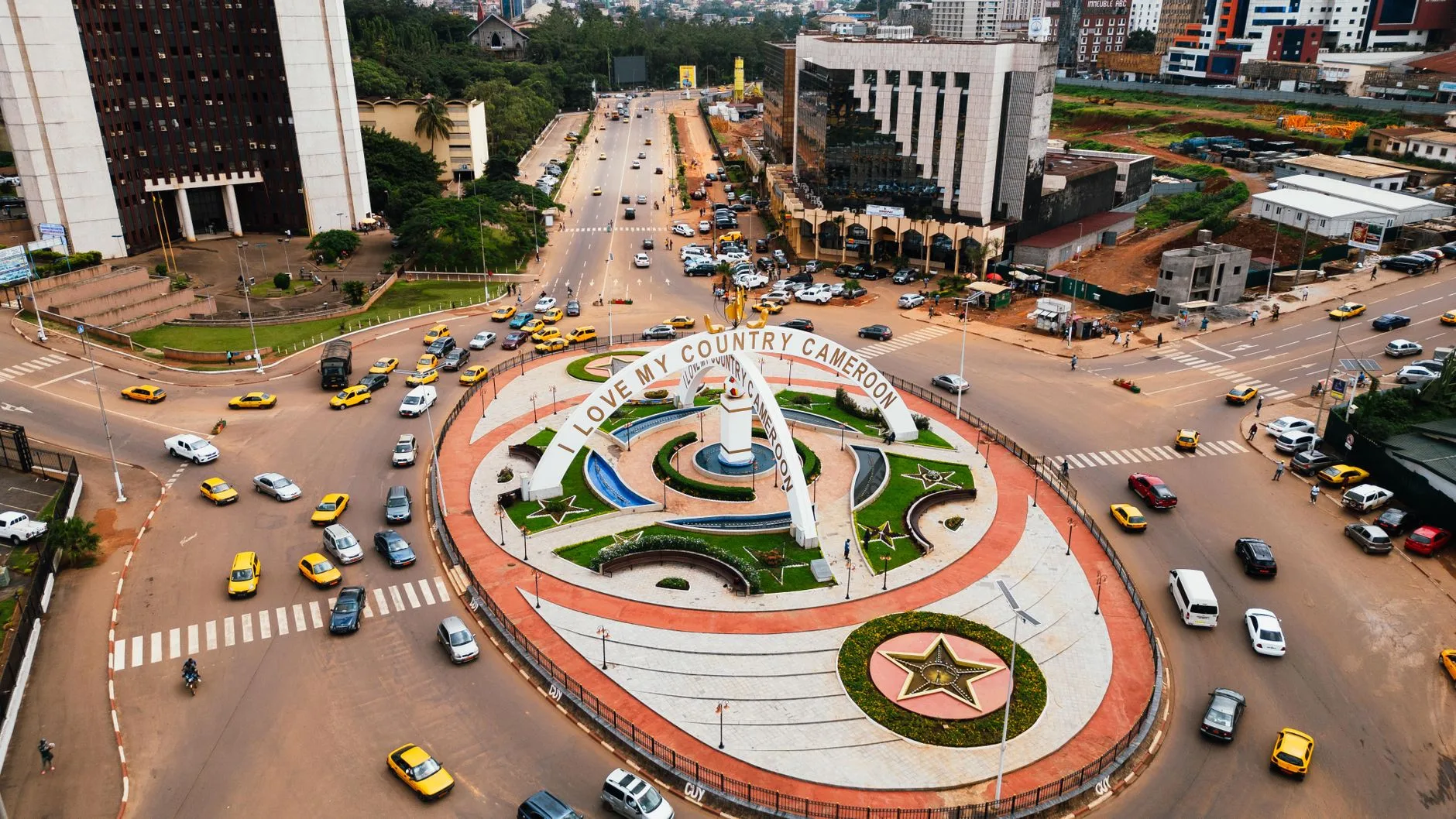
The bus to Bamenda leaves Douala’s Bonabéri motor park when it’s full, not when the schedule says it will, and on a Tuesday morning in dry season that can mean a ninety-minute wait watching vendors move between windows selling bread, roasted peanuts in twists of newspaper, and bags of chilled water bitten open at the corner with practiced teeth. The air smells of diesel and frying plantain. Someone’s goat is tied to the roof rack. This is the real rhythm of getting around Cameroon, and it sets the tone for everything that follows: nothing moves fast, but almost everything moves eventually, and the country rewards travellers who build in slack rather than fight it.
Cameroon doesn’t get the attention Kenya or Tanzania do, and that’s partly logistics — infrastructure is patchy, English and French split the country awkwardly along old colonial lines, and the northern regions carry genuine security concerns that require real research, not just vibes. But for travellers willing to do the groundwork, Cameroon delivers a version of West and Central Africa that’s startlingly compressed: Atlantic beach towns, volcanic highlands, rainforest with lowland gorillas, Sahelian plains, and a francophone-anglophone cultural fault line running through the middle of it all. This guide covers what independent travel here actually looks like — not the brochure version, the real one.
Getting In and the Visa Reality
Most nationalities need a visa for Cameroon, and the process has tightened in recent years rather than loosened. The e-visa system (via the Ministry of External Relations’ portal) is the standard route for most travellers now, typically processed in a few business days, though delays are common and you should apply at least three weeks before travel. Printing confirmation and carrying a physical copy matters — immigration officers at Douala International Airport are not always sympathetic to a phone screen.
Yellow fever vaccination is mandatory and checked on arrival; carry your certificate. Malaria prophylaxis is strongly recommended country-wide, Cameroon sits in a high-transmission zone, and this isn’t a destination to wing it on antimalarials. Check your government’s current travel advisory before booking anything — the UK Foreign Office and equivalent bodies maintain specific regional guidance for Cameroon, including areas in the Far North and the Northwest/Southwest regions where the Anglophone crisis has made travel genuinely unsafe for years. This isn’t a footnote. Large parts of the Northwest and Southwest regions (Bamenda, Buea’s surrounding areas, much of the anglophone west) have experienced ongoing conflict since 2016, and independent travel there is not advisable regardless of how adventurous you consider yourself.
Douala: Arrival, Not Destination
Douala is Cameroon’s economic capital and most travellers’ entry point, and it rarely gets described kindly. It’s hot, congested, humid to the point of wringing out your clothes, and not built for sightseeing. Treat it as a transit hub rather than a highlight. If you have a day to spare, the Marché des Fleurs in Bonanjo is worth an hour for its fabric stalls and the smell of smoked fish stacked in pyramids, and Bonanjo itself has a handful of crumbling German colonial buildings from Cameroon’s brief stint as a German protectorate before 1916 — worth a walk if you like architectural ghosts.
Most independent travellers move through Douala within a day or two, heading either north toward Yaoundé and the interior, or further north still toward the Ring Road region around Bafoussam and Bamenda (anglophone-safe areas permitting). Shared taxis and the bus companies Guarantee Express and Touristique Express run the Douala–Yaoundé corridor reliably, a three-to-four-hour run on a genuinely decent paved road — a rare comfort in a country where road quality degrades fast once you leave the main arteries.
Yaoundé and the Road to the West
Yaoundé, the political capital, is calmer and greener than Douala, spread across seven hills with the Mfoundi River cutting through the centre. The Musée National is modest but gives useful context on Cameroon’s 250-plus ethnic groups before heading into the interior where that diversity becomes visible on the ground. The Marché Central is the place to eat: look for ndolé, the bitterleaf-and-peanut stew that’s close to a national dish, served with fufu or boiled plantain, and grilled fish (poisson braisé) sold whole off charcoal braziers with a fiery pili-pili sauce on the side.
From Yaoundé, the road west toward Bafoussam and the Bamoun and Bamiléké highlands is one of Cameroon’s better-maintained stretches, and it’s where the country starts to feel genuinely distinctive. Foumban, the old capital of the Bamoun kingdom, has a working royal palace (Palais des Rois Bamoun) with a museum inside holding royal regalia, and an active sultan whose family line traces back centuries — this is not a restored tourist attraction, it’s a living institution. The artisan quarter near the palace produces bronze casting and carved masks sold at prices that reward slow negotiation over fast transactions.
The Ring Road and the Volcanic North
Northwest of Bafoussam sits the Ring Road region — the Grassfields — a loop of volcanic highland dotted with chiefdoms (fondoms), crater lakes, and waterfalls. Security conditions here have fluctuated with the Anglophone crisis, and current conditions must be checked immediately before travel, not assumed from older blog posts. When accessible, this is some of the most visually dramatic country in Central Africa: rolling green hills at altitude, cooler air than the coast, and chiefdoms like Bafut and Oku where palace visits are arranged through local guides rather than ticket booths.
Further north again, past the central plateau, the land flattens and dries into the Sahelian zone around Maroua and the Mandara Mountains. The Rhumsiki massif, with its volcanic plugs rising out of the plain like broken teeth, is the most photographed landscape in Cameroon and one of the few places in the country that has an established, if modest, tourism circuit — guides in the village lead walks among the peaks and visits to local sorcerers who still practice crab divination, a genuine Kapsiki tradition rather than a performance staged for visitors. The Far North region, however, carries serious security advisories related to Boko Haram activity near the Nigerian and Chadian borders, and independent travel without current local intelligence is not recommended.
Wildlife: Dja, Korup, and the Harder Parks
Cameroon’s national parks don’t have the infrastructure of East Africa’s safari circuit, and that’s exactly the draw for travellers chasing something less packaged. The Dja Faunal Reserve, a UNESCO-listed rainforest reserve southeast of Yaoundé, protects lowland gorillas, chimpanzees, and forest elephants, but access requires arranging permits and guides through conservation offices in Yaoundé well in advance, plus a genuinely rough road in. Korup National Park in the Southwest region holds some of Africa’s oldest rainforest, with a canopy walkway and research-grade biodiversity, though its location near anglophone-crisis areas means checking access conditions is essential before planning a route there.
These parks are not a one-day safari drop-in. Expect multi-day logistics, basic camp accommodation, and guides who know the forest intimately but don’t run polished operations. If reliable wildlife infrastructure matters more to you than raw access, it’s worth comparing against better-established options covered in a broader look at the continent’s national parks, many of which offer a gentler entry point into African wildlife travel.
Getting Around: The Honest Transport Picture
| Route | Transport | Time | Cost (approx) | Road condition |
|---|---|---|---|---|
| Douala–Yaoundé | Bus (Touristique Express) | 3–4 hrs | 4,000–6,000 CFA | Paved, reliable |
| Yaoundé–Bafoussam | Bus/shared taxi | 4–5 hrs | 5,000–7,000 CFA | Mostly paved |
| Bafoussam–Foumban | Shared taxi | 1.5–2 hrs | 1,500–2,500 CFA | Paved |
| Maroua–Rhumsiki | 4×4 or shared taxi | 2–3 hrs | 3,000–5,000 CFA | Unpaved, rough |
| Yaoundé–Dja Reserve | Private/arranged transport | 5–6 hrs | Varies, arranged | Unpaved, slow |
Fares fluctuate with fuel prices and negotiation, and none of this runs on a fixed timetable the way European or even Southeast Asian buses do. Shared taxis (bush taxis) leave when full, drivers pack them fuller than seems physically possible, and breakdowns are a normal part of any long-distance journey rather than an exception. Budget extra days into any itinerary that involves more than two long-distance legs.
Food, Markets, and What You’ll Actually Eat
Cameroonian food rewards curiosity. Beyond ndolé, look for eru — a slippery, dark-green vegetable stew from the anglophone west, traditionally eaten with miondo (fermented cassava sticks wrapped in leaves) — and koki, a steamed black-eyed-pea pudding wrapped in banana leaf, sold hot off roadside braziers in the mornings. Suya, spiced grilled beef skewers, turns up at night markets in Yaoundé and Bamoua, sold by weight and wrapped in paper with raw onion and more pili-pili than most visitors expect.
Markets are the center of daily commerce and worth building time around rather than rushing through — the Marché Mokolo in Yaoundé is one of the largest and most chaotic in the country, a genuine working market rather than a craft bazaar, where bargaining is expected and the geography takes a few visits to learn. If you want a refresher on how to navigate market eating with confidence before you land, the general principles that apply to Southeast Asian street food markets translate reasonably well here, with the caveat that Cameroonian market etiquette leans more communal and conversational.
Money, Connectivity, and Day-to-Day Costs
Cameroon uses the Central African CFA franc, pegged to the euro, and cash is still king outside Douala and Yaoundé — ATMs are unreliable even in cities and essentially absent in smaller towns, so carry more cash than feels comfortable and keep it split across bags. Mobile money (MTN Mobile Money, Orange Money) is widely used locally and increasingly workable for travellers who set up a local SIM early.
A frugal day — local food, shared taxis, basic guesthouse accommodation — runs roughly $20–35 USD. Add private transport, park fees, or guided wildlife access and that climbs quickly. French is essential outside the former anglophone regions; English gets you through Buea, Bamenda, and parts of the Northwest where conditions allow travel, but francophone Cameroon makes up the bulk of any realistic independent itinerary right now, so basic French (or a translation app and patience) matters more than most guides admit.
The Bottom Line
Cameroon is not a plug-and-play destination, and pretending otherwise would be dishonest. Security conditions in the Far North and the anglophone Northwest/Southwest regions change and must be checked immediately before travel, not assumed from a blog post written months earlier. Build serious slack into transport timing — nothing here runs on a published schedule, and the bush taxi leaving “when full” is the most reliable fact in the entire system. French will take you further than English across most of the realistic route. The reward for all that friction is a country that still feels unmediated: markets that function for the people who live there rather than for visitors, palaces that are still royal residences, and landscapes — Rhumsiki’s volcanic plugs, the Grassfields when accessible, Dja’s rainforest canopy — that most travellers to Africa will never see simply because Cameroon asks more of them than Nairobi or Cape Town do. For travellers who’ve already built confidence navigating complicated, infrastructure-light countries elsewhere, Cameroon is a logical next step rather than a reckless one.
Keep reading: Best national parks in Africa for wildlife worth the journey