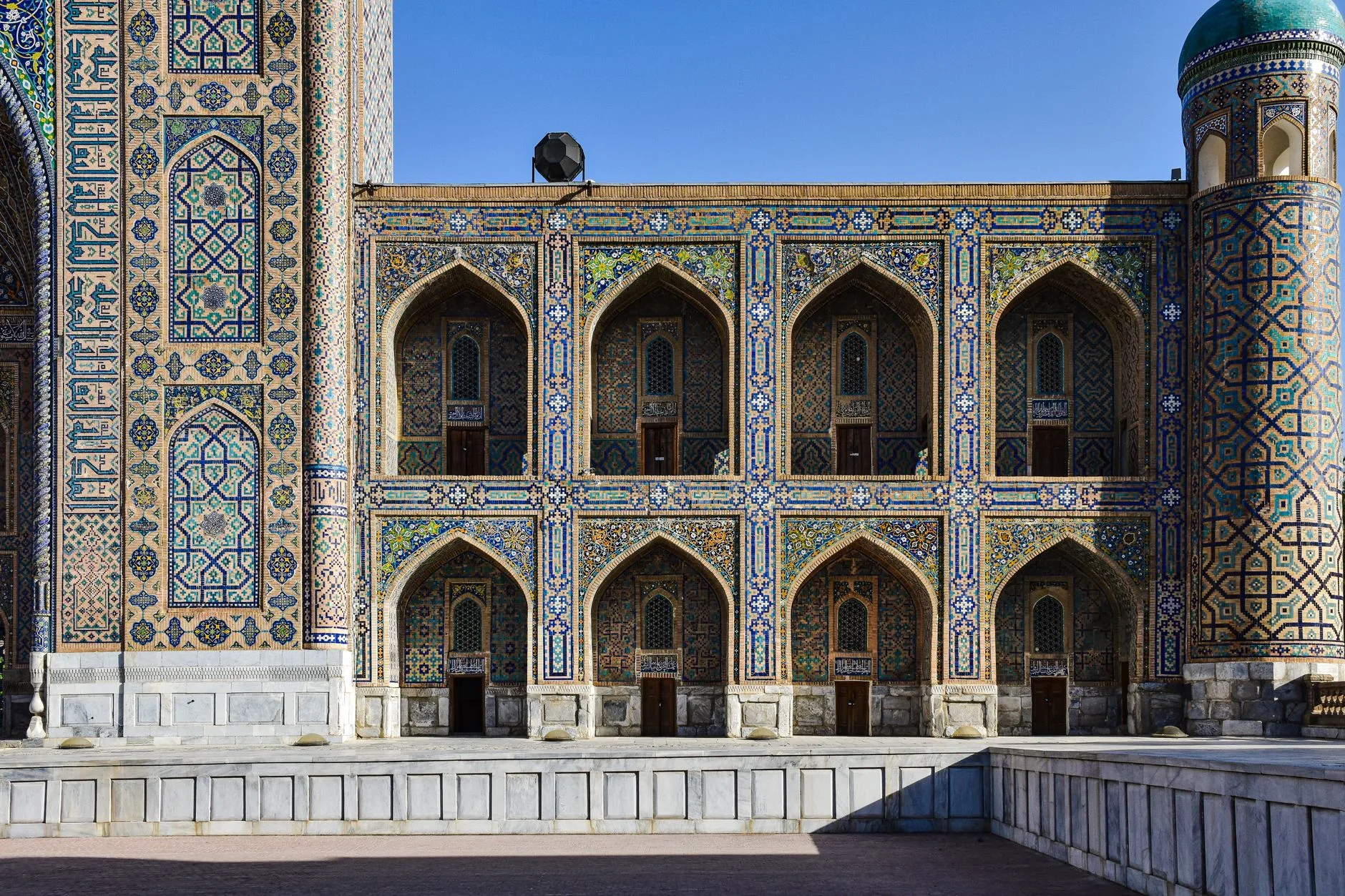
Photo by AXP Photography on Pexels
The shared taxi from Osh to the Tajik border leaves when it’s full, not when the driver says it will. You’ll sit in the back of a Lada for an hour watching the vehicle slowly fill with sacks of flour, a goat tied to the roof rack, and eventually two more passengers wedged in beside you, before the driver pronounces himself satisfied and pulls out onto the M41 toward the Irkeshtam and Kyzyl-Art passes. By the time you reach the border post at 4,280 metres, the goat has been fed, the flour has shifted twice, and somebody’s grandmother has shared her bread with the entire car without being asked.
This is what independent travel in Central Asia actually looks like: unglamorous, slow, occasionally absurd, and entirely worth it. The five countries that make up “the Stans” — Kazakhstan, Kyrgyzstan, Tajikistan, Uzbekistan, and Turkmenistan — sit at the hinge between Russia, China, Iran, and the Indian subcontinent, and the region has spent the last decade quietly opening up. Visa rules have loosened, border crossings have multiplied, and the infrastructure for travelling without a packaged tour has gone from nearly nonexistent to genuinely workable, if still rough around the edges.
Why Central Asia rewards going it alone
Package tours here tend to whisk you between Samarkand’s Registan, Bukhara’s old city, and a yurt camp near Song-Kul, all in air-conditioned minivans with a fixed itinerary. That’s a reasonable way to see the greatest hits, but it skips the connective tissue — the shared taxis, the chaikhanas (teahouses) where old men play nard for hours, the overnight trains where someone always has a thermos of green tea and strong opinions about Soviet history.
Travelling independently through the region means engaging with its logistics directly: negotiating marshrutka (minibus) fares in Almaty, figuring out which bazaar in Tashkent sells the good non bread, working out whether the Pamir Highway is passable this week. It’s slower and occasionally frustrating. It’s also the only way to actually understand how these five countries, each with a distinct post-Soviet trajectory, differ from one another — something no multi-country tour bus can show you properly.
Visas and borders: the part everyone over-researches and still gets wrong
As of 2026, Kazakhstan, Kyrgyzstan, and Uzbekistan allow visa-free entry for most Western passport holders for stays up to 30 days (Kazakhstan extends this further for many nationalities). Tajikistan requires an e-visa, straightforward and processed online in a few days, and this is also where you apply for the GBAO permit if you intend to travel the Pamir Highway — don’t skip this, checkpoints along the M41 do check. Turkmenistan remains the outlier: independent tourist visas are difficult, transit visas are easier but restrict you to a few days moving through, and guided tours are still the realistic option for seeing Ashgabat’s marble towers and the Darvaza gas crater properly. Budget for Turkmenistan to be the one country in this itinerary where “independent” has limits.
Land borders between the other four are generally workable for independent travellers, though timing matters. The Kyrgyzstan–Tajikistan border via Kyzyl-Art and Kyzyl-Bel can close with little notice due to weather or politics; check recent traveller reports before committing to a date. The Uzbekistan–Kyrgyzstan crossing near Dostyk is comparatively easy and well-trodden. Always carry cash in small denominations for these crossings — card payment does not exist at a mountain border post, no matter how modern your hotel in Tashkent was.
Getting around: trains, shared taxis, and the Pamir Highway
| Route | Mode | Duration | Approx. cost | Notes |
|---|---|---|---|---|
| Almaty–Tashkent | Overnight train | ~16 hrs | $25–40 | Book via Kazakhstan Railways or in person; comfortable, scenic steppe crossing |
| Tashkent–Samarkand | Afrosiyob high-speed train | ~2 hrs | $10–20 | Book ahead in peak season (Apr–May, Sep–Oct) |
| Bishkek–Osh | Shared taxi or flight | 10–12 hrs / 1 hr | $15–20 taxi / $40–70 flight | Road crosses the Too-Ashuu pass; flight saves a full day |
| Osh–Khorog (Pamir Highway) | Shared jeep | 2 days | $50–80 | GBAO permit required; best July–September |
| Khorog–Dushanbe | Shared taxi | 10–14 hrs | $20–30 | Follows the Afghan border along the Panj River |
| Dushanbe–Almaty region | Flight | 2.5 hrs | $100–180 | Overland alternative exists but adds several days |
The Pamir Highway deserves its own mention. Running roughly 1,250 kilometres from Osh to Dushanbe via Khorog, it’s the second-highest international highway in the world and one of the great overland routes anywhere — not because the road surface is good (it frequently isn’t) but because of what sits alongside it: the Wakhan Corridor, where Afghanistan is close enough to see individual houses across the river, and Lake Karakul, a saline lake at 3,900 metres ringed by nothing but silence and wind. Most travellers do it by shared jeep, arranged a day ahead through guesthouses in Osh or Sary-Tash; a smaller number rent a 4×4 with a driver for more flexibility, which costs considerably more but allows stops at places like the Yashilkul Lake or the hot springs at Bibi Fatima near Khorog.
Uzbekistan’s cities: where the Silk Road still has a pulse
Samarkand’s Registan Square, with its three madrasas tiled in cobalt and turquoise, is the image most people carry into the region, and it earns the reputation — go at opening time (8am) before the tour buses arrive and the light is doing something extraordinary to the tilework. But the city that rewards a slower pace is Bukhara, where the old town is compact enough to walk entirely on foot and the Lyab-i Hauz pool, ringed by mulberry trees and teahouses, is where locals and travellers alike sit out the heat of the afternoon.
Tashkent itself gets dismissed too quickly as a mere transit hub. The Chorsu Bazaar, under its blue-tiled dome, is where to eat plov — Uzbekistan’s national dish of rice, carrot, and lamb cooked in a single enormous kazan — for a couple of dollars, and the Soviet-era metro stations, each individually designed, are worth a detour even if you have nowhere particular to go.
Kyrgyzstan: mountains, yurts, and Song-Kul
Kyrgyzstan is the easiest country in the region for independent trekkers, partly because Community Based Tourism (CBT) offices in towns like Karakol and Kochkor have, for two decades now, organised homestays and guides for exactly this purpose. The trek around Ala-Kul Lake, a two- to three-day route from Karakol, climbs through pine forest to a turquoise glacial lake at 3,500 metres and is doable without a guide if you’re reasonably fit and carry a decent map, though hiring a local guide through CBT costs little and supports the same families running the yurt camps you’ll sleep in.
Song-Kul, a high alpine lake at over 3,000 metres reachable from Kochkor, is where to actually stay in a yurt — not the staged version sometimes offered near cities, but a working summer pasture where families move livestock up from the valleys each June and down again in September. Expect no electricity, flat bread baked in the embers, and nights cold enough that extra blankets are not optional even in July.
Tajikistan: the Fann Mountains and the road less driven
Beyond the Pamir Highway, Tajikistan’s Fann Mountains, accessible from Dushanbe or Penjikent, offer multi-day trekking between turquoise lakes — Iskanderkul and the Kulikalon lakes chain — with far fewer travellers than Kyrgyzstan’s equivalent routes. Dushanbe itself is a pleasant, leafy capital with wide Soviet boulevards and a genuinely excellent flagpole (one of the tallest in the world, for what that’s worth), but it’s really a staging post for the mountains and the Pamirs beyond.
Food, markets, and the rhythm of daily travel
Expect bread — non in Uzbekistan, naan-adjacent elsewhere — stamped with intricate patterns and torn, never cut, a small cultural rule worth learning early. Expect plov, laghman (hand-pulled noodle soup, a legacy of the region’s Dungan Chinese Muslim communities), and shashlik grilled over charcoal at roadside stops. Expect tea, always, offered before any transaction and often before any conversation. Bazaars — Osh’s Jayma Bazaar, Tashkent’s Chorsu, Dushanbe’s Mehrgon — are where you’ll understand the region’s agricultural geography faster than any museum: Fergana Valley melons, Pamir apricots, mountains of dried fruit and nuts sold by the kilo.
The Bottom Line
- Budget at least three weeks if you want to cover Uzbekistan’s cities and the mountains of Kyrgyzstan or Tajikistan properly — rushing the Pamir Highway in particular defeats its purpose.
- July through September is the realistic window for high-altitude routes like the Pamirs and Song-Kul; roads above 3,000 metres can be snowbound outside this.
- Carry more cash than feels necessary. ATMs are unreliable outside capital cities, and border posts, shared taxis, and homestays all run on it.
- Turkmenistan is the one country where independent travel is genuinely constrained — plan a guided add-on rather than forcing it into the DIY itinerary.
- The CBT networks in Kyrgyzstan are a model worth noting if you’ve read about community based tourism examples that work elsewhere — this region does it as well as anywhere, and if the overland borders and shared-taxi logistics here feel familiar, the same patience serves you well reading up on budget travel in Georgia, another post-Soviet country where infrastructure and hospitality run on different clocks.
Keep reading: Budget travel in Georgia: the country’s hidden gem