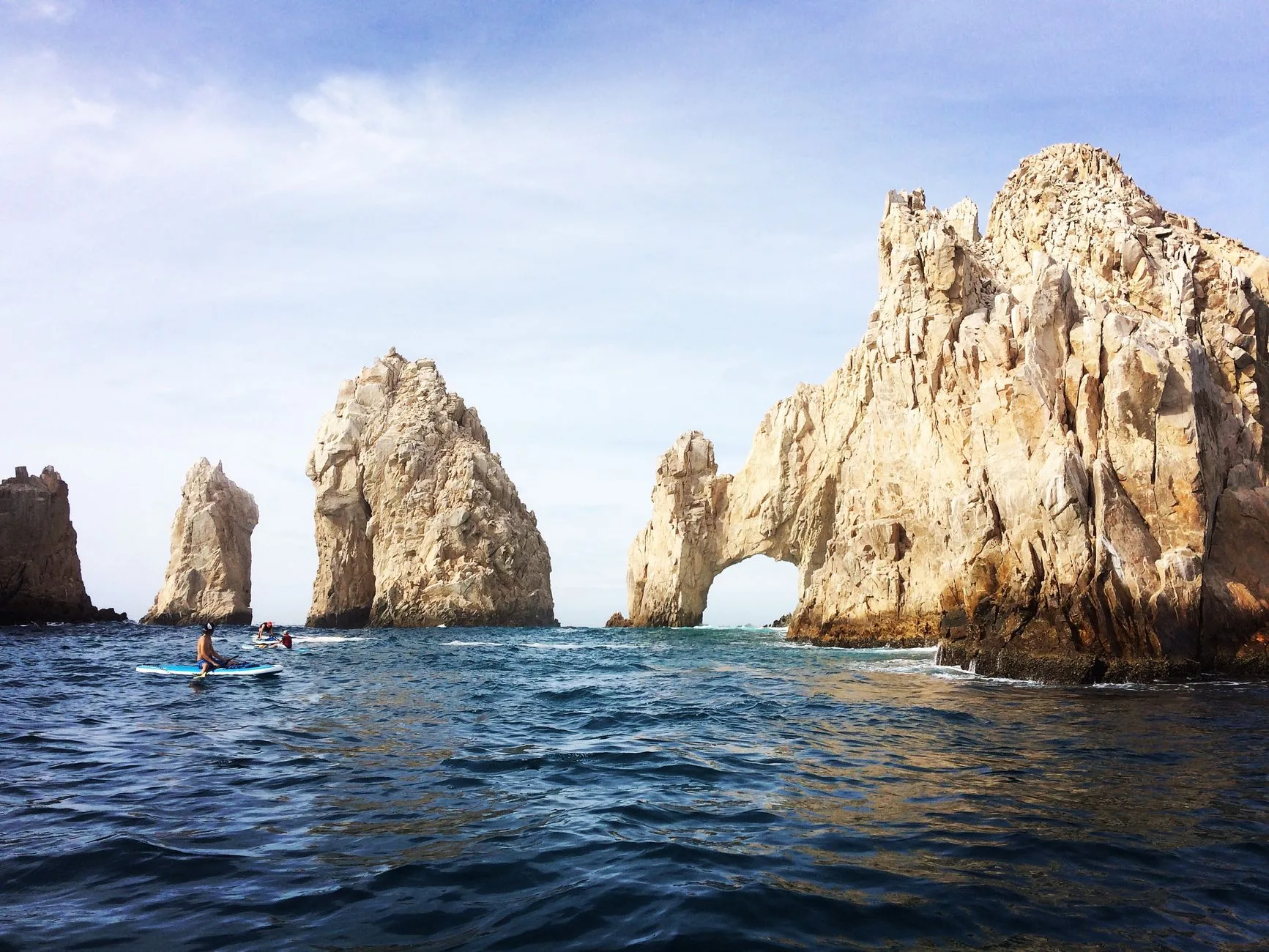
Photo by Joanie Tidwell on Pexels
Kayaking in the Sea of Cortez, Baja California: a practical guide
The water here is the kind of colour that makes you doubt your eyes. At 6am in the Bahía de Loreto, before the wind picks up and the pangas head out, the sea sits almost flat — deep cobalt fading to turquoise over the sandbars, with the silhouette of Isla Carmen sitting low on the horizon. You load a dry bag into the bow hatch, adjust your skirt, and push off from a beach made of crushed white shells. A sea lion surfaces thirty metres to your left, regards you briefly, and dives. This is a Tuesday morning. There is nowhere else you need to be.
Jacques Cousteau called the Sea of Cortez “the world’s aquarium,” and while that phrase has been repeated until it’s nearly lost meaning, the water itself still makes the case. Enclosed on three sides by the Baja California Peninsula and the Mexican mainland, warmed by the desert sun, the Gulf of Cortez holds more species of marine life than almost any body of water on the planet. For kayakers, this translates into something specific: you can paddle over whale sharks, alongside dolphins, past nesting boobies and frigate birds, through narrow island channels where the current pulls hard — and then pull up on a beach with no one else on it and make camp under a sky that has no light pollution for fifty miles in any direction.
This guide covers the practical realities of kayaking in the Sea of Cortez — where to go, which routes suit which experience levels, how to get there, what it costs, and what the conditions actually demand.
Where to kayak: the main regions
Baja California’s coastline along the Sea of Cortez runs roughly 1,200 kilometres from the US border to the southern tip at Cabo San Lucas, but most serious kayaking concentrates in three distinct areas.
Loreto and the Parque Nacional Bahía de Loreto is the most popular base for multi-day paddling. The national park protects five islands — Carmen, Danzante, Monserrate, Santa Catalina, and Coronados — all reachable from town by kayak. Loreto itself is a small, walkable colonial town with a good supply of outfitters and guesthouses. Isla Carmen, roughly 8 km offshore, is the most visited, with sheltered coves, a working salt flat in the middle, and turquoise channels between its eastern shore and the smaller Isla Danzante. A full circumnavigation of Carmen takes most paddlers three to four days, depending on conditions.
La Paz and the Espíritu Santo Archipelago is the other major hub, and many consider Espíritu Santo the finest sea kayaking destination in Mexico. The island — a UNESCO Biosphere Reserve — sits about 25 km northeast of La Paz by water and takes two to five days to circumnavigate at a comfortable pace. The western shore has dramatic red volcanic cliffs, sea caves, and a colony of California sea lions at Los Islotes that will swim alongside your kayak with unsettling curiosity. La Paz is larger than Loreto, with better air connections and a wider range of accommodation, from budget hostels along Calle Obregón to mid-range hotels near the malecón.
Bahía de los Ángeles is the northern option — wilder, less touristed, and considerably harder to reach. It sits about halfway down the peninsula, reachable from the Transpeninsular Highway (Mexico 1) via a 68 km side road from the junction near Punta Prieta. There are whale shark aggregations here from May to November, and the bay’s island chain — Ángel de la Guarda is the largest and most dramatic — offers serious multi-day routes for experienced paddlers. Infrastructure is minimal: a couple of small eco-camps, a fish camp, and not much else. That’s the point.
Guided vs. self-supported: what to know before you decide
The Sea of Cortez is not a beginner’s playground dressed up as one. Open-water crossings, afternoon chubascos (localized storm systems that build fast), and exposed campsites on desert islands are real factors. That said, the range of experiences available — from day paddles out of Loreto to ten-day wilderness traverses — means that skill level determines your options more than it limits them.
Guided multi-day trips are the most common choice for first-timers in Baja. A full-service guided expedition typically includes double kayaks, all camping gear, meals, and logistics support from a panga (motorized skiff) that carries the heavy gear between camps. Expect to pay USD $150–$250 per person per day for a reputable operator. Baja Outdoor Activities (BOA) in La Paz and Sea Kayak Baja Mexico in Loreto are both long-established, with experienced guides and solid safety protocols. Group sizes are usually capped at eight to ten paddlers.
Self-guided/independent paddling is viable for experienced sea kayakers who are comfortable with open-water navigation, self-rescue, and desert camping. You’ll need to rent or transport your own equipment, file a trip plan, and carry sufficient water for the duration — there is no fresh water on most islands. Rental kayaks are available in Loreto (from Loreto Kayak from around USD $50–$70 per day for a single touring kayak) and in La Paz. A Mexican fishing permit is technically required for camping in the national park areas; a Parque Nacional permit (around USD $4 per person per day) is required for Bahía de Loreto and Espíritu Santo. These are available from SEMARNAT (Mexico’s environmental authority) offices in each town or from most outfitters.
Seasonal conditions: when to go and what to expect
The Sea of Cortez has two distinct seasons, and the difference matters significantly for paddlers.
| Season | Months | Conditions | Wildlife highlights | Recommended for |
|---|---|---|---|---|
| Winter (dry) | Nov–Apr | Calm mornings, cool nights, occasional norte winds | Grey whales (Jan–Mar), dolphins, seabirds | Multi-day expeditions, beginners |
| Spring (transition) | Apr–May | Warming, wind increasing, still manageable | Whale sharks begin arriving, manta rays | Day trips, short routes |
| Summer (hot/humid) | Jun–Sep | Intense heat, afternoon chubascos, high humidity | Whale sharks peak, hammerheads | Experienced paddlers only |
| Autumn | Oct–Nov | Cooling, hurricane risk easing, good visibility | Whale sharks tapering, sea lions active | Good balance of wildlife + conditions |
November through April is the prime season. Mornings are reliably calm, with winds typically picking up in the afternoon (paddle in the morning, make camp by 1pm is the standing rule). Water temperatures are cool — 18–22°C — and the air is dry and clear. January through March coincides with grey whale season in the Pacific lagoons on Baja’s western coast, but whale activity in the Sea of Cortez picks up with humpbacks and fin whales.
June through September is manageable for experienced paddlers who are comfortable with heat management and reading storm patterns, but it’s not recommended for anyone new to sea kayaking. Chubascos — fast-developing afternoon squalls — are unpredictable and can bring 40-knot winds and rough seas with little warning.
The Espíritu Santo route in detail
For most paddlers making a dedicated kayaking trip to Baja, Espíritu Santo is the centrepiece. Here is a workable route for a four-day circuit:
Day 1 — La Paz to Bahía San Gabriel: Launch from Pichilingue beach, about 17 km north of La Paz’s city centre by road (taxi or shuttle, around USD $15). The crossing to Espíritu Santo’s southern tip is roughly 10 km and takes two to three hours in calm conditions. Bahía San Gabriel has a beautiful protected anchorage and a broad white-sand beach — the most popular first camp. Set up early; it fills with other groups by afternoon in high season.
Day 2 — San Gabriel to Ensenada El Candelero: Paddle north along the western coast, past the striking red cliffs of the Cardonal formation. There are sea caves accessible at mid-tide near Punta Lobos. Ensenada El Candelero is a narrow inlet with a shallow-draft anchorage and mangroves — watch for great blue herons. Camp on the beach at the mouth.
Day 3 — El Candelero to Los Islotes and around to the eastern shore: The sea lion colony at Los Islotes, a small rocky islet at Espíritu Santo’s northern tip, is the highlight of most paddlers’ trips. The animals are habituated to kayaks and will investigate you at close range — respectful distance is still important, and no touching. Round the northern tip and descend the eastern coast, which is more exposed but has fewer campers. Caleta Partida, the channel between Espíritu Santo and the smaller Isla Partida, is a good eastern camp with a dramatic desert-island feel.
Day 4 — Return to Pichilingue: Paddle the eastern coast south and cross back at the southern tip. Morning crossings are calmer; aim to be on the water by 7am to have the sea to yourself and avoid afternoon chop.
Total distance: approximately 60–70 km depending on route choices. Suitable for paddlers with previous sea kayaking experience. Guided versions of this route are widely available and strongly recommended for anyone without multi-day sea kayaking background.
Getting to Loreto and La Paz
Loreto has a small international airport (LTO) with direct flights from Los Angeles and Calgary via Alaska Airlines and WestJet seasonally. From Los Angeles, the flight is about two hours. Alternatively, fly into La Paz (LAP), which has broader connections from Mexico City, Guadalajara, and Los Cabos, then take a bus north — ABC and Aguila run regular services between La Paz and Loreto (roughly four hours, around USD $20–$30). The Transpeninsular Highway (Mexico 1) is the main land artery, and while driving is an option from the US border at Tijuana or Mexicali, Loreto is approximately 1,100 km from Tijuana — a long haul.
La Paz is more accessible: LAP airport receives daily flights from Mexico City (about two hours), and connections from the US are increasingly direct through Los Angeles and Phoenix. The city’s malecón waterfront makes a pleasant base; the central area around Plaza Constitución and the adjacent streets has good taco spots, a lively evening scene, and most of the kayak outfitters.
For those entering Mexico by land, the border crossing at Tijuana (San Ysidro on the US side) is the standard western gateway. Mexican vehicle insurance is mandatory if you’re driving — don’t cross without it. Mexico’s official tourism board maintains up-to-date entry requirements and travel advisories for those planning road trips down the peninsula.
What to pack and what you won’t need
Desert sea kayaking has a specific gear logic. You’re paddling in heat, camping in an environment with no shade trees, limited fresh water, and fine sand that gets into everything.
Essentials:
– Sun protection: long-sleeve UV shirt, broad-brim hat, SPF 50+ sunscreen applied obsessively. Reflected glare off the water is intense.
– Water: minimum 4 litres per person per day on the water, more in summer. Multi-day trips require a panga resupply or serious water-carrying capacity.
– Dry bags for everything — not just valuables. Sand and splash water are constant.
– VHF marine radio (channel 16 for emergencies) and a personal locator beacon (PLB) for self-guided trips.
– Cash in pesos: most fish camps and small operators don’t take cards. La Paz and Loreto have ATMs but carry more than you think you’ll need.
Leave behind:
– Cotton clothing (useless when wet)
– Heavy footwear (sandals or water shoes are sufficient)
– Any expectation of mobile signal on the islands — there isn’t one.
For paddlers new to this style of travel, National Geographic’s overview of the Sea of Cortez ecosystems gives useful context for what you’ll encounter in the water and why the marine environment here is genuinely different from most places you’ve paddled before.
Camping, food, and resupply
On Espíritu Santo and the Loreto islands, you’re camping on beaches with no facilities — no toilets, no waste disposal, no fresh water. Leave No Trace principles apply strictly, and most guided operators enforce them: all waste is packed out, campfires are prohibited in national park areas, and grey water is disposed of in the sea below the tide line.
Food on guided trips is typically excellent — it’s one of the quiet pleasures of this style of travel. Expect fresh fish tacos the first night if your guide stops at a fish camp, followed by dehydrated meals and camp stoves for subsequent nights. Self-supported paddlers should stock up in Loreto or La Paz before departure. La Paz’s Mercado Municipal Nicolás Bravo (on Calle Revolución between Calles Degollado and Prieto) is worth an hour of your time even beyond resupply: dried chiles, fresh fish, churros, and a chaos of colour that earns its place in the trip as an experience in itself.
In Loreto, the Mercado de Loreto on Calle Salvatierra has basic supplies. The town’s restaurant scene is modest but reliable: McLulu’s on Calle Madero does respectable machaca (dried, shredded beef braised with peppers and tomato) with handmade flour tortillas, and Mita Gourmet on the malecón serves fresh ceviche and aguachile worth building an afternoon around.
If you’re interested in how paddling and self-supported travel compares to other immersive outdoor experiences across the Americas — for instance, the multi-day trekking routes in Patagonia — the guide to multi-day hikes in Patagonia for beginners covers similar logistical ground in a very different landscape.
Wildlife: what you will actually see
Part of what makes the Sea of Cortez distinctive is the density and variety of marine life that you encounter not as a diver searching it out, but simply as a paddler moving through it.
Sea lions at Los Islotes are year-round and reliably curious. Whale sharks aggregate in the bay at La Paz (off El Mogote) and in Bahía de los Ángeles from roughly June to November — they are filter feeders and completely harmless, but still an extraordinary sight when a six-metre animal surfaces next to a kayak. Bottlenose and common dolphins are seen on most multi-day trips, often bow-riding pangas or porpoising alongside kayaks. Humpback and fin whales appear in winter, usually at distance. Manta rays breach frequently in spring — the sight of a two-metre animal clearing the water completely is startling and then immediately wonderful.
Birdlife on the islands is substantial: blue-footed boobies nest on Isla Los Islotes, brown pelicans are a constant presence, and the island scrub holds endemic species including the Belding’s yellowthroat warbler. Pack binoculars if birds are part of your interest.
For those whose interest in Baja extends beyond the water, it’s also worth noting that Mexico’s Pacific coast — particularly Los Cabos and the East Cape — offers surfing and diving that could frame a longer trip. And if you’re building a wider Latin American itinerary, the backpacking Central America practical guide covers overland routes that connect naturally southward from Mexico.
The Bottom Line
The best base depends on your goals: La Paz gives quicker access to Espíritu Santo and has better infrastructure; Loreto is quieter and the national park islands are closer to town. If you only have one destination, Espíritu Santo edges it for sheer drama and marine life density.
November through March is the optimal window. Conditions are calmer, wildlife is active, and the desert heat doesn’t threaten your safety. The whale shark season (summer–autumn) is compelling, but self-guided paddling in that heat requires serious experience and preparation.
Guided trips are worth the cost for most people who don’t already have multi-day sea kayaking experience. The Sea of Cortez is not a forgiving environment if the weather turns and you don’t know what you’re doing. A good guide also adds ecological knowledge that transforms the experience from a paddle to something closer to a field course.
Budget realistically: a five-day fully guided Espíritu Santo trip runs USD $800–$1,200 per person, all-inclusive. Self-supported with rental gear over the same period costs roughly USD $350–$500 plus food and permits, but requires genuine paddling competence. Neither is cheap travel, but the national park fees are low, and Loreto and La Paz are both affordable towns once you’re out of the water.
Get the permits before you launch. The Parque Nacional fee is modest and the process is straightforward through outfitters in both towns. Doing it yourself at the SEMARNAT office requires patience and some Spanish. Either way, don’t skip it — rangers do check.
Keep reading: Budget travel in Mexico City: practical guide