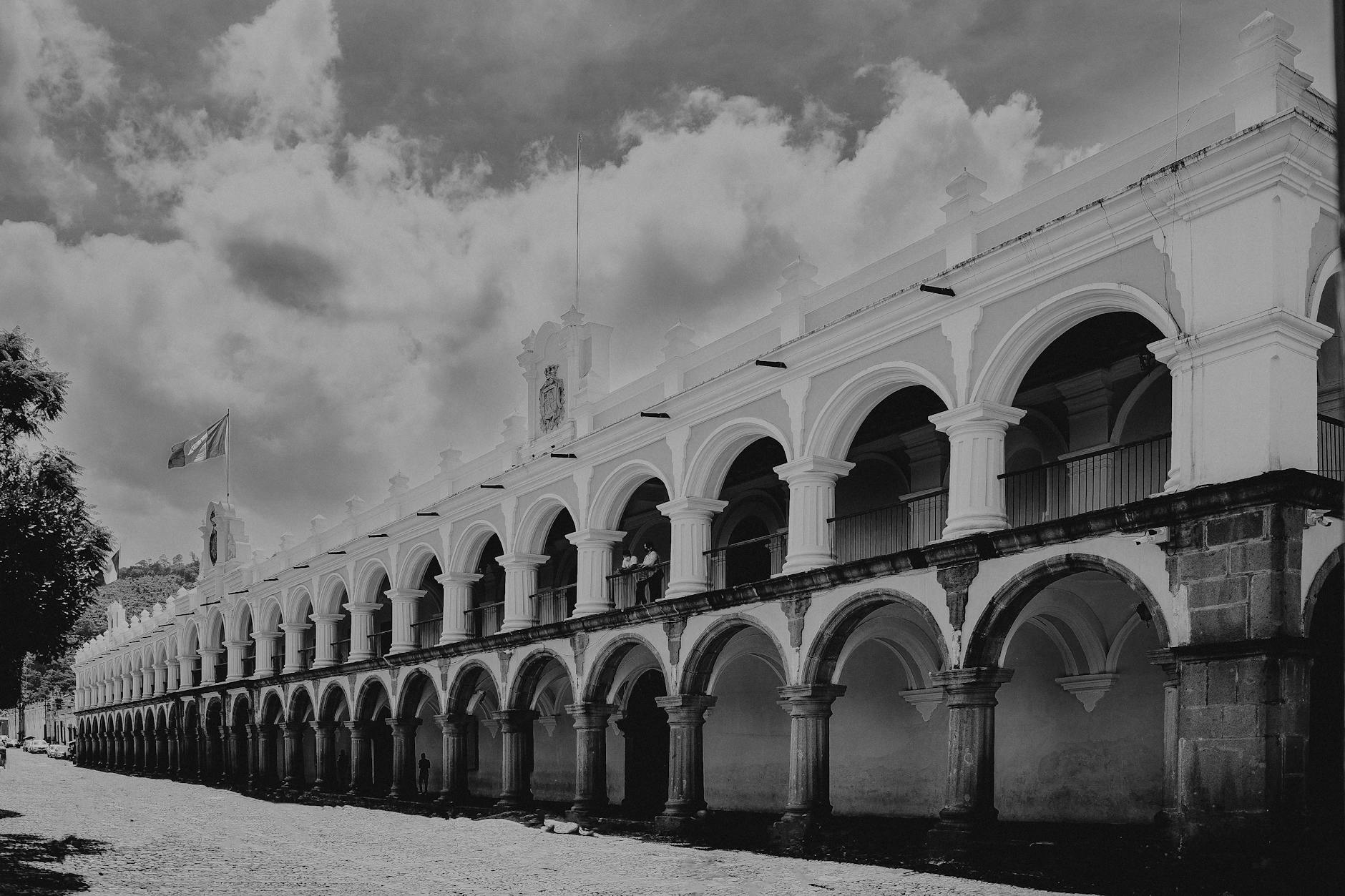
Photo by Hugo Martínez on Pexels
Learning Spanish in Antigua, Guatemala: a language school guide
The classroom is an open-air courtyard, roofed by bougainvillea. Your teacher — María, late twenties, patient and specific — sits across a wooden table and asks you to describe your morning in the past tense. Through the gap in the colonial wall, you can hear the market at Mercado de Artesanías cranking up, and somewhere nearby a tuk-tuk is arguing with a cobblestone. Antigua is an unusually good place to learn Spanish: small enough to feel manageable, coherent enough to practise in, and with an entire ecosystem of schools, homestays, and Spanish-speaking daily life built around the fact that foreigners have been coming here to study for decades.
That history cuts both ways. Antigua is polished — perhaps the most traveller-friendly city in Central America — and the language-learning infrastructure is excellent. But it also means you can spend a week here barely speaking Spanish at all, if you’re not deliberate about it. This guide is about being deliberate: choosing the right school, structuring your time, and using the city itself as the classroom it’s designed to be.
Why Antigua works for language learning
Antigua (full name: Santiago de los Caballeros de Guatemala) sits in a mountain valley at around 1,500 metres, ringed by three volcanoes — Agua, Fuego, and Acatenango. The altitude keeps temperatures mild year-round, typically 18–25°C, which is one practical reason so many long-term students end up staying longer than planned. The city is compact — the central grid runs about eight blocks in each direction from Parque Central — which means your school, homestay, market, and evening comedor are likely all within fifteen minutes on foot.
The Spanish spoken in Guatemala is considered among the clearest in Latin America: relatively neutral accent, full pronunciation of final consonants, no particularly strong regional slang to fight through at the beginner stage. That makes it genuinely useful for learners who want to build a foundation they can take elsewhere — to Mexico, Colombia, Spain — rather than specialising in one regional dialect.
The density of schools in Antigua is both an asset and a complication. There are over 70 registered language schools in a city of around 40,000 people. Quality varies considerably, and the competition keeps prices low — sometimes lower than is sustainable for decent teaching conditions. Choosing carefully matters.
Choosing a language school: what to look for
The standard format across almost all Antigua schools is four hours of one-on-one instruction per day, Monday to Friday, in those open-air courtyard settings. This is Antigua’s signature model — highly personal, highly flexible — and it works well for most learners. Group classes are available but less common; they suit people who find the intensity of one-on-one instruction tiring, or who are travelling with a companion at the same level.
What a reputable school looks like:
– Teachers paid a proper wage, not a commission-heavy percentage. Ask directly.
– Structured curriculum with written materials, not just improvised conversation.
– Clear level assessment before you start — not just self-reported.
– Active cultural programme: cooking classes, market visits, weaving demonstrations in nearby villages.
Some schools that have maintained consistent reputations over the years:
Proyecto Linguistic Francisco Marroquín (6a Calle Poniente #31) is one of the oldest and most established, with strong community reinvestment credentials — a meaningful consideration when paying for language instruction in a low-income country. Antigüeña Spanish Academy (1a Calle Poniente #10) has a solid reputation for structured teaching and a relaxed physical setup. Christian Spanish Academy (6a Avenida Norte #15) is well-regarded among those staying longer-term, particularly for its cultural immersion extras.
Walk into two or three schools before committing. Sit in on a session if they’ll allow it. The courtyard atmosphere matters more than you’d think — you’ll be spending twenty hours a week there.
Costs: what you’ll actually pay
Prices in Antigua are low by international standards, but the range is wide and the cheapest options are not always worth it.
| Package | Low end | Mid-range | Higher end |
|---|---|---|---|
| 4hrs tuition/day (Mon–Fri) | Q800/week (~$100) | Q1,000–1,200/week (~$130–155) | Q1,400+/week (~$180+) |
| Homestay (room + 3 meals/day) | Q700/week (~$90) | Q900–1,100/week (~$115–140) | Q1,300+/week (~$165+) |
| Combined school + homestay | Q1,400–1,600/week (~$180–205) | Q1,800–2,200/week (~$230–280) | Q2,500+/week (~$320+) |
Exchange rate as of early 2026: approx. Q7.8 to $1 USD. Verify current rates before travel.
The combined school-plus-homestay package is worth considering, even if you’d normally choose a hostel. Living with a Guatemalan family forces you into real Spanish from day one — breakfast conversation, navigating house rules, being asked about your day in a way that isn’t a classroom exercise. Families hosting students range from basic (a room and filling meals) to genuinely warm and engaged. Schools typically vet their host families; ask how often they review placements and whether you can request a change if it’s not working.
The lowest-priced schools often pay teachers Q60–80 per hour or less. That’s below a living wage in Antigua. Schools charging Q1,000+ per week are more likely to be paying teachers fairly — which also correlates, in practice, with teacher retention and teaching quality.
Structure your week: beyond the four hours
Four hours of one-on-one instruction is intensive, and most students find they need the afternoons. But what you do with those afternoons determines how fast you progress.
Parque Central and the surrounding streets are genuinely useful for practice. The vendors around the park — selling chuchitos, tostadas, and elotes from carts — are accustomed to students attempting Spanish. The key is to commit: order entirely in Spanish, decline in Spanish, ask prices in Spanish. It feels effortful at first and then, usually around day four or five, it starts to feel like something else.
Mercado de Artesanías (4a Calle Poniente, near the bus terminal) is noisier and less tourist-polished than the shops along 5a Avenida Norte, and the vendors are more forthcoming with actual conversation. Go to buy something specific — a huipil, dried chile cobanero, a bag of Guatemalan coffee — and you’ll have a transaction with enough friction to be educational.
La Merced church and neighbourhood, on the north end of 5a Avenida Norte, is the quieter end of the city. The afternoon light on the yellow baroque facade is genuinely striking, but more practically, the comedores clustered around the Mercado Municipal just south of here serve lunches to working locals — a plate of pepián (a thick seed-and-chile sauce, usually with chicken) for around Q35–45. It’s the kind of place that doesn’t have an English menu and doesn’t need one.
For evenings, Café No Sé (1a Avenida Sur #11C) is a long-standing Antigua institution — dim, slightly chaotic, with a mezcal list and a rotating cast of travellers and semi-permanent Antigua residents. It’s not a Spanish immersion exercise, but it’s a useful place to meet people who’ve been studying here a while and can give unfiltered advice about which teachers are worth requesting.
Day trips that are also language practice
The villages around Antigua are within easy reach and offer a different register of Guatemala entirely.
San Juan del Obispo, a 30-minute camioneta (chicken bus) ride south, is a small village at the foot of Volcán Agua with almost no tourism infrastructure. The market on Sunday mornings is a practical exercise in numbers, food vocabulary, and getting directions. Buses leave from the main bus terminal near the market — ask locally for current times, as schedules shift.
Ciudad Vieja, even closer (20 minutes by camioneta), is the site of the original colonial capital, destroyed by a lahar in 1541. There’s little to see in the heritage sense, but it’s an ordinary Guatemalan small town where nobody is particularly calibrated to foreign visitors, which makes it useful.
For a more structured cultural excursion, most schools organise visits to San Antonio Aguas Calientes (about 45 minutes west), a village known for its ixcaquistán weaving tradition. The cooperative workshop visits are not just tourist spectacle — weavers explain their craft in Spanish, and following a technical explanation in a second language is a real comprehension challenge.
According to UNESCO’s documentation of Guatemalan textile heritage, the weaving traditions of highland Maya communities represent one of the most complex living textile systems in the world. Understanding what you’re looking at before you visit makes the trip significantly richer.
Practicalities: getting to Antigua and getting around
From Guatemala City’s La Aurora Airport (GUA): Antigua is 45km west of the capital, about 40–60 minutes by shuttle depending on traffic. Airport shuttles run frequently and cost $10–15 USD per person; most schools and many hostels can arrange pickup. The cheaper option is a camioneta from the terminal building to Escuintla and a connection from there, but it adds time and luggage management complexity — worth doing later in your trip, not on arrival day.
From Mexico (overland): The most common crossing from Mexico is at La Mesilla/Ciudad Cuauhtémoc (on the Pan-American Highway), connecting to Huehuetenango and then a coach south to Antigua — roughly 8–10 hours total. The crossing at El Carmen/Talismán (on the Pacific coast route) is faster from Chiapas but deposits you on the coastal lowland, requiring a bus through Retalhuleu and connections up to Antigua.
Within Antigua: The city is walkable. Tuk-tuks are everywhere and cost Q10–20 for short rides. There are no reliable bike hire operations at scale, though a few hostels have bikes available.
Entry requirements (as of early 2026): Guatemala is part of the CA-4 agreement with Honduras, El Salvador, and Nicaragua — meaning a single entry covers all four countries for 90 days. EU, UK, US, Canadian, and Australian citizens do not require a visa. Check your government’s travel advisory for current health and entry requirements before departure; the UK Foreign, Commonwealth & Development Office Guatemala page is regularly updated.
How long should you study?
This is the question schools will give optimistic answers to, because longer stays mean more fees. A more honest framework:
One week gives you orientation and basic conversational survival — useful if you’re already at a low-intermediate level and want a reset. For absolute beginners, one week is not enough to consolidate anything durably.
Two weeks is the practical minimum to make meaningful progress from scratch. You’ll have the basic tense structure, a working food and transport vocabulary, and enough confidence to attempt conversations without freezing.
Four weeks is where it starts to compound. You can begin reading street-level Spanish — signs, menus, overheard conversations — and the grammar that seemed abstract in week one has had time to become instinct.
Beyond a month: many long-term students reduce to two hours a day and spend more time on independent practice. The school becomes a feedback mechanism rather than the primary learning environment.
The Bottom Line
- One-on-one instruction in an open courtyard is Antigua’s standard model — it works well, but arrive with a clear sense of your current level so the school can place you with an appropriate teacher. Don’t just accept whoever is available.
- Budget Q1,000–1,200 per week for tuition and don’t automatically take the cheapest quote. Low prices often mean low teacher wages, which means high turnover and weaker instruction.
- The homestay option is genuinely worth it, especially for the first two weeks. Speaking Spanish at dinner is part of the curriculum.
- Afternoons are not free time — they’re the other half of the learning day. Use the markets, the comedores, and the surrounding villages deliberately rather than defaulting to the expat cafés.
- Two weeks minimum, four if you can — one week is enough to feel the shape of the language but not enough to take anything useful home.