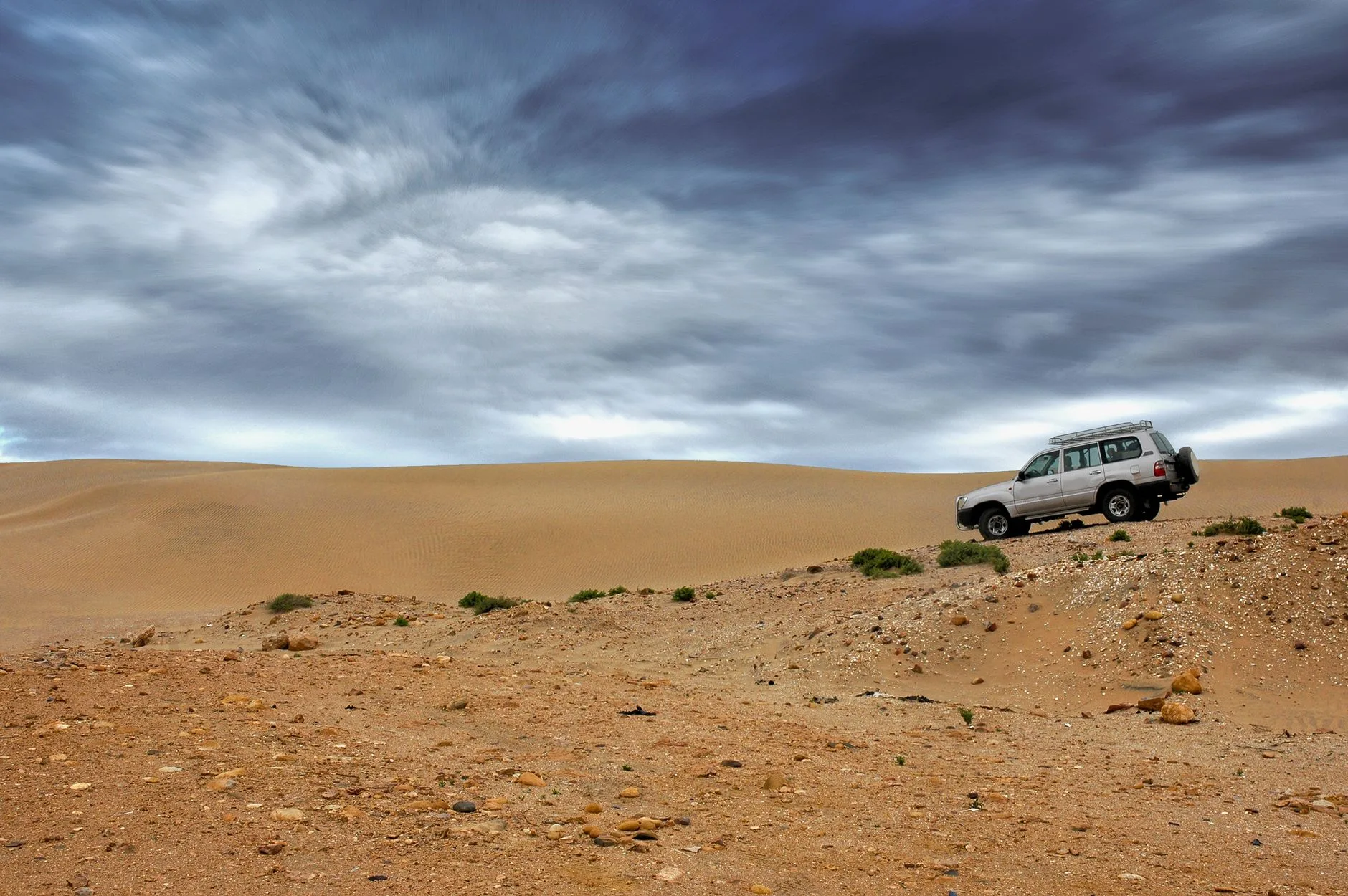
Photo by Moussa Idrissi on Pexels
The border post at Kazungula, where Botswana, Zambia, Zimbabwe, and Namibia nearly touch, is not much to look at: a cluster of corrugated-roof buildings, a queue of trucks that can stretch for a kilometre, and a ferry across the Zambezi that has, as of 2026, mostly been replaced by a bridge that locals still regard with mild suspicion. You’ll stand in line behind a Zimbabwean trader hauling bags of maize meal and a German couple in a hired Land Cruiser, passport in one hand, vehicle carnet in the other, while a border official methodically stamps everything three times. It takes ninety minutes on a good day. This is overlanding in southern Africa in miniature: slow, bureaucratic, occasionally baffling, and absolutely worth it.
Overlanding here doesn’t mean one thing. It can mean a self-drive loop through Namibia’s gravel roads in a rented 4×4 with a rooftop tent, or it can mean joining a truck-based group tour that rattles from Cape Town to Victoria Falls over three weeks, cooking communal dinners at bush camps along the way. Both are legitimate ways in. This guide leans toward the self-drive version, because that’s where most of the planning questions live, but the logistics below apply whether you’re behind the wheel yourself or handing that job to a driver-guide.
Choosing your route: the classic loop and its alternatives
The route most people default to is some version of the Cape Town–Windhoek–Victoria Falls corridor, sometimes extended into Botswana’s Okavango Delta and Chobe National Park, sometimes looped back through Johannesburg. It’s popular for a reason: the roads are good enough for beginners, the distances are manageable, and the wildlife density along the way (particularly in Chobe and Etosha) rewards the effort.
A quieter alternative runs through Malawi and Zambia — starting in Lusaka, working down to South Luangwa National Park, then crossing into Malawi at Mchinji or Chipata/Mwami to finish along the shores of Lake Malawi. Roads are rougher, fuel stops are further apart, and English is spoken less consistently outside the main towns, but traffic is lighter and the trip feels less like a well-worn circuit.
| Route | Typical duration | Road conditions | Difficulty for beginners | Highlight |
|---|---|---|---|---|
| Cape Town → Namibia → Vic Falls | 2–4 weeks | Mostly good tar, some gravel in Namibia | Moderate | Etosha, Sossusvlei dunes |
| Johannesburg → Botswana → Zambia loop | 2–3 weeks | Tar with long gravel stretches | Moderate-hard | Okavango Delta, Chobe elephants |
| Lusaka → South Luangwa → Lake Malawi | 10–18 days | Variable, some poor tar | Hard | South Luangwa walking safaris |
| South Africa Garden Route + Lesotho detour | 10–14 days | Excellent tar, mountain passes | Easy-moderate | Sani Pass, Tsitsikamma coast |
If this is your first overland trip anywhere, the Garden Route plus a Lesotho detour via the Sani Pass is genuinely the gentlest entry point — paved roads almost the entire way, reliable fuel and phone signal, and towns close enough together that a breakdown is an inconvenience rather than a crisis.
Vehicle: rent, buy, or join a truck
Renting a fully-equipped 4×4 with a rooftop tent — the standard overlanding setup — typically runs $90–160 USD per day depending on season and vehicle size, usually from operators based in Cape Town, Windhoek, or Johannesburg. These rentals come with recovery gear, a fridge, cooking kit, and usually unlimited kilometres, which matters because distances here are longer than they look on a map.
Buying a vehicle makes financial sense only if you’re overlanding for three months or more and plan to resell at the end — a cottage industry exists around this in Cape Town’s backpacker circuit, with Facebook groups where outgoing travellers sell rigs to incoming ones. It’s workable but adds real risk: registration paperwork, roadworthy certificates, and the possibility of a mechanical problem landing on you rather than a rental company.
Joining a truck-based tour (operators like Acacia Africa or Nomad Africa run multi-week overland trips) removes almost all the logistics at the cost of flexibility and solitude — you’ll be cooking and camping alongside 15–20 strangers, which some people love and others find exhausting by week two. It’s a reasonable way to test whether overlanding suits you before committing to a self-drive trip.
Borders, paperwork, and the carnet question
This is the part that trips up first-timers. Crossing between South Africa, Namibia, Botswana, Zambia, and Zimbabwe requires more than a passport. For your own vehicle (owned or long-term rented), you’ll likely need a carnet de passage — essentially a passport for the car, guaranteeing you won’t sell it abroad — arranged through your national automobile association before departure. Rental companies registered in South Africa or Namibia usually provide cross-border permission letters instead, which is simpler, but confirm this in writing before you leave the depot, because not every rental agreement covers every border.
Budget for small, semi-official costs at crossings: road access fees, carbon tax stickers, third-party insurance (often sold in a shed just past immigration), and the occasional “facilitation” request that isn’t official but is common enough that most overlanders just pay the few dollars and move on. None of this is dangerous, just tedious, and it’s worth having small denominations of US dollars and South African rand on hand since card payment is rarely an option at border posts.
Visa requirements vary by nationality and change periodically, so check current requirements directly with South Africa’s Department of Home Affairs or the relevant embassy before finalising a route — don’t rely on forum posts from two years ago.
What the driving actually feels like
Tar roads in South Africa and Namibia are generally excellent, but gravel sections — particularly in Namibia’s interior and much of Botswana outside the main highways — demand a different kind of attention. Corrugations build speed wobble into a vehicle if you drive too slowly or too fast; there’s a sweet spot, usually somewhere around 80–100 km/h, where the ride smooths out, though it takes a day or two to trust that physics is actually on your side.
Wildlife crossing the road is a real hazard, not a postcard moment — kudu and warthog in particular have poor road sense, and dusk driving in game areas like the road through Chobe or the C34 along Namibia’s Skeleton Coast is genuinely risky. Most seasoned overlanders simply don’t drive after dark in these zones, which means your daily planning revolves around sunset as much as distance.
Fuel stops need forward planning. Between towns like Solitaire and Sesriem in Namibia, or through the Caprivi Strip, fuel stations can be 200km apart and occasionally out of stock entirely. Carry at least one full jerry can as standard practice, not as paranoia.
Camping, lodges, and where you’ll actually sleep
Most overland routes alternate between campsites and the occasional lodge night, and the campsites themselves are a highlight rather than a compromise. Spitzkoppe in Namibia offers unfenced camping among granite boulders with no light pollution at all — the Milky Way is startlingly dense here. Elephant Sands in Botswana has a waterhole that elephants wander up to within metres of the camp bar, which sounds like a gimmick until you’re standing there at 6pm watching a bull elephant drink twenty feet away.
Campsite fees run roughly $10–25 USD per person per night; private lodges and tented camps inside national parks (Chobe, South Luangwa, Etosha) run considerably higher, often $150+ for all-inclusive packages. A workable budget strategy is camping outside park gates and doing day drives in, which saves significantly over staying inside — though it means earlier starts to catch the gates opening at dawn, which is also when the wildlife is most active anyway.
Food, water, and what you’ll actually eat
Braai — the South African and Namibian word for barbecue — is less a meal than a ritual, and most campsites have fixed fire pits built for exactly this. Boerewors (a coiled, spiced sausage) from a farm stall or small-town butchery is a staple worth seeking out specifically rather than settling for supermarket versions. In Zambia and Malawi, nshima (a stiff maize porridge, similar to pap or sadza elsewhere in the region) served with beans or dried fish is the everyday meal at roadside stalls, and ordering it rather than the tourist-menu alternative is both cheaper and genuinely good.
Tap water in South Africa’s cities and Namibia’s main towns is generally safe; treat it as unreliable everywhere else in the region and carry a filter or purification tablets as backup even where bottled water is available, since supply can be inconsistent in smaller towns.
Fresh produce markets are worth the detour — the Michael Mapongwana market in Victoria Falls town and farm stalls along Namibia’s B1 highway sell fruit, biltong, and vegetables at a fraction of lodge prices, and they’re a better way to understand what people here actually eat day to day than any curated menu.
Money, connectivity, and pacing yourself
South African rand is accepted informally in Namibia and parts of Zambia and Botswana, which simplifies cash logistics considerably — it’s worth carrying a stock of small rand notes even outside South Africa itself. Cellular data is patchy once you leave major towns; South Africa and Namibia have reasonably good coverage along main routes, but expect dead zones for hours at a time in Botswana’s wilder stretches and much of rural Zambia. This isn’t necessarily a loss — it forces a kind of attention to the landscape that a signal bar usually interrupts.
Pacing is the single most underrated skill in overlanding. The instinct for a first trip is to cram in every park and town within reach, but 400km of gravel road with three border crossings in a week leaves you exhausted rather than immersed. Planning fewer stops with two or three nights each, rather than a different campsite every night, makes the difference between a trip that feels like driving and one that feels like travelling. Readers building out the wildlife side of an itinerary might find it useful to cross-reference which parks reward a longer stay against those better suited to a single day visit.
The Bottom Line
Overlanding in southern Africa rewards patience more than adventurousness — the people who have the best trips are usually the ones who built in slack for border delays, fuel detours, and the occasional flat tyre rather than the ones who packed the tightest itinerary. Start with the Garden Route and Lesotho if this is a first attempt at self-driving abroad; save the Caprivi Strip and South Luangwa for a second trip once you’ve got a feel for gravel roads and long fuel gaps. Carry more cash and water than seems necessary, confirm border paperwork in writing before you leave the rental depot, and resist the urge to drive after dusk in game areas — it’s the one rule locals won’t bend on, and for good reason. The region doesn’t reveal itself through speed; it reveals itself through the waiting — at borders, at waterholes, at fuel stations with one pump and a queue.
Keep reading: Planning the wildlife side of the trip