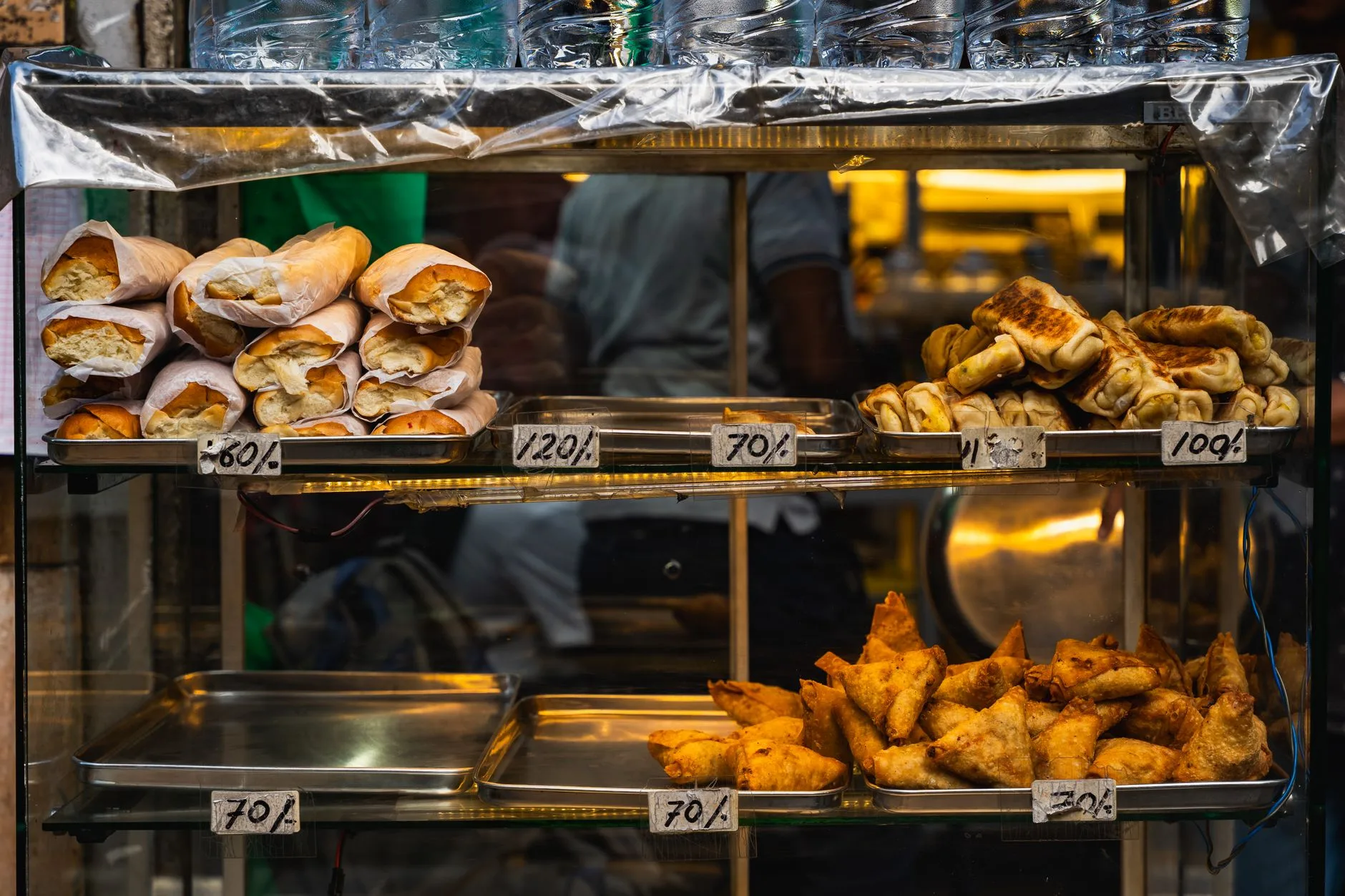
Photo by Thilina Alagiyawanna on Pexels
It’s just past noon on Yaowarat Road in Bangkok’s Chinatown, and the plastic stools outside a stall on Soi Phadungdao have filled with off-duty taxi drivers, a few office workers with their shirts untucked, and one elderly woman methodically working through a plate of stir-fried crab. Nobody is looking at a menu. They’re pointing at what the person next to them has, or simply saying a dish name to the cook, who is already moving before the order is finished. A plate costs 80 baht, roughly two dollars, and it’s better than almost anything you’d find in a restaurant three streets over charging five times as much for the tourist set menu with English translations and a laminated photo of pad thai.
This is the pattern that repeats in Mexico City’s Mercado de San Juan, in the lokantas tucked behind Istanbul’s Eminönü ferry terminal, in the workers’ canteens of Hanoi’s Old Quarter, and in the tascas of Lisbon’s Alfama that have no sign at all. Good cheap food exists almost everywhere people actually live — it’s simply not where the tourist infrastructure points you. Finding it isn’t about secret knowledge or luck. It’s about reading a few reliable signals and being willing to eat somewhere that doesn’t have a menu in your language.
Follow the Queue, Not the Photos
A queue of locals at lunchtime is the single most reliable signal in travel. It means turnover is fast, ingredients are fresh, and the price is right for people who eat there every day on a working wage, not a travel budget. A restaurant with glossy photos of every dish and a greeter outside beckoning you in is optimised for the opposite: one-time customers who won’t be back to complain.
The trick is timing. Queues form at specific hours — Thai office lunch runs sharp from 11:30am to 1pm, Spanish lunch service rarely starts before 1:30pm and peaks closer to 2:30pm, and in much of Latin America the almuerzo rush is 12:30 to 2pm. Arrive outside those windows and you’ll miss the signal entirely, finding an empty room that tells you nothing. The flip side: arriving right at the start of service often gets you the best of what was cooked that morning, before the popular dishes sell out.
Markets Are Honest
Fresh produce markets with attached food stalls are where cheap food is most consistently good, because the people cooking there are often buying ingredients from the stall two metres away. Mercado de San Juan and Mercado de Medellín in Mexico City both have cocinas económicas tucked among the produce stands, serving a comida corrida — soup, main, rice, and a drink — for a fraction of restaurant prices. In Istanbul, the Kadıköy market on the Asian side does the same with esnaf lokantası counters where you point at steam trays of stewed vegetables, beans, and rice.
Southeast Asia runs on this model almost entirely, from the wet markets of Phnom Penh to the hawker-adjacent stalls of Kuala Lumpur’s Chow Kit. If you’re heading that direction, it’s worth reading a dedicated guide to eating at local markets in Southeast Asia before you go, since market etiquette and food safety basics vary more there than almost anywhere else. Europe has its own version of this culture, too — the piled produce stalls and cheese counters of markets across the continent reward slow exploration, and a browse through the best local food markets in Europe is a good starting point for building a route around them rather than around monuments.
The Lunch Menu Trick
Nearly every food culture that has a strong lunch tradition also has a cheaper, simpler version of dinner service built specifically for workers who need to eat fast and get back to their desks. In Spain and much of Latin America it’s the menú del día — usually three courses, bread, and a drink, often for less than what a single tapas plate costs at dinner in the same restaurant. In France it’s the formule or plat du jour, chalked on a board outside, changing daily depending on what the kitchen bought that morning. In Japan it’s teishoku, a fixed set menu with rice, miso soup, a main, and pickles, available at lunch in restaurants that charge double for the à la carte dinner menu.
The catch is that this pricing almost never applies at dinner, and it’s rarely advertised in English. Look for a handwritten board, a laminated sheet taped to the window, or simply ask “¿hay menú del día?” — the willingness to ask in the local language, even badly, often gets you pointed toward food that isn’t on the printed menu at all.
Reading the Signs of Quality in Street Food
Not all street food is equal, and the difference between a stall that will make a fantastic meal and one that will ruin your next two days usually comes down to a handful of visible details. Look at turnover — is the oil being changed, is the grill constantly busy, is food being cooked to order rather than sitting under a heat lamp. Look at the cook’s hands — gloves or tongs for raw ingredients, a separate surface for raw meat. Look at the crowd — a stall with a line of locals at 1pm on a Tuesday has passed a test that no health inspector certificate can replicate.
Price matters here too, in a specific way: a street stall charging noticeably less than its neighbours for the same dish is sometimes using cheaper, older ingredients to undercut the competition. The best value isn’t always the cheapest option on the street — it’s the busiest one charging a fair, consistent price.
Walk One More Block
Tourist-facing food clusters around three things: landmarks, transport hubs, and hotel districts. Rent is higher in those spots, so prices rise and quality often drops to match a customer base that’s unlikely to return. The fix is almost embarrassingly simple — walk one more block, ideally away from the main road rather than parallel to it.
In Naples, the pizzerias directly facing the Duomo charge tourist prices for a Margherita; walk ten minutes into the Quartieri Spagnoli and you’ll find the same pizza, often better, for half the cost, served to a room full of residents. In Marrakech, the food stalls ringing Jemaa el-Fnaa are priced for the square’s foot traffic; the medina’s side alleys, just a few turns away, have stalls selling the same tagines and harira soup for a fraction of the price, to a mostly local clientele. This same logic applies across much of Morocco beyond Marrakech, where the gap between tourist-district pricing and everywhere-else pricing can be dramatic.
What Cheap Actually Costs, Region by Region
“Cheap” is relative, and it’s worth having a rough sense of what a good, filling, local meal should cost before you arrive, so you can spot when you’re being charged a tourist premium.
| Region | Street food / market meal | Sit-down local lunch | Tourist-zone equivalent |
|---|---|---|---|
| Southeast Asia (Bangkok, Hanoi, Phnom Penh) | $1–3 | $3–5 | $8–15 |
| South Asia (Delhi, Colombo) | $1–2 | $2–4 | $6–12 |
| Mexico & Central America | $2–4 | $4–7 | $10–18 |
| South America (Colombia, Peru) | $2–4 | $4–8 | $10–20 |
| Southern & Eastern Europe (Lisbon, Istanbul, the Balkans) | $3–6 | $7–12 | $18–30 |
| Western Europe (Paris, Amsterdam) | $6–10 | $14–20 | $25–45 |
These are rough bands, not fixed rules, and they shift with inflation and season — but the ratio between the local price and the tourist-zone price tends to hold remarkably steady, often two to three times higher in areas built around visitors rather than residents. The same math shows up whether you’re navigating budget travel in Colombia or working through a comida corrida in Oaxaca.
Eating Cheap Without Getting Sick
The honest caveat to all of this: eating where locals eat does carry slightly more risk than eating in a sealed, air-conditioned restaurant with imported ingredients, simply because street and market food often involves less rigorous cold-chain handling. That risk is manageable, not a reason to avoid it. Stick to food cooked fresh in front of you rather than food that’s been sitting, drink bottled or boiled water in places where tap water isn’t safe, and build in a day or two of buffer early in a trip rather than scheduling a long bus ride the morning after trying something new. The CDC’s travel food and water safety guidance is a useful baseline if you want specifics before a longer trip, especially through South or Southeast Asia.
It’s also worth remembering that street food isn’t a lesser version of “real” dining — in places like Singapore, hawker centres are recognised by UNESCO as intangible cultural heritage, a formal acknowledgment of what regular eaters already know: this is where the food culture actually lives, not a budget substitute for it.
The Bottom Line
- The single best predictor of good cheap food is a queue of locals at the right hour — not reviews, not photos, not proximity to a landmark.
- Markets with attached food stalls consistently outperform standalone restaurants on both price and freshness, because the kitchen and the produce stand are often metres apart.
- Fixed lunch menus — menú del día, plat du jour, teishoku — are the cheapest route to a full, well-balanced meal almost anywhere that has a lunch culture, but they rarely extend to dinner.
- Walking one more block away from a landmark or transport hub routinely halves the price without any drop in quality, sometimes with an improvement.
- Budget a little flexibility into your itinerary, not your appetite — the modest extra risk of eating where everyone else eats is manageable with basic precautions, and it’s where the actual food culture of a place turns out to live.
Keep reading: How to eat at local markets in Southeast Asia safely