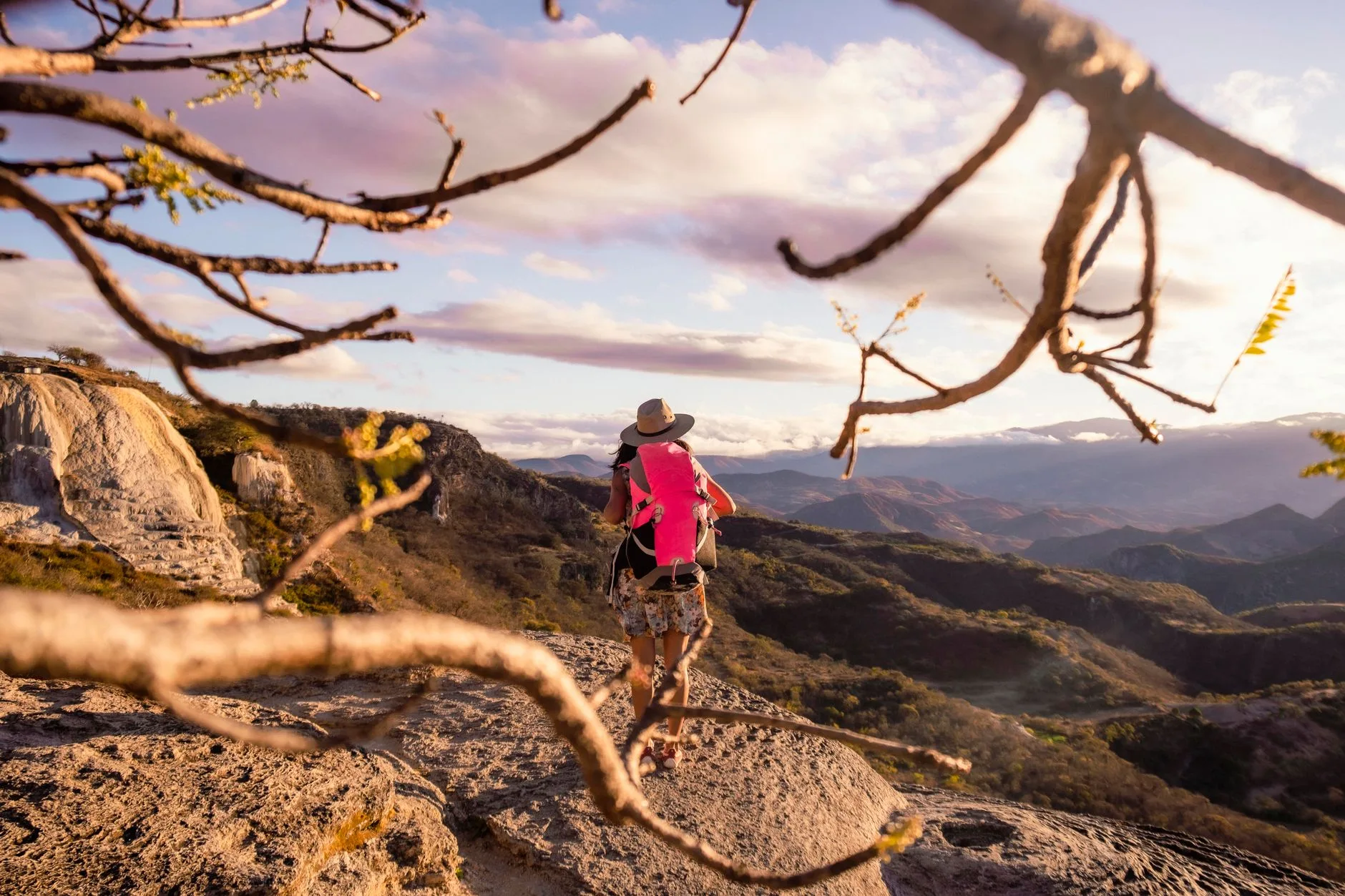
Photo by Davis Arenas on Pexels
At six in the morning, the Mercado Sánchez Pascuas in Oaxaca city is already loud: women stacking tortillas the size of dinner plates, a man grinding cacao for chocolate de agua, the hiss of a comal heating for the day’s first memelas. Steam fogs the air, mixed with the smoky edge of chiles toasting somewhere out of sight. Nobody here is performing for a camera. This is simply what Tuesday looks like.
That’s the thing about Oaxaca — the state, not just the city — that makes it reward patience over itinerary. Most visitors arrive, photograph Monte Albán and the Santo Domingo church, eat a mole at a restaurant with an English menu, and leave after three days believing they’ve seen it. They haven’t, not really. Oaxaca’s depth is in its valleys, its sierra villages, its coast, and the rhythm of a place that still runs largely on its own calendar rather than a tourist one. Slow travel here isn’t a lifestyle choice so much as a practical necessity: the roads are slow, the buses are slower, and the good stuff rarely happens on schedule.
Oaxaca City: more than a base camp
Centro Histórico, with its green cantera stone buildings and the Santo Domingo de Guzmán church anchoring the north end, is where everyone starts, and fairly so — it’s genuinely beautiful, and the historic centre is a UNESCO World Heritage Site alongside the nearby ruins of Monte Albán. But staying more than a weekend changes what you see. The Xochimilco neighbourhood, a few blocks west of the centre, has quieter cobblestone streets, family-run mezcalerías, and far fewer souvenir stalls. Jalatlaco, to the east, has a similar texture — colourful facades, a 16th-century church, and cafés that serve chapulines (toasted grasshoppers, seasoned with chile and lime) as a bar snack rather than a novelty item for visitors.
Give the city at least four or five days before heading anywhere else. Walk the Mercado 20 de Noviembre at lunchtime for tasajo (thin grilled beef) cooked over charcoal in the market’s smoke-filled pasillo de humadas, then follow it with a glass of tejate, a frothy, slightly bitter drink made from maize and cacao that predates the Spanish conquest. The pace of a market meal — queuing, waiting for the comal, sitting on a plastic stool elbow to elbow with strangers — is itself a kind of slow travel. There’s no way to rush it, and no reason to.
The Valles Centrales: weaving towns and a mountain of hot springs that aren’t
South and east of the city, the Valles Centrales hold a string of villages each known for a single craft, which makes a loop through them feel less like sightseeing and more like an apprenticeship in attention. Teotitlán del Valle, about 30 minutes by colectivo (shared taxi, roughly 15–20 pesos) from Oaxaca city, is the centre of Zapotec wool weaving. Workshops here still use pedal looms and dye wool with cochineal (a red dye made from insects that live on prickly pear cactus), indigo, and pericón. Many families will show you the process without expecting a sale, though buying directly from a weaver rather than a city shop puts more money in fewer hands.
Further along the same road, Mitla’s archaeological site gets a fraction of Monte Albán’s visitors despite equally striking stonework — intricate geometric mosaics set into the Palacio de las Columnas, built without mortar. Hierve el Agua, the petrified “waterfall” of mineral-rich rock pools about an hour past Mitla on a rough but paved road, is the valley’s most photographed spot and genuinely worth the detour, but arrive before 10am; by midday it fills with tour vans from the city and the calcified pools lose some of their stillness.
| Region | Travel time from Oaxaca city | Best for | Season to visit |
|---|---|---|---|
| Valles Centrales | 30 min–1.5 hrs | Weaving villages, Mitla ruins, Hierve el Agua | Year-round; avoid Semana Santa crowds |
| Sierra Norte | 1.5–2.5 hrs | Hiking, cloud forest, Pueblos Mancomunados | Oct–May (dry season) |
| Oaxaca coast | 6–10 hrs by road, 40 min by air | Beaches, turtle nesting, slower pace | Nov–Apr |
| Santiago Matatlán & mezcal country | 1 hr | Palenques, mezcal tasting | Year-round |
The Sierra Norte: cloud forest on foot
The Pueblos Mancomunados — a network of eight Zapotec communities in the Sierra Norte, about two hours northeast of Oaxaca city — run their own community tourism cooperative, Expediciones Sierra Norte, which arranges hiking and mountain biking between villages like Benito Juárez, Cuajimoloyas, and Llano Grande. Trails run through pine and cloud forest between 2,800 and 3,200 metres elevation, which means mornings are genuinely cold even in dry season — pack a proper layer, not just a light fleece.
Accommodation in the villages is in simple wood cabañas with wood-burning stoves, and meals are taken communally, usually featuring quesillo (Oaxacan string cheese) and tlayudas cooked over an open fire. There’s no mobile signal in most of these villages, which is either a selling point or a problem depending on your tolerance for being unreachable. Hikes between villages run 3 to 6 hours and are moderately strenuous given the altitude; this isn’t a destination for people expecting resort infrastructure, but for anyone who wants a slower register of travel, it’s one of the most complete experiences in the state.
Mezcal country: Santiago Matatlán and beyond the tasting room
Santiago Matatlán calls itself the “world capital of mezcal,” and while that’s a marketing line, the density of small-scale palenques (distilleries) here is real. Unlike the polished mezcal bars of Oaxaca city’s Centro, a visit to a family palenque in Matatlán or nearby San Baltazar Guelavila means watching agave piñas roasted in earthen pits for days, crushed by a stone wheel pulled by a horse or mule, and fermented in wooden vats before being distilled in clay or copper stills. Tastings are often free or a few hundred pesos, and the mezcal is stronger and less filtered than anything bottled for export.
Getting there independently means a colectivo from the second-class bus terminal (Central de Abastos) in Oaxaca city, or hiring a driver for a half-day if you want to visit two or three palenques without the logistics of return transport. Go slowly here in the literal sense — mezcal at 45–50% ABV at 10am is not a quantity game.
The coast: Mazunte, San Agustinillo, and the long bus ride that’s worth it
Oaxaca’s Pacific coast is a different country in feel from the valleys — hot, humid, and unhurried in a beachier register. Getting there the slow way means an 8 to 10 hour bus journey on winding mountain roads (the ADO line runs comfortable overnight buses from Oaxaca city to Pochutla), or flying into Puerto Escondido’s small airport in 40 minutes if the switchback roads sound less appealing than they are scenic.
Mazunte and neighbouring San Agustinillo are smaller and quieter than Puerto Escondido or Zipolite, with a handful of family-run palapa restaurants serving fresh pescado zarandeado (butterflied fish grilled over coals with achiote) right on the sand. Mazunte is also home to the Centro Mexicano de la Tortuga, a turtle conservation centre worth visiting for context on the olive ridley turtle nesting season that happens along this coast between roughly June and January. Zipolite, a few minutes further by colectivo, has a reputation for a particular, unhurried beach culture and is one of the few beaches in Mexico where nudity is informally tolerated — worth knowing before you arrive with expectations of a quiet family beach.
None of these towns have large resorts, which is precisely the appeal and also the catch: infrastructure is basic, roads flood in rainy season (June–October), and a sprained ankle on an uneven sandy street is a more realistic travel risk than anything more dramatic. Anyone weighing this trip against other budget-friendly stretches of the country might find it useful to compare notes with a broader look at budget travel in Mexico beyond tourist hotspots, which covers logistics for stringing together a longer, slower route.
Food as a slow-travel itinerary in itself
Oaxaca is sometimes called the culinary capital of Mexico, and the claim holds up mostly because the food resists shortcuts. The state’s seven moles — negro, rojo, amarillo, verde, chichilo, coloradito, and manchamanteles — each take hours, sometimes days, to prepare, built from dozens of ingredients toasted and ground by hand. Restaurants worth seeking out include Itanoní in the Colonia Reforma neighbourhood, which sources heirloom corn directly from farmers and mills it on-site for tortillas and memelas, and the comedores (small family eateries) inside the Mercado Benito Juárez, where a plate of mole negro with chicken runs 80–120 pesos rather than the 300–400 pesos charged at tourist-oriented restaurants nearby.
Tlayudas — a large, crisp tortilla topped with black bean paste, quesillo, cabbage, and your choice of meat, folded and grilled over charcoal — are best eaten standing at a street stall after dark, particularly around the Mercado de la Merced area, where vendors set up folding tables and plastic chairs each evening. Eating this way, slowly and repeatedly over several days rather than ticking off one “must-try restaurant,” is arguably the fastest way to understand the state’s regional variation — Istmo cooking differs sharply from valley cooking, which differs again from coastal seafood traditions.
Logistics: getting around without a rental car
Oaxaca state is genuinely large and the terrain is mountainous, which means travel times are longer than distances suggest. Colectivos (shared vans or taxis) connect most valley towns and run frequently and cheaply, though they leave when full rather than on a fixed schedule — budgeting flexible time is essential. ADO buses handle longer routes (Oaxaca city to the coast, or to San Cristóbal de las Casas in neighbouring Chiapas, roughly 10 hours) in air-conditioned comfort with assigned seats.
Renting a car gives more freedom for the Valles Centrales and Sierra Norte but isn’t necessary and brings its own headaches — mountain roads are narrow, topes (speed bumps) are frequent and often unmarked, and parking in Oaxaca city’s Centro is limited. For most travellers moving at a slower pace, a mix of colectivos for short valley hops and ADO buses for longer stretches works well and is considerably cheaper. It’s worth checking the US State Department’s Mexico travel advisory before finalising a coastal or southern route, as advisories are issued region by region within Mexico rather than as a single blanket rating.
Extending the trip: Chiapas and the Oaxaca–San Cristóbal route
Travellers with two or more weeks often continue from Oaxaca into Chiapas, taking the overnight ADO bus to San Cristóbal de las Casas, a colonial highland city with its own strong indigenous weaving traditions among the Tzotzil and Tzeltal communities in surrounding villages like San Juan Chamula. The route itself, through pine forest and increasingly dramatic mountain scenery, is part of the experience rather than a dead stretch to sleep through. This kind of unhurried, overland regional travel — crossing from one distinct culture into another by bus rather than plane — is the same logic that underpins slower routes elsewhere, from backpacking through Central America to stringing together Europe’s long-distance trails on foot.
The Bottom Line
- Oaxaca rewards a minimum stay of two weeks if you want to see the city, valleys, sierra, and coast without rushing between them — a long weekend only ever scratches the historic centre.
- The best single logistics move is leaning on colectivos for short valley hops and ADO buses for longer legs; a rental car adds stress on mountain roads without saving meaningful time.
- Go to Hierve el Agua before 10am, drink mezcal in Matatlán rather than only in city bars, and eat at least one meal inside a market rather than a restaurant built for visitors.
- The coast is genuinely remote in character even if the beaches are well known — budget extra time for bus delays, rainy-season road conditions, and the simple fact that nothing on this coast moves quickly.
- If the trip stretches past two weeks, the overland route into Chiapas via San Cristóbal de las Casas extends the same unhurried, culturally dense travel logic into a second, distinct region.
Keep reading: Budget travel in Mexico beyond tourist hotspots