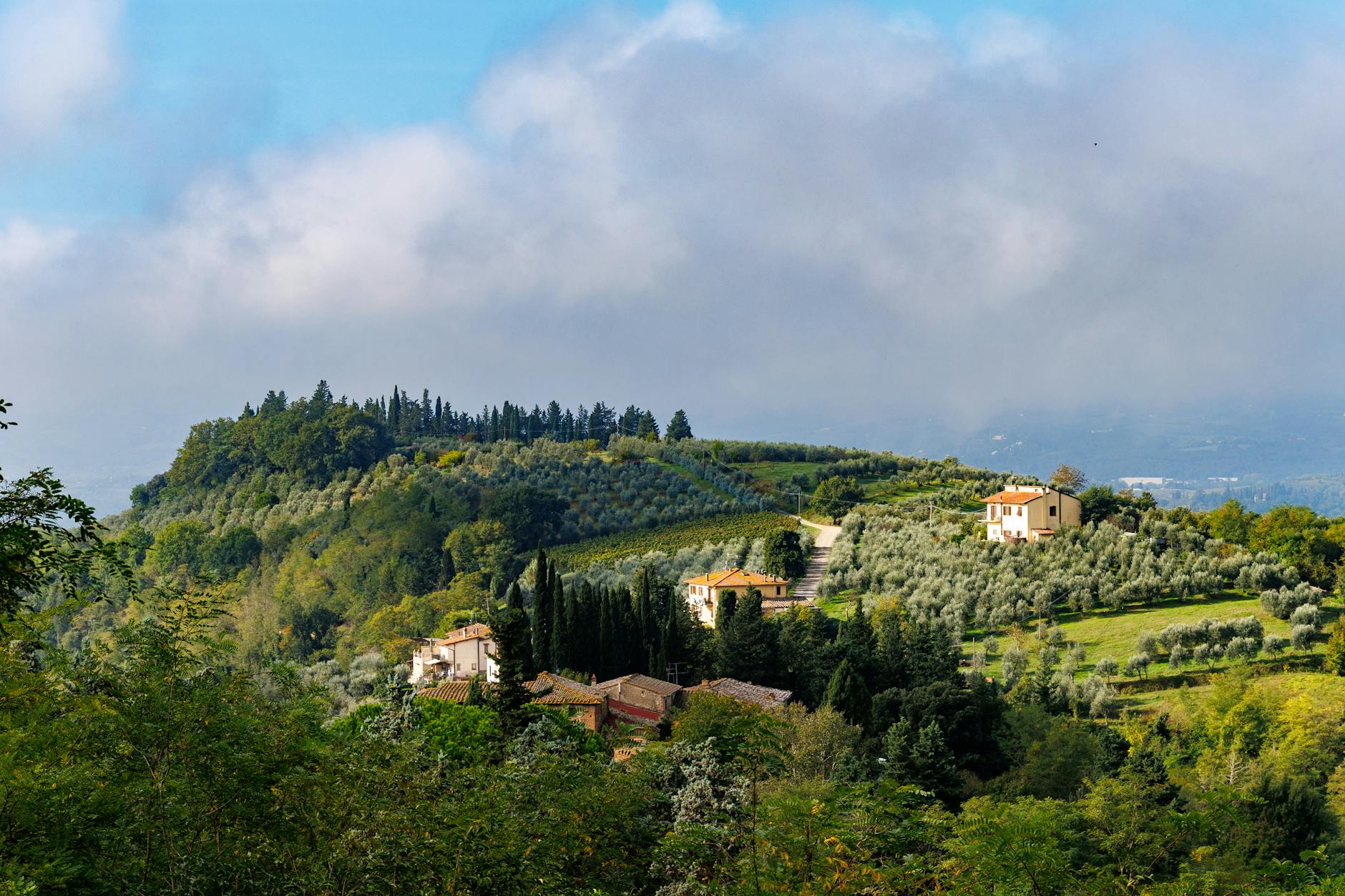
Photo by Toni Seyfert on Pexels
Slow travel in rural Italy: where to go and how
The 6:47 from Ascoli Piceno to San Benedetto del Tronto carries three passengers on a Tuesday morning: a woman with a bag of chard, a man in overalls reading a newspaper folded into quarters, and you. The train rattles along the Tronto valley, past walnut orchards and farmhouses with laundry strung across iron balconies. Nothing is optimised. Everything is legible. This is what slow travel in rural Italy actually feels like — not a photogenic fantasy, but a pace of life that requires you to operate on its own schedule, which is slower, stranger, and considerably more interesting than anything the coastal resorts offer.
Rural Italy is not one place. It’s Le Marche’s rolling wheat country and Basilicata’s lunar gorges, Garfagnana’s chestnut forests and the Murge plateau of Puglia, where trulli dot limestone fields. The thread connecting them is the same: small towns with one alimentari, train lines that run twice a day, and a hospitality that emerges slowly once you’ve sat at the same bar two mornings running. Getting it right takes planning and patience. Here’s how.
Where to actually go: five regions worth the effort
Le Marche is the most accessible entry point. The hill towns of the Sibillini foothills — Sarnano, Amandola, Montemonaco — sit within reach of the Adriatic coast rail line but feel genuinely untouched. Sarnano has a medieval centro storico compact enough to walk in twenty minutes, thermal baths (Terme di Sarnano, around €15 for a day pass), and a Tuesday market selling local cheeses including the sharp, pressed pecorino di fossa.
Basilicata is harder and more rewarding. Matera gets the tourists; the Agri valley and the villages around Senise and Tursi get almost none. The landscape here — dry riverbeds, eroded clay formations called calanchi, abandoned sassi-style dwellings — has a rawness that Le Marche doesn’t. It also has peperoni cruschi, dried sweet peppers fried in olive oil until they crackle like crisps, served over pasta or eaten alone. Find them at any alimentari in Senise.
Garfagnana, in northern Tuscany, is underused despite sitting between the Apuan Alps and the Apennines. The town of Castelnuovo di Garfagnana is a functional base — it has a supermarket, a bus terminal, and a Saturday market. From here, trails into the Orecchiella nature reserve start within a 20-minute drive. Local dishes run to tordelli (large pasta parcels stuffed with meat and herbs) and farro della Garfagnana, a spelt grown here since Roman times with protected IGP status.
Alta Murgia, Puglia — the plateau northwest of Bari — is flatter, drier, and deeply agricultural. The town of Gravina in Puglia, famous for its gorge and cave churches, sees weekend visitors from Bari but empties by Sunday evening. Stay midweek. The tiella di Gravina — a baked dish of rice, potatoes, and mussels — is essentially the same as Bari’s version but made with local sheep’s cheese instead.
Molise deserves mention precisely because almost no one goes. Italy’s second-smallest region has no major tourist infrastructure, which is both the problem and the appeal. Agnone is known for its bell foundry (Pontificia Fonderia Marinelli, still operating since the 11th century, tours available for €8). The surrounding countryside produces caciocavallo cheese and an obscure wine grape, Tintilia, that you’ll find almost nowhere outside the region.
Getting there and moving around
Rural Italy’s transport is functional but unforgiving of rigid schedules. Trenitalia’s regional network covers the main corridors — Florence to Castelnuovo di Garfagnana via Lucca, Potenza to Metaponto in Basilicata — but frequencies drop to two or three services daily on branch lines. FLIXBUS and regional SITA/Cotral buses fill some gaps, particularly in Molise and inland Puglia, but timetables shift seasonally.
A hire car unlocks everything. Rates from Bari, Naples, or Ancona airports start around €30–45/day for a small manual car; book two weeks ahead for the cheapest rates. Many rural roads are narrow, unmarked, and occasionally unsigned — download offline maps on Maps.me or Google Maps before you leave mobile coverage areas.
Where to sleep and what it costs
Agriturismo is the backbone of rural accommodation — working farms that rent rooms and often provide breakfast and dinner from their own produce. Quality varies. The best ones (book through Agriturismo.it, which is independently operated) run €60–90 per night for a double with half-board in Le Marche or Garfagnana, slightly less in Molise and Basilicata. The worst are just B&Bs with a tractor parked outside.
Affittacamere (room rentals) in village centres are cheaper — €40–65/night — and more useful if you want to eat out and explore independently. For stays of a week or more, weekly apartment rentals through direct owners (advertised on local Facebook groups and noticeboards) can drop to €300–450/week, utilities included.
Costs, seasons, and logistics at a glance
| Factor | Low season (Nov–Mar) | Shoulder (Apr–May, Sep–Oct) | High season (Jun–Aug) |
|---|---|---|---|
| Agriturismo double/night | €45–65 | €60–90 | €80–120 |
| Car hire/day (small) | €25–35 | €30–45 | €45–65 |
| Restaurant meal (2 courses + wine) | €18–26 | €20–30 | €22–35 |
| Market produce basket | €8–12 | €10–15 | €10–15 |
| Village to village bus fare | €2–4 | €2–4 | €2–4 |
| Thermal baths (day pass) | €12–18 | €14–20 | €16–22 |
Shoulder season — particularly late September through October — is the optimum window. Harvests are active (olives in Puglia, chestnuts in Garfagnana, truffles in Le Marche), temperatures are manageable, and tourist infrastructure is still open without the summer pressure.
What to eat and where to find it
Eating well in rural Italy is almost automatic if you follow a few rules. Lunch is the serious meal — most rural ristoranti and trattorie close by 2:30pm and may not open for dinner at all on weekdays. The menu del giorno (fixed lunch menu, typically €12–18 including wine) is almost always the best value and the most representative of what’s