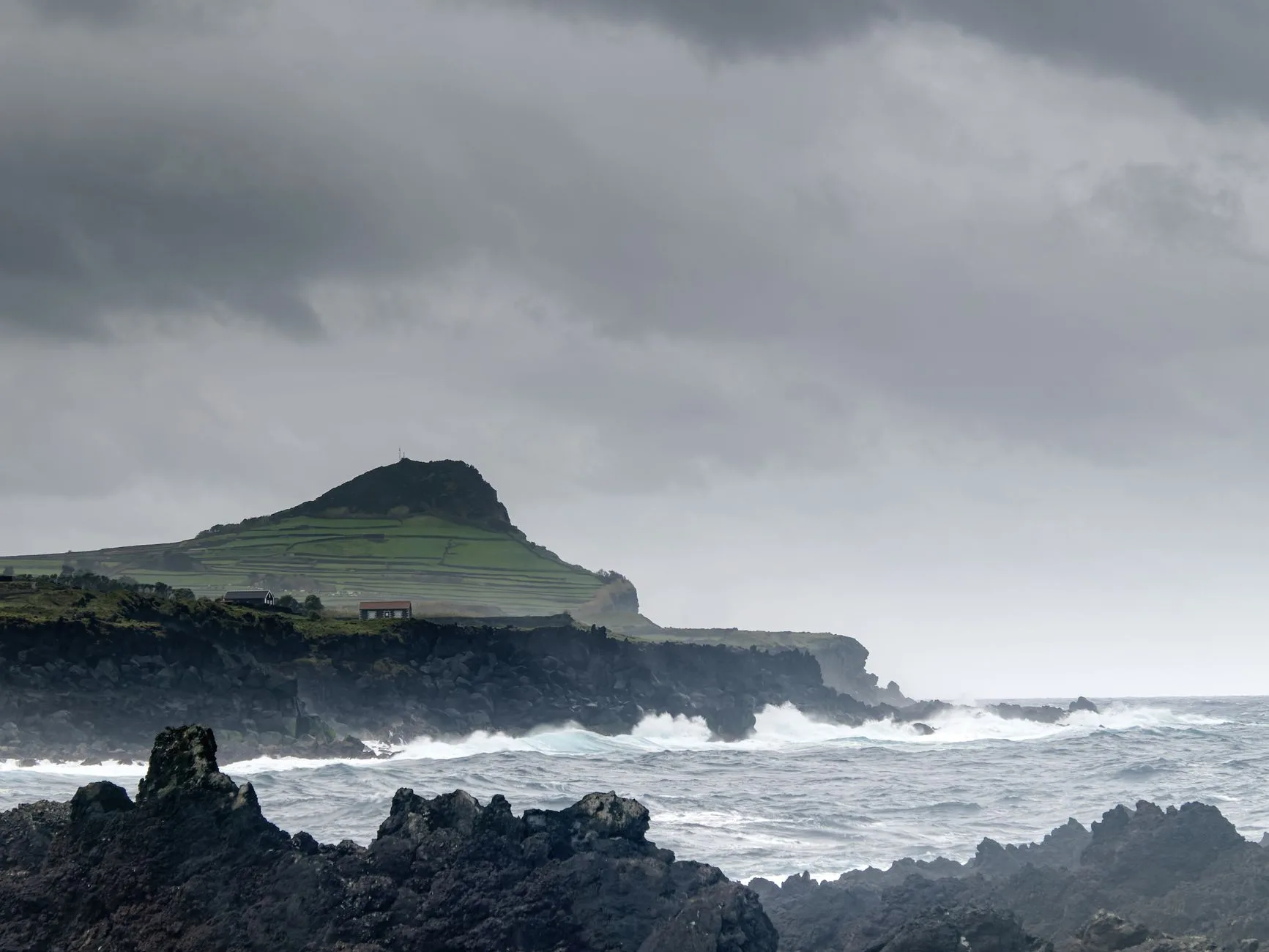
Photo by Rino Adamo on Pexels
The fog rolls into Sete Cidades most mornings before nine, and if you’re standing at the Vista do Rei lookout on São Miguel before it burns off, you’ll see nothing at all — just white, and the sound of cowbells somewhere below. Wait twenty minutes, maybe forty, and the crater opens up: a blue lake and a green lake, side by side, filling an extinct volcano the size of a small town. Most visitors treat this as a ten-minute photo stop between the airport and a boat tour. It’s worth more than that. It’s worth sitting on the stone wall with a thermos of coffee and watching the valley reveal itself at its own pace, because that’s essentially the whole argument for slow travel in the Azores: nothing here rewards rushing, and almost everything punishes it.
The nine islands of this Portuguese archipelago sit in the middle of the North Atlantic, roughly 1,500 kilometres from Lisbon and 3,900 from New York, which is either very far or surprisingly close depending on which coast you’re starting from. Volcanic, green, frequently wrapped in cloud, they were long a refuelling stop for transatlantic flights and little else to outsiders. That’s changed — São Miguel in particular gets busy in July and August now — but the islands remain structurally resistant to speed. Ferries run on their own schedule, not yours. Weather closes trails without warning. A single island can swallow a week.
Why the Azores Work for a Slower Pace
The Azores aren’t set up for island-hopping in the Greek sense — there’s no dense, cheap, constant ferry network connecting everything to everything. Inter-island transport is limited, often weather-dependent, and genuinely cheaper and easier if you pick two or three islands and stay put rather than trying to collect all nine. That constraint is a gift. It forces the kind of trip where you learn the walk from your guesthouse to the padaria, recognise the fishermen mending nets at the same quay each evening, and stop checking what else you’re missing.
Distances are small but terrain is slow: roads switchback up volcanic cones, trails cross fields of hydrangea hedgerows that look ornamental but are actually old land-division fences, and almost nothing is flat. Budget more time than the map suggests.
Getting There and Between the Islands
Flights land mainly at Ponta Delgada (PDL) on São Miguel, with connections from Lisbon, Porto, and seasonal direct routes from Boston and Toronto. SATA Azores Airlines runs the inter-island network, and it’s worth booking the Azores Airpass if you’re visiting three or more islands — it’s considerably cheaper than booking single legs separately.
Where ferries exist, they’re worth taking over flying when schedules allow. The crossing between Faial (Horta) and Pico (Madalena) takes about 30 minutes and runs multiple times daily — this is the one reliable, frequent inter-island ferry in the archipelago, and it’s a genuinely pleasant way to arrive somewhere, deck spray and all. Beyond that pairing, ferry service to the other islands is seasonal (roughly June to September) and far less frequent, so cross-check timetables before building an itinerary around them. If you enjoy working ferry logistics into a trip, the broader question of which European crossings are worth the effort is covered in a guide to underrated ferry routes in Europe — the Horta–Madalena crossing would fit comfortably on that list.
Car rental is near-essential outside Ponta Delgada’s centre. Roads are well-paved but narrow, and GPS can mislead on the smaller islands — paper maps from the tourist office in Horta or Ponta Delgada are a reasonable backup.
São Miguel: The Hub Island, Worth More Than a Layover
Most itineraries start and often stay on São Miguel, the largest island, and there’s enough here for a full week without repetition. Ponta Delgada’s old town has a genuine working rhythm — the Mercado da Graça is a produce and fish market rather than a tourist stage, and the Portas da Cidade, the 18th-century city gates, frame the harbourfront without being roped off from daily life.
Furnas, on the island’s east side, is built entirely around geothermal activity: sulphurous vents steam up through the town’s gardens, and the local specialty, cozido das Furnas, is a meat-and-vegetable stew cooked for hours by lowering a pot into the volcanic earth itself. Restaurants around the Furnas lake will arrange this, and watching the pots dug up — mud-caked, impossibly fragrant — is worth timing lunch around.
Lagoa do Fogo, the “lake of fire,” sits higher and wilder than Sete Cidades and gets a fraction of the visitors, partly because the access road is rougher and the weather less forgiving. The hike down to the shoreline takes about 45 minutes each way and is frequently closed in high wind — check conditions locally rather than assuming the trailhead will be open.
Pico and Faial: Vineyards, Whales, and a Working Port
Pico Island is dominated, literally, by Portugal’s highest peak — a 2,351-metre volcano that’s often shrouded but occasionally, gloriously, clear. Climbing it is a serious half-day-plus undertaking requiring a permit and, for safety, ideally a guide given the loose volcanic scree and fast-changing weather.
More distinctive, and far gentler, is the UNESCO-listed vineyard landscape on Pico’s southwest coast — a patchwork of black basalt walls (currais) built to shelter vines from salt wind, stretching for kilometres along the coast near Criação Velha. The UNESCO World Heritage listing covers the area in detail, but the real experience is walking it: no gates, no fee, just stone corridors opening occasionally onto the Atlantic, with small adegas where you can taste Verdelho wine made from vines growing in volcanic gravel with no visible soil at all.
Horta, on neighbouring Faial, has long been a stopover for transatlantic sailors, and its marina wall is covered in decades of paintings left by passing yacht crews — tradition holds that failing to paint one brings bad luck on the next crossing. Café Sport on the harbourfront has been the sailors’ bar for generations and is worth a drink even if you arrived by plane.
Whale watching from Pico or Faial is a genuine highlight rather than a gimmick — the Azores sit on a migratory route and sperm whales are resident year-round, though sightings are never guaranteed and trips should be booked with operators following responsible-distance guidelines.
São Jorge: Fajãs, Cheese, and Fewer Visitors Still
São Jorge is narrower, steeper, and quieter than its neighbours, defined by fajãs — flat lava or landslide platforms at the base of the island’s cliffs, some reachable only by steep footpath or 4×4 track. Fajã dos Santos and Fajã da Caldeira de Santo Cristo (a 90-minute hike down from the village of Serra do Topo) are the best-known, the latter famous for its clam lagoon and a single restaurant serving them fresh.
São Jorge also produces the Azores’ best-known cheese, a firm, tangy DOP-protected queijo that outshines most of what gets exported — buy it directly from small producers (queijarias) in Urzelina or Velas rather than the supermarket version.
Where to Stay
Slow travel in the Azores leans naturally toward smaller, family-run stays rather than resort-style hotels, partly because the latter barely exist outside Ponta Delgada.
| Island | Where to base yourself | Typical stay type | Good for |
|---|---|---|---|
| São Miguel | Ponta Delgada or Furnas | Guesthouses, converted manor houses | First-timers, longer single-base stays |
| Pico | Madalena or Lajes do Pico | Rural quintas, wine-estate rooms | Hiking, vineyards, whale watching |
| Faial | Horta | Harbourside pensões | Ferry access, sailing culture |
| São Jorge | Velas or Norte Pequeno | Family-run casas rurais | Fajãs, cheese, quiet |
Rural guesthouses (turismo rural / casas de campo) are common and often working farms — breakfast might include milk from the cows visible out the window. Booking ahead matters more in July and August; outside peak season, availability loosens considerably and prices drop.
Eating Beyond Cozido
Beyond the Furnas stew, look for lapas grelhadas (grilled limpets with garlic and lemon, a São Miguel staple), bolo lêvedo (a griddled, slightly sweet muffin-bread sold warm and split for butter in Furnas and Ponta Delgada bakeries), and molha de carne, a spiced marinated pork dish found on home-style menus. Portuguese wine culture generally gets less attention than it deserves, and the Azores’ volcanic Verdelho — once prized in 19th-century America before phylloxera nearly wiped it out — is a genuinely distinct expression worth seeking out at adegas rather than restaurant wine lists.
Season, Weather, and Honest Logistics
The Azores are a year-round destination in theory and a fairly narrow window in practice. June through September offers the most reliable weather and the only period with seasonal inter-island ferries running; it’s also when accommodation on São Miguel tightens up noticeably. Shoulder months — April, May, October — bring fewer crowds, greener landscapes, and a real chance of several wet, grey days in a row. Winter is possible but unpredictable, with some trails and ferry routes closing entirely.
Budget roughly €70–120 per day per person for mid-range guesthouse stays, car rental, and meals, excluding inter-island flights. It’s not a cheap destination by Portuguese mainland standards, but it’s considerably less expensive than comparable Atlantic or Mediterranean island trips, and the kind of unhurried, nature-led travel it rewards sits alongside the slower pace covered in guides to Europe’s best cities for slow travel and the broader case for slow travel across mainland Portugal.
The Bottom Line
- Pick two or three islands, not nine — the limited, weather-dependent ferry network makes a scattershot itinerary exhausting rather than efficient, and depth beats coverage here.
- São Miguel alone can fill a week; pair it with Pico and Faial via the reliable Horta–Madalena ferry for the easiest two-island combination.
- Book the SATA Azores Airpass before arrival if flying between islands — it’s materially cheaper than one-off bookings and saves logistical headaches.
- June–September is the safest weather bet and the only window with seasonal inter-island ferries running, but April, May, and October trade some reliability for quieter trails and lower prices.
- Eat where the dish is made, not just where it’s sold — cozido in Furnas, limpets on São Miguel’s coast, cheese direct from São Jorge’s queijarias. The ingredients rarely travel as well as the experience of eating them on site.
Keep reading: Compare notes with mainland Portugal’s slower corners