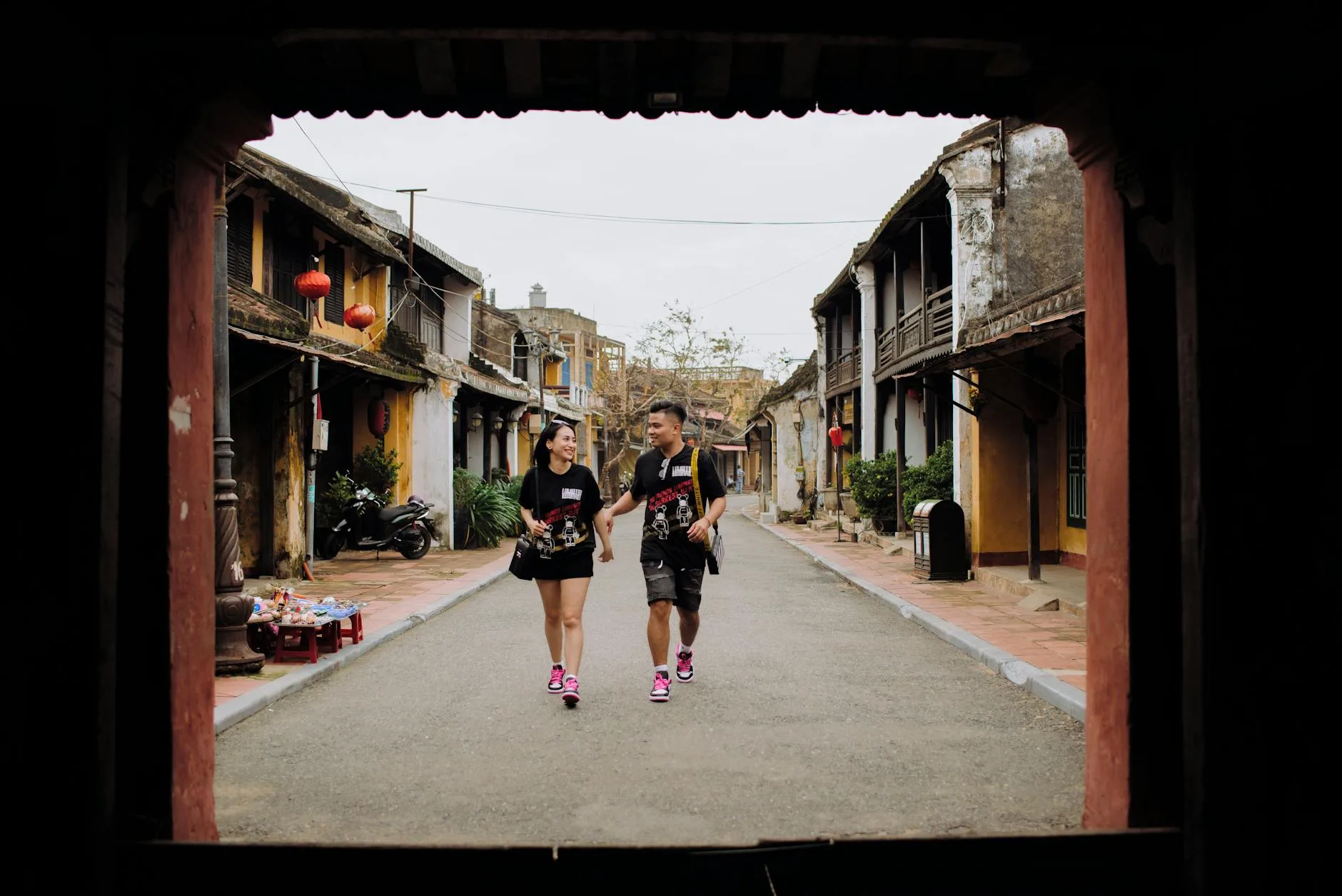
Travelling alone vs with a partner: an honest comparison
The slow boat from Huay Xai reaches Pak Beng around four in the afternoon. Two hundred kilometres of Mekong, brown and wide, sliding past limestone hills and fishing villages. On the upper deck, a man travelling alone has been talking to the same Argentinian couple since noon — they’ve covered jobs, borders, the best guesthouses in Luang Prabang. By the time the boat docks, they have dinner plans. The couple share a look, a small negotiation conducted entirely in silence. The solo traveller is already halfway up the bank.
Both parties had a good day. But they had very different days.
The question of whether to travel alone or with a partner is not really about which is better. It’s about what kind of experience you’re building, what you’re willing to trade, and whether the destination you’ve chosen suits your mode of travel. This comparison doesn’t push you either way — it lays out the real differences, by category, so you can make an informed decision before you book.
Cost: the honest numbers
The assumption that solo travel is more expensive is broadly correct, but the gap depends entirely on where you are and how you travel.
Accommodation is the biggest variable. A double room for two people split two ways almost always beats a single room — often by 30–50%. In Portugal, a private double in a Lisbon guesthouse in Alfama runs €60–90 a night; a solo traveller in the same room pays the same amount alone. Dorms close the gap (€18–30 in most European cities), but dorms aren’t for everyone and aren’t always available in rural areas.
Transport levels the playing field somewhat. Flights, buses, and trains cost the same per seat regardless. But private transport — tuk-tuks in Phnom Penh, shared taxis in Georgia’s Kazbegi region, a boat charter in the Bacuit Archipelago in Palawan — gets dramatically cheaper when split. A private longtail boat from El Nido to Nacpan Beach costs around PHP 2,500–3,500; alone, that’s your bill. With a partner, it’s halved.
Food is largely neutral, though couples can order more dishes and share, which is genuinely useful in places like Vietnam’s Old Quarter in Hoi An or the Mercado de San Miguel in Madrid, where small plates and half-portions are the point.
The honest summary: solo travel typically costs 20–40% more in accommodation-heavy destinations (Western Europe, Japan, New Zealand). In hostel-friendly or budget-overland routes — Southeast Asia, Central America, the Balkans — the gap narrows considerably.
Flexibility and pace: who actually gets to choose
Solo travel gives you total flexibility, which sounds like an unqualified positive. In practice, it means every decision is yours — which is liberating until you’re exhausted and don’t want to decide anything. You can linger in the Medina of Fes for three days because you found a tilemaker whose workshop you keep returning to, or you can leave Chiang Mai after two nights because you’ve seen what you came to see. No negotiation required.
Couple travel involves constant, low-grade negotiation — over pace, energy levels, interests, and the eternal question of how long to spend somewhere. One person wants to walk every neighbourhood; the other is done after two. This friction can generate resentment on a long trip, or it can produce a richer itinerary than either person would have planned alone.
The critical difference is trip length and destination density. On a two-week holiday with defined stops, pace differences are manageable. On a three-month overland trip through, say, East Africa, pace incompatibility is one of the most common reasons couples cut trips short or end up moving through places faster than they wanted.
A practical tip: couples travelling long-term benefit from building in deliberate “apart” days — one person visits the museum, the other goes to the hammam, and you compare notes over dinner. It sounds counterintuitive. It works.
Safety and logistics in the field
Safety calculations vary significantly depending on your gender, destination, and travel style — and this is an area where the solo/partner split genuinely matters.
For women travelling alone, some destinations require more active planning: Jordan’s souks, Morocco’s Medina streets after dark, certain areas of South Asia. This doesn’t mean those places are off limits — plenty of women travel them alone every year — but it does mean carrying more situational awareness, being more selective about accommodation, and sometimes paying a little more to stay somewhere with better security or a more social common area. The solo female travel guide to Jordan covers this in detail for one of the more nuanced destinations in the region.
For couples, the logistical advantage is simple: one person watches the bags while the other deals with the border form, the sim card, the guesthouse negotiation. At land crossings like Poipet (Cambodia–Thailand) or the Hamid Karzai Memorial crossing at Torkham, which can be chaotic and slow, having two sets of eyes and two hands is genuinely useful.
Solo travellers tend to be sharper in crowd situations — more alert, less distracted — but they also carry the full cognitive load of every decision, every risk assessment, every booking. Over weeks, that accumulates.
One practical note: solo travellers booking accommodation last-minute in high season — say, arriving in Lisbon in July without a reservation — have fewer room options and less flexibility to refuse rooms that feel wrong. Couples have the same problem, but can share a dorm with slightly less discomfort.
Social texture: who you meet and how
This is where the two modes diverge most visibly.
Solo travellers are more socially permeable. You are, by default, available — to conversation at a tea stall in Tbilisi, to an invitation from fellow hikers on the Annapurna Circuit, to the family at the next table in a pho shop in Hanoi’s Hoan Kiem district who want to know where you’re from. People approach solo travellers more readily. You approach people more readily. The social texture of solo travel tends to be richer in unexpected encounters.
Couples form a self-contained unit. This is comfortable — you always have someone to eat with, to process a difficult experience with, to share the joke about the guesthouse owner’s aggressive rooster. But it can also create an invisible social barrier. Other travellers are less likely to interrupt a conversation between two people. You’re less likely to strike one up when you don’t need to.
This plays out differently depending on destination. In a place where cultural exchange is the whole point — attending a Balinese festival as an outsider, taking a cooking class in a village home, doing a rural homestay — a solo traveller often has a qualitatively different experience, simply because they rely more heavily on local contact for their social scaffolding.
That said, couple travel can produce its own unexpected depth. Two people reading a place differently — one notices the architecture, the other the people — and then comparing observations over a meal produces a texture of understanding that solo travel can’t always replicate.
Which destinations suit which mode
Not all places are created equal for each mode of travel. This table is a working framework — not a rule:
| Destination / Context | Better solo | Better with a partner | Either works well |
|---|---|---|---|
| Long overland routes (Balkans, SE Asia) | ✓ (more flexible) | — | — |
| City-based slow travel (Lisbon, Bologna) | — | ✓ (share costs, pace) | — |
| Multi-day trekking (Annapurna, Patagonia) | — | — | ✓ |
| Remote homestays / rural immersion | ✓ (easier entry socially) | — | — |
| Budget backpacker circuits | ✓ | — | — |
| Safari / wildlife-focused trips | — | — | ✓ |
| Language school / long-stay programmes | ✓ (forces local engagement) | — | — |
| Island-hopping (Greece, Philippines) | — | ✓ (split private transport) | — |
| Cultural festivals | ✓ (less conspicuous alone) | — | — |
| High-risk / complex logistics destinations | — | ✓ (safety, support) | — |
This is a framework, not a verdict. Solo travellers have done incredible things in every category here, and couples have had transformative experiences on budget backpacker circuits. But if you’re weighing the decision, these patterns hold up in practice.
The mental and emotional reality
Travel puts pressure on both modes in ways that don’t show up in planning spreadsheets.
Solo travel can produce a kind of luminous focus — you’re more present because there’s no one else to carry the moment for you. Mindful travel practitioners often note that travelling alone strips away the social buffer and forces a more direct relationship with where you are. The difficult version of this: solo travel also means sitting with loneliness when it arrives, and it does arrive, usually on a Tuesday afternoon in a city you don’t know well, when nothing goes right and you have no one to eat bad pizza with.
Couple travel has a different pressure point: the relationship itself becomes a travelling companion. Shared stress — missed trains, food poisoning, the guesthouse that looked different in the photos — tests a couple in ways a two-week holiday in an all-inclusive resort never will. Many couples say it’s the best thing they’ve done together. Some say it exposed cracks they hadn’t noticed. According to research published by the BBC, travel is genuinely good at revealing how a relationship handles adversity — which is either a recommendation or a warning, depending on where you are.
The honest answer is: both modes are worth doing at different points in your life. Solo travel teaches you something about your own capacity and preferences that pair travel can obscure. Travelling with a partner in a genuinely challenging destination teaches you something about the relationship that comfortable life at home can obscure. Neither mode is superior. Both are more useful than staying put.
Practical decision checklist
Before booking, work through these:
- Trip length: Under 2 weeks? Either mode works. Over 6 weeks? Pace compatibility matters enormously — discuss it explicitly before you go.
- Destination complexity: High logistics burden (multiple border crossings, visa runs, difficult languages) is easier shared.
- Budget: If accommodation costs are the dominant expense, solo is noticeably more expensive. If transport is dominant, the gap closes.
- Social intention: Do you want to meet new people as a core part of the trip? Solo travel gives you a structural advantage. If existing companionship is the point, travel with someone.
- Relationship honesty: Have you travelled together before? Lonely Planet’s advice on couple travel recommends a short trip first — three to five days in a mildly challenging destination — before committing to a multi-month journey together.
The Bottom Line
-
Solo travel is typically 20–40% more expensive in accommodation-heavy destinations — Western Europe, Japan, New Zealand. In hostel-friendly or overland routes, the gap shrinks significantly. Budget accordingly.
-
Social depth skews solo; logistical ease skews partner. If meeting people and cultural immersion are your priorities, travelling alone gives you a structural advantage. If you want to split costs, share the cognitive load, and have built-in company, travel with a partner.
-
Pace incompatibility is the most common reason couple trips go wrong on longer journeys. Have a direct conversation about daily rhythm, energy levels, and non-negotiable interests before you leave — not during a nine-hour bus ride in the rain.
-
Some destinations are better suited to one mode. Remote homestays, language schools, and cultural festival contexts often yield richer experiences solo. Island-hopping, safari-style trips, and high-logistics destinations are often smoother with two.
-
Both modes are worth doing. If you’ve only ever travelled with a partner, a solo trip — even a short one — teaches you things about how you travel that shared travel can’t. If you’ve only travelled alone, doing it with someone whose instincts differ from yours opens up a different kind of attention. The comparison is useful for planning. It isn’t a verdict.
Keep reading: Solo travel anxiety: how to manage fear of the unknown