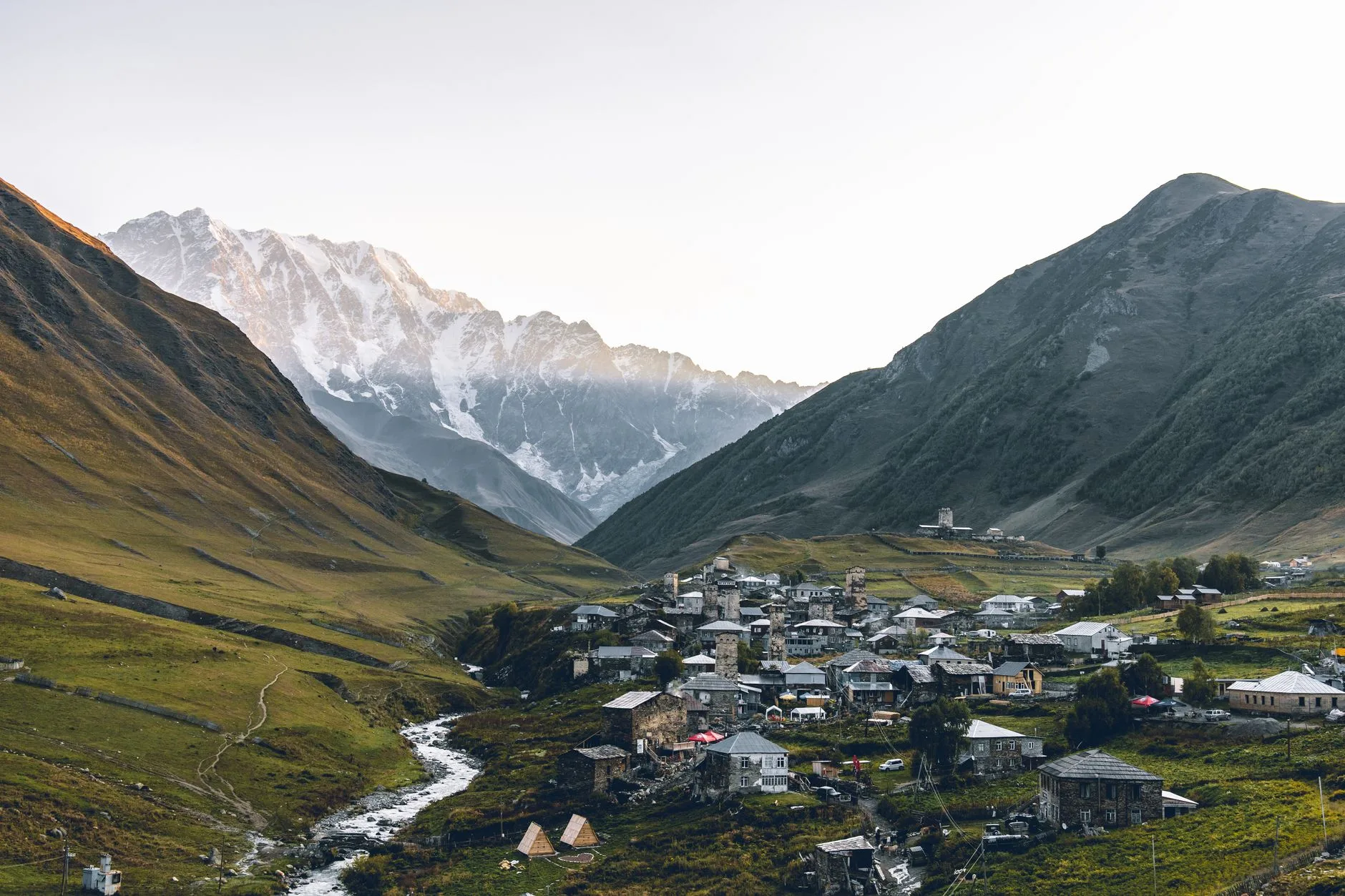
Photo by Tomáš Malík on Pexels
Georgia sits at the intersection of Europe and Asia, between the Black Sea and the Caucasus mountains, and has been producing wine for 8,000 years — longer than anywhere else on Earth. It has a distinct script and language unrelated to any other, a culture of extraordinary hospitality, a capital city that is genuinely unlike anywhere else in the region, and a mountain landscape that competes with the Alps for raw drama at a fraction of the price.
It is also one of the most overlooked destinations in the broader European travel circuit. This is changing — Tbilisi in particular has developed a strong arts and nightlife scene over the last decade — but outside the capital, visitor numbers remain low and prices remarkably reasonable.
Getting In
Visa: Most Western nationalities can enter Georgia visa-free for up to 365 days. Check the Georgian e-visa portal (evisa.gov.ge) for your specific nationality — the list of visa-free countries is extensive.
How to get there: Tbilisi International Airport (TBS) is served by direct flights from most major European cities. Turkish Airlines via Istanbul offers good connections from further afield. Ryanair, Wizz Air, and Georgian Airways cover multiple European routes. Alternatively, trains and buses from Turkey (Trabzon or Istanbul via Batumi) connect to the western coastal city of Batumi; ferries cross the Black Sea from Odesa (Ukraine — check current situation) and Constanța (Romania).
Tbilisi
Tbilisi is one of the most interesting capitals in the former Soviet sphere. The old town (Dzveli Tbilisi) is a dense tangle of wooden-balconied houses, medieval churches, Persian- and Ottoman-era baths (the Abanotubani sulphur bath district), and ruined fortifications climbing the hillside to Narikala castle above. The city’s geography — in a gorge with the Mtkvari river at the bottom and forested hills on both sides — is part of what makes it distinctive.
The nightlife scene centres on Fabrika (a Soviet sewing factory converted into a hostel, bar, and creative hub), the clubs and bars along Vera and Sololaki streets, and a genuine underground electronic music culture at venues like Bassiani and Café Gallery. Tbilisi has developed an international reputation as a destination for nightlife tourism — though it remains far cheaper than Berlin or London equivalents.
Georgian food is exceptional: khinkali (thick-dough dumplings filled with spiced meat and broth, eaten by hand from the top), khachapuri (cheese bread in several regional forms, of which the Adjarian variant — a boat of bread with egg and butter poured over cheese — is the most famous), and the walnut-heavy cold dishes that characterise the western Georgian culinary tradition.
Allow at least 3–4 days in Tbilisi. The Ethnographic Open-Air Museum on the outskirts shows traditional Georgian architecture from every region. The MOMA Tbilisi and Museum of Georgia are worth half days each.
The Mountain Regions
Kazbegi (Stepantsminda)
The most accessible Georgian mountain destination — 2.5 hours from Tbilisi by shared marshrutka (minibus, around 10 GEL) or by car. The town of Stepantsminda sits at 1,700m in the Caucasus mountains, with the peak of Mount Kazbegi (5,047m) visible to the south and the iconic Gergeti Trinity Church perched on a hill above the valley.
The hike to Gergeti Trinity Church takes 2–3 hours round trip, with views across the valley to the Caucasus. Longer hiking options include trails toward the Chkheri glacier and the Khde gorge. The town has budget guesthouses (from around $10–15/night) and increasingly upmarket options.
Svaneti (Mestia and Ushguli)
Georgia’s high Caucasus region, accessible by flight from Tbilisi (40 minutes) or a long drive via Zugdidi. Svaneti is famous for its medieval defensive towers — stone towers rising from villages that were built by mountain clans to protect against raids. Ushguli (2,200m) is one of Europe’s highest permanently inhabited villages.
The trek from Mestia to Ushguli (4 days, hut-to-hut) is one of the most scenically spectacular multi-day walks in Europe and considerably less crowded than comparable routes in the Alps or Dolomites. The infrastructure is basic — accommodation is homestays rather than mountain huts — but the experience is extraordinary.
Tusheti
The most remote of the main mountain regions — accessible only via the Abano Pass, which is one of the most dangerous mountain roads in the world (high clearance 4WD essential) and open only from June to October. The isolation has preserved Tushetian culture almost entirely: stone villages, ancient round towers, and a pastoral way of life centred on sheep herding. For those who make it, one of the most remarkable places in Georgia.
Wine Country: Kakheti
Eastern Georgia’s Kakheti region is the heartland of Georgian viticulture. Georgian wine is made using an ancient method involving fermentation and ageing in clay amphoras (qvevri) buried in the ground — a process now recognised by UNESCO. The resulting wines — particularly the amber-coloured skin-contact whites — are distinctive and unlike anything produced in Western Europe.
The main towns are Telavi and Sighnaghi (a renovated hilltop fortress town overlooking the Alazani valley, with the Caucasus mountains beyond). Most wineries offer tastings; several offer overnight stays. The towns are around 2 hours from Tbilisi by shared taxi.
Getting Around Georgia
Marshrutka (shared minibus): The primary intercity transport. Cheap (Tbilisi–Kazbegi: 10 GEL, around £3), frequent, and runs between most cities. Leaves when full rather than on a fixed schedule — arrive early.
Shared taxi: Faster and only slightly more expensive than marshrutkas. Ask at taxi ranks or your accommodation.
Car rental: Practical for exploring Kakheti and the mountain regions at your own pace. Roads vary from excellent (main roads) to poor (mountain tracks). Tbilisi car rental from around $25–40/day for a small car.
The railway: Connects Tbilisi, Kutaisi, and Batumi on the main east-west line. Clean, comfortable, and useful for reaching the Black Sea coast.
Costs
Georgia is inexpensive by European standards:
| Item | Approximate cost (GEL / £ equivalent) |
|---|---|
| Budget hostel dorm, Tbilisi | 20–40 GEL (£6–12) |
| Budget guesthouse (private room) | 50–100 GEL (£15–30) |
| Khinkali (5 dumplings) | 5–8 GEL (£1.50–2.50) |
| Full dinner, local restaurant | 20–40 GEL (£6–12) |
| Glass of wine, local restaurant | 5–10 GEL (£1.50–3) |
| Marshrutka Tbilisi–Kazbegi | 10 GEL (£3) |
Budget travellers can live comfortably in Georgia for £30–45/day, including accommodation and food.
Conclusion
Georgia rewards slow travel and curiosity — it’s a country with distinct culture, food, wine, and landscape that is still genuinely off the main European tourist circuit.
- Spend at least 3–4 days in Tbilisi before heading to the mountains — the city has layers that take time to appreciate
- Take a marshrutka to Kazbegi for a day or two — one of the most accessible dramatic mountain landscapes in the Caucasus
- Try Georgian wine — qvevri-style amber wines are unlike anything produced elsewhere; wine bars in Tbilisi are excellent and inexpensive
- Visit Kakheti for a day trip or overnight — the landscape, towns, and wine culture reward time outside the capital
- Budget £35–50/day for comfortable independent travel; less for genuine shoestring
Keep reading: How to travel through the Caucasus Mountains: independent guide