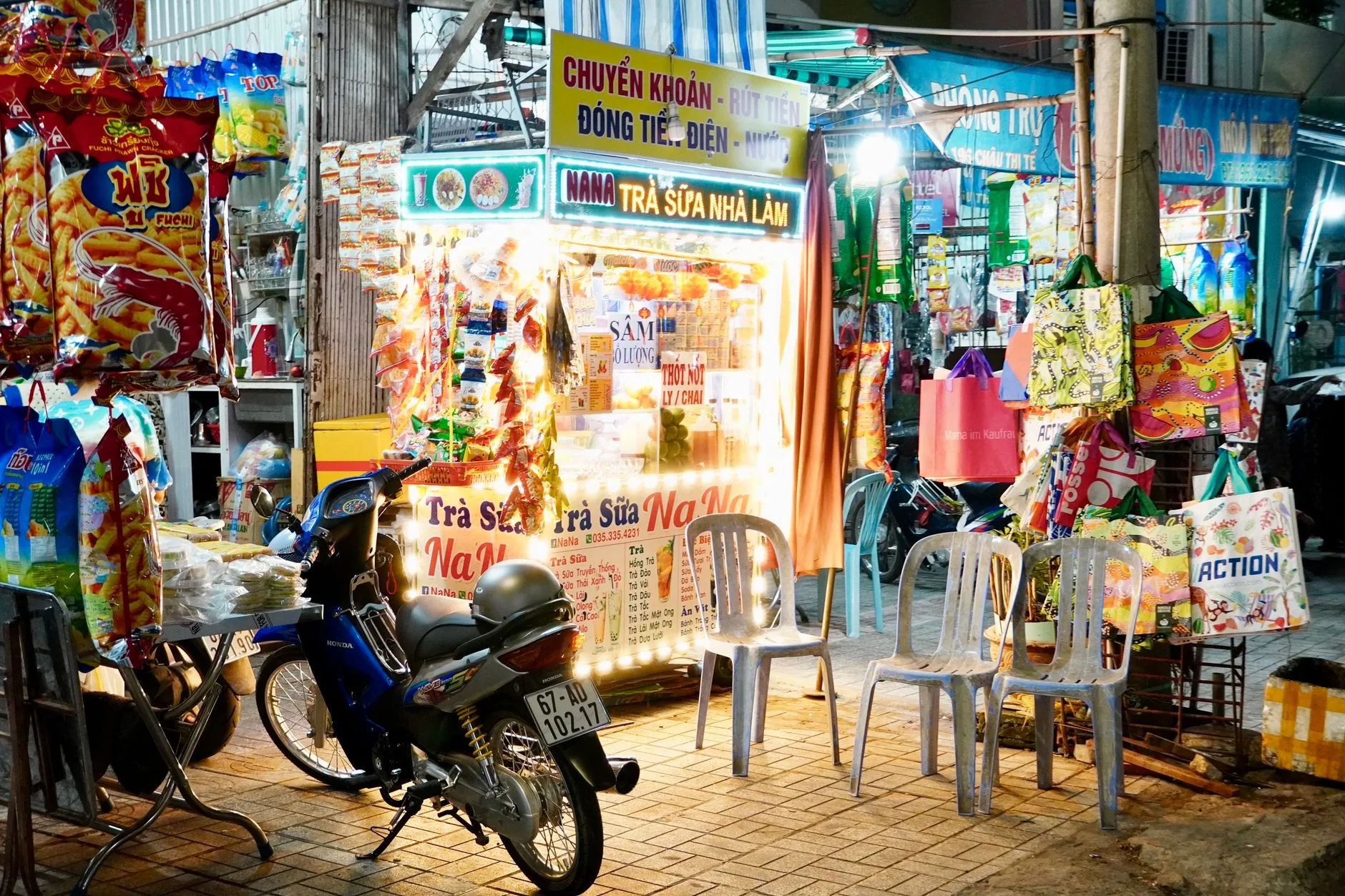
Vietnam stretches 1,650km from the Chinese border to the Gulf of Thailand, and the contrast between north and south — in landscape, food, culture, and people — is striking enough to feel like two countries. It’s also one of the best-value destinations in Asia, with extraordinary food at every price point.
Costs
Budget: £18–28/day
Mid-range: £35–60/day
Daily breakdown (budget):
– Hostel dorm: VND 120,000–250,000 (£4–8)
– Pho or banh mi: VND 30,000–60,000 (£1–2)
– Local restaurant meal: VND 50,000–120,000 (£1.60–4)
– Beer (bia hoi, local draught): VND 5,000–15,000 (£0.20–0.50)
– Grab (rideshare): VND 20,000–60,000 for short trips (£0.70–2)
Vietnam is among the cheapest countries in Southeast Asia.
The Route: North to South (or South to North)
Most travellers do Vietnam end-to-end. Hanoi in the north, Ho Chi Minh City (Saigon) in the south. The classic tourist route is:
Hanoi → Halong Bay (or Lan Ha Bay) → Ninh Binh → Hue → Da Nang / Hoi An → Nha Trang → Ho Chi Minh City → Mekong Delta
Allow 3–4 weeks for the full route. 2 weeks is possible but rushed.
Getting Around
Open Tour buses (Sinh Tourist, The Sinh Tourist, Futa Bus): Budget bus networks with popular tourist routes between cities. Book at hotels and hostels. Cheap but slow for long distances.
Trains: The Reunification Express runs the length of Vietnam from Hanoi to Ho Chi Minh City. Slower than buses on short routes but more comfortable for overnight legs. Hard sleeper berths are affordable and comfortable. Book at stations or via the Vietnam Railways website (baove.vr.vn).
Domestic flights: Vietnam Airlines, VietJet, Bamboo — cheap domestic flights for longer hops. Hanoi–Ho Chi Minh City can be under £30 if booked ahead.
Motorbike rental: The quintessential Vietnam experience for confident riders. A semi-automatic Honda Win or manual bike rented for £5–8/day. The Ho Chi Minh (Truong Son) trail through the mountains is the most scenic route. Requires care — road conditions and driving standards vary.
Grab: The Southeast Asian rideshare/delivery app — essential for affordable, metered motorbike taxis and cars in all major cities.
Where to Go
Hanoi: Atmospheric old quarter, Hoan Kiem Lake, street food (bun cha, banh cuon, egg coffee). More chaotic and authentic-feeling than Ho Chi Minh City.
Halong Bay: UNESCO limestone karst bay — iconic and genuinely spectacular. Boat trips range from budget (cramped, bad food) to excellent (overnight cruises on Bai Tu Long or Lan Ha Bay). Avoid the very cheapest boats. Lan Ha Bay (off Cat Ba island) is less crowded than central Halong.
Ninh Binh: Inland version of Halong Bay — limestone karsts rising from rice paddies, reachable by bicycle. Quieter and cheaper than Halong; some travellers prefer it.
Hue: Former imperial capital. The Citadel, Royal Tombs, and excellent local cuisine (banh khoai, bun bo Hue). One of Vietnam’s most underrated food cities.
Hoi An: Exceptionally well-preserved old town — lanterns, tailors, bicycle rides to the beach. Heavily touristed but for good reason. The food (cao lau, white rose dumplings, banh mi from Banh Mi Phuong) is outstanding.
Ho Chi Minh City (Saigon): Frantic, modern, and energetic. War Remnants Museum is essential. Day trip to Cu Chi Tunnels.
Mekong Delta: Day trips from HCMC or multi-day exploration by local boat. Rice paddies, floating markets (Cai Rang), fruit orchards.
Food
Vietnamese street food is among the finest in the world. The plastic stool and tiny table on the pavement is not a budget compromise — it’s where the best food is.
Key dishes:
– Pho (noodle soup): Beef or chicken, breakfast staple in the north
– Banh mi: Baguette sandwich with pork, pâté, pickled vegetables, chilli
– Bun cha: Grilled pork patties in broth with noodles and herbs (Hanoi)
– Cao lau: Thick noodles with pork and greens (Hoi An only — the water from Hoi An’s wells is considered essential)
– Banh xeo: Sizzling rice flour pancake with pork and shrimp
– Bia hoi: Fresh-brewed draught beer at corner stalls, sometimes as cheap as 10p a glass
Visas
UK passport holders need a visa for Vietnam. Options:
– E-visa: Apply online at evisa.xuatnhapcanh.gov.vn before travel. £17 fee, 90-day single-entry. Approved within 3 working days. Easiest option.
– Visa on arrival: Available at main airports; requires a pre-approved letter. Less convenient than e-visa.
Scams to Know
Xe om (motorbike taxi) overcharging: Always agree the fare before getting on, or use Grab.
Taxi meter rigging: Use Grab or official taxis (Mai Linh, Vinasun in HCMC; Hanoi Taxi, ABC in Hanoi).
Shoe shining: People putting polish on your shoes and charging you before you agree — just say no firmly.
Summary
Vietnam on a budget:
- Get the e-visa before you go — apply online at least a week before departure
- Eat on plastic stools at street level — this is where the best food is, not a compromise
- Use Grab for all urban transport — eliminates taxi scams and is cheaper than taxis
- Lan Ha Bay over central Halong Bay if you do an overnight cruise — less crowded, same scenery
- Trains for overnight legs — the sleeper berth on the Reunification Express saves accommodation costs and is comfortable
Keep reading: Travelling in Laos: what to know before you go