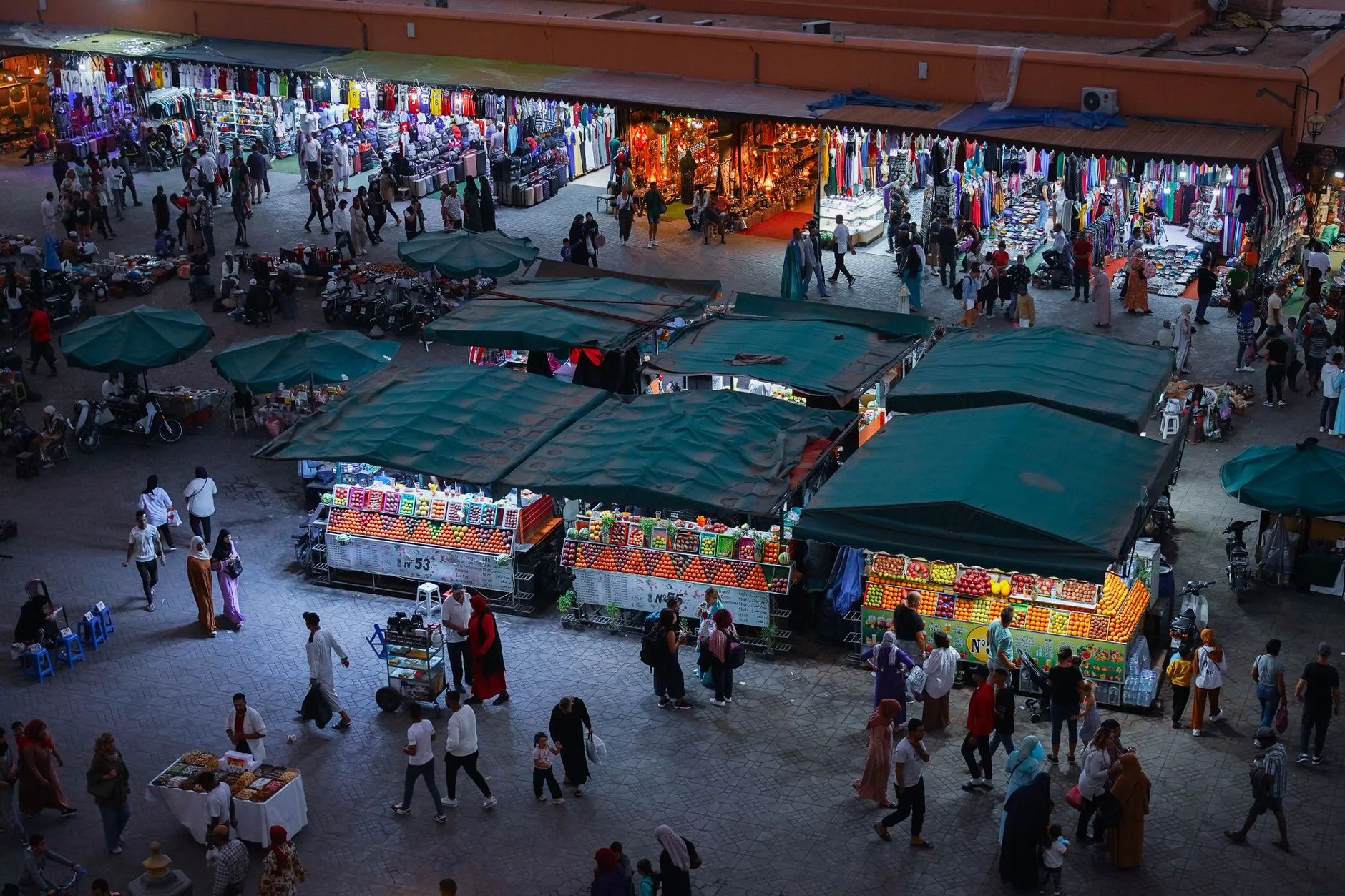
Photo by Mathias Dargnat on Pexels
Morocco is one of the most compelling destinations reachable in under 3 hours from the UK — and one of the most disorienting for first-timers. The medinas (old city centres) of Fès and Marrakech are genuinely labyrinthine; the tourist economy is built around aggressive hustle in a way that rewards knowing what to expect; and the contrast between the world outside and inside a riad (traditional courtyard guesthouse) is one of the most dramatic in travel.
Arriving informed makes the difference between an overwhelming first day and an extraordinary one.
Getting In
Visa: UK citizens do not need a visa for Morocco — entry is visa-free for stays of up to 90 days. Check your specific nationality’s requirements before travelling.
How to get there: Direct flights from London to Marrakech (3.5 hours), Casablanca (3.5 hours), and Fès (3 hours). Ryanair, easyJet, Royal Air Maroc, and British Airways all operate routes. Casablanca is the hub for onward connections to other Moroccan cities.
Ferries from Algeciras (Spain) to Tangier Med (2.5 hours) or Tarifa to Tangier (1 hour) are popular for overland travellers entering via Spain.
The Medina: How to Navigate It
The medinas of Morocco’s imperial cities (Marrakech, Fès, Meknès, Rabat) are UNESCO-listed historic urban areas — dense networks of alleys, souks (markets), mosques, and residential quarters that were built before the concept of a road grid existed.
The orientation challenge: In Fès el-Bali (the old medina), there are an estimated 9,000 lanes. No map is adequate for the full labyrinth. Getting lost is part of it — and usually harmless, because the medina is compact enough that you’ll find a main thoroughfare eventually.
The guide hustle: In Marrakech and Fès particularly, strangers who offer to guide you are almost always seeking payment. “There’s a festival today, your riad is closed, let me show you the way” is a classic opener. Politely decline and keep moving. If you want a guided tour of the medina, hire an officially licensed guide through your riad or a reputable agency.
Navigation: Google Maps works surprisingly well in major medinas, with a significant caveat — the alleys are so narrow that the GPS accuracy is insufficient for confident navigation. Use it as a general direction guide rather than turn-by-turn instruction.
Riads: The Best Accommodation Option
A riad is a traditional Moroccan house built around an internal courtyard, often with a fountain, tiled walls, and rooms opening onto the central space. They’re the most atmospheric accommodation option in the medinas — especially in Marrakech and Fès — and often more competitively priced than hotels of equivalent quality.
Budget riads: £30–60/night for a private room. Mid-range riads: £60–150/night. Some riads include breakfast.
Booking in advance is essential in peak season (April–May, October, Christmas). Most riads have limited rooms.
Cities to Know
Marrakech: The most visited Moroccan city — vivid, overwhelming, and remarkable. Djemaa el-Fna square (the main central square) is a spectacle: snake charmers, storytellers, food stalls at night, and constant movement. The souks surrounding it are the best shopping in Morocco (carpets, leather, spices, metalwork, ceramics). The Majorelle Garden (owned by Yves Saint Laurent’s foundation) is the most popular tourist attraction.
Fès: Morocco’s cultural and spiritual capital. Fès el-Bali is arguably the best-preserved medieval urban environment in the world — the famous Chouara tannery (dyeing leather by hand in the medieval manner) is the most photographed sight. The medina is more traditional and less tourist-focused than Marrakech’s.
Chefchaouen: The famous “blue city” in the Rif mountains — a small town where the buildings are painted in shades of blue and white. Genuinely beautiful and now genuinely busy with tourists as a result. Best early morning.
Essaouira: A walled port city on the Atlantic coast — breezy (it’s famous for wind), bohemian, and significantly more relaxed than Marrakech. The medina is manageable; the fish restaurants by the port are excellent.
The Sahara (Merzouga): A desert journey to the dunes at Erg Chebbi near Merzouga is a common Moroccan itinerary item — camel riding and overnight desert camps. From Marrakech, it’s a 9-hour drive (or an 11-hour overnight bus). Worth it for the dune sunrise, which is genuinely spectacular.
Costs
| Item | Approximate cost |
|---|---|
| Budget riad (dorm bed) | 100–200 MAD (£8–16) |
| Budget riad (private room) | 300–600 MAD (£24–48) |
| Tagine in a local restaurant | 50–100 MAD (£4–8) |
| Cafe au lait and msemen (flatbread) | 15–25 MAD (£1–2) |
| Souk shopping | Negotiate — start at 30–40% of asking price |
| Intercity CTM bus (Marrakech–Fès) | 120–160 MAD (£10–13) |
Daily budget: £30–50 for independent travel including accommodation in a budget riad, local food, and transport.
Practical Notes
Bargaining: Expected in the souks. Start at 30–40% of the asking price for most goods. Walking away often works. Don’t feel obligated to buy after receiving an invitation to look.
Dress: Morocco is a Muslim country — covering shoulders and knees is respectful and reduces unwanted attention, particularly for women. In the medinas and outside beach towns, conservative dress is strongly advisable.
Food safety: The food is excellent — tagine, couscous, pastilla, harira soup. Stick to cooked food or freshly squeezed orange juice (the ubiquitous freshly squeezed juice is fine); avoid raw salads from street carts.
Ramadan: Travelling during Ramadan (dates vary by year) is a different experience — many restaurants are closed during daylight hours, and the atmosphere shifts significantly at iftar (sunset). Not a reason to avoid Morocco, but worth knowing.
Conclusion
Morocco is worth the preparation — the first day in a medina is almost always overwhelming, and by the third day the rhythm becomes understandable and extraordinary:
- Book a riad in the medina — navigating to it on day one is confusing; your riad staff will help you understand the neighbourhood
- Expect and decline unsolicited guides — politely but firmly
- Try Fès over Marrakech for culture — smaller tourist footprint, larger and more authentic medina experience
- Bargain in the souks — it’s expected and part of the experience, not exploitation
- Add the desert or Atlantic coast to a Marrakech or Fès trip — the geographic range of Morocco rewards more than one location
Keep reading: Budget travel in Egypt: beyond the pyramids