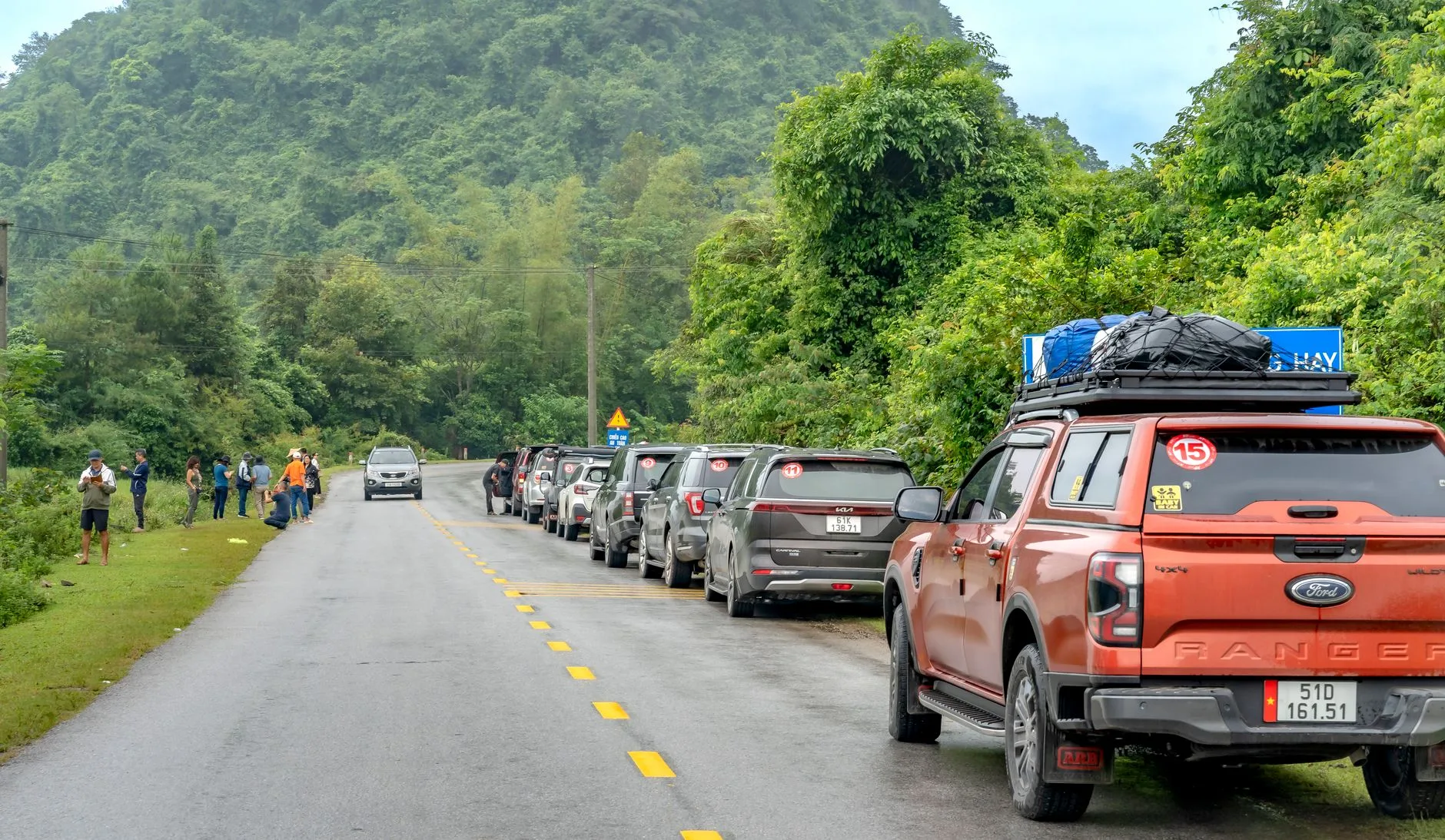
Photo by Quang Nguyen Vinh on Pexels
Vietnam to Cambodia overland border crossing guide
The bus pulls into Moc Bai at mid-morning, dust settling around a cluster of money changers, noodle stalls, and people hauling bags twice their size. On the Vietnamese side, the immigration hall smells of industrial cleaner and warm plastic. On the Cambodian side, twenty minutes later, the air changes — drier, slightly hotter, carrying the faint sweetness of burning sugarcane from the fields beyond the road. You haven’t taken a flight. You haven’t lost an afternoon to an airport. You’ve simply passed through a seam in the map, and the landscape is already telling you that you’re somewhere different.
Crossing from Vietnam to Cambodia overland is one of the most-used routes in Southeast Asia, and for good reason: it’s cheap, it’s direct, and it puts you on the ground in a way that no flight can replicate. But it’s also a crossing that rewards preparation. The border zones vary dramatically — some are orderly and straightforward, others involve touts, confusing signage, and the particular stress of not knowing which queue is the right one. This guide covers every practical thing you need to know before you go.
The main crossings: which one to use
There are five border crossings between Vietnam and Cambodia that are open to foreign nationals. Three of them carry the bulk of traveller traffic. Here’s an honest breakdown.
Moc Bai / Bavet — This is the busiest crossing and the one connecting Ho Chi Minh City (Saigon) to Phnom Penh. It’s the most straightforward for travellers doing the classic south Vietnam–Cambodia route. Direct buses run from Phnom Penh’s central bus stations and from Ho Chi Minh City’s Pham Ngu Lao backpacker district. The crossing itself is functional rather than pleasant — a large, busy immigration facility with casino developments visible on the Cambodian side (Bavet is a gambling enclave catering to Vietnamese visitors). Expect queues, especially on weekends.
Xa Xia / Prek Chak — The crossing between Hà Tiên (Vietnam) and Kep or Kampot (Cambodia). This is a genuinely useful route if you’re travelling along the southern coast rather than taking the inland highway. Hà Tiên is a quiet riverside town worth a night’s stay on its own, and the road from Prek Chak to Kampot passes through flat, green farmland that feels a world away from the tourist circuits. Fewer buses run this route, but it’s manageable with local transport on both sides.
Mộc Hóa / Đồng Văn / Dinh Ba — A more obscure crossing in the Mekong Delta region, used mainly by travellers who want to combine time in the delta with entry into Cambodia’s Takeo province. Public transport is limited here; you’ll likely need a motorbike or private car.
Lệ Thanh / O’Yadav — In the central highlands, connecting Pleiku in Vietnam to Ratanakiri province in northeastern Cambodia. This is a genuinely remote route, best suited to those specifically interested in the highlands on either side. The road condition on the Cambodian side can be rough in wet season.
Xa Mat / Trapeang Phlong — A crossing north of Moc Bai that connects Tây Ninh (Vietnam) with Kampong Cham (Cambodia). Less frequently used than Moc Bai and with fewer direct transport options, but functional for those wanting to visit Tây Ninh’s Cao Dai Temple before crossing.
The Ho Chi Minh City to Phnom Penh route in detail
This is by far the most common overland journey between the two countries, and it deserves its own section.
From Ho Chi Minh City, buses depart from the Pham Ngu Lao area (District 1) and from Ben Thanh area. The major operators are Mekong Express, Giant Ibis, and Phương Trang (FUTA). Giant Ibis and Mekong Express are the most reputable — comfortable coaches with air conditioning, toilets, and reasonably reliable schedules. Seats cost between $12 and $18 USD for a direct Saigon–Phnom Penh service. Book online or at the operator’s own office rather than through third-party agents, who sometimes add unnecessary fees or overstate what the ticket includes.
The journey covers roughly 230km and takes between 5 and 7 hours depending on border wait times. Buses cross at Moc Bai/Bavet. You’ll be asked to disembark with your bags, walk through Vietnamese immigration (exit stamp), cross the short distance to the Cambodian side, and go through Cambodian immigration. The bus waits. If the queue is short, this takes 30–45 minutes. On a busy day, allow 90 minutes.
On the Cambodian side, you’ll need a valid e-Visa or you can obtain a visa on arrival at Moc Bai/Bavet. The visa on arrival costs $30 USD and requires one passport photo. Bring your own photo to avoid being charged for one at the border. The e-Visa ($36 online via the Cambodian Ministry of Foreign Affairs) is worth getting in advance — it speeds up the process and removes the mild stress of handling paperwork at the border.
A word about border “fees”: you may be asked for a small processing fee on the Cambodian side that doesn’t appear on any official signage. This is common at Bavet and amounts to $1–2. It’s not strictly official, but refusing it can slow things down considerably. Budget for it and don’t make it a confrontation.
The Hà Tiên to Kampot route in detail
If you’ve been travelling the Vietnamese coast — through Mui Ne, Phu Quoc, or the Mekong Delta — the Hà Tiên / Prek Chak crossing puts you into Cambodia’s south coast without backtracking to Saigon.
Hà Tiên is a useful staging point. The town sits on a small peninsula near the Gulf of Thailand, with a relaxed waterfront market and a limestone karst landscape that feels strikingly different from the delta lowlands. The border crossing at Prek Chak is about 7km from Hà Tiên’s town centre; a motorbike taxi or tuk-tuk will cover that for about 50,000–80,000 VND ($2–3).
On the Cambodian side, Prek Chak is not a town — it’s a crossing point. From there, you’ll need onward transport to either Kampot (about 1.5 hours) or Kep (about 1 hour). Shared taxis and minivans gather near the border and charge around $5–8 per person. There’s no scheduled bus service directly from the border, so either pre-arrange a pickup or negotiate at the roadside. Mekong Express runs a through-service from Phu Quoc to Kampot via this crossing, which is worth considering if you’re coming off the island.
Kampot itself — a riverside colonial town with peeling French-era shopfronts, independent cafes, and some of the calmest atmosphere in Cambodia — is an excellent first stop. The famous Kampot pepper grows in the red-soiled hills just outside town; if you’re there between October and January, you’ll see the vines heavy with green peppercorns.
Visas, paperwork, and what to have ready
Vietnam does not require a visa on arrival for citizens of many countries (UK, EU, US, Australia, and others receive 45-day visa-free entry as of 2026 — check current status via your government’s travel advisory before you go). But verify your specific nationality’s entitlement before you leave, because rules shift.
Cambodia requires a visa for most nationalities. Your options:
- E-Visa: Apply online at evisa.gov.kh, costs $36, processing takes 3 business days. Works at Moc Bai/Bavet and Prek Chak, among others. Strongly recommended.
- Visa on arrival: Available at major crossings. Costs $30 + $1–2 in unofficial processing fees + your passport photo. Fine if you haven’t planned ahead.
- Cambodian visa validity: 30 days single entry (tourist), extendable in Phnom Penh.
Have these ready in physical form:
– Passport (valid for at least 6 months beyond your entry date)
– One passport-sized photo (keep extras — some crossings ask for them even with an e-Visa)
– Pen for forms
– USD cash — Cambodia’s economy runs largely on dollars, and border areas will not accept VND or cards
What to expect on the ground
Border crossings in this region have a particular atmosphere that’s worth describing honestly so you’re not caught off-guard.
At Moc Bai/Bavet, both sides of the crossing have money changers, food stalls, and persistent touts. The Vietnamese side is more orderly; the Cambodian side has more commercial chaos, partly because of the casino strip that begins just past immigration. Don’t change more money than you need — rates here are worse than in Phnom Penh. ATMs are available on the Cambodian side in Bavet, but the fees are high.
At Prek Chak, the atmosphere is much calmer. The crossing is smaller, queues are shorter, and the approach from Hà Tiên is through flat farmland rather than a border-town commercial strip.
In both cases: be patient, be polite, keep your documents accessible (not buried in your pack), and don’t hand your passport to anyone who doesn’t have an official uniform and a desk. Touts occasionally offer to “help” with processing — this is never necessary and often ends with you paying for something you didn’t need.
Getting around once you’re in Cambodia
From Phnom Penh, Cambodia opens up quickly. The bus network — operated by companies including Giant Ibis, Mekong Express, and Rith Mony — connects the capital to Siem Reap (6 hours, ~$9–12), Kampot (3 hours, ~$8), Sihanoukville (3.5 hours, ~$8), and the Thai border at Poipet. Phnom Penh itself is navigable by tuk-tuk and Passapp (Cambodia’s ride-hailing app, more reliable than flagging down drivers on the street).
If you’re continuing a longer Southeast Asia circuit, Cambodia connects easily to Thailand via the Poipet/Aranyaprathet crossing or the newer Cham Yeam/Hat Lek crossing near Koh Kong. For travellers trying to work out how much time to allocate across the region, thinking about pacing across multiple countries is genuinely useful — as explored in our guide to how long to spend in each country in Southeast Asia.
Practical considerations: season, safety, and food
When to cross: The dry season (November to April) makes most crossings easier, particularly the remote ones like Lệ Thanh/O’Yadav where road quality matters. The wet season (May to October) brings heavy rain that can affect unpaved roads on the Cambodian side. The Moc Bai and Prek Chak crossings operate year-round without significant weather disruption.
Safety: This is a well-worn route with no meaningful safety concerns beyond the standard caution you’d apply anywhere — watch your bags in busy border areas, don’t flash valuables, use reputable bus companies rather than unvetted private operators arranged by hostel staff on commission.
Food at the border: Don’t rely on border-area restaurants for anything memorable. If you’re crossing at Moc Bai/Bavet, eat a proper meal in Ho Chi Minh City before you leave — a bowl of bún bò Huế at one of the Pham Ngu Lao street stalls, or a proper cơm tấm (broken rice with pork and egg) from any rice shop in District 1, will sustain you better than whatever’s on offer at the border. On the Cambodian side, Phnom Penh’s street food — particularly the noodle soup kuy teav sold from early morning carts near Kandal Market — rewards you once you arrive.
The broader question of eating well at markets and street stalls across the region is something many travellers get nervous about; our guide to eating at local markets in Southeast Asia covers the practical approach in detail.
If you want broader context on where Cambodia fits into a longer Southeast Asia itinerary — and where to find less-crowded corners of the region — Lonely Planet’s Cambodia overview and the UK Foreign Commonwealth & Development Office travel advice for Cambodia are both worth a read before you go.
Border crossing comparison table
| Crossing | Vietnam side | Cambodia side | Best for | Visa on arrival? | Direct bus? | Approx. journey time to major city |
|---|---|---|---|---|---|---|
| Moc Bai / Bavet | Ho Chi Minh City | Phnom Penh | Most travellers | Yes | Yes | 5–7 hrs (HCMC–PP) |
| Xa Xia / Prek Chak | Hà Tiên | Kampot / Kep | Coastal route travellers | Yes | Partial (Phu Quoc–Kampot) | 1.5–2 hrs to Kampot |
| Xa Mat / Trapeang Phlong | Tây Ninh | Kampong Cham | Cao Dai Temple visitors | Yes | No | 2–3 hrs to Phnom Penh |
| Lệ Thanh / O’Yadav | Pleiku | Ratanakiri | Highland / adventure route | Yes | No | 3–4 hrs to Banlung |
| Mộc Hóa / Đồng Văn | Mekong Delta | Takeo province | Delta explorers | Yes | No | Variable |
The Bottom Line
- For most travellers, the Moc Bai/Bavet crossing on a direct Giant Ibis or Mekong Express bus from Ho Chi Minh City to Phnom Penh is the right choice. It’s straightforward, affordable ($12–18), and leaves you in the Cambodian capital without fuss.
- Get your Cambodian e-Visa in advance at evisa.gov.kh ($36, 3 business days). It saves time at the border and removes the small stress of on-arrival paperwork.
- Bring USD cash and one passport photo regardless of which crossing you use. Cards are not reliable at border facilities.
- The Hà Tiên / Prek Chak route is underused and genuinely rewarding if you’re on the southern coastal circuit — it drops you into Kampot, one of Cambodia’s most likeable towns, without any Phnom Penh detour.
- Budget for unofficial fees (usually $1–2) on the Cambodian side at Bavet. Know that they exist, don’t overpay, and don’t let them rattle you.
Keep reading: How long to spend in each country in Southeast Asia