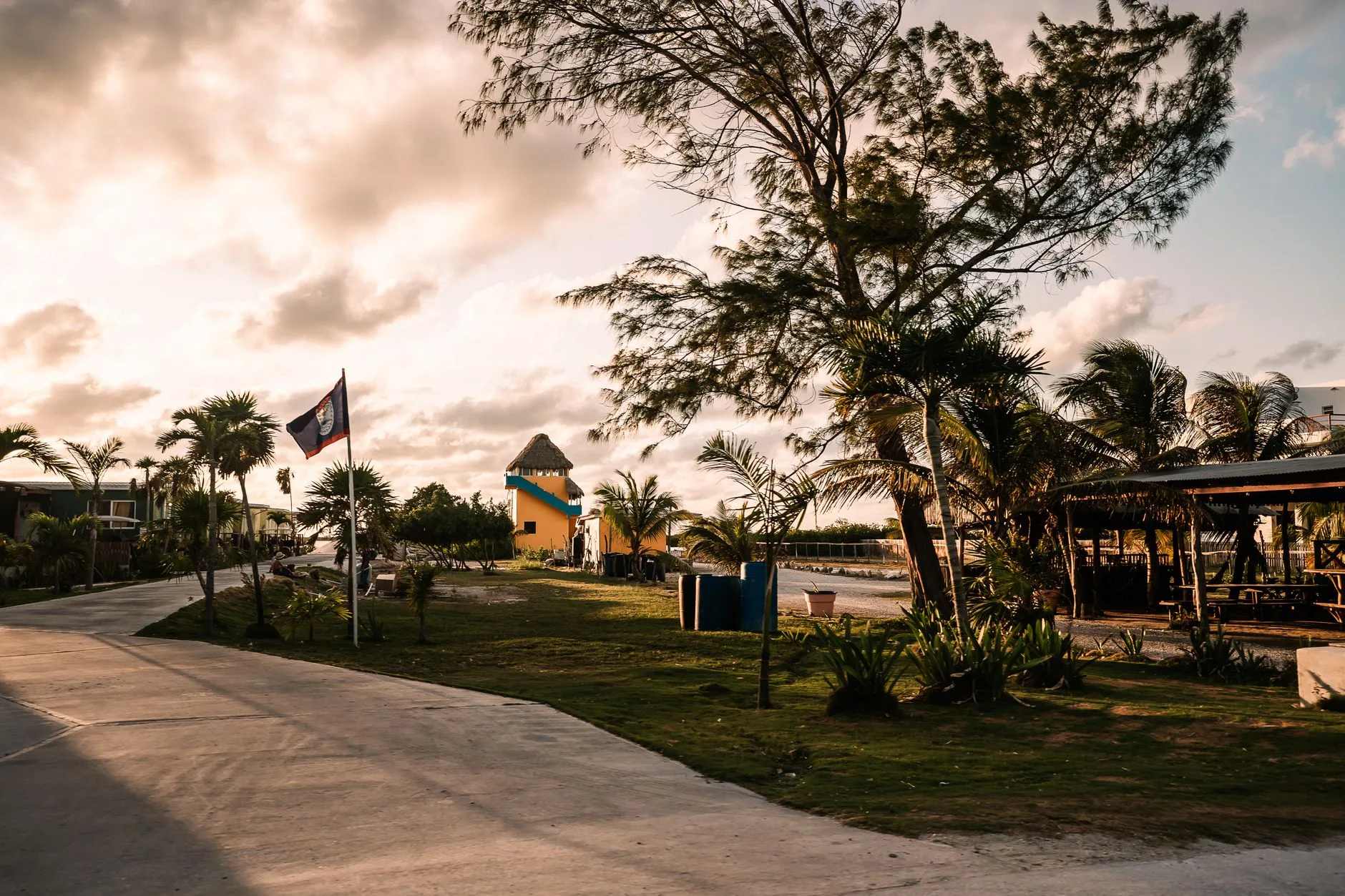
Photo by Roy Serafin on Pexels
The chicken bus from Belize City to San Ignacio leaves when it’s full, not when the schedule says it will, and by the time it pulls out of the depot near the Marine Terminal, every seat holds someone’s grandmother, someone’s school bag, and at least one live chicken that isn’t part of the name. The road runs west along the Western Highway, past roadside stands selling cashew wine and fry jack, through Belmopan’s oddly quiet government blocks, and into the limestone hills of the Cayo District. Nobody on this bus is wearing a resort wristband.
That’s the version of Belize that rarely makes it into the glossy brochures for the private cayes off Ambergris — a country of about 400,000 people where four languages get spoken before breakfast (English, Kriol, Spanish, and in the south, Q’eqchi’ or Mopan Maya), where the Belize dollar is pegged at exactly two to the US dollar, and where getting somewhere often means waiting for a boat, a bus, or a border official to finish their coffee. None of that is a complaint. It’s the texture that makes independent travel here worth the extra planning.
How Belize Actually Moves
Belize is small — about the size of Massachusetts — but its transport network rewards patience rather than speed. There’s no passenger rail, and the road network narrows to gravel fast once you leave the four main highways. Three systems matter for independent travellers:
Chicken buses (recycled American school buses, still yellow, still loud) run the Western, Northern, Southern, and Hummingbird highways cheaply — Belize City to San Ignacio runs around 2.5 hours for a few Belize dollars. They don’t run late, and Sundays see reduced service everywhere.
Water taxis connect Belize City to the cayes and down the coast. San Pedro Belize Express and Ocean Ferry Belize both run multiple daily departures to Caye Caulker (45 minutes) and San Pedro (90 minutes), and a less-used but genuinely useful route runs south from Placencia to Puerto Cortés, Honduras, a few times a week — one of the more interesting sea borders in the region if you’re continuing south.
Domestic flights (Tropic Air, Maya Island Air) connect Belize City’s municipal airport to Placencia, Punta Gorda, and Dangriga in 20–40 minutes for roughly USD 80–150 one-way — worth it if the Southern Highway’s occasional washouts have eaten your schedule.
The Cayes Without the Resort Gate
Ambergris Caye’s San Pedro has grown into golf carts, beach clubs, and increasingly resort-controlled waterfront — pleasant, but insulated. Caye Caulker, twenty minutes south by boat, has kept its sand streets and its unofficial motto, “go slow,” stencilled on a hand-painted sign near the Split.
| Caye Caulker | San Pedro (Ambergris) | |
|---|---|---|
| Vibe | Sand streets, no cars, budget guesthouses | Paved roads, golf carts, resort development |
| Daily cost (independent) | $35–60 USD | $60–120 USD |
| Best for | Snorkelling day trips, hammock time, backpackers | Diving trips to Blue Hole, nightlife, mid-range comfort |
| Getting there | Water taxi from Belize City, 45 min | Water taxi from Belize City, 90 min |
| Food | Fry jack stands, Rasta Pasta, garifuna coconut fish | More restaurants, higher prices |
From Caye Caulker, independent snorkelling trips to Hol Chan Marine Reserve and Shark Ray Alley cost far less booked through a small local outfit at the town dock than through a hotel desk — ask around at the co-op stalls near the Split rather than the first tour hawker who approaches. The reef itself, part of the Belize Barrier Reef Reserve System, is a UNESCO World Heritage Site, and it’s worth reading up on why it was placed on the endangered list in 2009 and removed again in 2018 before you go — the coral you’ll see has a recent, contested history.
Cayo District: Caves, Ruins, and the Road to Guatemala
San Ignacio is the base for the country’s most physically demanding — and most rewarding — inland experience: the Actun Tunichil Muknal cave, universally shortened to ATM. You wade through a jungle river to the cave mouth, swim into darkness with a headlamp, then climb, squeeze, and scramble past ceremonial Maya pottery and calcified human remains left undisturbed for over a thousand years. Cameras have been banned since 2012, after a tourist dropped one onto a skull, and guides are legally required — this is the one experience in this guide where “independent” gives way to “essential local guide,” and rightly so.
Further into the Mountain Pine Ridge Forest Reserve, the ruins at Caracol sit at the end of a rough, occasionally military-escorted road (a legacy of border tension with Guatemala, largely a formality now but worth checking current status before you go). Caracol’s main pyramid, Caana, still outranks Belize City’s tallest building — a fact locals mention with quiet satisfaction. Renting a car in San Ignacio and driving yourself is possible in dry season; in wet season (June–November), the river crossings on the way in can strand a two-wheel-drive for hours.
San Ignacio itself is worth a slow day: the Saturday market along the Macal River draws Mennonite farmers from the Cayo villages selling cheese and produce alongside Q’eqchi’ vendors, and the town’s small strip of Burns Avenue has some of the country’s best-value Belizean food — stewed chicken, rice and beans, and potato salad, usually for under BZ$15.
The Garifuna Coast: Hopkins and Dangriga
South along the Hummingbird Highway — arguably Belize’s most scenic road, cutting through citrus groves and karst hills — lies Hopkins, a Garifuna fishing village that has resisted large-scale resort development better than most of the coast. The Garifuna people, descended from shipwrecked and escaped African slaves who intermarried with Indigenous Caribs on St. Vincent before being exiled to Central America in 1797, maintain a distinct language, music, and cuisine that UNESCO recognised in its Intangible Cultural Heritage lists.
In Hopkins, hudut — mashed plantain in coconut fish broth — is the dish to order, best found at small family-run kitchens rather than the beachfront hotel restaurants. Drumming lessons with local Garifuna musicians are widely available and genuinely worth the couple of hours; the rhythms (punta, paranda) are foundational to the music, not a tourist add-on invented for visitors. Dangriga, the larger Garifuna town north of Hopkins, holds Settlement Day celebrations every November 19th — loud, unpolished, and one of the more meaningful cultural events open to visitors anywhere in Central America if the timing lines up.
Toledo District: The Far South
Few independent travellers make it past Placencia to the Toledo District, and that’s mostly a matter of road quality and time rather than lack of interest. Punta Gorda, the district’s small capital, feels closer to a Caribbean fishing town than a Belizean resort hub — its market days (Wednesday and Saturday) bring Q’eqchi’ and Mopan Maya farmers from surrounding villages to sell cacao, achiote, and greens under a tin-roofed shed by the water.
From Punta Gorda, community-run homestay programs — coordinated loosely through village alcaldes and local guides rather than any single tour company — let visitors stay in villages like San Antonio, San Pedro Columbia, or Santa Cruz, sleeping in a family’s guest room, eating what the household eats, and sometimes joining a cacao harvest if the season’s right (roughly June to December). This kind of arrangement resembles the models covered in community based tourism examples that work — it works because the money and decision-making stay largely with the village rather than an outside operator.
Toledo is also Belize’s rainiest district, which keeps it green and keeps visitor numbers low. Roads deteriorate fast after storms; a 4×4 or a willingness to wait out a downpour under a village shop’s roof is part of the deal.
Crossing Borders on Your Own
Two land borders matter for independent travellers extending a Belize trip:
Benque Viejo del Carmen to Melchor de Mencos (Guatemala) — the most-used crossing, about 20 minutes from San Ignacio by local bus or shared taxi. Exit and entry stamps are usually straightforward; expect a modest exit fee and some unofficial “helpers” offering to expedite things for a tip they’re not owed.
Santa Elena/Corozal to Chetumal (Mexico) — a smooth, well-trodden crossing in the north, with buses running direct from Belize City through Corozal to Chetumal’s bus terminal, useful for anyone continuing on toward the Yucatán. Anyone stitching together a longer regional route through Guatemala and beyond will find the logistics broadly similar to those described in guides to backpacking through Central America, where border waits and shared-shuttle economics follow familiar patterns across the isthmus.
What It Actually Costs
Independent travel in Belize isn’t cheap by Central American standards — it’s often compared unfavourably to Guatemala or Honduras on price, and that comparison is fair. Guesthouse dorm beds run $15–25 USD, private rooms $35–60, and food, if you stick to local kitchens rather than tourist-facing restaurants, runs $5–10 USD a meal. Where costs spike is transport to remote sites (private cave tours, water taxis to smaller cayes) and the U.S. dollar pricing that’s crept into anything explicitly marketed to tourists — always ask if a quoted price is in BZD or USD before paying.
The Bottom Line
- Belize rewards travellers who build in slack time — buses run late, boats get cancelled for weather, and roads wash out in wet season. Plan buffer days, especially around Toledo and Caracol.
- ATM Cave and any serious cave system require a licensed guide by law; treat that as non-negotiable rather than a missed chance at independence.
- Caye Caulker still offers the unhurried, low-infrastructure island experience that San Pedro has largely traded away — go there first if that’s what you’re after.
- The Garifuna coast and Toledo’s Maya villages offer the country’s deepest cultural encounters, but they require slower travel, patchier roads, and a willingness to arrive without a fixed itinerary.
- Budget more than you would for Guatemala or Honduras next door — Belize prices in US dollars more often than its neighbours, particularly anything tourist-facing.
Keep reading: Backpacking Central America on a shoestring budget