Photo by ROBERTO ZUNIGA on Pexels
Volcano boarding in Nicaragua: what to expect
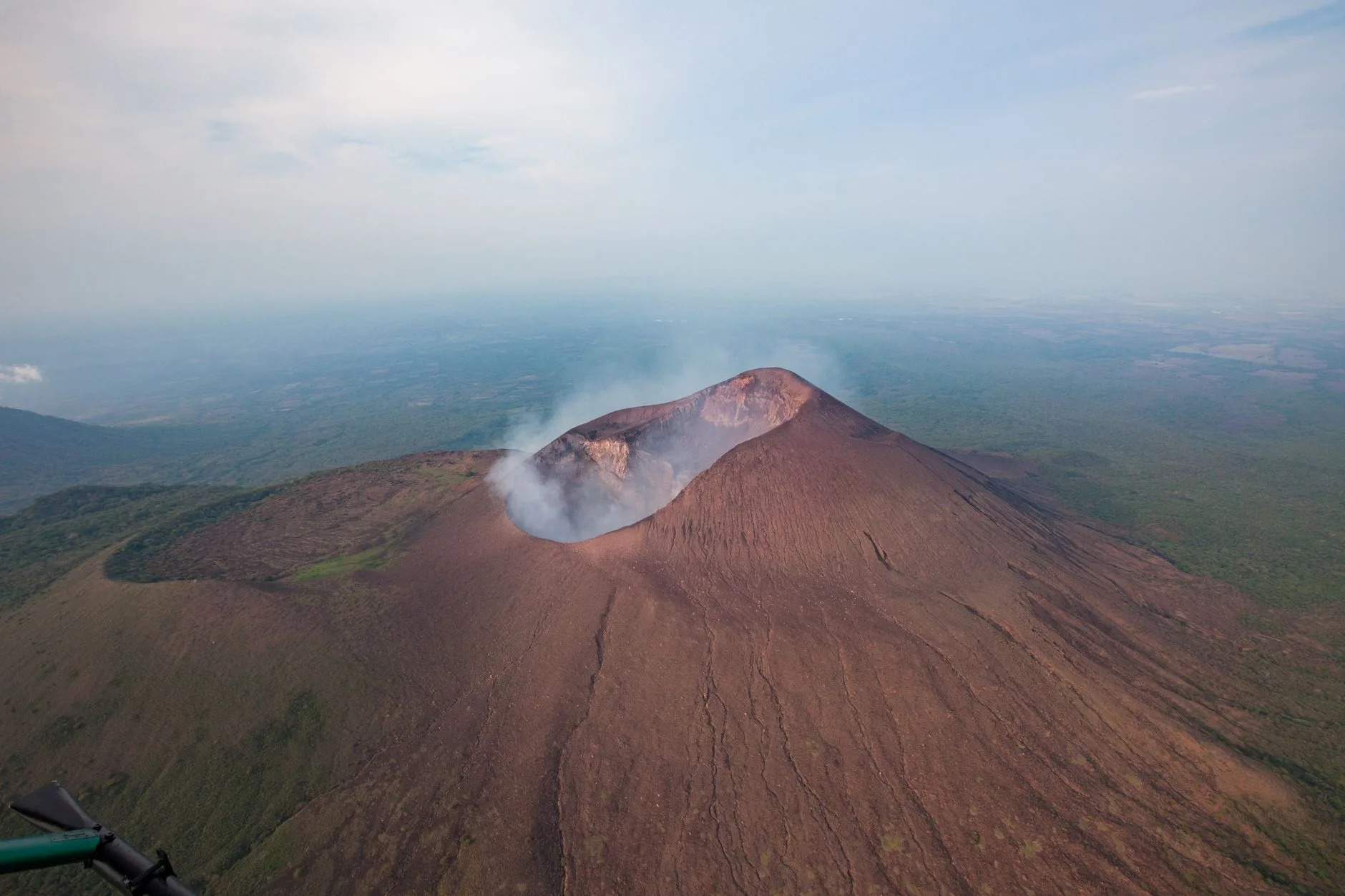
The road to Cerro Negro is a dirt track through sugarcane fields, and the shuttle van rattles hard enough to knock your water bottle off the seat. By the time you step out at the trailhead, the sun is already cutting sideways and hot, and the volcano is sitting right there — black and raw and surprisingly close. It doesn’t look like a mountain so much as a wound in the earth: no trees, no softness, just 728 metres of loose volcanic cinder with a ridge of smoke curling off the top.
This is the only place in the world where volcano boarding is a going concern, and it is exactly as strange as it sounds. You hike up carrying a plywood-and-metal sledge, and you ride it back down a 41-degree slope of jagged black scree at speeds that can reach 80 km/h. Whether that appeals to you or makes your palms sweat probably tells you everything you need to know about whether you should book it.
What follows is not a highlight reel. It’s a practical account of what the experience actually involves — the logistics, the effort, the cost, the discomfort, and the parts that don’t make it into the Instagram videos.
Where Cerro Negro is and how to get there
Cerro Negro sits about 20 kilometres northwest of León, the colonial city that serves as the base for almost everyone who does this trip. León is Nicaragua’s intellectual and political capital — a city of ochre churches, revolutionary murals, and excellent street food — and it’s well connected to Managua, the capital, by comfortable express buses (around 1.5 hours, roughly 80 córdobas, or less than USD $3).
From León itself, you don’t get yourself to Cerro Negro independently in any practical sense. The volcano is inside a protected area, and all visitors must enter with a licensed operator. Shuttle transport, guide, equipment, and park entry fee are bundled into tour packages. You can book through any of the operators based in León’s centre, many of which cluster around the Parque Central and the streets to the north of it.
The main operators running this route include Bigfoot Hostel, Tierra Tours, and Quetzaltrekkers — the latter is a nonprofit that channels profits toward local community programmes. Prices typically run between USD $30 and $45 per person including transport, equipment, and a guide. The journey from León to the trailhead takes around 45 minutes each way.
Tours usually depart in the morning (around 8am) to avoid the worst of the afternoon heat. Plan to be back in León by early afternoon.
The hike up: what you’re actually in for
The ascent takes roughly 45 minutes to an hour, depending on your pace and how the wind is behaving. There is no shaded trail. You’re walking up open, exposed volcanic cinder — a fine black gravel that shifts underfoot and has the texture of heavy sand mixed with small sharp stones. The gradient steepens in the final section, and most people find the last 15 minutes genuinely hard work.
You carry your board the whole way. The boards weigh around 6–8 kilograms and are awkward rather than heavy — long, flat, and difficult to manage in crosswinds. Some operators strap the boards to rucksacks; others have you carry them by hand. Ask when you book.
The summit view is worth pausing for. The crater below is actively steaming, with a greenish tinge to the gas vents nearest the rim, and on a clear day you can see the Pacific to the west and a chain of other volcanoes to the north and south. The air smells faintly of sulphur — not overwhelming, just present, a reminder of what you’re standing on.
One honest note: people with respiratory conditions or asthma should be cautious near the crater rim. The sulphur emissions vary by day, but they can be significant.
The descent: technique, speed, and what actually happens
At the top, your guide will give a briefing. You’ll be dressed in an orange or yellow jumpsuit (provided), safety goggles, and gloves. The board sits between your legs; you steer with your heels, dragging them into the cinder to slow down. The technique is simple in theory and harder in practice once you’re on the slope and the angle becomes real.
There are two speed options on most tours: “extreme” (feet in front, leaning back, minimal braking) and “tourist” (more upright, feet used as rudders). The difference in actual speed is meaningful. On a dry, well-packed section, extreme riders can hit 70–80 km/h. Tourist-pace riders tend to average 30–50 km/h. Both feel fast when you’re 20 centimetres above moving volcanic rock.
Falls happen. The cinder shreds skin efficiently, which is why the jumpsuit, gloves, and goggles are not optional. The most common injuries are to hands and forearms from instinctive braking. If you fall forward, tuck your arms in. Your guide will tell you this; it’s worth actually listening to.
The descent itself takes 5–10 minutes. It ends on a flat section of black sand at the volcano’s base, where you’ll be dusty, winded, and either grinning or quietly grateful it’s over. Most people feel both.
What to wear and bring
The jumpsuit goes over your clothes, but you’ll be sweating inside it. Wear lightweight, breathable clothing — shorts and a t-shirt underneath works well. Your shoes must be closed-toe and secure; sandals are not permitted, and the operators will turn you away if you show up in them.
Bring:
– Sunscreen, applied before you leave León — there is no shade on the volcano
– A full water bottle (1.5 litres minimum; there’s nothing to buy at the trailhead)
– Sunglasses or sports goggles — goggles are provided but some people prefer their own
– A bandana or buff for dust on the descent
– A change of clothes for the journey back, because the jumpsuit contains the worst of it but your shoes and hair will still be coated in black cinder
Leave valuables at your accommodation. There is no secure storage at the trailhead.
Seasons, conditions, and when to go
Nicaragua has two seasons: dry (November to April) and wet (May to October). Volcano boarding runs year-round, but conditions vary considerably.
| Season | Board conditions | Wind | Heat | Rain risk |
|---|---|---|---|---|
| Dry (Nov–Apr) | Fast, firm cinder | Often strong, can create dust | High, especially Jan–Mar | Low |
| Early wet (May–Jun) | Slower, damp cinder | Lighter | Moderate | Moderate |
| Peak wet (Jul–Sep) | Slowest, soft cinder | Variable | Lower | High — tours can cancel |
| Late wet (Oct) | Unpredictable | Variable | Moderate | Moderate–high |
The dry season gives you faster descents and clearer summit views but also fierce winds that can fling cinder into your face and make the walk up genuinely difficult. February and March see the worst wind. November and December offer a reasonable middle ground: drier conditions, lighter wind, good visibility.
If you’re visiting during the wet season, ask operators about recent conditions before booking. Tours are cancelled when heavy rain makes the trail unstable, and refund policies vary.
León as your base: where to stay and eat
León is worth more than a single night. The city has a serious food scene rooted in Nicaraguan staples: vigorón (yuca, chicharrón, and cabbage salad wrapped in banana leaf) is sold by vendors near the Mercado Central and at the weekly Sunday market on the north side of the Parque Central. Quesillo — a fresh cheese folded into a tortilla with pickled onion and sour cream — is the local street snack, and it’s sold from small carts throughout the city for less than a dollar.
For accommodation, the streets around Calle Central Rubén Darío and the blocks east of the Cathedral have a mix of guesthouses and small hostels. Bigfoot Hostel (which also runs the volcano boarding tour) sits on Calle 1 NO and has a reliable reputation among travellers doing the region. For something quieter, La Tortuga Booluda is a small guesthouse a few blocks south with a garden and fewer dorm beds.
If you’re building a wider Central America itinerary around this, the backpacking through Central America practical guide covers the regional logistics in detail, including border crossings and bus routes between countries.
León is also a reasonable base for visiting Las Peñitas, a low-key Pacific beach village about 20 kilometres to the southwest, accessible by local bus for around 20 córdobas. It’s a sharp contrast to the volcano — flat, coconut-lined, and very slow.
Getting to Nicaragua and practical logistics
Most international visitors arrive into Managua’s Augusto César Sandino International Airport. From there, express buses to León depart from the Terminal de Buses Israel Lewites (also called Mercado Israel Lewites) in western Managua. Journey time is 1.5 to 2 hours, cost around USD $2–3.
As of 2026, citizens of most Western countries — including the US, UK, Canada, and EU members — can enter Nicaragua without a visa for stays of up to 90 days. A tourist card is purchased on arrival (around USD $10). Check current requirements with your government’s travel advisory before you go, as Nicaragua’s political situation has been volatile and entry requirements can shift.
The US State Department travel advisory for Nicaragua is worth reading before you book. The current advisory level should inform your decision, particularly regarding travel insurance coverage.
Currency is the córdoba (NIO). ATMs exist in León but can be unreliable — carry USD cash as backup, which is widely accepted. Most tour operators and mid-range guesthouses quote prices in dollars.
Nicaragua is one of the more affordable countries in the region. A daily budget of USD $35–50 covers accommodation, food, transport, and the volcano boarding tour. If you’re budget-conscious and travelling the wider region, the same frugality that works in Guatemala applies here — backpacking Central America on a shoestring covers how to do it practically.
For a broader picture of the experience and what it looks like from the ridge, National Geographic’s coverage of Cerro Negro is one of the better photographic accounts available.
Is it actually worth doing?
That depends on what you’re after. Volcano boarding is not a profound experience. It’s 45 minutes of sweaty hiking, 5 minutes of chaotic speed, and then a van ride back to town. The volcano itself — the landscape, the crater, the elemental weirdness of standing on active rock — is genuinely striking and would be worth the hike alone. The boarding is the spectacle; the summit is the substance.
People who find it underwhelming tend to have expected more of the ride itself. It’s over quickly. The experience of being on an active volcano, of seeing the crater vent and the black cinder fields stretching down toward the valley, lasts longer in the memory than the descent does.
People who loved it tend to describe the combination: the physical effort, the surreal setting, the accumulated absurdity of carrying a plywood board up a volcano, and then the speed. For USD $30–40, including transport and gear, the value is hard to argue with.
The Bottom Line
- Cerro Negro is 20km from León, and all visits must go through a licensed tour operator — budget USD $30–45 including transport, gear, and guide. You cannot self-guide into the protected area.
- The hike up takes 45–60 minutes on exposed, steep cinder in full sun. It’s not technically difficult, but it’s physically tiring. The descent takes under 10 minutes.
- November and December offer the best conditions — dry enough for fast boarding, light enough wind to make the ascent manageable. Avoid February–March if wind bothers you.
- León is a worthwhile destination in itself, with serious colonial architecture, good street food, and a pace that rewards staying two or three nights rather than rushing through.
- Check current travel advisories before booking — Nicaragua’s political situation has been unsettled since 2018, and while León sees regular tourist traffic, your insurance coverage may depend on the advisory level in force when you travel.
Keep reading: Backpacking Central America on a shoestring budget