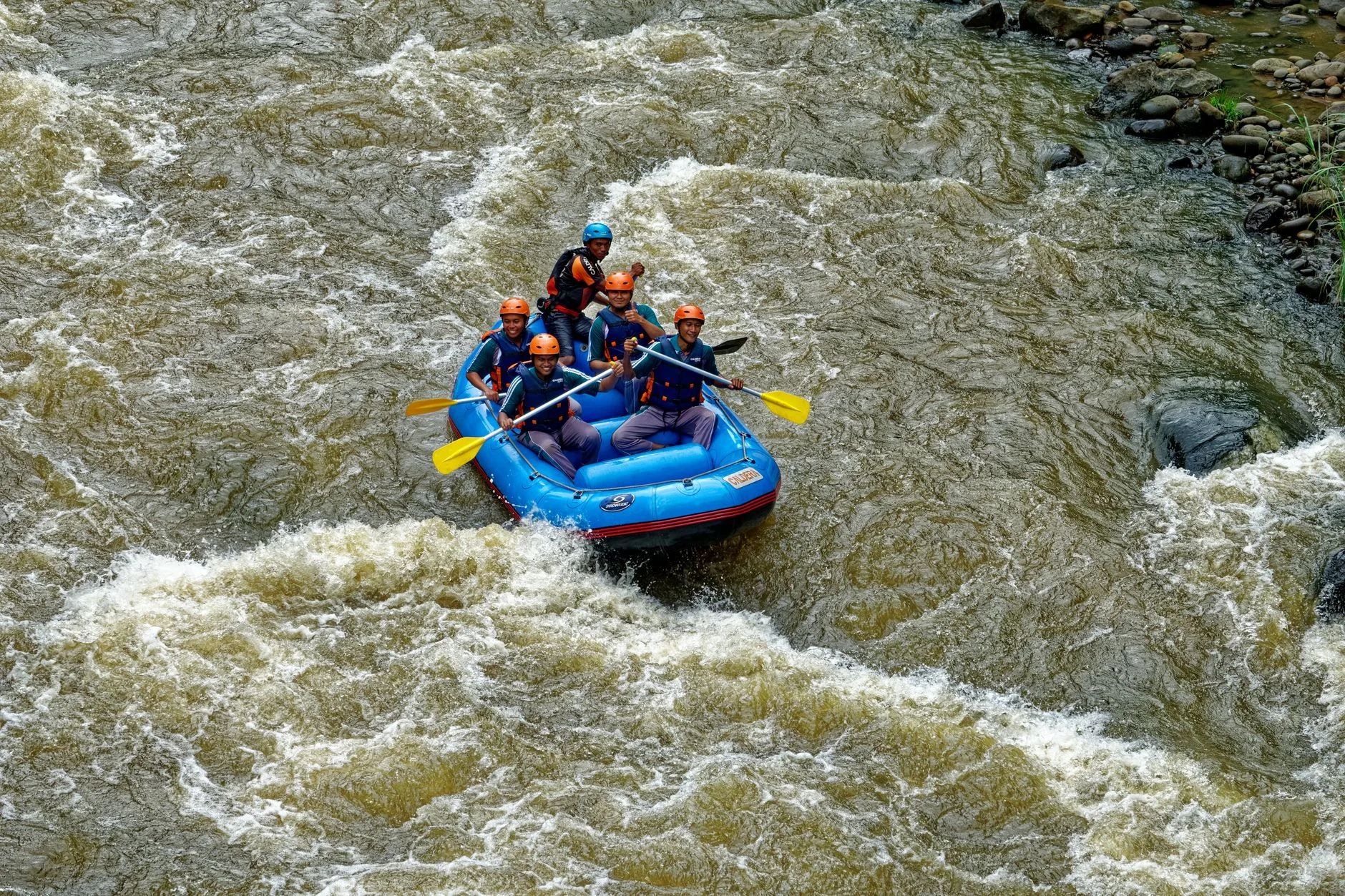
White water rafting in Costa Rica: what to expect
The Pacuare River appears without warning. One moment you’re winding through banana plantation roads in a shuttle van, the next you’re standing at a put-in point somewhere in the Turrialba region, watching green canyon walls close in on both sides and a chute of white water disappear around a bend. A guide is talking through paddle commands. Someone asks if the water is cold. (It isn’t — it’s about 24°C and the colour of strong tea.) Then the raft is in the water and the current is already doing most of the deciding.
Costa Rica has built a serious reputation for river rafting, and it earns it. The country’s geography — steep volcanic mountains, heavy rainfall, short rivers that drop fast — creates the kind of hydraulics that draw paddlers from across the Americas and Europe. But “Costa Rica rafting” covers a lot of ground, from gentle floats suitable for families to technical multi-day expeditions through genuinely remote jungle gorges. Knowing which river suits your experience and expectations is the difference between a good day and a miserable one.
This guide covers the main rivers, what the different grades actually feel like, how to choose an operator, what things cost, and what no one tells you before you go.
The main rivers: which one is right for you
Pacuare River
The Pacuare is widely considered one of the finest rafting rivers in the Americas, and National Geographic has listed it among the world’s top river experiences. It runs through a deep jungle canyon near Turrialba, roughly two hours from San José, and is rated Class III–IV. The standard day trip covers about 28 km (17 miles) and takes four to five hours on the water, with a lunch break on the riverbank midway.
What you’ll actually encounter: long stretches of fast, technical water broken by calmer pools, several named rapids (Magnetic Rock, Double Drop, Upper Huacas), and canyon walls dense enough that you’ll rarely see sky at its widest points. The canyon is home to toucans, howler monkeys, and the occasional green basilisk lizard sprinting across the surface of a calm pool. It’s also genuinely challenging — Class IV means powerful hydraulics, holes you need to read ahead of time, and moments where a missed paddle stroke matters.
The Pacuare is most commonly run from the town of Tres Equis as a put-in to Siquirres take-out, following the Caribbean slope. Most operators pick up in San José or La Fortuna and include transport.
Who it suits: Anyone in reasonable fitness with no prior rafting experience required for the standard Class III–IV section. The full Class IV section (sometimes called the Lower Gorge) is more demanding and not offered by all operators on standard tours.
Reventazón River
Also near Turrialba, the Reventazón was long the other great Costa Rican rafting river — until the construction of a hydroelectric dam significantly changed its character on the upper section. The lower section (Class III) still runs and is popular for beginners, but serious paddlers should know the Reventazón of twenty years ago no longer exists in its upper reaches.
Who it suits: Families, first-timers, those who want the experience without the commitment of the Pacuare.
Sarapiquí River
In the northern lowlands near Puerto Viejo de Sarapiquí (not to be confused with Puerto Viejo on the Caribbean coast), the Sarapiquí offers Class II–III water through lush rainforest. It’s a quieter, lower-key experience — less dramatic canyon scenery than the Pacuare, but genuinely good birdwatching from the raft, and the region around La Virgen has a handful of good small lodges.
Who it suits: Those combining a river day with a trip to Arenal or Monteverde; families with children over eight.
Savegre River
In the southern Pacific highlands near San Gerardo de Dota and the Valle del General, the Savegre is a cold, fast river that doesn’t get the same attention as the Pacuare but is worth knowing about. Fewer operators run it regularly; it’s better suited to those willing to organise a private trip.
Difficulty grades decoded
Costa Rican operators use the standard international whitewater scale. Here’s what the grades mean in practice on these rivers — not just on paper:
| Grade | What it means in practice | Typical river/section |
|---|---|---|
| Class II | Fast-moving water, small waves, easy to navigate | Lower Sarapiquí, calm Reventazón stretches |
| Class III | Strong rapids, irregular waves, requires manoeuvring | Upper Sarapiquí, Pacuare entry sections |
| Class IV | Powerful, predictable rapids, scouting needed; mistakes matter | Most of Pacuare, Upper Reventazón (historic) |
| Class V | Violent, complex; serious risk if swum | Pacuare Lower Gorge (select sections); expert only |
| Class VI | Not commercially run | — |
A note on honesty: most operators market the Pacuare as Class III–IV, which is accurate as an average, but there are individual rapids on the river that are solidly Class IV at high water. December through April (dry season) typically means lower, more technical water; May through November (wet season) means higher, faster, more continuous flow. Some paddlers find high-water runs exhilarating; others find them overwhelming. Ask your operator specifically about water levels before booking.
Choosing an operator: what actually matters
Costa Rica is not short of rafting companies. The quality difference between a serious operator and a cheap one is significant enough that it’s worth paying attention.
Ríos Tropicales, based in San José, is the oldest and most established company on the Pacuare, having run it since the mid-1980s. They have well-maintained equipment, guides who have trained on these rivers for years, and a riverside lodge for multi-day trips. Their day trips run around $100–$120 USD per person including transport from San José; the two-day lodge trip is approximately $350–$450 USD per person.
Exploradores Outdoors, operating from La Fortuna and San José, is a good mid-range option with strong guide ratios and reliable transport logistics. Popular for those combining Arenal volcano visits with a Pacuare day.
Desafío Adventure Company, also based in La Fortuna, is well-regarded for Sarapiquí runs and good on multi-activity combinations.
When assessing any operator, ask:
– What is the guide-to-guest ratio? (One guide per raft is minimum; the best trips have a lead boat and a safety kayaker on Class IV sections)
– Are guides certified by the Costa Rican Tourism Board (ICT)?
– What safety equipment is included? (Helmet, PFD, and wetsuit or splash jacket should all be provided)
– What’s the cancellation policy if water levels are unsafe?
Avoid booking through hotel desks without checking who actually runs the trip. The desk often adds a 20–30% margin and has no responsibility for what happens on the water.
Logistics: getting to the rivers
From San José to Pacuare: Most operators include a shuttle from San José, which takes around 2–2.5 hours via the road through Cartago toward Turrialba. If you’re driving independently, head to Turrialba town and follow signs toward Siquirres; the put-in at Tres Equis is roughly 20 km east of Turrialba on Route 10.
From La Fortuna to Pacuare: About 2.5–3 hours via the Rancho Redondo/Braulio Carrillo route or the longer road through San José. Most La Fortuna operators include transport.
From La Fortuna to Sarapiquí: About 45 minutes north toward Puerto Viejo de Sarapiquí via Route 4. This is one of the most convenient river day trips for anyone based in the Arenal area.
Getting to La Fortuna itself: Public buses run from San José’s Terminal 7-10 (Coca-Cola area) to Ciudad Quesada/San Carlos, with connections to La Fortuna. Journey time is around 4 hours total and costs under $10 USD. Shared shuttles run by companies like Interbus are faster (around 3 hours) and cost $35–$55 USD per person from San José.
What a day on the Pacuare actually looks like
Pickup from San José hotels typically happens around 5:30–6:30 AM — early enough to reach the put-in by 8:30 or 9 AM, before afternoon rains. The drive through the Turrialba valley is already good: coffee plantations giving way to sugarcane, then the road dropping toward the Caribbean slope and the air becoming visibly wetter.
At the put-in, guides run a safety briefing covering paddle commands (forward, back, left side, right side), the swimmer’s position if you fall out (feet forward, toes up, ride it out), and what happens if the raft flips. This takes around 20–30 minutes. Pay attention. It’s not theatre.
On the water, the canyon closes in quickly after the first bend. The first major rapid usually arrives within the first kilometre — a wake-up after the flat entry section. Between rapids, the current is fast enough to require constant awareness but calm enough to take in the walls of bamboo, wild heliconia, and primary jungle overhead. Lunch is typically on a gravel beach midway, often involving rice, beans, plantains, and grilled chicken prepared on a camp stove.
The full day run ends at the take-out near Siquirres, followed by a shuttle back to San José arriving around 5–6 PM. Total time from hotel to hotel: around 12 hours.
For those wanting more than a day, Ríos Tropicales operates a riverside lodge midway through the canyon. The two-day option means spending a night in open-sided cabins above the river — a genuinely different experience from the day trip, with time to swim the calmer pools and walk a short jungle trail.
What to bring and what to leave behind
The river will soak you regardless of rain. Everything you bring goes in a dry bag (provided by the operator). Leave behind: cameras without waterproof housing, any footwear that isn’t a sandal with heel strap or a water shoe, and any expectation of staying dry.
Bring: reef-safe sunscreen (for the calmer sections), a change of clothes for the return shuttle, any medication taken with food (the midday break is the time for this), and a small amount of cash for tips — guides work hard and tips are genuinely part of their income.
Wear: shorts and a rash guard or quick-dry shirt. Wetsuits are sometimes offered but rarely necessary given water temperatures. Avoid cotton, which becomes heavy when wet and stays cold.
For the physically cautious: pre-existing back or neck conditions and pregnancy are the standard contraindications. If you have a heart condition, speak to a doctor before booking Class IV water — not because incidents are common, but because the exertion can be significant.
Costa Rica in context: practical trip framing
Most visitors combine a Pacuare day with either the Arenal/La Fortuna area (hot springs, volcano, hanging bridges) or the Caribbean coast around Puerto Viejo de Limón and Cahuita. Both combinations make geographic sense.
Costa Rica operates on a two-season calendar: dry season roughly December to April (called verano — summer), wet season May to November (invierno — winter). Both work for rafting. Dry season means more reliable sunshine and slightly more technical, lower water; wet season means higher, faster rivers and lush, saturated jungle. The shoulder months of May–June and October–November are worth considering: good water levels, fewer visitors than peak dry season, and better accommodation rates.
Entry for most nationalities is visa-free for stays up to 90 days. You will need to show proof of onward travel. The national currency is the Costa Rican colón, but USD is widely accepted (and commonly used in tourist pricing). Most ATMs in Turrialba and La Fortuna dispense both. Tipping in USD is standard and appreciated.
The planning skills that apply to demanding physical trips elsewhere — detailed logistics for multi-day hikes in Patagonia, careful operator research for gorilla trekking in Uganda vs Rwanda — translate directly here. The core principle is the same: know what you’re booking, who’s running it, and what the conditions will be on the day.
The Bottom Line
-
The Pacuare is the standout. For most travellers, it combines the best logistics, the most dramatic scenery, and the most experienced operators. If you do one river in Costa Rica, this is it — but go in knowing it has genuine Class IV sections and demands basic physical fitness.
-
Operator quality varies enormously. Ríos Tropicales and Exploradores Outdoors are benchmark operators. Book directly with the outfitter rather than through a hotel desk. Confirm ICT certification and guide ratios before you pay.
-
Season shapes the experience, not just the weather. Wet season (May–November) means higher, faster water and fuller canyon pools. Dry season means more technical, rockier runs. Neither is wrong — they’re different trips.
-
Budget $100–$130 USD for a standard Pacuare day trip including transport and lunch from San José. Cheaper options exist; scrutinise the safety setup carefully before choosing them.
-
Arrive early, leave the valuables, and don’t underestimate the physical demand. The Pacuare is accessible to most adults without prior paddling experience — but it is real whitewater, not a theme park ride. That’s exactly what makes it worth doing.
Keep reading: Learning Spanish in Antigua, Guatemala: a language school guide