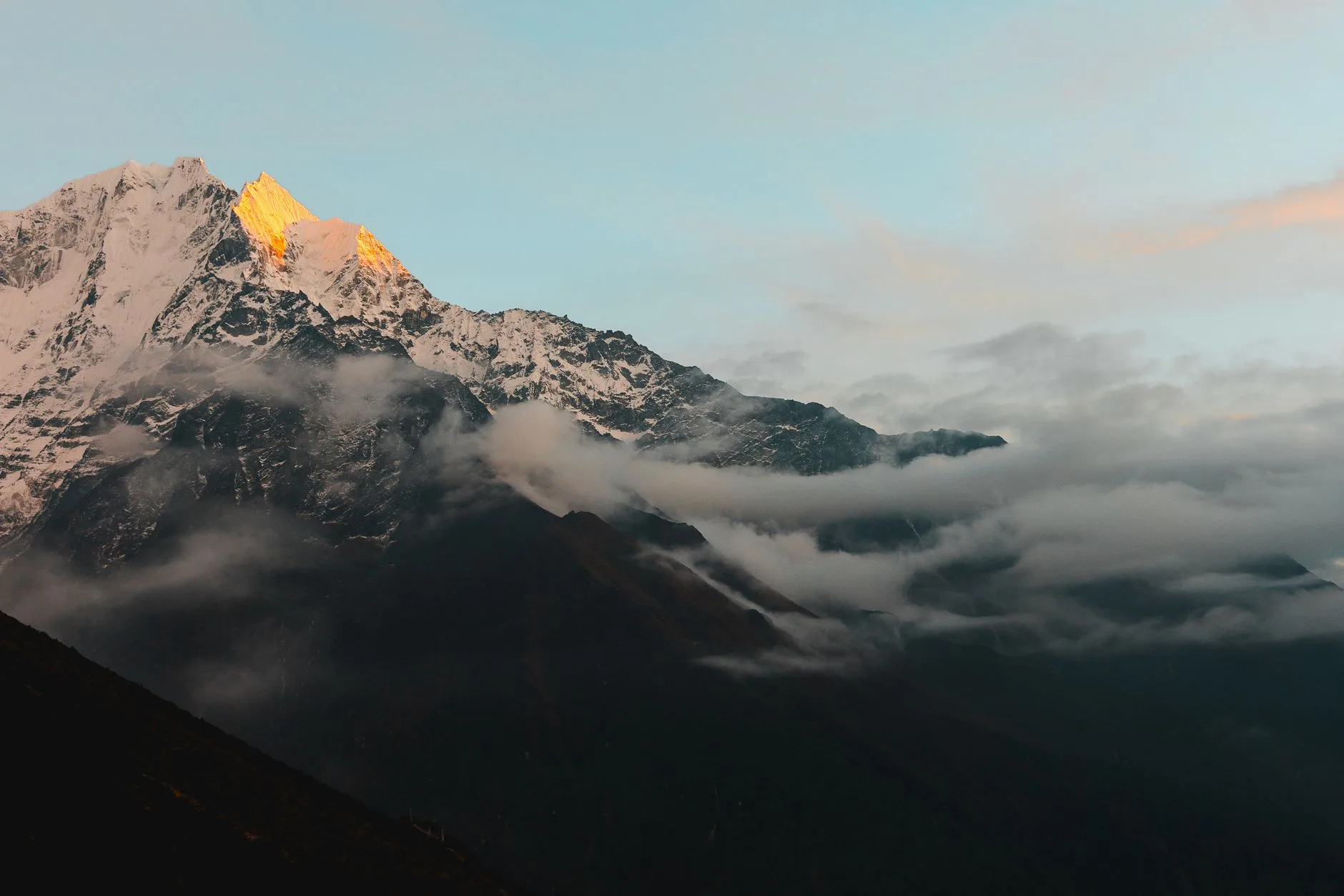
Photo by Arjay Neyra on Pexels
The bus from Besisahar to Chamje leaves when it’s full, not when the timetable (there isn’t one) says it should. You’ll sit on the roof rack with your pack wedged between a sack of rice and a man carrying three live chickens, watching the Marsyangdi River go from brown to jade as the road climbs. Somewhere past Bahundanda, the tarmac gives out entirely, and the bus starts throwing itself into potholes with a confidence that feels, at the time, misplaced. This is the Annapurna Circuit beginning in the way it actually begins — not with a dramatic mountain vista, but with a four-hour jeep ride that rearranges your spine.
Nepal has spent the last decade making independent trekking slightly more complicated on paper and no less rewarding in practice. The old image of wandering off alone with a guidebook and a prayer is mostly gone — new rules now require a guide on most major routes — but “independent” in Nepal was never really about going solo through the mountains unsupported. It was about setting your own pace, choosing your own teahouses, eating what the kitchen actually has rather than what a package itinerary promised, and staying loose enough to change your route when a landslide, a festival, or a spectacular guesthouse with a view of Machapuchare, talks you into it.
This is a guide to doing that: the permits you need, the routes that reward independent-minded travel, the costs you’ll actually pay, and what Nepal looks and smells like once you’re past the souvenir shops of Thamel.
The permit situation, honestly
As of 2023, Nepal require trekkers to hire a licensed guide for most routes outside the Everest and Annapurna conservation areas’ most touristed stretches, and TIMS (Trekkers’ Information Management System) cards plus route-specific permits are mandatory nearly everywhere. This is a real change from the era when backpackers trekked the Annapurna Circuit entirely alone, and it has annoyed a lot of long-time visitors. But it hasn’t killed independent travel — it’s reshaped it.
You can still hire a guide independently rather than through a trekking agency’s full package. In Kathmandu’s Thamel district, dozens of small operators and the Nepal Mountaineering Association’s own office can connect you with a licensed guide for a day rate, typically $25–35, without locking you into a fixed itinerary, meals plan, or porter you don’t want. You choose the pace, the teahouses, the rest days. That’s where “independent” now lives in Nepal: independent of the package tour, not independent of all human company on the trail.
Specific permits to budget for:
- TIMS card: roughly $10–20 depending on route and solo/group status, obtained in Kathmandu or Pokhara
- Annapurna Conservation Area Permit (ACAP): around $30
- Sagarmatha National Park entry (for Everest region routes): around $30, plus a local Khumbu Rural Municipality fee of a few dollars collected at Lukla or Monjo
- Restricted area permits (Upper Mustang, Manaslu, Nar-Phu): these run $75–100 per week and require trekking in a group of at least two with a licensed guide — genuinely non-negotiable, checked at military posts along the way
Buy these at the Nepal Tourism Board office in Kathmandu’s Bhrikutimandap area or at the ACAP office in Pokhara’s Damside neighbourhood. Bring passport photos — four or five, since you’ll need them for multiple permits.
Annapurna Circuit and Annapurna Base Camp: the classic, still worth it
The Annapurna Circuit lost some of its wild edge when the road reached Manang on one side and Jomsom on the other, letting jeeps cut what used to be a three-week walk down to something shorter. Purists complain, and they have a point — you now share parts of the trail with dust and diesel fumes. But the high section over Thorong La Pass (5,416m), between Manang and Muktinath, remains a serious, spectacular trek regardless of the road, and the Annapurna Base Camp trek, a separate route through Ghorepani and the Modi Khola valley, is largely road-free and arguably more atmospheric for travellers short on time.
Expect 12–16 days for the full circuit, 7–10 for Base Camp. Teahouses line both routes roughly every 2–3 hours of walking, so there’s no need to carry a tent or food — just a sleeping bag liner, since blankets vary in cleanliness and warmth. Dal bhat, the lentil-rice-vegetable plate that Nepali guides swear fuels unlimited walking (“dal bhat power, 24 hour,” as the trail joke goes), costs $4–6 and usually comes with a free second helping.
October–November and March–April are the reliable windows — clear skies, rhododendrons blooming in March, stable weather in autumn. Monsoon season (June–September) turns the trails to mud and the views to cloud, though it’s also when the trekking lodges are empty and prices soften.
Everest region: Lukla, the Khumbu, and the alternative approach
Flying into Lukla’s short, uphill airstrip is one of aviation’s more theatrical openings to a trek — and also one of its more weather-dependent, with flights frequently delayed or cancelled for days when cloud sits over the valley. Budget a buffer day or two on both ends of an Everest Base Camp trek for exactly this reason; it’s less a possibility than an expectation.
From Lukla, the standard route runs through Phakding, Namche Bazaar (a genuinely good place to spend an acclimatisation day, wandering its terraced market selling yak cheese and Chinese thermoses), Tengboche with its monastery and startling views of Ama Dablam, and on to Gorak Shep and Everest Base Camp itself, 14 days round trip for most walkers. The trail is well-marked, well-supplied, and in peak season, well-crowded — October mornings on the approach to Dingboche can feel more like a queue than a wilderness.
For a quieter alternative covering similar terrain, the Gokyo Lakes route branches off at Sanasa, climbing instead to a string of turquoise glacial lakes and the viewpoint of Gokyo Ri, with far fewer trekkers and arguably better mountain views than base camp itself. Some walkers combine both via the Cho La Pass (5,420m), a genuinely technical crossing requiring basic glacier travel skills and, ideally, microspikes.
| Route | Duration | Permit cost (approx) | Guide required | Best season | Crowd level |
|---|---|---|---|---|---|
| Annapurna Circuit | 12–16 days | $40–50 | Yes | Oct–Nov, Mar–Apr | High |
| Annapurna Base Camp | 7–10 days | $40–50 | Yes | Oct–Nov, Mar–Apr | High |
| Everest Base Camp | 12–14 days | $40–50 | Yes | Oct–Nov, Mar–May | Very high |
| Gokyo Lakes | 10–12 days | $40–50 | Yes | Oct–Nov, Mar–May | Moderate |
| Upper Mustang | 10–12 days | $500+ | Yes, group of 2+ | Jun–Sep (rain shadow) | Low |
| Manaslu Circuit | 14–16 days | $150+ | Yes, group of 2+ | Oct–Nov, Mar–Apr | Low |
For a sense of exactly how weather and crowding interact with the Everest region’s calendar, Nepal’s Department of Tourism publishes current permit rules and seasonal advisories worth checking before you book flights.
Beyond the big two: Manaslu and Mustang
If the idea of sharing a trail with a hundred other trekkers a day undercuts the appeal, Nepal still has routes that don’t attract that volume. The Manaslu Circuit, looping around the world’s eighth-highest peak, passes through Tibetan Buddhist villages like Samagaon and crosses the Larkya La pass (5,106m) with a fraction of the Annapurna Circuit’s foot traffic, despite similarly dramatic scenery. It requires a restricted area permit and a guide, and infrastructure is leaner — teahouses are simpler, menus shorter, and the sense of being somewhere genuinely remote is sharper.
Upper Mustang, the arid former kingdom beyond Jomsom, feels like a different country altogether — which, until 2008, it functionally was, ruled by its own king under Nepali sovereignty. The walled city of Lo Manthang, with its whitewashed gompas and wind-scoured plateau, sits in a rain shadow that makes it trekkable even during monsoon, when the rest of Nepal is drowning. It’s also one of the more expensive permits in the country, which keeps numbers low.
Beyond trekking: Kathmandu Valley, Pokhara, and the Terai
Independent travel in Nepal doesn’t require mountains at all. Kathmandu’s Durbar Square neighbourhoods — Patan and Bhaktapur especially — hold some of South Asia’s densest concentrations of Newari temple architecture, and both reward slow, repeated wandering rather than a single rushed visit; Bhaktapur’s Pottery Square, where terracotta is still thrown and sun-dried in open courtyards, is worth returning to at different times of day as the light changes.
Pokhara, the usual trekking jump-off point, is worth a few unhurried days in its own right. Phewa Lake at dawn, before the pedal boats start, with mist still sitting on the water and the Annapurna range occasionally visible beyond — weather permitting, which in Pokhara is a genuine caveat rather than a formality.
South of the hills, the Terai lowlands offer an entirely different Nepal: Chitwan National Park for rhino and, with considerable luck, tiger sightings on a guided jeep or canoe safari, and Lumbini, the Buddha’s birthplace, a UNESCO World Heritage Site worth visiting for its quiet rather than its spectacle — a scattered complex of monasteries built by different Buddhist nations, each in its own national architectural style.
For travellers weighing Nepal against other budget-friendly, trail-heavy destinations in the region, it sits alongside countries covered in guides to budget travel in Sri Lanka and similar practical, cost-conscious approaches to travel — though Nepal’s altitude and permit system make it a different kind of planning exercise entirely.
Costs, realistically
Nepal remains inexpensive relative to most trekking destinations globally, but the 2023 guide requirement has pushed independent budgets up from the days when solo trekking cost next to nothing. Expect:
- Guide: $25–35/day
- Porter (optional, often shared between two trekkers): $20–25/day
- Teahouse accommodation: $3–8/night (often discounted or free if you eat dinner there)
- Meals: $15–25/day depending on altitude (prices climb the higher you go, since everything arrives by porter or mule)
- Permits: $40–50 for standard conservation areas, $150–500+ for restricted regions
A two-week Everest Base Camp trek with a guide, modest porter-sharing, and teahouse accommodation typically runs $900–1,400 excluding flights to Kathmandu and the Lukla flight itself (around $350–450 round trip, as of 2026, subject to the usual seasonal surcharges).
The Bottom Line
Independent travel in Nepal in 2026 means something different than it did a decade ago — the solo, guideless wander is largely gone from the major routes, replaced by independently-arranged guiding that still leaves you in control of pace, route, and rest days. Budget real buffer days around any Lukla flight; the mountain decides the schedule, not the airline. Choose Manaslu or Upper Mustang over Everest or Annapurna if trail crowding would bother you more than the extra permit cost. And don’t treat the trekking as the whole trip — a few unhurried days in Bhaktapur’s temple squares or Pokhara’s lakeside mornings round out a visit that mountains alone, however spectacular, can’t quite provide on their own.
Keep reading: Nepal’s teahouse trails on a tighter budget