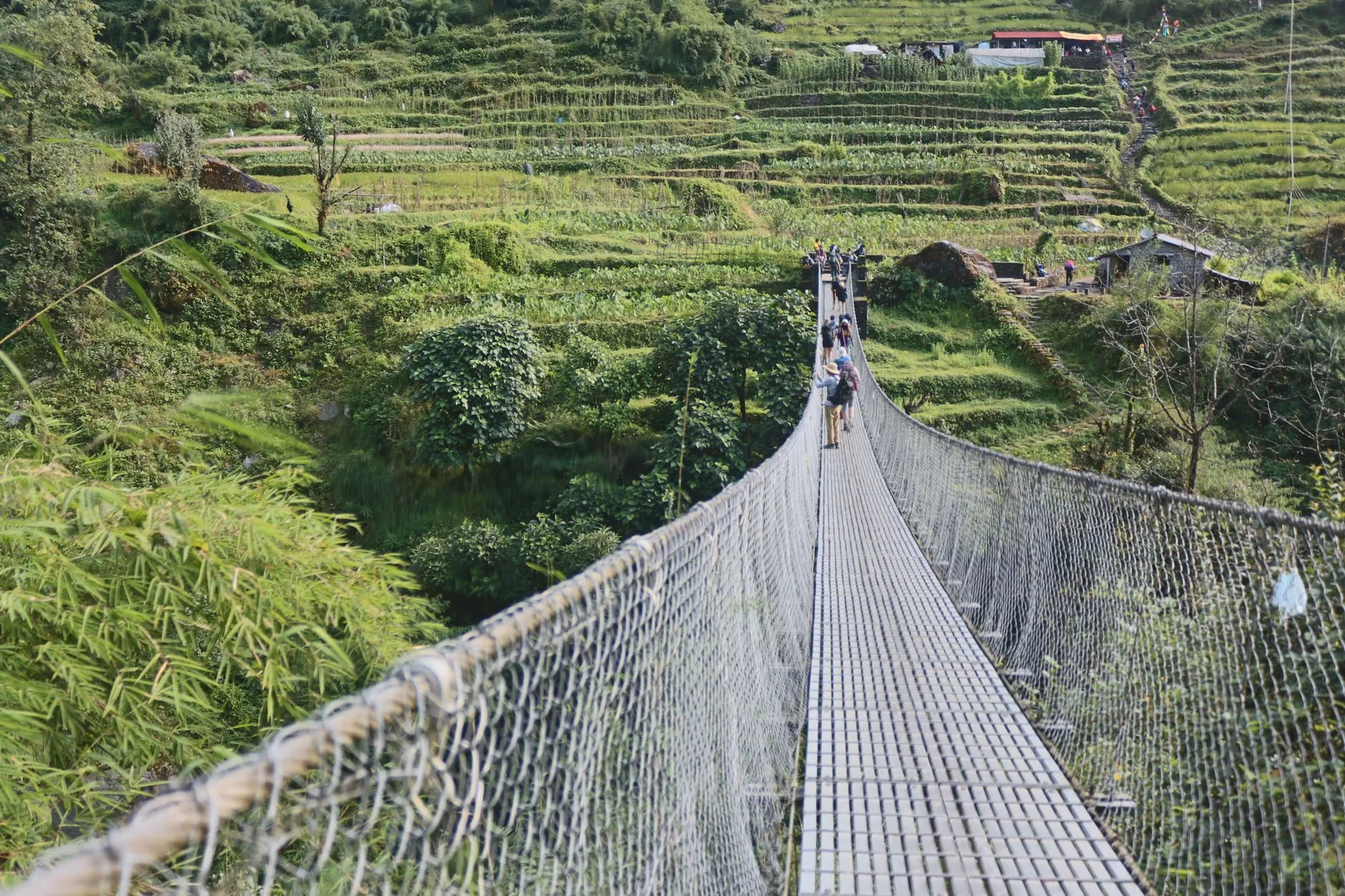
Photo by Sagar Neupane on Pexels
Nepal is frequently described as a budget destination, but the Annapurna Circuit and Everest Base Camp trekking industry have pushed prices higher on the most popular routes. Teahouse accommodation that cost $3 a night in 2010 costs $15–25 today; guided trek packages run $800–1,500 for a week. This is still relatively inexpensive by global standards, but it’s not the cheapest trekking in Asia.
Budget travel in Nepal — genuinely cheap travel — means understanding where the tourist economy is concentrated and where it isn’t, and choosing routes and regions accordingly.
Entry and Basics
Most nationalities obtain a tourist visa on arrival at Tribhuvan International Airport (KTM) in Kathmandu or at designated land borders. The fee is $30 for 15 days, $50 for 30 days, or $125 for 90 days. Pay in USD. An e-visa is also available in advance at nepalimmigration.gov.np.
The currency is the Nepalese Rupee (NPR). As of mid-2026, approximately 130–135 NPR per USD. Use ATMs in Kathmandu and larger trekking towns; ATMs are unreliable or absent in remote areas — carry enough cash for your intended time off the grid.
Where the Money Goes on Classic Routes
The Annapurna Circuit (ACAP permit: NPR 3,000 / ~$22), Everest Base Camp (Sagarmatha National Park permit: NPR 3,000), and Langtang (Langtang National Park permit: NPR 3,000) all require both a national park permit and a TIMS card (Trekkers’ Information Management System: $10–20, varying by route). These are unavoidable costs.
Beyond permits, costs escalate with altitude and remoteness on popular routes — the further you walk from the trailhead, the more expensive the teahouses, because everything has to be carried or flown in. A mid-range teahouse at Gorak Shep (near EBC) charges NPR 2,000–3,000 ($15–22) per night for a basic room that would cost NPR 300 ($2) in Kathmandu.
Budget tip: The room itself on popular trekking routes is often cheap or heavily discounted if you eat all your meals at the same teahouse. The economics work like hotels in remote places — they make money on food, not accommodation. If you commit to eating breakfast and dinner in-house, many teahouses give the room free or at NPR 200–400.
Routes That Are Genuinely Cheaper
Mardi Himal Trek
A shorter, steeper, and less-visited alternative to the classic Annapurna routes, the Mardi Himal trek reaches a viewpoint at 4,500m above the Annapurna and Machhapuchhre massifs, with Fishtail Mountain directly in front of you. The route takes 5–7 days from Pokhara, traverses rhododendron forests and high ridges, and has teahouses throughout — but far fewer trekkers than the Circuit or Sanctuary approaches.
Teahouse accommodation: NPR 400–800 per night. Meals: NPR 250–600 per dish. Total budget for the trek (excluding transport from Pokhara): approximately NPR 20,000–30,000 ($150–220) for a week.
Khopra Ridge
South of the Annapurna Sanctuary, a loop via Ghorepani–Poon Hill–Khopra Danda–Khayar Lake. Khopra Ridge Community Homestay operates as a community-owned trekking infrastructure — rates are fixed, lower than commercial teahouses on the main routes, and the income goes to the local village. Views of Dhaulagiri and the Annapurna South face. Less travelled than the ABC approach.
Manaslu Circuit
The most accessible restricted area trek — requires a special permit ($100 per week), which adds to upfront costs but dramatically reduces trail crowds. The route circles the world’s eighth-highest mountain through Tibetan Buddhist villages, high alpine valleys, and the Larkya La pass (5,160m). Teahouses are simpler and cheaper than Annapurna equivalents. This is a serious undertaking (14–18 days recommended) but offers the best combination of wilderness and accessibility in Nepal.
Kathmandu on a Budget
Kathmandu is one of the cheapest capitals in Asia for budget accommodation and food.
Thamel is the tourist district — convenient, noisy, easy, and mid-range to expensive by Nepali standards. A dorm bed in a Thamel hostel costs NPR 500–1,000; a private room NPR 1,500–2,500.
Outside Thamel (Patan, Bhaktapur, and inner Kathmandu neighbourhoods), guesthouses run NPR 600–1,200 for a basic private room. Patan — across the Bagmati River from Kathmandu — has a better-preserved old city, fewer touts, and lower prices than the tourist centre.
Food: Dal bhat (rice, lentil soup, curried vegetables, pickles) is the foundational Nepali meal and the best value in the country. A full plate of dal bhat at a local restaurant costs NPR 150–250 ($1–2) and comes with unlimited refills of the lentil and curry portions. The tourist restaurants in Thamel charge NPR 400–700 for the same dish.
Street food is similarly cheap: sel roti (fried rice doughnut), momo (dumplings, fried or steamed), samosas, and chiura (beaten rice). A plate of momos from a street stall: NPR 80–150.
| Item | Cost (NPR / approx USD) |
|---|---|
| Dorm bed, Thamel hostel | 500–1,000 NPR ($4–7) |
| Budget guesthouse (private room) | 800–1,500 NPR ($6–11) |
| Dal bhat, local restaurant | 150–250 NPR ($1–2) |
| Plate of momos | 80–150 NPR ($0.60–1.10) |
| Bottled water | 25–40 NPR ($0.20–0.30) |
| Local bus (city) | 20–40 NPR ($0.15–0.30) |
| Tourist bus Kathmandu–Pokhara | 1,200–2,000 NPR ($9–15) |
Beyond Kathmandu and Pokhara
Chitwan National Park — one of the best wildlife experiences in Asia for the price. A 2-night package at a budget lodge outside the park buffer zone costs NPR 8,000–12,000 ($60–90) including jungle walks, jeep safaris, and elephant-bathing experiences. The park protects Bengal tigers, one-horned rhinos, and over 540 bird species. Budget travellers who book independently (arrange a lodge on arrival at Sauraha, the gateway village) can cut package prices significantly.
Lumbini — the birthplace of the Buddha, 280km west of Kathmandu. The Sacred Garden has an Ashokan pillar marking the exact birth site, a Maya Devi Temple, and a surrounding complex of monasteries funded by Buddhist nations worldwide — Japanese, Chinese, Korean, Thai, Tibetan, and Sri Lankan monasteries each with distinct architecture. Entry is free. Budget guesthouses in the surrounding town run NPR 600–1,200 per night. Almost never crowded.
Bandipur — a hilltop bazaar town in the Gandaki hills between Kathmandu and Pokhara that has preserved its Newari architecture almost entirely intact. No motor vehicles in the town centre. Views of the Annapurna and Manaslu ranges. Budget guesthouses in converted Newari houses: NPR 800–1,500. A stop of 1–2 nights breaks the Kathmandu–Pokhara journey and shows a part of Nepal that most trekkers miss entirely.
Getting Around
Local buses: The cheapest option for all inter-city travel. Night buses between Kathmandu and Pokhara (200km) cost NPR 600–900. They are slow (7–9 hours due to mountain roads), crowded, and not always comfortable — but entirely functional and used by most Nepalis.
Tourist buses: Comfortable air-conditioned buses on main routes (Kathmandu–Pokhara–Chitwan corridor) cost NPR 1,200–2,000 and take a similar amount of time with better seats and designated stops. Booked through any Thamel travel agent or guesthouse.
Shared jeeps: For off-route destinations and trailhead access — fill a jeep with 8–10 people, divide the cost. NPR 200–400 per seat for short distances.
Realistic Budget Breakdown
| Travel style | Daily budget (NPR / USD) |
|---|---|
| Shoestring (dorms, dal bhat, local buses) | NPR 1,500–2,500 ($11–18) |
| Budget (private guesthouse, mix of food) | NPR 2,500–4,500 ($18–33) |
| Comfortable budget (nicer guesthouse, trekking costs) | NPR 4,500–8,000 ($33–60) |
Add trekking permits ($20–50) and any special area permits to the relevant days.
Conclusion
Nepal’s best budget travel is off the main trekking highways — in the community-run trails, the forgotten bazaar towns, and the wildlife parks where organised tourism hasn’t standardised the prices.
- Eat dal bhat with unlimited refills — NPR 150–200 at local restaurants is the most nourishing and cheapest meal in the country
- Book teahouses that offer free rooms with meal commitments — the economics work in your favour on all popular trekking routes
- Mardi Himal and Manaslu Circuit offer better value than Everest or Annapurna Circuit — fewer people, lower prices, equal scenery
- Bandipur and Lumbini are both undervisited and reward a day or two of slow travel
- Budget $11–18/day for shoestring travel in Kathmandu and on lower-elevation routes — closer to $30–40 during any serious trekking
Keep reading: Trekking in the Simien Mountains Ethiopia guide