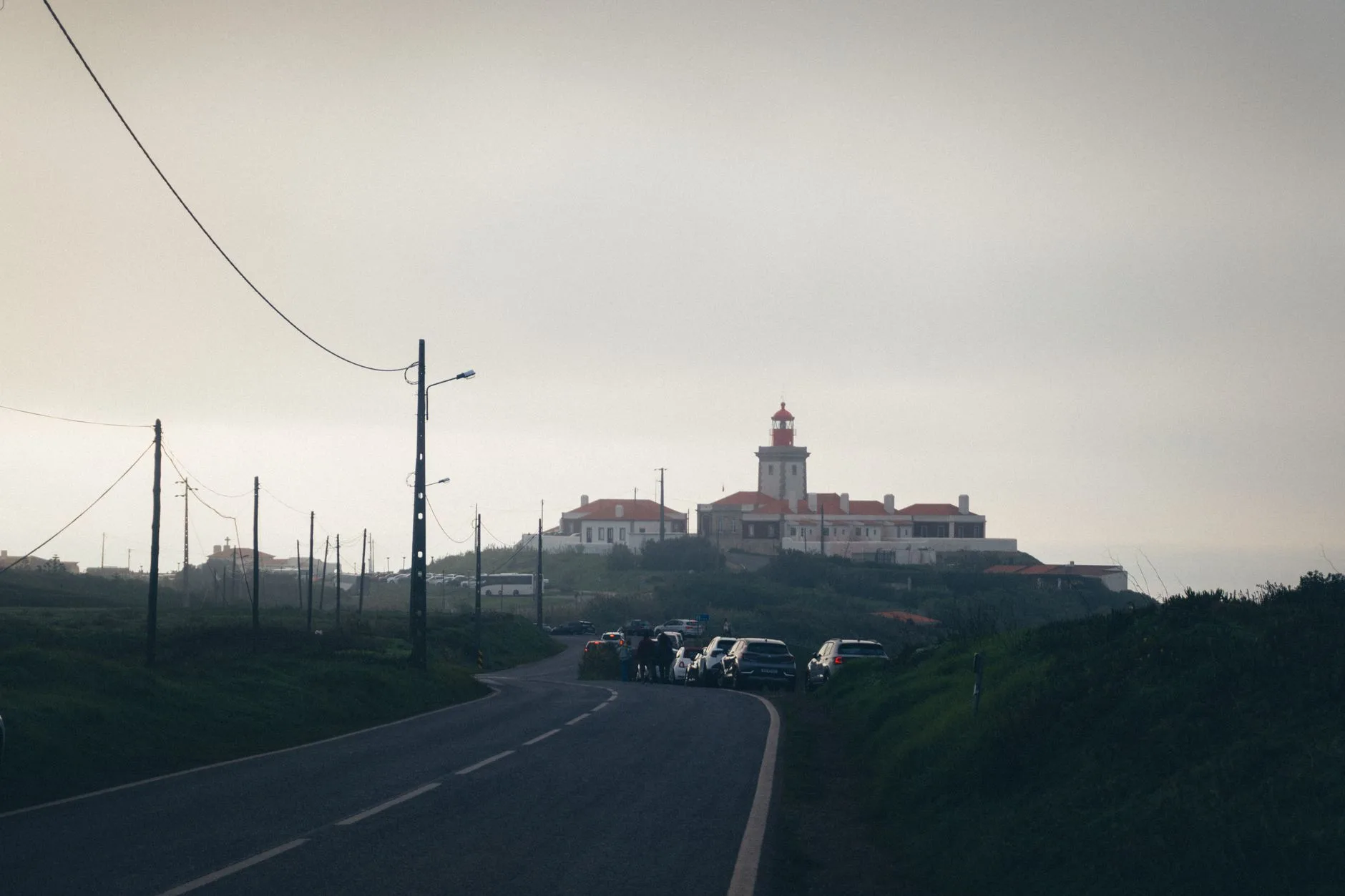
Photo by Taras Chuiko on Pexels
The fog usually burns off Baiona by ten in the morning, and when it does, the Monte Real headland reveals itself in stages — first the stone ramparts of the Parador, then the fishing boats working the Ría de Vigo, then the open Atlantic beyond, grey-green and restless. This is the starting line for one of Europe’s more underrated road trips: the drive down the Atlantic edge of the Iberian Peninsula, from the rías of Galicia through Portugal’s working fishing towns to the cliffs of the Algarve. It is not a route you’ll find packaged into a week-long bus tour. It rewards travellers with a car, time, and a willingness to eat dinner later than feels natural.
This is a coastline, not a highway — N-roads that hug cliffs, ferry crossings that run on their own schedule, and towns where the day’s rhythm is still set by the tide and the fish auction. Expect wind. Expect long lunches. Expect to recalibrate what you thought “Atlantic coast” meant once you’ve stood at Cabo de São Vicente and watched the ocean genuinely end.
Planning the route: how far, how long, which direction
The full drive from Galicia’s northern rías to the southwestern tip of Portugal covers roughly 900 to 1,000 kilometres, depending on how many coastal detours you take — and you should take most of them. Budget a minimum of ten days; two weeks lets you breathe. Driving it non-stop takes about 12-14 hours of actual road time, but that number is almost meaningless here, because the whole point is to not drive it non-stop.
Most travellers start in Santiago de Compostela or A Coruña (both have international airports with connections via Madrid or Lisbon) and drive south, finishing in Faro or Lagos. This direction has a logical arc: cooler, wetter, dramatic Galicia gives way to the working ports of northern Portugal, then the river city of Porto, then the long Atlantic beaches of the Alentejo coast, ending in the warmer, more polished Algarve. Doing it in reverse works too, and has the advantage of ending in Spain’s Rías Baixas, which feels like a quieter place to decompress before a flight home.
Car rental is straightforward from either Santiago or Faro airport, with manual transmission the default (automatics cost more and need booking ahead). Fuel in Portugal is somewhat pricier than Spain; tolls on Portuguese motorways (the A-roads) use an electronic system that rental companies handle automatically, usually billed after the fact — ask explicitly how this works before you drive off, because surprise toll bills are the most common complaint from first-time renters.
Galicia’s rías: Baiona to Cambados
The Rías Baixas — the four great estuaries of Galicia’s southwest coast — are where this trip earns its “Atlantic” name properly. These aren’t Mediterranean coves; they’re drowned river valleys, cold and tidal, lined with eucalyptus forests and pine, with Pontevedra as a good midpoint base. The town’s medieval centre, all granite arcades and the Praza da Leña, is compact enough to explore in an afternoon before continuing south.
Cambados, further down the Ría de Arousa, is the capital of Albariño wine country. The grape here is grown on granite pergolas called parras, raised off the damp ground, and the resulting white wine — crisp, faintly saline — pairs with exactly what the region does best: percebes (goose barnacles), harvested at real risk by divers working the rocks at low tide, and served simply steamed with nothing but salt. A plate at a marisquería in the old town, with a glass of Albariño from one of the nearby adegas, is as good an introduction to Galician food as exists.
The drive from Baiona to the Portuguese border at Valença takes under two hours on the A-55, but allow a full day if you stop in Vigo for lunch and in A Guarda for a walk up Monte Santa Tecla, where Celtic hut foundations sit above the mouth of the Minho river with Portugal visible on the far bank.
Crossing into Portugal: Minho and the Costa Verde
The border at Valença is unmarked now — just a bridge over the Minho river and a change in road signage — but the shift in texture is immediate. This is Portugal’s Minho region, greener and more intensely farmed than Galicia, with vinho verde vineyards strung on trellises between fields of maize. Viana do Castelo, about 45 minutes south, is worth a full stop: its Art Nouveau townhouses, the funicular up to the Santa Luzia basilica for a view down the Lima river’s mouth, and a beach, Praia do Cabedelo, reached by a small ferry across the river rather than by road.
Further south, Póvoa de Varzim and then Porto itself mark the transition from rural coast to working port city. If time allows a detour inland, the hiking routes through the Peneda-Gerês National Park are a different kind of Atlantic-influenced landscape — granite peaks and wild Garrano ponies — though that’s a few hours off this route and really belongs to a separate trip.
Porto and the river mouth
Porto deserves at least two nights, not for the road trip’s sake but because the city resists being rushed. The Ribeira district, tumbling down to the Douro river in layers of tiled façades hung with washing lines, is the obvious draw, but the coastal part of the city matters more for this itinerary: the stretch from Foz do Douro to Matosinhos, where the river meets the sea.
Matosinhos is a working fishing port, and its waterfront grills — no-frills places with plastic chairs and a charcoal smell that reaches the street — serve some of the best grilled fish in Portugal, usually just sardines, dourada or robalo, salt and olive oil, nothing else. This is also where to try a francesinha if you’re brave about lunch: a sandwich of cured meats under melted cheese and a beer-and-tomato sauce, a dish that makes no apologies for itself. For a slower, more immersive take on this region beyond the obvious Porto-and-done itinerary, it’s worth reading about backpacking in Portugal beyond Lisbon, much of which applies just as well to a driving trip.
The Silver Coast and the long beaches south of Porto
South of Porto, the N109 and then the A8 motorway run past a string of beach towns — Espinho, São Jacinto, Costa Nova with its candy-striped fishermen’s houses on the Ria de Aveiro — before the coast opens into the long, dune-backed beaches of the Costa de Prata. Nazaré is the obvious stop here, famous for the giant winter swells at Praia do Norte that draw big-wave surfers from October through March, but worth visiting even outside the surf season for the fishing quarter below the clifftop, where women still sometimes sell dried fish laid out on racks along the seafront.
Óbidos, a walled medieval town a short inland detour from Nazaré, gets crowded by midday with day-trippers from Lisbon, but arriving before 9am or staying the night inside the walls gives a very different experience — empty cobbled streets, the smell of ginjinha (sour cherry liqueur) served in small chocolate cups from hole-in-the-wall counters.
Lisbon itself sits almost exactly at the route’s midpoint and is worth two or three days if the schedule allows, though it’s well documented elsewhere and the real character of this road trip lies south of it, on the Alentejo and Algarve coasts.
Alentejo’s wild coast and the Rota Vicentina
South of Lisbon, across the 25 de Abril bridge or via the ferry from Belém to Porto Brandão, the coastline changes character again. The Costa Vicentina — protected as a natural park — is the least developed stretch of the entire route: low scrubby cliffs, storks nesting on sea stacks (an odd sight, since storks are usually associated with chimney tops, not ocean cliffs), and small towns like Vila Nova de Milfontes and Zambujeira do Mar that still feel governed by fishing schedules rather than tourism calendars.
This stretch is best explored partly on foot. The Rota Vicentina’s Fishermen’s Trail (Trilho dos Pescadores) runs along the clifftop for roughly 120 kilometres between Porto Côvo and Odeceixe, and even a single day’s section — the Zambujeira do Mar to Odeceixe leg is a good one — gives a sense of the coast that driving alone can’t. Readers who enjoy building a trip around trails rather than roads might also look at the broader list of best coastal walks in Europe worth the effort, several of which sit on this same stretch of Iberian coastline.
The Algarve’s west: wilder than the brochures suggest
Crossing from Alentejo into the Algarve at Odeceixe, the landscape stays wild for longer than most visitors expect — the brochure image of the Algarve (golf courses, all-inclusive resorts) belongs almost entirely to the central and eastern stretches, not here. Carrapateira and Arrifana, near Aljezur, have serious surf breaks and a slower pace, with beach cafés serving grilled fish and little else.
Cabo de São Vicente, the southwesternmost point of mainland Europe, is the natural endpoint for this particular Atlantic obsession — a lighthouse, a sheer 75-metre drop, and on a clear evening, a sunset with nothing between you and the open ocean until the coast of North America. Sagres, a few kilometres east, makes a sensible base, with a fortress on its own headland and a much lower density of development than Lagos or Albufeira further along.
Route comparison: key legs of the trip
| Leg | Distance | Driving time | Suggested stop length | Highlight |
|---|---|---|---|---|
| Baiona → Cambados | ~75 km | 1.5 hrs | 1–2 nights | Albariño wine, percebes |
| Cambados → Porto (via Valença, Viana do Castelo) | ~180 km | 3 hrs | 2 nights | Border crossing, Minho vineyards |
| Porto → Nazaré | ~160 km | 2 hrs | 1–2 nights | Matosinhos grilled fish, big-wave surf history |
| Nazaré → Lisbon (via Óbidos) | ~130 km | 2 hrs | 2–3 nights | Walled town, capital city |
| Lisbon → Vila Nova de Milfontes | ~180 km | 2.5 hrs | 1–2 nights | Costa Vicentina natural park |
| Milfontes → Sagres | ~110 km | 1.5 hrs | 2 nights | Fishermen’s Trail, Cabo de São Vicente |
Food, timing, and the things nobody mentions
Meal times shift noticeably as you move south: Galicia eats lunch around 2pm and dinner after 9, and by the time you’re in the Algarve, dinner can stretch past 10pm in summer, which catches early risers off guard. Restaurants in smaller fishing towns often close for a few hours mid-afternoon and sometimes for an entire day midweek — Monday closures are common in Portugal — so checking ahead matters more here than in cities.
Driving the N-roads along cliff sections, particularly around the Costa Vicentina and parts of Galicia’s coast road, is slow by design: hairpin turns, single-lane bridges, tractors. This is not a route to rush, and GPS estimated times routinely undersell how long a “short” coastal stretch actually takes. Budget 20-30% more time than any map suggests for anything described as a scenic coastal road.
Weather is the other honest caveat. The Atlantic side of Iberia is considerably cooler and wetter than its Mediterranean counterpart, even in summer — Galicia in particular can have grey, drizzly days in July. Spring (April–June) and early autumn (September–October) offer the best balance of mild weather, lower crowds, and swimmable seas without the peak-season crush that hits the Algarve in August. For broader context on how this region fits into slower-paced European travel, the UNESCO-listed Camino routes that cross parts of this coastline are documented on UNESCO’s World Heritage list, worth a glance if the pilgrim trail overlaps with your drive near Galicia.
The Bottom Line
- Ten days is workable, but this is a trip that improves with slack in the schedule — the Costa Vicentina and the Rías Baixas are where rushing costs you the most.
- Rent the car in Santiago or Faro, not both, and ask explicitly about Portugal’s electronic toll billing before you leave the lot.
- Food here runs on tide and season, not tourist convenience — percebes, grilled sardines, and vinho verde are all best enjoyed by matching the local mealtime rather than fighting it.
- The Algarve’s reputation for crowds and resorts applies mostly to its central and eastern coast; the western edge, around Aljezur and Sagres, is a genuinely different place.
- If a coastal road trip isn’t quite the pace you’re after, consider pairing it with time spent properly still — there’s a reason slow travel in Portugal has its own following, and this coastline is exactly where it works best.
Keep reading: Find out what slow travel looks like beyond Lisbon