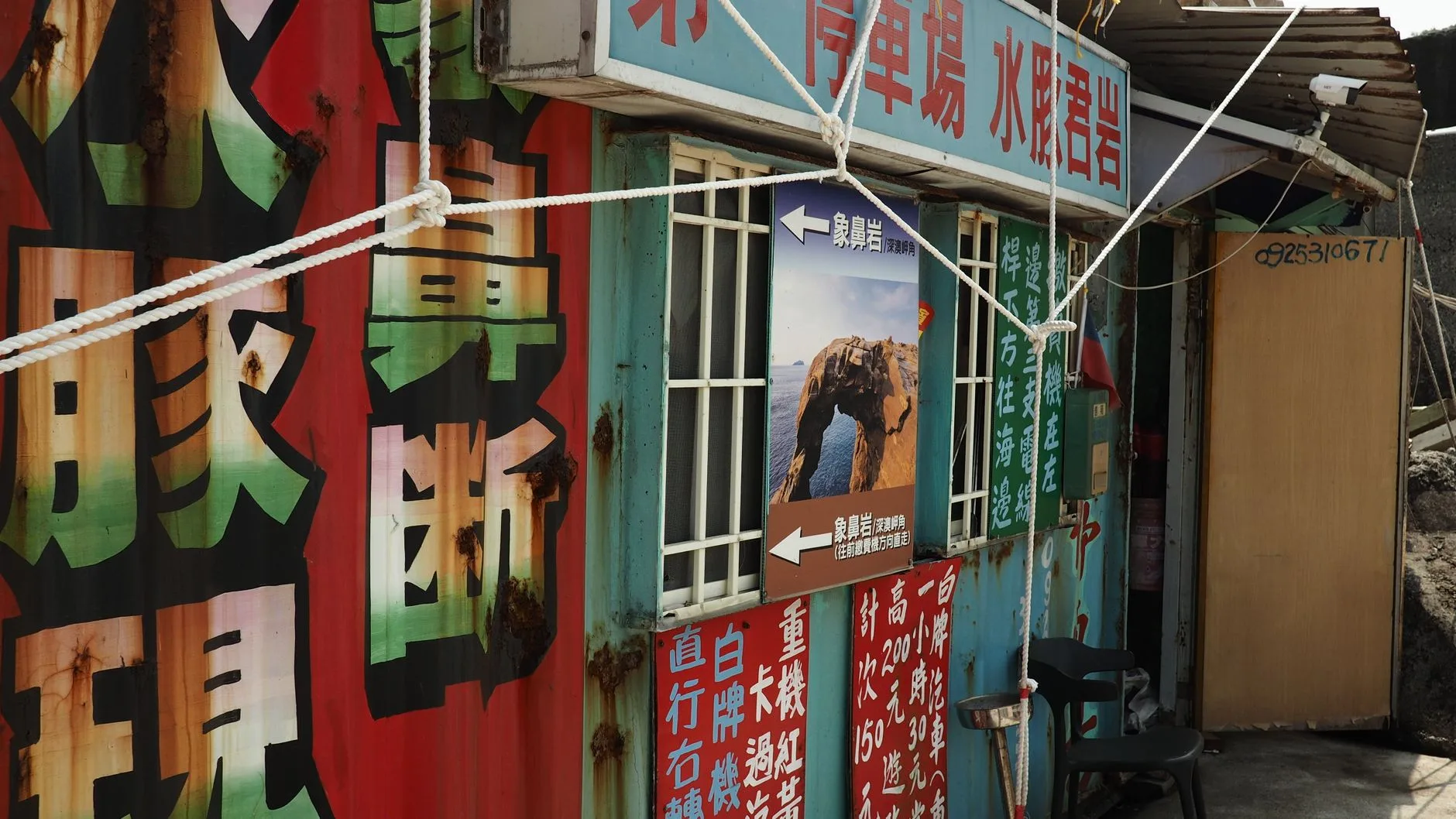
Photo by mingche lee on Pexels
The 7-Eleven on the corner of Yongkang Street in Taipei sells hot tea eggs steeped in soy and star anise, and at six in the morning it’s already doing a brisk trade with office workers and the odd night-shift taxi driver. Outside, the air smells of diesel, frying scallion pancakes, and the damp mineral tang that clings to Taipei after rain, which is often. A woman sweeps the pavement in front of her shopfront with a bundle of twigs tied together, a habit that predates every broom sold in the convenience store behind her. This is Taiwan at street level: modern infrastructure layered over older rhythms that never fully went away.
Travelling Taiwan independently is, logistically speaking, one of the easier undertakings in Asia. The trains run on time, English signage is everywhere on major routes, and the convenience store network is so dense and so capable — paying bills, buying concert tickets, printing documents — that it functions as unofficial national infrastructure. The harder part is knowing where to point yourself once you’re off the High Speed Rail, because Taiwan rewards specificity. Generic itineraries here miss almost everything interesting.
Getting In and Getting Your Bearings
Most independent travellers arrive at Taoyuan International Airport, connected to central Taipei by the Airport MRT line — about 40 minutes to Taipei Main Station, costing roughly NT$160 (around US$5). Avoid the taxi touts in the arrivals hall; the metered taxi rank outside is fine if you’d rather skip the train, but it’ll run you NT$1,000–1,200 and take longer in traffic.
Citizens of most Western countries, the UK, EU, Australia, Canada, and the US included, get visa-free entry for up to 90 days, which makes Taiwan unusually friendly to slow, independent travel. Buy an EasyCard at any MRT station on arrival — it works on buses, trains, YouBike rentals, and most convenience store purchases nationwide, and it’s the single most useful NT$500 you’ll spend.
Taipei itself deserves two or three days minimum, not as a checklist of sights but as an orientation. Base yourself in Zhongshan or Da’an rather than the area immediately around the train station, which is convenient but soulless. Da’an puts you walking distance from Yongkang Street’s dumpling houses and within a short MRT ride of everywhere else.
Taipei Beyond the Night Market Circuit
Shilin Night Market gets all the attention, and it’s worth one visit for the sheer sensory overload — the hiss of oil, the barking of vendors, the queues for the original XXL fried chicken cutlet — but it’s also the most tourist-saturated market in the country. For a better version of the same experience, head to Raohe Street Night Market in Songshan, which runs in a single straight line from a temple gate and is heavier on locals than selfie sticks. Order the pepper buns (hu jiao bing) baked in a clay oven near the entrance — they’re the market’s actual reason to exist.
Dadaocheon, the old trading district along Dihua Street, is where Taipei’s Qing-dynasty and Japanese colonial history is still legible in the architecture: dried goods shops selling mushrooms and bird’s nests by the kilo, Chinese medicine halls with wooden drawer cabinets, and — increasingly — small design studios and coffee bars tucked into the same buildings. Go on a weekday morning before the tour groups arrive around midday.
For a different register entirely, take the Red Line MRT to Xiangshan (Elephant Mountain) and climb the stone steps up through the forest for the postcard view over Taipei 101 — it takes 20–30 minutes, gets humid fast, and is worth doing at dusk when the city lights come up.
The Railway Spine: How to Actually Move Around
Taiwan’s High Speed Rail (THSR) connects Taipei to Kaohsiung in under two hours, and it’s genuinely one of the most efficient ways to cover the island’s west coast. But the HSR stations themselves are often inconveniently placed outside city centres, requiring a local shuttle or the regular TRA (Taiwan Railway) line to actually reach downtown. The TRA network, slower and cheaper, is often the better choice for shorter hops and for reaching the east coast, since the HSR doesn’t run there at all.
| Route | Mode | Time | Approx. Cost (one-way) |
|---|---|---|---|
| Taipei → Taichung | THSR | 1 hr | NT$700 |
| Taipei → Kaohsiung | THSR | 1.5–2 hrs | NT$1,490 |
| Taipei → Hualien | TRA (Taroko Express) | 2–2.5 hrs | NT$440 |
| Hualien → Taitung | TRA | 2 hrs | NT$360 |
| Taipei → Jiufen (via Ruifang) | TRA + bus | 1.5 hrs | NT$100–150 |
Buy HSR tickets at the station or online in advance if travelling on a weekend or holiday — Taiwanese domestic tourism is substantial, and trains to Kaohsiung on a Friday evening sell out.
The East Coast, Where the Island Slows Down
The east coast is where Taiwan stops resembling a tech-forward Asian metropolis and starts resembling something closer to rural Japan or the Philippines’ quieter provinces — a comparison worth making if you’ve read about exploring rural Japan beyond Tokyo and Kyoto, since both reward travellers willing to slow down and rent a scooter rather than chase a checklist.
Hualien is the gateway to Taroko Gorge, a marble canyon carved by the Liwu River that is, without exaggeration, one of the more dramatic landscapes in East Asia — sheer white-and-grey rock walls, suspension bridges, and the Swallow Grotto trail (Yanzikou), where swifts nest in the eroded holes in the cliff face. A rental scooter from Hualien city (around NT$500/day, international driving permit required) gives you the freedom to stop wherever the light is good; the alternative is one of the shuttle bus tours that loop the gorge on a fixed schedule, less flexible but fine if you’re not comfortable on two wheels.
Further south, Taitung and the Rift Valley have a different pace entirely: rice paddies, Indigenous Amis villages, and the slow-food rhythm of towns like Chishang, famous for its rice and for a bicycle path that cuts straight through the paddies with zero traffic. This stretch barely registers with international visitors, which is part of its appeal — though “undiscovered” isn’t quite right either, since Taiwanese families have been holidaying here for generations.
Temples, Tea, and the Mountain Interior
Alishan, in the central mountains, is where you go for high-altitude tea plantations and a sunrise that’s become a minor national ritual — the narrow-gauge Alishan Forest Railway, built originally for logging, now carries passengers up through cloud forest for the view. It’s touristy by Taiwanese standards, which still means modest by global ones. Stay overnight in the village near the station rather than day-tripping from Chiayi; the sunrise trains fill fast and the whole point is being there before dawn.
Jiufen, the hillside town that partly inspired the visual style of Spirited Away (a claim Studio Ghibli has never confirmed but that persists regardless), is worth visiting on a weekday. Its narrow lantern-lit stairways and tea houses overlooking the sea are genuinely atmospheric when not jammed shoulder to shoulder, and genuinely miserable when they are. Combine it with nearby Jinguashi, an old gold-mining town with a far quieter, equally photogenic set of ruins and a museum built into the old refinery.
Food: The Actual Point of the Trip
Beef noodle soup (niu rou mian) is Taiwan’s unofficial national dish, and every region has a preferred version — Taipei leans toward a rich soy-braised broth, while some southern versions favour a clearer, spicier stock. Yong Kang Beef Noodle in Taipei is the famous one; it’s good, but so is the nameless stall two streets over that doesn’t have an English menu.
Night market staples worth seeking out specifically: oyster omelette (orh ah jian), stinky tofu (chòu dòufu — the smell is a feature, not a flaw, and it tastes far milder than it announces itself), and gua bao, the braised pork belly bun that predates and arguably outclasses its Western “bao bun” imitators. In Tainan, the island’s old capital and arguably its best food city, seek out danzai noodles and coffin bread (a hollowed-out fried bread loaf filled with creamy seafood stew) — Tainan’s food culture runs deeper and older than Taipei’s, built around a slower, more sauce-driven southern palate.
Weather, Timing, and the Typhoon Problem
Taiwan’s climate punishes bad planning. Summer (June–September) brings heat, humidity, and typhoon season, which can shut down trains, flights, and mountain roads with little warning — the island sits directly in the typical Pacific typhoon track, something the Taiwan Central Weather Administration tracks closely and publishes in English. Spring (March–April) and autumn (October–November) are the more reliable windows: mild temperatures, lower humidity, and a decent chance of clear mountain views in Alishan and Taroko.
Winter is mild in the lowlands but genuinely cold and wet in the north — Taipei’s winter drizzle has a particular bone-deep dampness that no amount of hot pot fully cures, though you’ll want to try.
The Bottom Line
Taiwan’s trains and convenience stores will do a lot of the hard work for you, which is exactly why independent travel here suits people who’ve never attempted it elsewhere — the infrastructure is forgiving even when your plans aren’t. Don’t let the HSR tempt you into skipping the slower TRA lines; the east coast’s best scenery is only reachable that way. Budget extra days for Tainan and Taitung rather than funnelling everything into Taipei, since the food culture and pace of life genuinely shift the further south and east you go. And build in slack around typhoon season — not as a worst-case contingency, but as a near-certainty if you’re travelling between June and September. For a longer, route-based breakdown of moving through the island on a budget, the companion piece on backpacking in Taiwan covers hostel costs and multi-week itineraries in more depth.
Keep reading: Read the full backpacking route through Taiwan