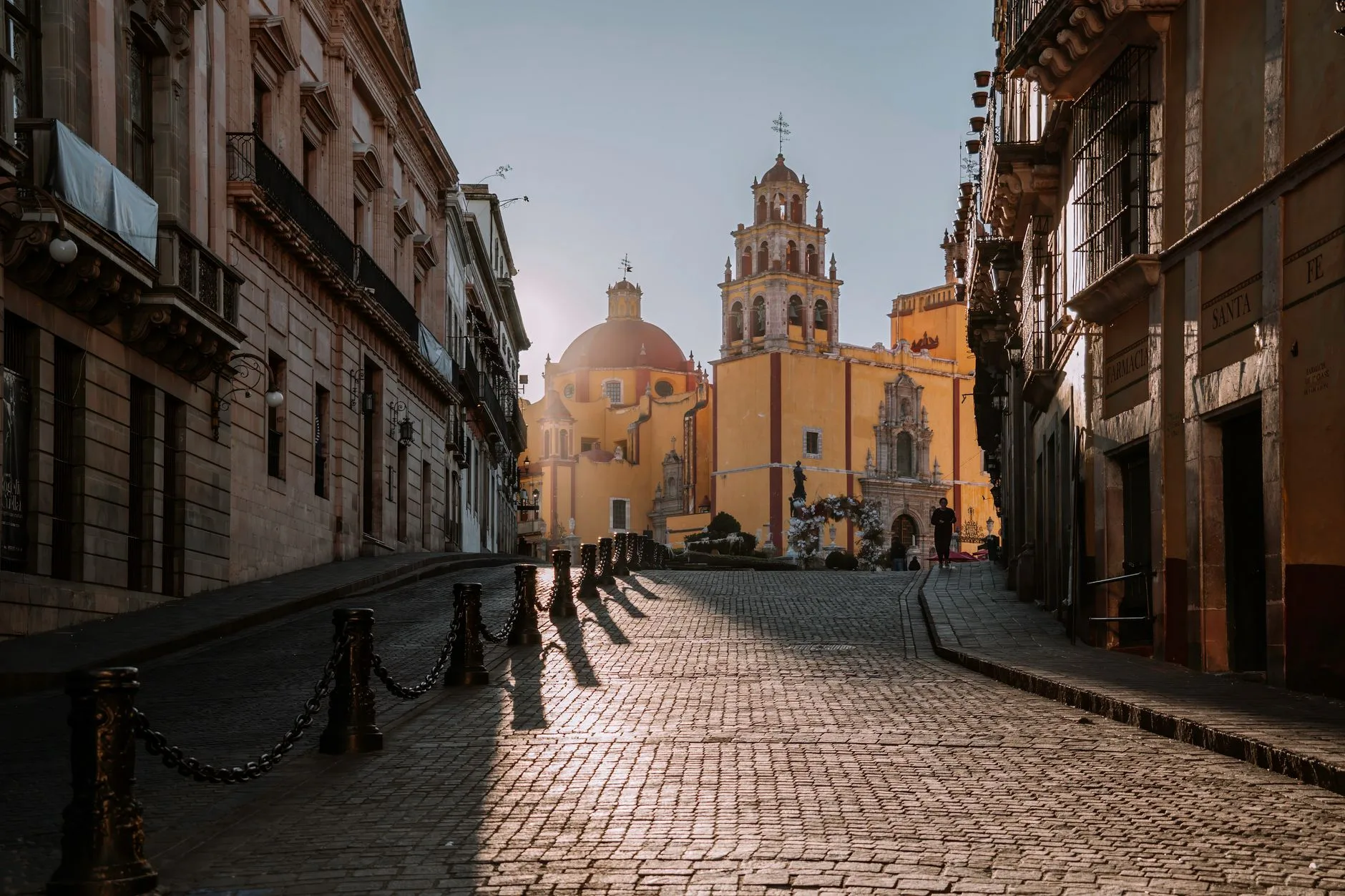
Photo by vanesa ayala on Pexels
At 6am in San Cristóbal de las Casas, the Mercado José Castillo Tielemans is already loud. Tzotzil women in black wool skirts sell chayote and chipilín by the kilo, a man ladles atole de maíz from a dented pot into plastic cups for eight pesos, and the mist hasn’t yet burned off the pine ridges that ring the city. Nobody here is selling you anything you didn’t come looking for. This is Chiapas at 2,200 metres, cold enough at dawn for a jacket, and about as far from a Cancún beach club as Mexico gets.
That’s the point. Mexico’s tourist corridor — Cancún, Playa del Carmen, Tulum, maybe a side trip to Chichén Itzá — is a tiny, hyper-developed sliver of a country that stretches from Baja California’s desert coastline to the cloud forests of Chiapas. Beyond that corridor, prices drop, crowds thin, and the version of Mexico on offer gets considerably more textured: colonial mining towns, volcanic lake islands, a narrow-gauge railway through canyons deeper than the Grand Canyon. None of this requires roughing it. It requires a bit more planning, a tolerance for long bus rides, and a willingness to eat where the smell draws you in rather than where the menu has photos.
Why the corridor isn’t the whole story
Quintana Roo (the state containing Cancún and Tulum) now runs on resort-economy pricing — a plate of tacos near the beach in Tulum can cost what a full meal costs almost anywhere else in the country. Step outside that economy and a filling lunch — a comida corrida of soup, rice, a protein, and agua fresca — runs 60–90 pesos (roughly $3–5 USD) in most of the interior. Hostel dorm beds in secondary cities run $8–15 a night; private rooms in family-run posadas often come in under $25.
This isn’t about avoiding anywhere specific — plenty of travellers will do both the coast and the interior on the same trip, and that’s a perfectly good way to see the country. It’s simply that the regions below rarely make a first-timer’s itinerary, and they should.
Chiapas: San Cristóbal de las Casas and the highlands
San Cristóbal is the obvious base — walkable, cool-climate, full of courtyard guesthouses around Barrio del Cerrillo and Guadalupe that charge $10–18 for a private room with breakfast. From there, collective vans (colectivos) leave constantly from the market area to San Juan Chamula and Zinacantán, two Tzotzil Maya towns a 25-minute ride away. The Chamula church — candles on a pine-needle-covered floor, Coca-Cola used in ritual, photography forbidden inside — is unlike any church visit in Mexico, and the 25-peso entry fee goes toward community funds.
Further out, the Cañón del Sumidero can be seen by boat from Chiapa de Corzo (buses from San Cristóbal, about an hour), a two-hour ride past walls over 800 metres high, crocodiles sunning on rock ledges, and a waterfall locals call El Árbol de Navidad for its shape. Boats cost around 220 pesos per person and leave when they fill, not on a fixed schedule — budget a slow morning for it.
Food here leans into Chiapaneco specifics: cochito horneado (slow-roasted pork marinated in achiote and vinegar), tamales de bola wrapped in banana leaf, and pozol, a fermented corn drink sold from barrels in the market that’s an acquired taste worth acquiring.
Oaxaca’s Pacific coast: Mazunte and Zipolite
Puerto Escondido has its own tourist momentum now, but a 30-minute colectivo ride west gets you to Mazunte and Zipolite, two beach towns that still run on hammocks, mezcal, and very little else. Mazunte’s Centro Mexicano de la Tortuga is a legitimate conservation project (entry around 50 pesos) built on the site of a former turtle slaughterhouse — a piece of honest history most brochures skip. Punta Cometa, a headland a 20-minute walk from the village, is free and the best sunset point on this stretch of coast, with no entry fee and no vendor stalls.
Zipolite’s reputation as Mexico’s nudist beach precedes it, but it’s also simply a quiet, low-rise strip of sand with strong undertow — swim with real caution, since drownings here aren’t rare. Cabañas with shared bathrooms run $8–12 a night; a plate of fish tikin xic at a palapa restaurant runs 120–150 pesos. This coast gets genuinely hot and humid May through October, so the comfortable window is November to April.
Michoacán: Pátzcuaro and the lake towns
Pátzcuaro, a two-and-a-half-hour bus from Morelia (itself a budget-friendly colonial city), centres on Plaza Vasco de Quiroga, a sloped square lined with arcades and purépecha wool blankets for sale most mornings. From the Muelle General dock, boats cross Lake Pátzcuaro to Isla Janitzio (round trip around 60 pesos), busiest around Día de los Muertos when the island’s cemetery fills with marigolds and candlelight — worth timing a trip around if the crowds don’t bother you, worth avoiding if they do.
A 40-minute colectivo from Pátzcuaro reaches Santa Clara del Cobre, a town built entirely around hand-hammered copperware — workshops along the main street let you watch metal being beaten into pots over open coal fires. This region is also within range of the Monarch Butterfly Biosphere Reserve, a UNESCO World Heritage Site where millions of monarchs overwinter in oyamel fir forests between November and March — reachable via Angangueo or Ocampo, with guided horseback or walking access required to protect the colonies.
The Copper Canyon by rail
Chihuahua’s Barrancas del Cobre is a canyon system larger and in places deeper than the Grand Canyon, and the way through it is the Chepe railway, running between Los Mochis (or El Fuerte, a better starting point) and Chihuahua City. The full one-way journey takes around 14–16 hours; most budget travellers break it at Creel, a pine-forest town that serves as the base for hiking to Cascada de Basaseachi or visiting Rarámuri (Tarahumara) communities, whose long-distance running culture predates the marathon by centuries.
Second-class Chepe Regional tickets cost a fraction of the first-class Chepe Express — expect a few hundred pesos less per leg, slower stops, and a lot more local life on board: vendors boarding briefly to sell gorditas and dried apples between stations. Pack layers; Creel sits at 2,340 metres and nights drop near freezing even when Los Mochis is sweating at 35°C.
San Luis Potosí’s high desert: Real de Catorce
A former silver-mining town at 2,750 metres, reached via a one-way, traffic-light-controlled tunnel through the mountain (the Ogarrio Tunnel, 2.3km long), Real de Catorce feels suspended between ghost town and pilgrimage site. The Huichol (Wixárika) people consider the surrounding Wirikuta desert sacred, and the town itself — cobblestone streets, a half-ruined bullring, a 19th-century church still drawing pilgrims — runs on a fraction of the visitors San Miguel de Allende gets, despite similar colonial bones. Horseback trips into the desert toward the ghost mining settlement of La Luz cost around 300–400 pesos for a few hours and are the easiest way to see the scale of the Altiplano desert beyond the town.
Getting there requires a bus to Matehuala (served from San Luis Potosí city or Monterrey), then a shared taxi through the tunnel — a half-day’s commitment that filters out anyone not genuinely curious.
| Region | Best season | Daily budget (USD) | How to get there | Standout experience |
|---|---|---|---|---|
| Chiapas highlands | Nov–Apr (dry, cool) | $20–35 | Fly to Tuxtla Gutiérrez, bus 1hr to San Cristóbal | San Juan Chamula church visit |
| Oaxaca Pacific coast | Nov–Apr (dry) | $20–30 | Fly/bus to Puerto Escondido, colectivo onward | Sunset at Punta Cometa |
| Michoacán lake region | Oct–Mar (incl. monarch season) | $25–35 | Bus from Morelia or Mexico City | Isla Janitzio by boat |
| Copper Canyon (Chihuahua) | Oct–Apr (avoid summer heat at base, winter cold at altitude) | $30–45 | Train from El Fuerte or Chihuahua City | Second-class Chepe to Creel |
| Real de Catorce | Oct–Apr | $20–30 | Bus to Matehuala, taxi through tunnel | Horseback ride into Wirikuta desert |
A few honest logistics
Mexico’s long-distance bus network (ADO in the south and east, Grupo Estrella Blanca and ETN in the centre and north) is genuinely good — reclining seats, onboard bathrooms, air conditioning that occasionally over-delivers, so pack a layer even in the tropics. Tickets bought a day or two ahead are rarely more than a few hundred pesos even for six-hour journeys. A Mexican SIM (Telcel or Movistar) costs very little and is worth getting at the airport on arrival — rural signal is patchy but data in towns is reliable.
Safety varies genuinely by region and changes year to year; it’s worth checking an official source like the US State Department’s Mexico travel advisory before finalising a route, since it breaks risk down state by state rather than painting the whole country with one brush. None of the regions above carry the advisory’s higher-risk designations as of the most recent updates, but conditions do shift.
Spanish will serve you far better outside the tourist corridor than English does — not a requirement, but a genuine quality-of-life upgrade, since menus, bus schedules, and market vendors rarely operate in translation. A phrasebook’s worth of food vocabulary (particular regional dishes, how to ask what’s in something) goes further than fluency in small talk.
The Bottom Line
- Chiapas and the Oaxaca coast pair well on one route — fly into Tuxtla Gutiérrez or Oaxaca city, bus between the highlands and the Pacific, and you’ve covered two very different climates in under two weeks.
- The Copper Canyon rewards patience more than money: the second-class train is cheaper and more interesting than the tourist-oriented Chepe Express, but it’s slower and you should expect delays.
- November through April is the sweet spot for most of these regions — dry, cooler, and (for Michoacán specifically) coinciding with the monarch migration.
- Budget travel in Mexico beyond tourist hotspots isn’t a harder version of the Cancún trip — it’s a different trip entirely, and the two aren’t in competition. If you want a city base with the same budget logic, Mexico City itself remains one of the best value capitals in the Americas, and it connects easily by bus to Michoacán, San Luis Potosí, and Oaxaca.
- If this kind of overland, bus-and-colectivo budget travel appeals, the same logic — and often the same bus companies — extends south into Central America, making a longer, cheaper trip entirely possible for travellers with the time.
Keep reading: Budget travel in Mexico City: a practical guide