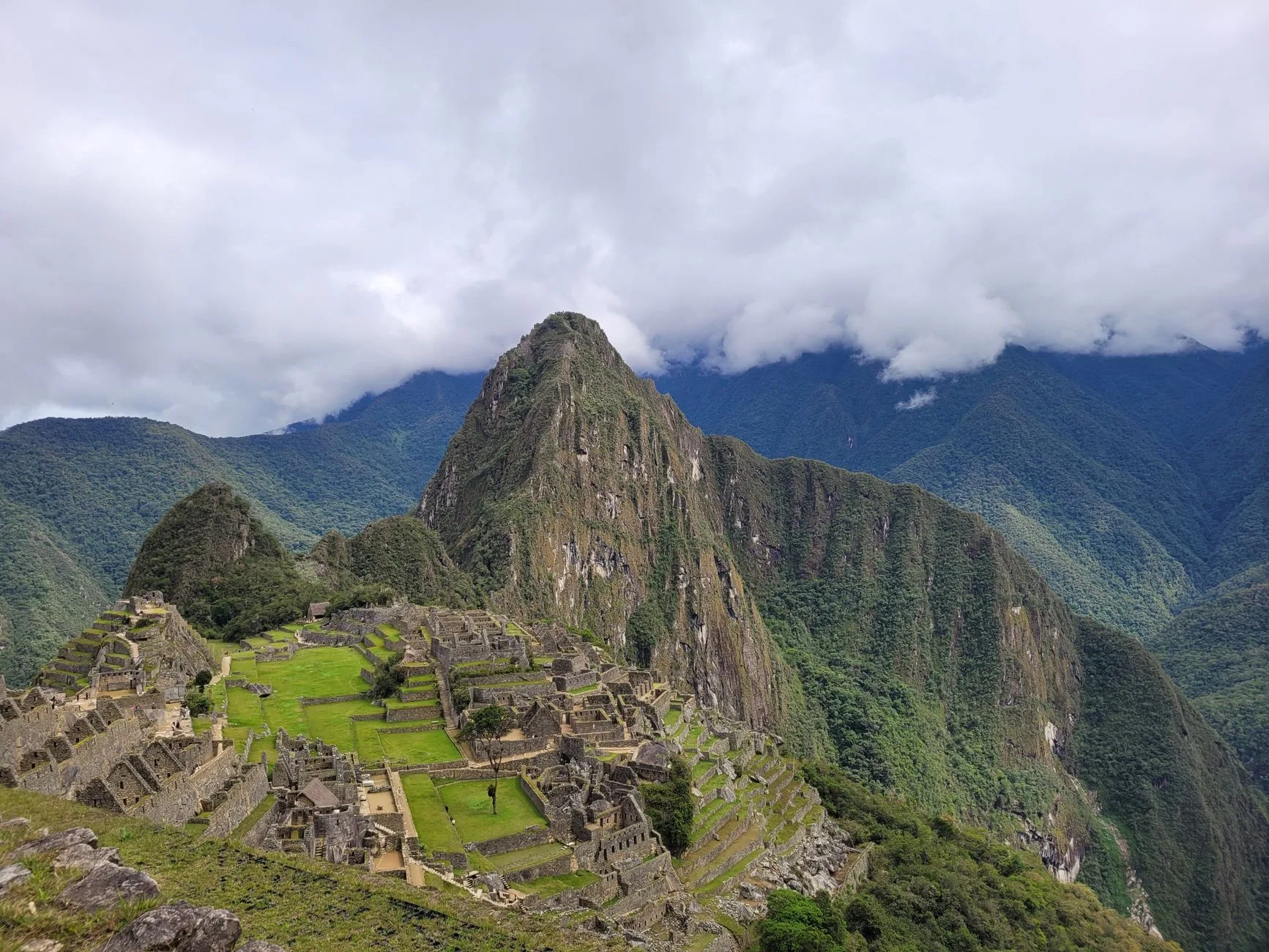
Photo by Laura Rudi on Pexels
At 6am in Huaraz, the market on Jirón Raimondi is already loud. Women in wide-brimmed hats stack avocados into pyramids, a man grinds fresh juice from tumbo fruit into plastic cups for two soles, and somewhere behind the stalls a radio plays huayno music slightly too fast. Above the rooftops, if the cloud cover breaks, you catch a flash of the Cordillera Blanca — snow on rock, improbably close, like the city forgot it was built at the foot of a mountain range that produces ice climbers and altitude sickness in equal measure.
This is the Peru that exists once you stop treating Machu Picchu as the destination and start treating it as one stop among many. The Inca citadel deserves its reputation, but it also comes with $50–80 entrance tickets, timed slots booked months ahead, and a train or trek that can run past $200 before you’ve eaten a meal. The rest of Peru — the Cordillera Blanca, the Colca Canyon, Lake Titicaca, the cloud forests of the north — runs on a different economy entirely. Hostels for $8 a night. Set lunches for 10 soles. Buses that cost less than a coffee back home for a six-hour ride through the Andes.
Huaraz and the Cordillera Blanca: trekking without the Inca Trail price tag
Huaraz, eight hours north of Lima by bus, is Peru’s unpretentious answer to Chamonix. It has none of Cusco’s polish and most of its scenery. The town itself is functional rather than beautiful — much of it was rebuilt after a 1970 earthquake and landslide destroyed the original — but it’s the staging post for the Cordillera Blanca, the highest tropical mountain range on earth, with over 20 peaks above 6,000 metres.
The Santa Cruz trek (four days, around 50 km) is the region’s answer to the Inca Trail, and costs a fraction of it. Agencies in Huaraz run guided versions for $120–180 including mules, cook, and permits; independent trekkers can do it for the cost of transport and camping fees, roughly $30–40 all in. The acclimatisation matters more than the fitness — you’re sleeping above 3,800 metres most nights, and the pass at Punta Union sits at 4,750m. Spend two or three days in Huaraz first, walking up to Laguna Churup or Laguna 69 as day hikes, before committing to anything multi-day.
Huascarán National Park, which protects most of the range, is a UNESCO-listed Biosphere Reserve, and entrance fees for day visits run around 30 soles (roughly $8) for foreigners. May to September is dry season and the only sensible window for high-altitude trekking — the rest of the year brings afternoon rain that turns trails to mud and obscures the views you came for.
Arequipa and the Colca Canyon: a colonial city with volcanoes for a backdrop
Arequipa’s Plaza de Armas, built from white volcanic sillar stone, looks almost Mediterranean in the right light — arcaded, sunlit, genuinely beautiful without trying. The Monasterio de Santa Catalina, a walled city within the city where Dominican nuns lived in near-total seclusion for centuries, costs around 40 soles to enter and is worth the whole morning; its ochre and indigo corridors photograph well but feel better — cool stone underfoot, the smell of damp plaster, a silence that the rest of Arequipa doesn’t have.
The budget move is to use Arequipa as a base rather than rushing through. A bowl of rocoto relleno — a stuffed, fiery pepper, a dish that will test your tolerance more than any travel cliché about “spicy food” — costs 15–20 soles at Mercado San Camilo, a cavernous food market that also does a brisk trade in fresh juice and unidentifiable Andean tubers.
From Arequipa, colectivos (shared vans) run to the Colca Canyon, one of the deepest canyons on earth and a reliable place to see Andean condors riding the morning thermals at the Cruz del Cóndor lookout. A two-day guided tour with transport, guide, and basic accommodation runs $40–60; doing it independently via colectivo to Chivay and onward buses saves money but costs a day of logistics. Either way, go before 9am for the condors — they thin out as the thermals weaken later in the morning.
Lake Titicaca: Puno, Amantaní, and the economics of a homestay
Puno is not a place you linger in for its own sake — it’s a working lake town, a little rough around the edges, with a tourist strip that can feel formulaic. The reason to come is the lake itself: the highest navigable lake in the world, and the floating reed islands of the Uros, built and rebuilt constantly from totora reeds that rot from the bottom as fast as new layers go on top.
The better value, though, is further out: Amantaní and Taquile islands, reached by a slower boat (2–3 hours from Puno) that most day-trippers skip in favour of the closer Uros islands. Overnight homestays on Amantaní cost around 40–60 soles per person including meals — a bowl of quinoa soup, fried trout from the lake, potatoes grown on terraces that have been farmed the same way for generations. There’s no electricity to speak of after dark on parts of the island, and the cold at 3,800 metres is a different kind of cold — dry, thin, and unforgiving once the sun drops. Bring more layers than seems reasonable.
Chachapoyas and Kuélap: the north’s answer to Machu Picchu
Chachapoyas, in Peru’s northern highlands, is where you go if Machu Picchu’s crowds were the problem rather than the ruins themselves. Kuélap, a fortified citadel built by the Chachapoya culture before the Inca absorbed them, sits on a ridge at 3,000 metres and gets a fraction of the visitors — in part because it takes real effort to reach.
A cable car from Nuevo Tingo now covers the steepest part of the ascent (around 20 soles round trip), cutting what used to be a punishing hike down to a short walk from the upper station. Entrance to the site itself costs around 30 soles. The walls, built from limestone and still standing three stories high in places, enclose circular stone houses with decorative friezes that are easy to miss if you’re moving fast — slow down here.
Getting to Chachapoyas is the honest catch: it’s a long bus journey from most starting points — around 10–12 hours from Chiclayo on the coast, longer from Cajamarca — on roads that switchback through cloud forest and occasionally close after heavy rain. Buses like Movil Tours run this route with reclining seats for $15–25. It’s not a detour you make casually, but it rewards the ones who make it.
Getting around: buses, colectivos, and the real cost of distance
Peru is large and vertical, and that combination defines its transport. Long-distance buses are the backbone of budget travel here, and the gap between operators matters. Cruz del Sur and Oltursa run comfortable, reliable services with reclining “cama” seats, onboard bathrooms, and security checks — worth the extra cost on overnight routes like Lima–Arequipa (around $20–35 for 16 hours) or Lima–Huaraz (around $12–20 for 8 hours). Cheaper local companies exist and will get you there, but with less certainty about timing, comfort, or who’s driving.
Colectivos — shared taxis or minivans that leave when full — handle shorter regional hops: Arequipa to Chivay, Cusco to the Sacred Valley towns, Puno to the port for Titicaca boats. They’re cheap (often under $5) and fast, but cramped, and not for anyone who needs personal space or a fixed departure time.
| Region | Base town | Best season | Typical daily budget | Signature experience |
|---|---|---|---|---|
| Cordillera Blanca | Huaraz | May–September | $20–35 | Santa Cruz trek, Laguna 69 |
| Colca Canyon | Arequipa | April–November | $25–40 | Condors at Cruz del Cóndor |
| Lake Titicaca | Puno | April–October | $20–30 | Homestay on Amantaní |
| Chachapoyas / Kuélap | Chachapoyas | May–September | $20–35 | Kuélap citadel, cable car ascent |
| Amazon basin | Iquitos / Puerto Maldonado | June–October (drier) | $30–50 | Jungle lodge, riverboat travel |
For a longer view of how Andean bus routes compare across the continent, the broader logistics of overland travel in South America are worth reading before committing to a route that spans several of these regions in one trip, and Peru pairs naturally with a continuation into Colombia’s own budget circuit if time and visas allow.
Eating well without spending much
The menú del día is the backbone of eating cheap in Peru: a set lunch, usually 10–15 soles, that gets you soup, a main (lomo saltado, aji de gallina, or whatever the kitchen decided that morning), a small dessert, and often a glass of chicha morada, the purple corn drink that tastes nothing like it sounds. Markets are the other reliable source — Mercado Central in Cusco, San Camilo in Arequipa, or the smaller daily markets in Huaraz all do breakfast stalls serving tamales, fresh cheese, and fruit juices for a few soles.
Ceviche is technically a lunchtime-only dish in most of Peru, tied to when the fish arrives fresh — ordering it for dinner in a non-touristy spot will sometimes get you a polite correction rather than a plate. On the coast, Huanchaco near Trujillo does excellent ceviche and is also a decent, cheap surf town if the Andes have worn you out and you want sea level for a few days.
The Bottom Line
Machu Picchu is worth seeing, but it is not where Peru’s value lives. The Cordillera Blanca gives you high-altitude trekking at a quarter of the Inca Trail’s cost; Chachapoyas gives you ruins nearly as significant with almost no queue; Titicaca’s outer islands give you a homestay economy that puts money directly into the hands of the families hosting you rather than an agency’s margin. Budget around $25–35 a day outside Lima and Cusco if you’re staying in hostels and eating at menú del día prices, and expect that figure to rise sharply the moment you add guided treks or jungle lodges.
Altitude, not cost, is the real limiting factor in most of these regions — build in acclimatisation days before Huaraz, Puno, or Chachapoyas rather than arriving straight off a long flight and heading uphill. And if buses are going to be your main form of transport for weeks at a stretch, it’s worth understanding how they actually run before you’re standing in a terminal at 11pm deciding between three companies you’ve never heard of — a problem anyone attempting South America’s long-distance bus network eventually runs into. Peru beyond Machu Picchu rewards patience and a willingness to sit on a bus for longer than feels reasonable — which, as it turns out, is most of what budget travel here actually is.
Keep reading: Compare notes with budget travel in Colombia before crossing the border