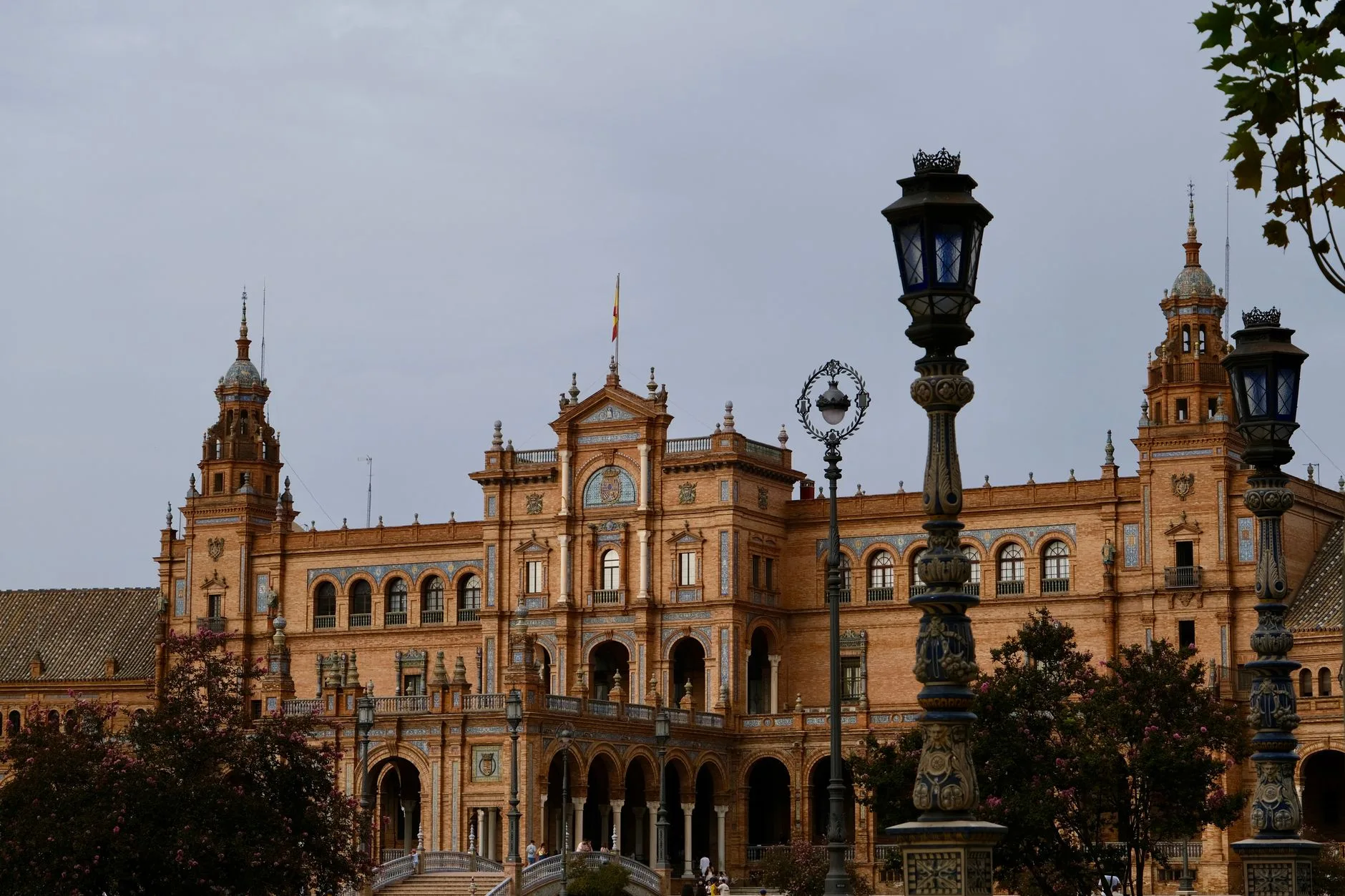
Photo by Bangrui Wang on Pexels
At eight in the morning, before the heat has fully announced itself, the Mercado de Triana is already loud with the business of fish on ice and old men arguing amiably over the price of boquerones. Across the river, the Giralda catches the first proper sun of the day, and a street sweeper works the Plaza del Salvador with a broom made of actual twigs bound together, the sound of it scratching against stone like something out of another century. By ten, the bars along Calle Betis are setting out chairs, and by two in the afternoon, Seville will have gone quiet in the particular way that cities built for heat go quiet — shutters down, streets empty, everyone indoors or asleep or pretending to work.
This is the rhythm you’re signing up for if you want to live and work in Seville rather than just visit it. It is not a city that rewards hustle. It rewards patience, a tolerance for bureaucracy, and a willingness to restructure your day around a sun that, from June to September, makes the hours between 2pm and 6pm genuinely hostile to being outdoors. For slow travel in Spain — the kind measured in months rather than days, with a rented flat and a local butcher who knows your order — Seville offers something most of the country’s bigger cities can’t: a city small enough to walk end to end in under an hour, dense with culture, and still considerably cheaper than Madrid or Barcelona.
Choosing a neighbourhood: where you actually live matters
Seville’s historic centre is compact, but each barrio has a distinct temperament, and which one you pick will shape your daily life more than almost any other decision.
Triana, across the Guadalquivir from the cathedral, is the city’s working-class soul and increasingly its most sought-after address for long-stay visitors. It has ceramic workshops, a lively covered market, and a riverside promenade that doubles as the city’s evening meeting point. It’s walkable to the centre over the Puente de Isabel II, but rents have climbed noticeably in the last few years.
Alameda de Hércules, just north of the centre, is bohemian, loud at night, and full of the kind of small bars where a caña costs €1.80 and the tapa comes free with it. Good for anyone who wants nightlife within stumbling distance and doesn’t mind some grit.
Santa Cruz, the old Jewish quarter beside the Alcázar, is beautiful and almost entirely given over to short-term tourist lets. Charming to visit, expensive and slightly hollow to actually live in — most long-term residents have been priced out.
Nervión, east of the centre near the Sevilla FC stadium, is unglamorous, residential, and cheaper. It’s where a lot of sevillanos actually live, which means real bakeries, real pharmacies, and fewer people trying to sell you a flamenco show.
Macarena, north of the centre past the Basílica, is quieter and increasingly popular with people on extended stays who want proximity to the centre without Santa Cruz prices.
| Neighbourhood | Monthly rent (1-bed, 2026 estimate) | Vibe | Best for |
|---|---|---|---|
| Triana | €750–950 | Riverside, traditional, increasingly trendy | Long stays, market access, river walks |
| Alameda de Hércules | €700–900 | Bohemian, nightlife-heavy | Younger crowd, social life |
| Santa Cruz | €1,000+ | Postcard-pretty, tourist-saturated | Short stays only |
| Nervión | €600–750 | Residential, local, unpretentious | Budget-conscious long stays |
| Macarena | €650–800 | Quiet, central-adjacent | Families, remote workers wanting calm |
The visa question: what actually lets you stay
Spain has two main routes for non-EU citizens who want to stay longer than the standard 90-day Schengen tourist allowance: the non-lucrative visa and the digital nomad visa, introduced in 2023 as part of Spain’s Startup Law.
The non-lucrative visa is for people who can support themselves without working for a Spanish company — retirees, remote workers employed by foreign companies in some interpretations, or anyone living off savings or passive income. It requires proof of substantial financial means (roughly four times Spain’s IPREM index per applicant, adjusted annually) and private health insurance, and critically, it does not technically permit local employment.
The digital nomad visa is the more relevant option for anyone planning to actually work while based in Seville. It’s aimed at remote workers employed by non-Spanish companies or freelancers with foreign clients, requires proof of at least three months’ prior remote work history, and comes with a reduced tax rate (24% rather than the standard progressive scale) for the first several years under the Beckham Law provisions, assuming eligibility. Processing happens either through a Spanish consulate before arrival or through the UGE (Unidad de Grandes Empresas) in Spain if you enter as a tourist first — consulate applications tend to be faster and less bureaucratically fraught. Requirements and income thresholds change periodically, so check directly with Spain’s official channels before applying rather than relying on any blog, including this one.
EU citizens, of course, need none of this — just the standard registration (empadronamiento) at the local town hall once settled, which is itself a bureaucratic rite of passage involving queuing at the Padrón office on Calle Fray Isidoro de Sevilla with a stack of photocopies nobody told you to bring.
Working from Seville: coworking, cafés, and the siesta economy
Seville’s coworking scene has grown substantially. Nativo Coworking, near the Alameda, is popular with freelancers and has a rooftop terrace that becomes unusable by 1pm in July. Oficraft and a handful of smaller spaces in Nervión and the centre offer day passes from roughly €15–20 and monthly memberships from €120–180, noticeably cheaper than equivalent spaces in Barcelona.
Working from cafés is common and generally tolerated if you buy something every hour or two — Filmoteca Café near the university and La Fábrica in Triana both have decent wifi and don’t rush you out. What’s worth planning around is the Spanish workday itself: many businesses still observe a long midday closure, some shops shutting from 2pm to 5pm, and the city’s energy doesn’t really return until the evening paseo begins around 8pm. If your work involves calls with clients in UK or US time zones, this actually works in your favour — mornings are quiet and productive, afternoons can be slow, and evenings open up again for calls with the US East Coast.
Markets, food, and the discipline of eating well cheaply
Seville’s food culture runs on small plates eaten standing up, and learning to shop and cook at the local markets is both cheaper and more interesting than eating out for every meal.
Mercado de Triana and Mercado de Feria, the latter claimed to be the oldest market in the city, are the two to know. Both have fishmongers selling that morning’s catch from Sanlúcar and Huelva, jamón stalls where a few euros buys enough cured ham for a week of breakfasts, and small bars tucked inside the market itself where a plate of salmorejo (a thicker, more garlicky cousin of gazpacho) costs €3–4.
For eating out, the essential Seville dishes are espinacas con garbanzos (spinach and chickpeas, often with a hit of cumin and a day-old bread thickener — a legacy of Moorish Seville), cola de toro (slow-braised oxtail), and the simple miracle of a plate of jamón ibérico with good bread and olive oil. Bars worth seeking out include Casa Morales, one of the oldest bars in the city, pouring wine straight from barrels since the 1850s, and El Rinconcillo, which claims to be Seville’s oldest tapas bar and writes your bill in chalk on the counter. Neither is a secret, both are worth the wait.
The city’s food culture pairs well with the kind of market-hopping covered in guides to the best local food markets in Europe for travellers, and the rhythm of long lunches and later dinners is a useful reset for anyone arriving from a culture of eating at your desk.
The heat problem: planning your year around the sun
Be honest with yourself about Seville’s summer. From late June through August, daytime temperatures regularly exceed 40°C, and the city is not exaggerating when it designs its entire social rhythm around avoiding the early afternoon. Many sevillanos who can afford to leave, do — to the coast at Cádiz or Huelva, or north to cooler towns. If you’re planning an extended stay, April–May and September–October offer the best balance of warmth, lower prices, and functioning daytime hours. Winter is mild, genuinely pleasant, and underrated — flamenco season in the smaller peñas (clubs) picks up, and the crowds thin considerably.
| Season | Average daytime temp | What to expect | Best for |
|---|---|---|---|
| April–May | 22–27°C | Semana Santa and Feria de Abril crowds, blooming orange blossom | First arrival, festivals |
| June–Aug | 35–42°C | Siesta is not optional, afternoons genuinely dangerous outdoors | Avoid if possible |
| Sept–Oct | 24–29°C | City returns to normal rhythm, good light for photography | Settling in, long walks |
| Nov–Feb | 10–18°C | Mild, occasional rain, quieter streets | Budget stays, flamenco |
Day trips and the wider Andalusian rhythm
Part of the appeal of basing yourself in Seville rather than treating it as a single stop is the access it gives to the rest of Andalusia. Córdoba is under an hour and a half by AVE high-speed train, making its Mezquita-Catedral an easy half-day trip. Carmona, 30 minutes by bus from the Plaza de Armas station, is a walled hilltop town with a Roman necropolis and far fewer visitors than Seville itself. Cádiz, Europe’s oldest continuously inhabited city by most accounts, is under two hours by train and makes a good weekend escape when the heat gets oppressive, with a genuine Atlantic coastline that feels worlds away from the Mediterranean image most people have of Spain.
For anyone who’s spent time thinking through the broader rhythms of settling somewhere at a slower pace, the considerations echo what’s covered in guides to the best cities in Europe for slow travel — proximity to daily markets, walkability, and a manageable cost of living all matter more than any single landmark.
Getting around without a car
Seville’s old centre is almost entirely walkable, and the flat terrain makes it one of the better cities in Spain for cycling — the SEVici public bike system has stations throughout the centre, and dedicated bike lanes run along much of the river and major avenues. The single tram line (T1) connects Plaza Nueva to San Bernardo, useful but limited. For trips further out, the Cercanías regional rail network connects to towns like Carmona’s nearest station and onward toward Huelva and Cádiz. A car is more hindrance than help within the centre — parking is scarce and the old town’s narrow streets weren’t built with traffic in mind.
The Cathedral, Alcázar, and Archivo de Indias together form a UNESCO World Heritage Site, and that density of historic architecture within walking distance is part of why Seville rewards slow, repeated exploration rather than a single checklist visit — you notice something different each time you cross the Plaza del Triunfo.
The Bottom Line
- Seville suits slow travel precisely because it resists speed — the heat, the siesta, the bureaucracy all force a slower rhythm whether you plan for it or not.
- Triana and Nervión offer the most realistic balance of cost, authenticity, and livability for long stays; Santa Cruz is beautiful to visit but largely impractical to actually live in.
- The digital nomad visa is the clearer route for remote workers, but income thresholds and documentation requirements change, so verify directly with Spanish consular sources before committing to dates or leases.
- Plan your arrival for spring or autumn if you have any choice in the matter — summer in Seville is not a minor inconvenience, it’s a structural feature of life there.
- The city’s real value for a long stay isn’t any single sight but the accumulation of small, repeated rituals — the same market stall, the same bar, the same walk along the river at the same hour each evening.
Keep reading: Compare notes with slow travel in Portugal