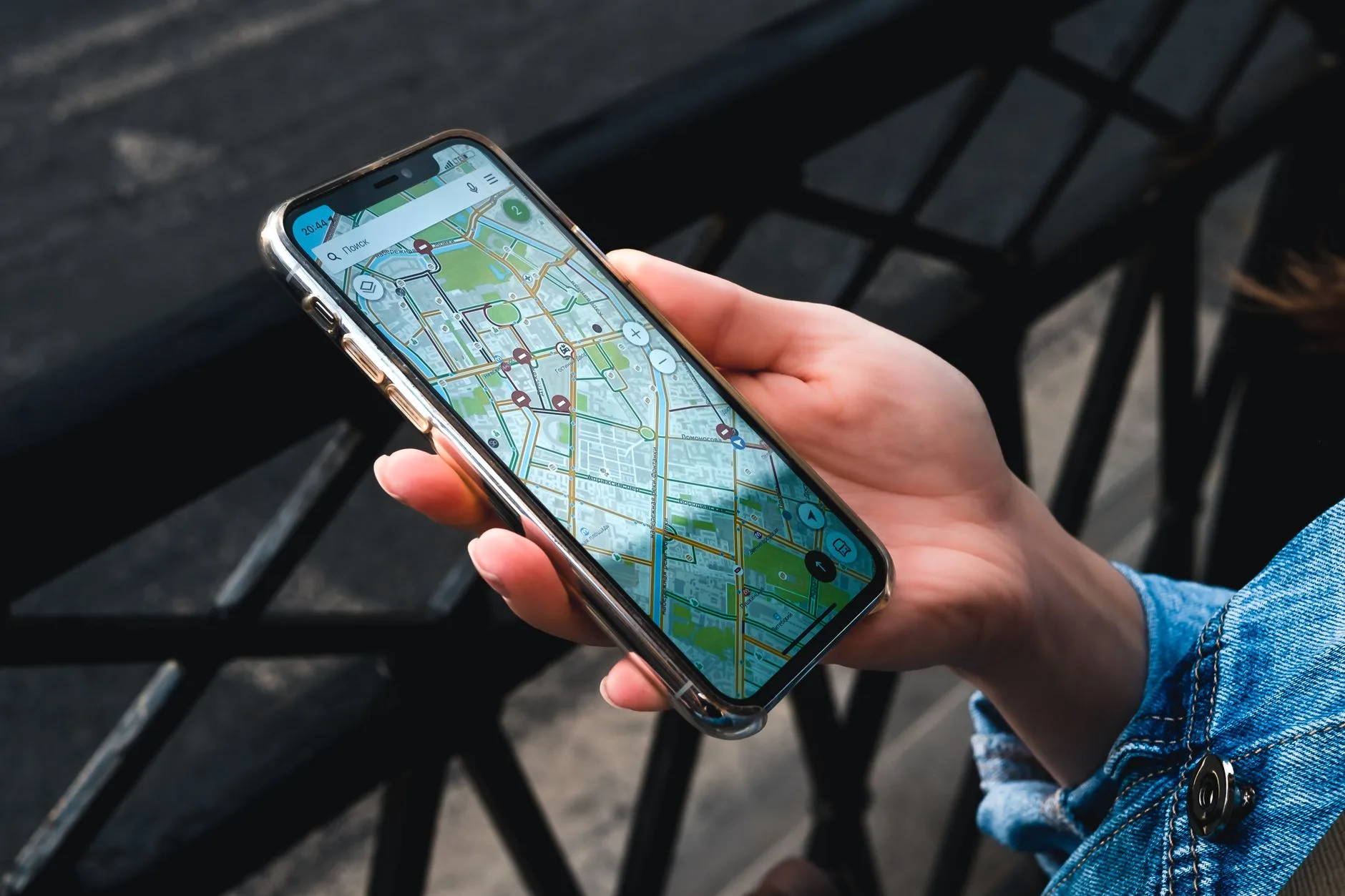
Photo by Stanislav Kondratiev on Pexels
The departures board at Belgrade’s main bus station still flips its letters mechanically, one tile at a time, with a sound like a deck of cards being shuffled slowly. There’s no app for this. You stand underneath it with a paper timetable bought from a kiosk for the equivalent of thirty cents, cross-referencing platform numbers with a woman selling burek from a cart, and the bus to Niš leaves at 14:40 whether or not you’ve confirmed it on your phone — because you don’t have one.
This is what travelling without a smartphone actually looks like in 2026: not a romantic rejection of modernity, but a series of small, solvable logistics problems that most travellers have simply forgotten how to solve because a screen has been solving them for over a decade. People do this for all kinds of reasons — digital burnout, a broken phone they’ve decided not to replace, a deliberate experiment, or simply the sense that a trip remembered through your own eyes sticks differently than one filtered through a camera roll. Whatever the reason, it’s entirely doable. It just requires different tools and a different pace.
Why This Is Harder Now Than It Was in 2010
It’s worth being honest about this upfront: travelling without a smartphone was normal fifteen years ago and is genuinely more difficult now, because infrastructure has been quietly built around the assumption that everyone has one. Bus tickets in parts of Italy are app-only. Parking in Dutch cities often requires a QR code. Some hostels in Southeast Asia check guests in via WhatsApp. None of this is insurmountable, but it means you’ll sometimes need to ask a stranger, a receptionist, or a fellow traveller to help you bridge a gap that used to be bridged by a kiosk or a human being and now isn’t.
The upside is that most of the world still runs on analogue systems underneath the digital veneer. Train stations have information desks. Tourist offices still print city maps. Banks still have branches. You’re not fighting the infrastructure so much as finding the older layer of it that’s still there, just less advertised.
Before You Leave: What to Actually Pack
A smartphone does four jobs for most travellers: navigation, translation, payment, and communication. Without it, you need physical or low-tech substitutes for each, prepared before departure rather than improvised at the border.
- A dumbphone with local SIM support — not a smartphone substitute, just voice and SMS. Unlocked models from Nokia or similar still exist and take local SIM cards in most countries.
- Paper maps and a real guidebook — Lonely Planet and Rough Guides still print. Buy the city maps from tourist information offices on arrival; they’re usually free or cost a euro or two and are more current than anything you’d print at home.
- A phrasebook, not a translation app — small, printed, dog-eared by day three. Pointing at a phrase works nearly everywhere.
- Printed confirmations — every booking, every ticket, every reservation number, on paper, in a single folder. This is non-negotiable; it is the single biggest source of friction for smartphone-free travellers who assume they’ll “sort it out when they arrive.”
- Cash and a physical bank card, plus a second card from a different bank kept separately. Without a banking app, you lose the ability to check balances or freeze a card instantly, so carrying a backup matters more than it would otherwise.
- A watch. Obvious, often forgotten, surprisingly essential once you no longer have a phone to glance at.
Navigation Without GPS
This is the skill that atrophies fastest and recovers fastest with practice. Within about three days, most people re-learn how to read a city by its landmarks rather than a blue dot.
Train and bus stations remain reliably well-signed almost everywhere, with physical departure boards, ticket windows, and information desks staffed by people whose job is literally to answer “which platform.” Rail travel is where the loss of a smartphone stings least, since websites like The Man in Seat 61 — a meticulously maintained independent resource on rail routes worldwide — can be researched and printed before departure, giving you timetables and connection details without needing a live connection on the road.
Hiking and walking routes are a different matter and genuinely easier without a phone, since trail markers, cairns, and painted blazes were designed for exactly this kind of navigation long before GPS existed. If you’re drawn to walking trails as a way to travel, the best long distance walking trails in Europe are almost all waymarked well enough that a paper map and a compass are not just adequate but often more reliable than a phone with patchy signal and a draining battery.
City navigation is the fiddliest part. The workaround that works best: pick up a free paper map from the tourist office on day one, orient it against a landmark you can see, and accept that you will get lost more often than you would with GPS. This isn’t a flaw in the method — it’s often how you end up finding the bakery, the courtyard, or the street market you weren’t looking for.
Money and Payments
Contactless cards still work fine without a phone — this part hasn’t changed. What’s gone is the ability to check your balance instantly, split a bill via an app, or use a QR-code-only payment system, which has become more common in parts of Asia than it once was.
| Region | Cash still dominant? | App-only payment traps to watch for | Best workaround |
|---|---|---|---|
| Balkans (Serbia, Bosnia, Albania) | Yes | Rare | Cash and card both widely accepted |
| Western Europe | Declining | Parking, some transit tickets | Buy multi-day transit passes in person at stations |
| Japan | Mixed | IC cards increasingly phone-linked | Buy a physical Suica/Pasmo card at the station counter |
| China | No — near-cashless | Alipay/WeChat Pay dominate | Carry cash and expect real friction; this is the hardest country on this list |
| Southeast Asia | Yes | Grab/food delivery apps | Markets and street stalls run entirely on cash |
| South America | Yes, outside capitals | Bus ticketing apps in major cities | Buy tickets at the terminal counter directly |
China deserves a specific warning: the cashless system there is now so deeply embedded that travelling without a smartphone is genuinely difficult, not just inconvenient. Budget extra time and expect to rely on hotel staff for anything requiring a QR code.
Staying in Touch
Payphones have largely vanished from wealthy countries but persist in budget destinations, usually near bus terminals and post offices. Hostel landlines remain a reliable fallback for calling ahead to confirm a booking or checking in with family — most hostel reception desks will let you make a quick local call, and some will dial internationally for a small fee.
Internet cafés, declared dead many times over, are still findable in smaller towns across Latin America, the Balkans, and parts of Southeast Asia, usually charging a dollar or two an hour, and are genuinely useful for the twenty minutes every few days you’ll want to check email or confirm a connection. Poste restante — mail held at a post office under your name — still works in many countries and is worth using if you’re travelling for an extended period and expect anyone to send you anything physical.
The honest trade-off here: you will be less reachable, and the people travelling with you or waiting for you at home need to know that in advance. Agree on check-in windows — “I’ll call the hostel landline every Sunday” — rather than assuming spontaneous contact will happen.
Finding Beds and Meals Without an App
Booking.com and its peers assume a smartphone, but hostels and guesthouses in heavily backpacked regions still take walk-ins and phone reservations, especially outside peak season. Arriving in a town by early afternoon and asking at the tourist office for a list of accommodation — most still keep one — remains a workable strategy, if slower than scrolling listings on a screen. If you’re building a trip around hostels specifically, it helps to think through logistics for finding a bed without an app before you arrive, since availability without instant booking means slightly more legwork and slightly earlier arrivals.
Markets and local restaurants are, if anything, easier without a phone. You order by pointing, by asking the stallholder what’s good that day, by following the queue of locals rather than the queue of travellers photographing their food. Menus with QR codes instead of paper are an increasing nuisance in some European cities — when this happens, simply asking the waiter to read the options aloud works, and more often than not, they will.
Buses, Trains, and Border Crossings
Overland travel is where the smartphone-free method proves its worth most clearly, because so much of the infrastructure predates digital ticketing. Long-distance buses through the Balkans, for instance, are still booked largely at the counter, in person, with a printed ticket and a seat number written in pen. The same is broadly true across much of bus travel in South America, where terminal counters remain the default and apps are a convenience for locals rather than a requirement for anyone.
Border crossings require more paper than usual — printed visa confirmations, printed onward tickets if asked, and printed proof of accommodation. Immigration officers are used to seeing phones; producing a folder of paper documents instead sometimes draws a raised eyebrow but has never, in any documented case worth citing here, caused an actual problem. It simply takes a few minutes longer.
The Bottom Line
- Travelling without a smartphone isn’t a return to some purer past — it’s a trade of convenience for friction, and that friction is often where the texture of a trip lives: the conversation with a stranger because you had to ask directions, the bus you nearly missed because the board flipped its letters a little too slowly.
- China and parts of urban Southeast Asia are genuinely hard without a phone, given how deeply QR-based payment has embedded itself; the Balkans, much of Latin America, and most rural Europe are not.
- Prepare on paper before you go — maps, tickets, confirmations, phrasebook — because improvising these on arrival is where the method fails, not where it succeeds.
- Tell the people waiting for you at home exactly how and when you’ll be reachable, and stick to it; unpredictability that’s fine for you can be alarming for them.
- Expect to move slower, plan less precisely, and arrive earlier in the day than you would otherwise — the method rewards a loser schedule, not a tighter one.
Keep reading: Finding a bed without an app