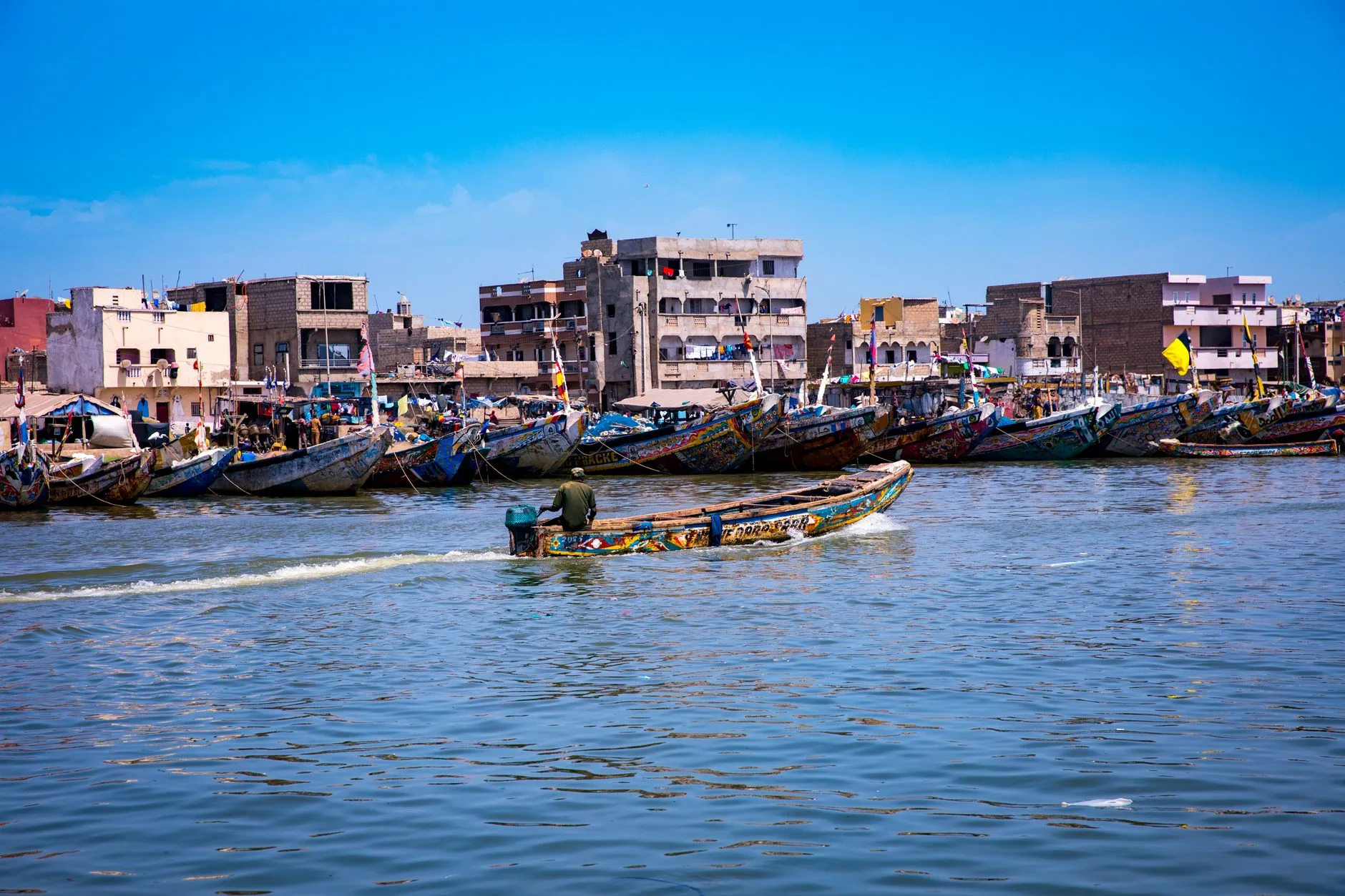
Photo by Lom Doudou on Pexels
The fish market at Soumbédioune starts before the sun clears the horizon. Pirogues painted in yellow, red and turquoise nose up against the sand, and men wade out to haul in baskets of thiof and yellowfin while women crouch by enamel basins, scaling and arguing prices at the same volume. The air smells of diesel, salt and woodsmoke from the grills already going behind the market, and somewhere a transistor radio is playing mbalax loud enough to compete with the gulls. This is Dakar at its least curated — a working port doing what it has done every morning for generations, tourists or not.
Senegal rewards travellers who are willing to do some of the legwork themselves. There’s no elaborate backpacker circuit here, no hostel-to-hostel trail with ready-made itineraries — which is exactly what makes it interesting. Independent travel in Senegal, specifically the Dakar–Saint-Louis axis, means negotiating fares in a language you may not speak, waiting for a shared taxi to fill up before it leaves, and eating where the smell tells you to eat rather than where the sign does. It also means two of West Africa’s most distinct cities, a few hundred kilometres apart, connected by a road trip worth taking slowly.
Getting oriented in Dakar
Dakar sits on the Cap-Vert peninsula, the westernmost point of mainland Africa, and its neighbourhoods each have a different register. Le Plateau is the old colonial downtown — faded French administrative buildings, the striking Cathédrale du Souvenir Africain, and the chaotic, fascinating Marché Sandaga, where fabric vendors will call out to you in three languages before you’ve decided whether to stop. Médina, just west of Plateau, is denser and more residential, a good place to find cheap eats and barbershops blasting music onto the street. Further out, Ngor, Yoff and Ouakam are fishing villages that Dakar’s sprawl has absorbed but not erased — Ngor in particular has a small pirogue crossing to Île de Ngor, a sandy islet with a surf break and a handful of simple places to eat grilled fish with your feet in the water.
Getting around the city means accepting that there’s no metro and the bus system, while it exists, isn’t built for visitors. Yellow-and-black taxis are everywhere; agree the fare before you get in, since meters are rare and the opening offer is always inflated. Ride-hailing apps (Yango is the most widely used) have made this considerably less stressful in the last few years and are worth downloading before you land. The car rapide — Dakar’s iconic, hand-painted minibuses, covered in Quranic verses and pop-art flourishes — are cheap and an experience in themselves, though routes aren’t signposted in any language and you’ll need to ask around or just watch where locals board.
Île de Gorée: the ferry everyone takes, for good reason
Île de Gorée is the one stop in Dakar that even the lightest tourist itinerary includes, and it earns the inclusion. The island sits twenty minutes offshore by ferry from the Dakar port terminal near Place de l’Indépendance; boats run several times a day and the crossing itself, with Dakar’s skyline receding behind you, is part of the appeal. On the island, car-free streets, bougainvillea-draped colonial houses in ochre and pink, and the sobering Maison des Esclaves (House of Slaves), long presented as a departure point during the Atlantic slave trade — a claim historians now debate in its specifics, though the building and the island’s UNESCO-listed status as a site of memory remain significant regardless. It’s worth going early, before the midday boats bring the bulk of the day-trip crowd, and worth sitting a while afterward at one of the small terrace cafés rather than rushing back to the mainland.
Lac Rose and the edge of the city
About 35 kilometres northeast of central Dakar, Lac Rose (Lake Retba) is famous for the pink hue its water takes on in certain light, caused by salt-loving bacteria and heightened by the dry season’s intensity. Men and women still harvest salt here by hand, wading in with shea butter smeared on their skin to protect against the salinity and loading baskets onto their heads — it’s genuinely still a livelihood, not a staged photo opportunity, though you will see camera-ready quad bikes parked along the shore catering to day-trippers. A hired car or a negotiated taxi for the day is the simplest way to reach it; there’s no reliable public transport link, and the unpaved final stretch of road can be rough after rain.
Food in Dakar: what to order and where
Thieboudienne — rice cooked in a rich tomato-and-fish broth with vegetables, Senegal’s national dish — is the one meal worth prioritising. It’s best eaten at a modest neighbourhood gargote (small eatery) rather than a hotel restaurant; ask at your guesthouse for their nearest trusted spot, since quality varies more by kitchen than by price. Yassa poulet (chicken marinated in lemon, onion and mustard) and mafé (a peanut-based stew, usually with meat or fish) round out the everyday repertoire. For something lighter, bissap (hibiscus juice) and bouye (baobab fruit juice) are sold from coolers on nearly every street corner, and a glass of café Touba, spiced with grains of selim, is the local answer to an espresso and worth seeking out from a street vendor’s thermos rather than a café menu.
The road north: Dakar to Saint-Louis
Saint-Louis sits around 270 kilometres north of Dakar, close to the Mauritanian border, and the journey there is a genuine piece of independent travel logistics. The standard option is a sept-place — a shared Peugeot station wagon seating seven passengers — departing from the Gare Routière des Baux Maraîchers on Dakar’s eastern edge. These leave only once full, so arrival time is flexible but departure time isn’t; budget for some waiting, and expect the car to leave when the last seat sells, not on a schedule. The drive itself takes four to five hours depending on checkpoints and the state of the road near Louga, and passes through flat, scrubby Sahelian countryside, roadside markets, and the occasional herd of zebu cattle holding up traffic entirely unbothered by the horn.
Private car hire with a driver is more comfortable and allows stops, at roughly double or triple the cost. There is currently no functioning passenger rail service on this route, despite the old colonial-era line still appearing on some outdated maps.
Saint-Louis: the island city
Saint-Louis was the capital of French West Africa before Dakar took over the role, and its island centre — connected to the mainland by the iron Pont Faidherbe, built in the 1890s — is a UNESCO World Heritage site of crumbling colonial façades in salt-faded pastel, wrought-iron balconies, and narrow streets quiet enough to hear your own footsteps, a rarity in urban Senegal. The UNESCO World Heritage listing notes the island for its distinct colonial urban fabric, and walking the Quartier Nord in the late afternoon, when the light goes gold on the river, makes the case better than any plaque could.
Just across a second bridge, the fishing district of Guet Ndar, on a narrow sand spit called the Langue de Barbarie, is one of the densest and most intensely lived-in fishing communities on this coast — hundreds of brightly painted pirogues crowd the beach, and the smell of drying fish carries for blocks. It’s a working neighbourhood, not a sight to photograph from a distance; a respectful walk through, ideally with a local guide who can introduce you rather than have you wander in cold, goes a long way.
If the timing lines up, the Saint-Louis Jazz Festival, usually held in May, fills the island’s bars and squares with music until late and is one of the more atmospheric reasons to time a visit around a specific date rather than just the dry season.
Djoudj and the Langue de Barbarie: wildlife without a safari truck
About 60 kilometres north of Saint-Louis, the Djoudj National Bird Sanctuary is one of the most significant wetland bird reserves in West Africa, hosting huge seasonal populations of pelicans, flamingos and migratory species escaping the European winter between December and February. Access is by hired boat with a park guide once you reach the entrance, which itself requires a car — there’s no public transport to the gate, so arranging a taxi from Saint-Louis for the half-day round trip is the standard approach. It’s a slow, low-infrastructure kind of wildlife watching: no jeeps, no loudspeaker commentary, just a small motorised pirogue cutting through reed channels while thousands of birds lift off at once.
Closer to town, the Langue de Barbarie National Park, the sandy peninsula south of Saint-Louis, protects nesting sites for sea turtles and is reachable by a short boat trip from the Hydrobase area — a gentler, half-day alternative if Djoudj’s distance doesn’t suit your schedule.
Comparing Dakar and Saint-Louis
| Dakar | Saint-Louis | |
|---|---|---|
| Pace | Fast, urban, noisy | Slow, small, walkable |
| Best for | Markets, nightlife, Gorée Island, coastal villages | Colonial architecture, birdlife, music festivals |
| Getting around | Taxis, ride-hailing apps, car rapide | On foot, or hired taxi for day trips |
| Typical daily budget | $35–60 (independent, mid-range guesthouse) | $25–45 (generally cheaper lodging) |
| Standout experience | Ferry to Île de Gorée | Pirogue trip into Djoudj bird sanctuary |
| Travel time from Dakar | — | 4–5 hours by sept-place |
Practical logistics worth knowing
Senegal’s currency is the CFA franc (XOF), pegged to the euro, and this remains largely a cash economy outside upscale hotels — ATMs are plentiful in Dakar but sparser once you’re north of Saint-Louis, so withdraw before you leave the capital. French is the official language and the one you’ll need for negotiating transport and markets; Wolof is the everyday spoken language and even a few basic phrases (“nanga def,” how are you) open doors that French alone doesn’t. SIM cards from Orange or Free are inexpensive and easy to pick up at the airport or in any Dakar boutique, and mobile data coverage is solid in both cities.
Visa requirements change periodically, so check current rules on your government’s travel advisory site before booking — the UK Foreign, Commonwealth & Development Office maintains an updated advisory that’s a reasonable starting point regardless of your nationality, alongside your own country’s equivalent. The dry season, roughly November through May, is the most comfortable window for independent travel, with the Harmattan dust haze settling in from December to February; the rainy season from June to October brings heat, humidity and occasional road disruption that can complicate the Dakar–Saint-Louis drive.
For travellers weighing Senegal against other independent-travel-friendly corners of the continent, the broader logic of community-based tourism that actually benefits the places you’re visiting applies directly here — much of what makes Saint-Louis and the Casamance region worthwhile runs on small, locally owned guesthouses rather than international chains, and seeking those out is both easy and worth the modest extra effort of asking around rather than booking the first listing you find.
The Bottom Line
- Budget more time than you think for transport — sept-places leave when full, not on schedule, and road conditions between Dakar and Saint-Louis vary with the season.
- Cash is king outside Dakar’s main hotels; stock up on CFA before heading north, where ATMs thin out.
- Île de Gorée is worth the ferry despite being the most visited stop on the itinerary — go early to avoid the midday crush and give yourself time to sit with it afterward.
- Djoudj’s bird sanctuary rewards a full day and a hired boat guide; it’s not a quick stop, and the December–February window is when it’s genuinely spectacular rather than merely pleasant.
- French and a handful of Wolof phrases will get you considerably further than English alone, particularly once you’re negotiating taxi fares or market prices.
Keep reading: Djoudj’s pelicans fit into a wider circuit of African national parks worth the detour