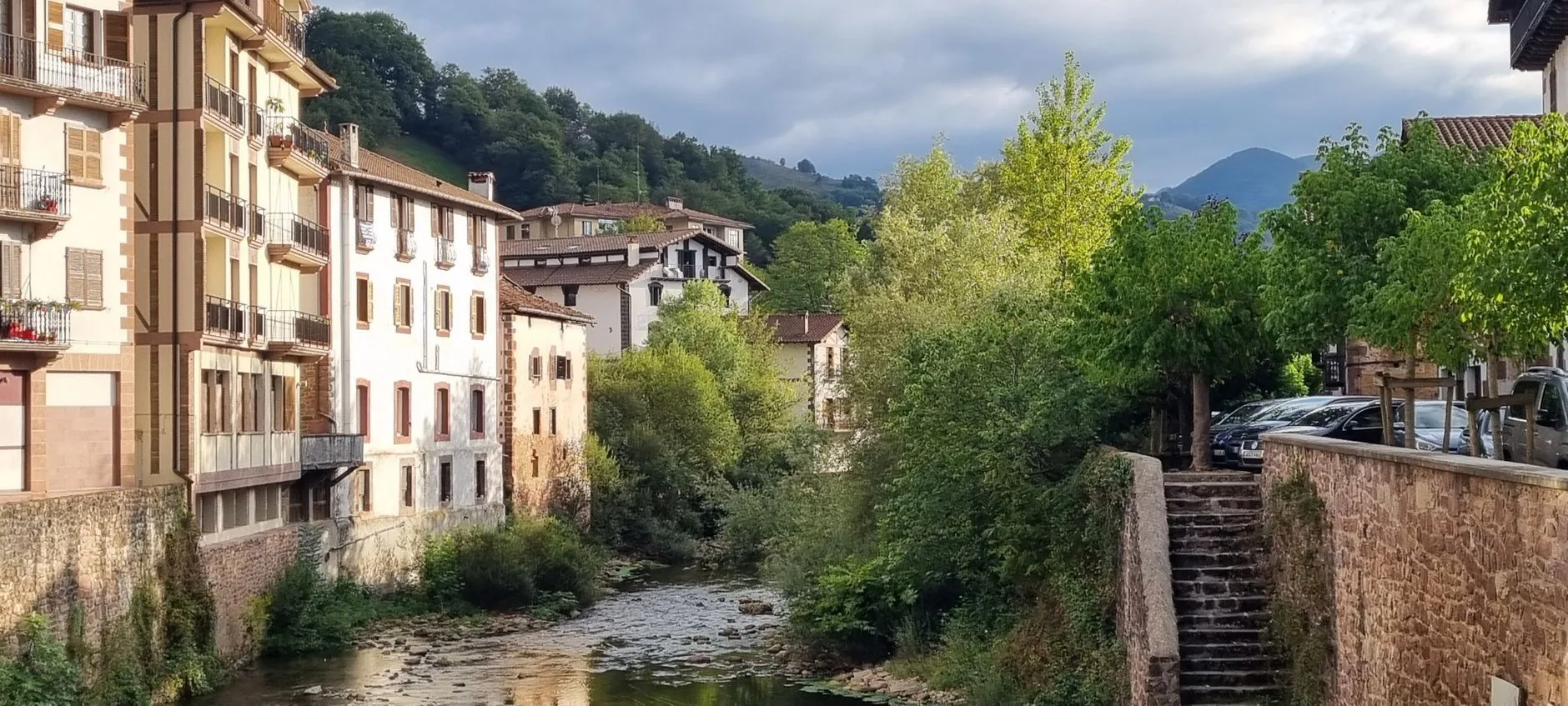
Photo by Juan Moreno on Pexels
The fog rolls in off the Bay of Biscay most mornings in San Sebastián, settling over the Playa de la Concha before the sun burns it away by ten. By then, the fishermen on the Paseo Nuevo have already come and gone, and the old town’s shutters are rattling open on bars that have been pouring txakoli into wide glasses since before the Spanish Civil War. Nobody is in a hurry. The bars themselves seem to operate on a principle of unhurriedness — you drink standing up, you eat with your hands, and you move to the next one when you feel like it, not when a menu tells you to.
This is the rhythm that makes the Basque Country and neighbouring Navarra such rewarding ground for slow travel. It’s a region small enough to cross by car in a few hours but dense enough with texture — language, food, landscape, history — that a month barely scratches it. The green hills of Basque sheep country fold into the stone villages of Navarra’s wine valleys within a 90-minute drive, and the coastline alone, with its cliffs and surf towns, could absorb a week on its own. The idea isn’t to see everything. It’s to pick a handful of places and stay long enough to understand them.
This guide covers how to move through the region without rushing it: where to base yourself, which routes reward walking or cycling over driving, what to eat and where, and the practical details — trains, buses, seasons, costs — that make the difference between a trip that feels immersive and one that feels like a checklist.
Understanding the region: Basque Country and Navarra are not one thing
The Basque Country (Euskadi in Basque, País Vasco in Spanish) is actually three provinces — Gipuzkoa, Bizkaia, and Álava — plus the French Basque Country across the border, which most travellers lump in without realising it’s a different country. Navarra, to the south and east, is a separate autonomous community with its own capital (Pamplona) and a landscape that shifts dramatically as you move south: from the green, rain-fed Pyrenean foothills near Roncesvalles to the dry, almost Mediterranean Bardenas Reales desert near Tudela.
Euskara, the Basque language, is unrelated to Spanish or any other Romance language — a genuine linguistic isolate — and you’ll see it on every road sign, often alongside Spanish. It isn’t performative. In smaller inland towns, it’s the language people actually speak at home. That detail matters for slow travel: this isn’t a region playing dress-up for visitors. It has its own grain, and the reward for moving slowly through it is getting close enough to feel that grain rather than just photograph it.
San Sebastián and the pintxos bars that reward lingering
San Sebastián (Donostia) is the obvious base for a first stay — walkable, compact, and built around two beaches (La Concha and the surfier Zurriola) separated by Monte Urgull. But the real slow-travel education happens in the Parte Vieja, the old town, where pintxos bars line streets like Calle 31 de Agosto and Fermín Calbetón.
The trick to doing pintxos properly is to not stay in one place. Order one or two items per bar — a gilda (anchovy, olive, pickled guindilla pepper on a skewer) at Bar Txepetxa, a slab of tortilla at La Cuchara de San Telmo, grilled foie at Bar Zeruko — and a glass of txakoli or Rioja, then walk to the next. A proper pintxos crawl across three or four bars takes two hours and costs considerably less than a sit-down tasting menu, though San Sebastián also holds more Michelin stars per capita than almost anywhere in Europe if you want to go the other direction at restaurants like Arzak or Elkano in nearby Getaria.
Getaria itself — a 35-minute bus ride west along the coast — is worth a half-day for its grilled turbot and its tiny harbour, and it’s the kind of detour that rewards exactly the unhurried pace this guide is about: no major sight, just good fish and a walk up to the Balcón de la Reina for a view back over the bay.
The interior: Basque sheep country and the Camino del Norte
Inland from the coast, the character of the Basque Country changes entirely. The Urkiola and Gorbea natural parks hold rolling pasture, beech forest, and the kind of stone farmhouses (baserriak) that have housed Basque farming families for centuries. This is where cheese is made — particularly Idiazabal, a smoked sheep’s milk cheese you’ll find at farmhouse producers who still sell directly from the door if you call ahead.
Walkers have options here beyond the famous Camino de Santiago routes. The Camino del Norte, which hugs the northern coast from Irún to Santiago de Compostela, passes directly through San Sebastián and Bilbao, and walking even a three- or four-day stretch — say, from Irún to Deba — gives a working sense of the coastal terrain without committing to the full 800-kilometre route. It’s steeper and quieter than the better-known Camino Francés, with fewer albergues and more genuine solitude, which also means more planning: book accommodation ahead in July and August, when the route gets its heaviest traffic. Readers who want a wider sense of how slow, trail-based travel works across the continent might also find it useful to look at some of the best long-distance walking trails in Europe before committing to a specific stretch here.
Bilbao: beyond the Guggenheim
Bilbao gets reduced, in most guides, to a single building. The Guggenheim Museum is genuinely worth the entry fee (around €16), and Frank Gehry’s titanium curves still look strange against the grey industrial backbone of the city, but the slow-travel version of Bilbao happens in the Casco Viejo, the old town along the Nervión River, and in the Mercado de la Ribera, one of the largest covered markets in Europe, where the ground floor still trades fish hauled in that morning from the port towns of Bermeo and Ondarroa.
Bilbao’s transformation from industrial, somewhat grim shipbuilding city into a design-conscious cultural capital happened largely in the last three decades, and the seams still show if you look — abandoned warehouses along the river, a working-class history that the glossier riverside promenade doesn’t erase so much as sit alongside. That tension is part of what makes it worth more than a day trip. Stay two nights, eat at a pintxos bar in Casco Viejo like Café Bar Bilbao, and take the funicular up Artxanda for a view over the whole estuary at dusk.
Navarra: Pamplona, wine country, and the Bardenas desert
Most people arrive in Pamplona because of the Running of the Bulls in July, which is precisely the week not to be there if slow travel is the aim — the city triples in population and prices spike accordingly. Outside San Fermín, Pamplona is a measured, arcaded, pleasantly serious city, with a cathedral cloister worth the entry fee and a walking circuit of the old city walls that takes under an hour.
South of Pamplona, Navarra’s wine country around Olite and the Ribera Navarra produces reds that rarely leave Spain in large quantities — look for Garnacha from bodegas around Artazu — and the town of Olite itself has a genuinely strange 15th-century castle, the Palacio Real, part of which is now a parador (a state-run heritage hotel) where you can actually stay the night inside the castle walls for a price comparable to a mid-range hotel elsewhere in Europe.
Further south still, the Bardenas Reales is the region’s most dramatic surprise: a semi-desert badlands landscape of eroded clay formations, utterly unlike the green Basque hills two hours north. It’s a UNESCO Biosphere Reserve, and the most photographed formation, the Castildetierra pinnacle, sits along a marked driving and cycling route through the reserve. Go early morning or late afternoon — midday sun here is unforgiving, and there’s almost no shade.
| Base | Best for | Time needed | Getting there |
|---|---|---|---|
| San Sebastián | Pintxos, beaches, coastal walks | 3–4 nights | Train from Madrid/Barcelona, or bus from Bilbao airport (1hr20) |
| Bilbao | Museums, markets, estuary history | 2 nights | Direct flights, or train from Madrid (5hrs) |
| Inland villages (Urkiola/Gorbea) | Cheese, farmhouses, hiking | 2–3 nights | Car recommended; limited bus service |
| Pamplona | City walking, wine day trips | 2 nights | Train from San Sebastián (1hr) or Madrid |
| Bardenas Reales / Olite | Desert landscape, castle stays | 1–2 nights | Car essential; no reliable public transport into the reserve |
Getting around without renting a car — and when you’ll need one
The coastal cities — San Sebastián, Bilbao, and the smaller towns between them like Zarautz and Getaria — are well connected by Euskotren, the regional rail and tram network, and by Pesa and Alsa buses, making a car genuinely unnecessary if you’re sticking to the coast. The EuskoTren line between San Sebastián and Bilbao (roughly 1 hour 40 minutes) runs along a scenic stretch worth taking for its own sake rather than the faster motorway bus.
Inland Navarra and the Basque sheep country are a different matter. Bus service to small villages like those around Urkiola or Gorbea is sparse — sometimes one bus a day, timed around school runs rather than tourists — and the Bardenas Reales reserve has essentially no public transport at all. If your itinerary includes wine country, farmhouse cheese visits, or the desert, renting a car for at least part of the trip is close to mandatory. Spanish rental rates run moderate by European standards, though manual transmission is still the default — automatics cost more and need to be requested specifically.
Food beyond pintxos: what to actually order
Pintxos get the attention, but the region’s proper sit-down cooking deserves equal billing. Look for bacalao al pil-pil (salt cod in an emulsified garlic and olive oil sauce, a dish built entirely on technique rather than ingredients) and marmitako, a tuna and potato stew that fishermen’s wives originally cooked aboard boats. In Navarra, menestra de verduras — a stewed medley of spring vegetables, often with ham — shows up on nearly every menu between April and June when the vegetables are actually local rather than frozen.
Cider houses (sagardotegiak) around Astigarraga, a short bus ride from San Sebastián, run a particular ritual from January to April: large shared tables, txotx (the call to go pour cider straight from the barrel), and a fixed menu built around cod omelette and grilled steak. It’s loud, communal, and one of the few places in the region where strangers end up sharing a table without quite meaning to.
Those who’ve found value in slow food travel elsewhere in Europe — wandering stalls, talking to producers, eating with the season — might recognise some of the same instinct at work in Spain’s best local food markets, and the Basque Country’s markets reward exactly that kind of unhurried browsing.
The Bottom Line
- Don’t try to cover coast and interior in under a week — the driving distances are short but the pace of each place demands its own time; five days minimum per sub-region if you want to do more than glance at it.
- Avoid Pamplona during San Fermín (July 6–14) unless that’s specifically the trip you want; prices and crowds distort the city completely outside that narrow honest exception.
- Rent a car for Navarra and the inland Basque villages, skip it for the coast — public transport along the coast is good enough that a car there is a liability, not a convenience.
- Eat slowly and locally rather than chasing star ratings — a three-bar pintxos crawl in the Parte Vieja will tell you more about the region than a single tasting menu, though both have their place.
- Spring (April–June) and early autumn (September–October) offer the best balance of weather and crowds; August brings heat, French holidaymakers, and fully booked coastal towns.
Keep reading: Looking for more unhurried routes across Europe