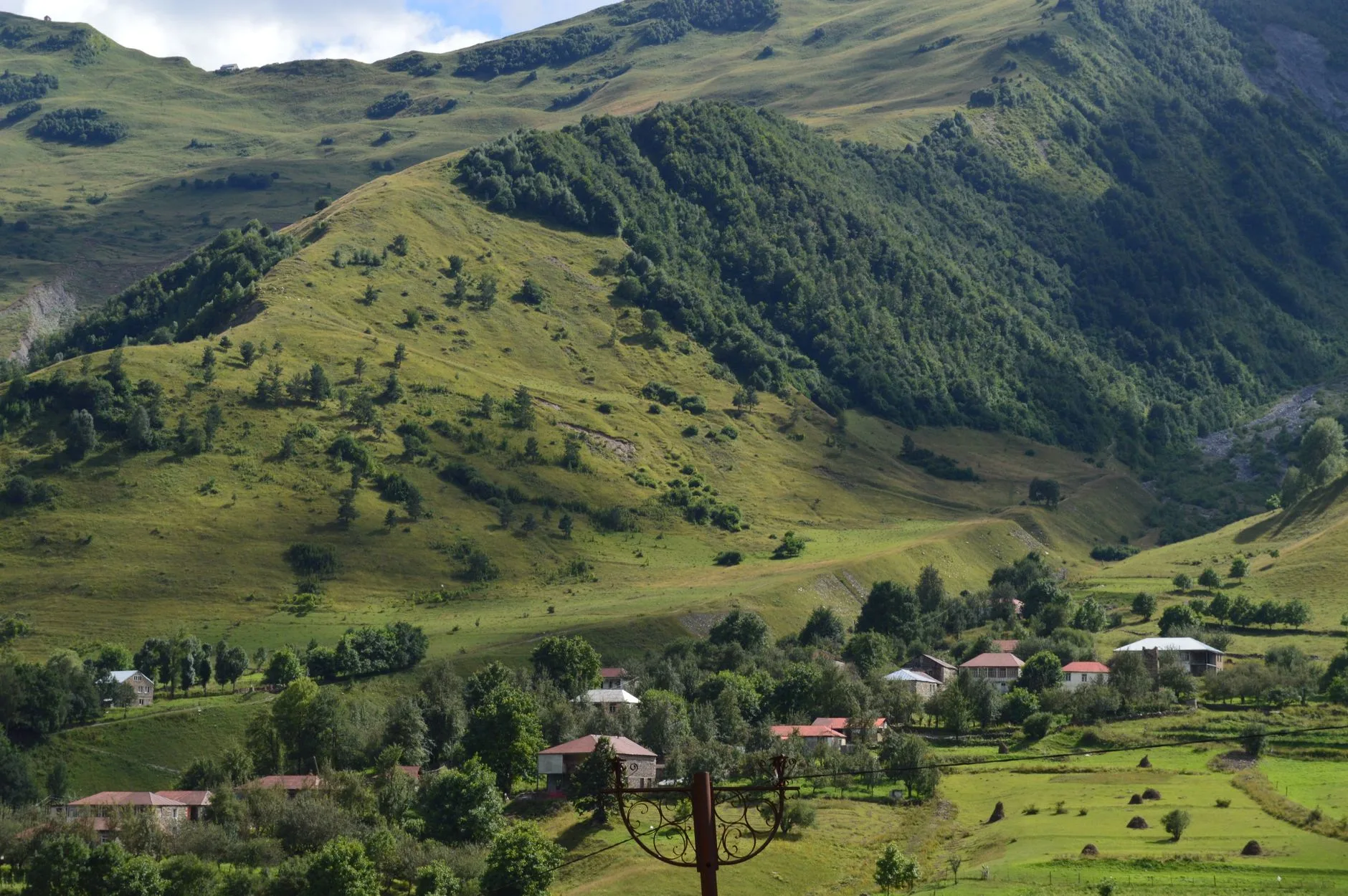
The smell hits before anything else: woodsmoke, grilling lamb fat, and the sulphur tang of a hot spring somewhere underneath it. This is Dilijan on a Tuesday evening, a spa town wedged into forested hills so dense the Soviets nicknamed it “Armenian Switzerland,” and the only sound competing with the sizzle from a streetside tonir oven is a stray dog negotiating with a pastry vendor. Nobody is taking a photo. There’s no queue. A grandmother in a headscarf sells walnut-stuffed dried fruit — sujukh — from a folding table, and she’ll talk your ear off about her grandson in Glendale, California, if you let her.
Armenia doesn’t announce itself. It’s landlocked, mountainous, bordered by countries it either can’t or won’t cross freely (more on that below), and it has spent the last three decades rebuilding after a war, an earthquake, and the collapse of the only economic system it had ever known. None of that shows up on a postcard. What does show up, if you go looking, is a country with 4,000-year-old monasteries carved into cliff faces, a wine culture older than Georgia’s, a capital that runs on sidewalk cafés and chess tables, and almost none of the crowds that now define neighbouring Georgia’s Tbilisi or Batumi.
This is a guide for getting around, eating well, and understanding what you’re actually looking at — not a highlight reel.
Getting There and Getting In
Zvartnots International Airport (EVN), just outside Yerevan, is the only realistic entry point for most travellers. Direct flights run from Moscow, Dubai, Doha, Vienna, Paris, and a growing number of European hubs, though there’s still no direct US route — expect a connection through Paris, Vienna, or the Gulf. Qatar Airways and Austrian Airlines are the most reliable options from the West.
Overland entry is where Armenia gets complicated, and it’s worth knowing before you plan a Caucasus loop. The Turkish border has been closed since 1993 over the unresolved conflict involving Nagorno-Karabakh and the Armenian Genocide dispute — there is no crossing, full stop, regardless of what an old map tells you. The border with Azerbaijan is also closed and has been since the Soviet collapse; the two countries remain in an active, unresolved territorial dispute, and this is not a border to attempt or even approach casually. That leaves two overland routes: Georgia to the north, and Iran to the south.
The Georgia route is the one most travellers use. Buses and marshrutkas (shared minivans) run from Tbilisi to Yerevan via the Sadakhlo–Bagratashen crossing, taking 5–6 hours and costing around $15–20. It’s a sociable, slightly chaotic way to arrive, and it pairs naturally with a longer Caucasus trip — anyone weighing up time in the region should also look at what Georgia itself offers, since the two countries share a wine culture, a mountain geography, and a similar appeal to travellers tired of overtouristed stretches of Europe.
The Iran route, via the Agarak–Nordooz crossing in the south, is less travelled but used by overlanders heading further afield; it requires an Iranian visa arranged in advance and isn’t something to improvise.
Yerevan: Pink Stone and Chess Tables
Yerevan is built largely from pink and orange tuff stone, which means the whole city shifts colour with the light — rose-gold at 7am, almost coral by sunset. The centre radiates out from Republic Square, where the Soviet-era government buildings do a surprisingly good impression of grandeur, especially when the dancing fountains switch on in the evening (free, nightly from spring to autumn).
Spend a morning at the Vernissage market near Republic Square — not a tourist trap exactly, more a sprawling flea market of Soviet medals, hand-carved backgammon sets, pomegranate-motif ceramics, and genuinely excellent rugs if you’re willing to negotiate. From there, walk to the Cascade, a monumental limestone staircase doubling as an open-air sculpture garden (look for the Fernando Botero cat), and climb to the top for a view that lines up the entire city axis with Mount Ararat on a clear day — Armenia’s most sacred peak, sitting just across the closed Turkish border, visible but unreachable, which says something about the country’s relationship with its own history.
The Armenian Genocide Memorial and Museum at Tsitsernakaberd is not a casual add-on. It’s a central, unavoidable part of understanding modern Armenian identity, and the museum — reopened in 2015 — handles the history with more restraint and detail than you’d expect. Give it two hours minimum. It’s free to enter, though the museum charges a small fee.
For food, skip the tourist-facing restaurants around Northern Avenue and head into the Kond neighbourhood or down to Dalma Garden Mall’s food market for khorovats (Armenian barbecue, usually pork or lamb, smoked over grapevine wood) and khinkali’s Armenian cousin, the smaller, denser manti. Lavash — the thin, blistered flatbread that’s UNESCO-recognised as an element of intangible cultural heritage — comes with everything, and watching it baked against the wall of a tonir oven at a bakery like Edem Lavash is worth the detour on its own.
The Monasteries: Geghard, Khor Virap, Noravank
Armenia was the first country to adopt Christianity as a state religion, in 301 AD, and its monasteries are the clearest physical evidence of that claim. Three stand out, and they’re usually done as day trips from Yerevan.
Geghard Monastery, about an hour east of Yerevan, is partly carved directly into the mountain rock — chambers hollowed from solid stone, with acoustics so resonant that a cappella singing groups sometimes perform inside for passing visitors (a hat gets passed, and it’s worth the few hundred dram). Combine it with a stop at the Garni Temple nearby, a Hellenistic-style colonnaded temple that looks more like it belongs in the Peloponnese than the Caucasus.
Khor Virap, close to the closed Turkish border, is the pilgrimage site where Armenia’s patron saint, Gregory the Illuminator, was reportedly imprisoned in a pit for over a decade. The pit still exists — you can climb down a steep ladder into it — but the real draw is the view: the monastery’s stone walls framed against Mount Ararat, assuming the weather cooperates. Go early morning for the best light and the fewest buses.
Noravank, a longer trip (around two hours south through the Vayots Dzor region), sits at the end of a dramatic red-rock canyon and is one of the few sites where the drive is as memorable as the destination. The monastery’s 13th-century church has an exterior staircase so narrow and steep it was clearly built by people with more faith than fear of heights.
| Site | Distance from Yerevan | Time Needed | Highlight |
|---|---|---|---|
| Geghard & Garni | ~40 km | Half day | Rock-cut chambers, acoustics |
| Khor Virap | ~45 km | Half day | Ararat views, pilgrimage pit |
| Noravank | ~120 km | Full day | Red canyon drive, cliffside church |
| Tatev Monastery | ~280 km | 2 days | World’s longest reversible cable car |
Lake Sevan and the Mountain North
Lake Sevan, one of the largest high-altitude lakes in the world, sits about an hour and a half from Yerevan and functions as the country’s summer escape — Armenians flock here in July and August for grilled Sevan trout (ishkhan, though overfishing means much of what’s served now is farmed) eaten at plastic-tabled lakeside cafés, which sounds unglamorous and is, in the best way.
Dilijan, further north, is the more atmospheric stop: forested hills, 19th-century wooden houses, and a slower pace that makes it a natural base for a day or two of hiking. The Dilijan National Park trails range from gentle forest walks to the more demanding route up to Parz Lich (Clear Lake). This is also wine country in miniature — nearby Areni village produces Armenia’s best-known reds from a grape variety that predates most of Europe’s wine regions, and the Areni-1 cave complex nearby contains what’s believed to be the oldest known winery site in the world.
Getting Around
Armenia is compact enough that Yerevan works as a single base for most of the country, but public transport outside the capital runs on local logic rather than published schedules.
Marshrutkas are the backbone of regional travel — cheap, frequent on popular routes, and departing “when full” rather than on a fixed timetable, which means showing up early and being prepared to wait. GG (formerly GG Taxi) and Yandex Go both operate reliably in Yerevan and are the easiest way to get around the city without language barriers. For day trips to the monasteries, hiring a driver for the day (easily arranged through any guesthouse, typically $40–60) is often more practical than wrestling with irregular marshrutka schedules, especially if you’re trying to combine two or three sites.
For the far south — Tatev Monastery and the Wings of Tatev cable car, the longest reversible aerial tramway in the world — a rental car or organised transfer from Yerevan is close to essential; it’s a full day’s commitment either way.
What It Costs
Armenia remains considerably cheaper than Western Europe and even undercuts Georgia in several categories, particularly food and local transport.
| Expense | Typical Cost |
|---|---|
| Guesthouse double room | $20–35/night |
| Mid-range hotel | $50–80/night |
| Khorovats meal with bread and salad | $6–10 |
| Marshrutka (intercity) | $2–6 |
| Private driver, full day | $40–60 |
| Entry fee, major monastery | Usually free; occasional $2–3 |
| Wings of Tatev cable car (return) | ~$25 |
A comfortable daily budget for a mid-range traveller sits around $40–60, including a guesthouse room, meals, and some transport. Budget travellers staying in hostels and eating at local cafés can manage on $25–30.
When to Go
May through June and September through October are the sweet spots — warm days, cool evenings, and the countryside green or turning gold depending on the month. July and August bring heat that can hit the high 30s°C in Yerevan, though it’s also lake season and the most sociable time to be in Dilijan or Sevan. Winter (December–February) closes some mountain roads and many guesthouses outside Yerevan, but it also empties the monasteries almost entirely, and Geghard under snow has a different, starker kind of weight to it.
The Bottom Line
Armenia rewards travellers who don’t need everything confirmed in advance — marshrutka schedules, restaurant hours, and even some monastery opening times operate on a looser logic than Western Europe, and that’s part of the texture, not a flaw to route around. Budget a full week minimum: three or four days in and around Yerevan, two or three more spread between Dilijan, Sevan, and the southern monasteries. Skip the temptation to “do” Armenia as a two-day add-on to a Georgia trip — the two countries share a region but not a rhythm, and Armenia’s quieter, more introspective character deserves its own pace, something worth weighing against the growing crowds in Tbilisi and the appeal of other Caucasus and Balkan countries still relatively overlooked by mass tourism. Bring cash in dram for rural areas, don’t expect fluent English outside Yerevan’s centre, and go into Tsitsernakaberd with time to sit afterward — it’s not a site you walk straight out of and into lunch.
Keep reading: Why Georgia remains the Caucasus’s best-known hidden gem