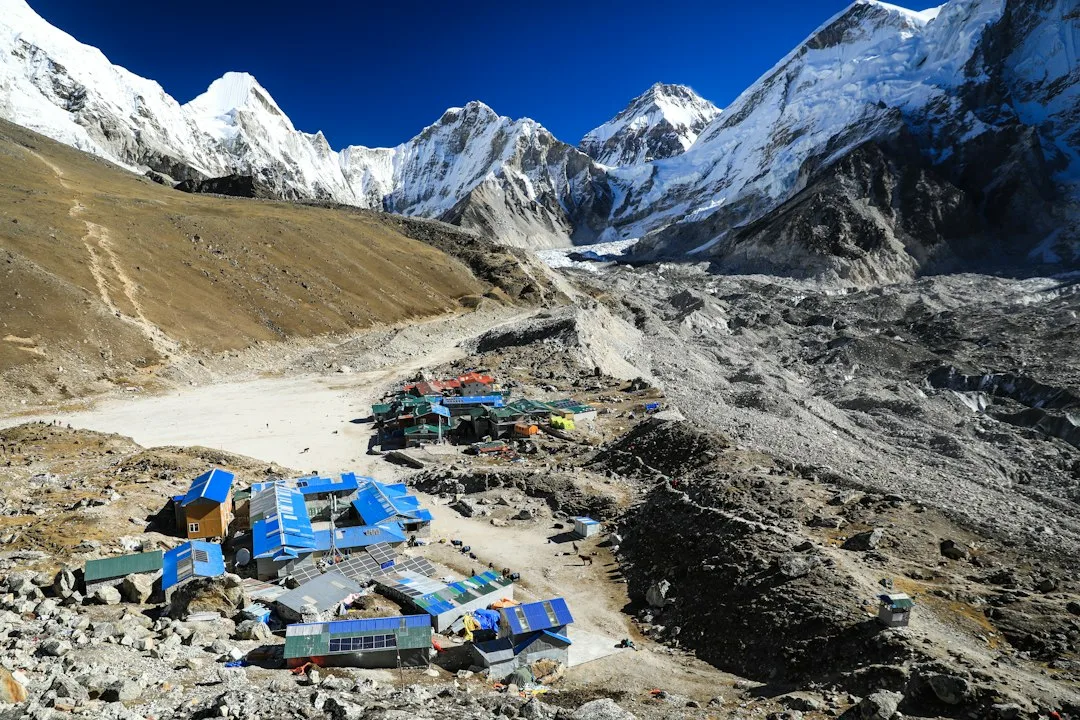
Photo by Dylan Shaw on Unsplash
At Phortse, three days below the main Everest trail, a woman dries yak cheese on a wooden rack outside her stone house while a dzopkyo train waits patiently for the path to clear. There is no queue for the view here, no line of down jackets stacked single-file up a moraine. The Khumbu is just over the ridge, close enough that trekkers on the EBC route sometimes wander across for a night, and surprised to find how few others have bothered.
Everest Base Camp earns its reputation honestly — the approach through Namche Bazaar and Tengboche is spectacular — but it has also become one of the most congested treks in the Himalaya, with teahouses booked out in peak season and queues forming at the Hillary Step long before you ever reach it. Nepal has dozens of other routes that deliver the same scale of mountain, the same rhythm of teahouse life, and a fraction of the foot traffic. This is a guide to those routes: where they go, what they cost, what permits you need, and what to actually expect underfoot.
Why the quiet routes stay quiet
Most of Nepal’s less-trekked regions require restricted area permits, which cost more than the standard Trekkers’ Information Management System (TIMS) card and, in several cases, mandate a registered guide and a minimum group size of two. That single bureaucratic hurdle filters out a large share of casual trekkers, which is exactly what keeps trails like Nar Phu and Tsum Valley so uncrowded. The other filter is logistics: no direct flights, longer approach roads, fewer lodges, and itineraries that run 12 to 18 days rather than the Base Camp trek’s compact 12.
None of this makes these routes more “authentic” than Everest Base Camp — plenty of people have excellent reasons to want exactly that trail, with its established infrastructure and clear waymarking. But if you’ve done it, or you’d rather spend three weeks in the Himalaya without passing another trekking group all morning, these are the routes worth knowing.
Nar Phu Valley: the narrow gorge route
Nar Phu sits in a restricted zone north of the Annapurna Circuit, reached by branching off the main trail at Koto, a day’s walk past Chame. The valley is a deep gorge carved through red rock, so narrow in places that the trail is cut directly into the cliff face with wooden bridges spanning the gaps. It opens into two villages — Nar and Phu — that were, until relatively recently, cut off from the outside world for months each winter.
The restricted area permit costs around $100 per person for the first week (September to November) and roughly half that for the rest of the year, plus the standard Annapurna Conservation Area Permit. You need a licensed guide and a minimum of two trekkers to obtain the permit, which rules out solo independent trekking here — one of the few genuine logistical constraints on this list. Most itineraries combine Nar Phu with a crossing of Kang La pass (5,322m) back into the main Annapurna Circuit, making a loop of 16 to 18 days total. Expect basic teahouses, buckwheat and potato-heavy menus, and village houses built in a Tibetan style with flat roofs stacked with firewood against the winter.
Tsum Valley: the hidden valley
Tsum Valley branches off the Manaslu Circuit at Lokpa, a few days’ walk from the roadhead at Soti Khola. The valley was a “hidden land” in Tibetan Buddhist tradition, sealed by geography and belief alike, and it still feels that way: mani walls run for hundreds of metres along the trail, chortens mark every village entrance, and the monasteries at Rachen and Mu Gompa hold centuries of undisturbed practice.
A Manaslu restricted area permit plus a Tsum Valley permit together run to roughly $40–$90 depending on season, again requiring a guide and minimum two-person group. The full Tsum Valley and Manaslu Circuit combination, crossing the Larkya La pass (5,106m), takes 18–21 days. A shorter Tsum-only loop, skipping the high pass, can be done in 10–12 days and suits trekkers who want the cultural depth without the altitude commitment. Villages here grow apples, buckwheat, and potatoes on terraces so steep they look improbable from below, and the local dish worth seeking out is dhindo, a thick buckwheat porridge eaten with hands and a side of fermented greens.
Upper Mustang: the desert kingdom
Upper Mustang is the odd one out on this list — not forested or glacial but arid, closer in colour and climate to the Tibetan plateau than to the green middle hills further south. The walk from Jomsom to Lo Manthang follows the Kali Gandaki valley through wind-scoured canyons, cave networks, and whitewashed villages with red-ochre gompas. Lo Manthang itself, the walled former capital of the Mustang kingdom, still has a functioning royal palace and a 15th-century monastery complex.
The restricted area permit is the most expensive on this list — around $500 for 10 days, with an additional daily fee beyond that — and again requires a licensed guide. Many trekkers now combine the walk in with a jeep ride out (or vice versa) to manage the cost and time, since a jeep track now runs most of the route. This is a legitimate compromise, not a cop-out: it opens the region to people with 7–10 days rather than two weeks, and the walking sections that remain are still the best of the trek. Best months are April to June and September to November — Mustang sits in the rain shadow of the Annapurnas, so even monsoon season (June–September) is trekkable here, a rare exception in Nepal.
Makalu Base Camp: the serious alternative
If what you actually want is an Everest Base Camp-style experience — a long approach through forest and rhododendron into high alpine terrain, ending at the foot of a serious 8,000-metre peak — Makalu Base Camp is the closest equivalent, and far quieter. The trek starts from Tumlingtar, reached by a short flight from Kathmandu, and runs through the Makalu-Barun National Park, one of the most biodiverse protected areas in Nepal, with forest cover that shifts from subtropical to alpine over the course of a week’s walking.
This route demands fitness and time: 18–22 days round trip, with several high camps above 4,500m and a genuinely remote final push to the base camp at around 5,000m, facing the sheer south face of Makalu, the world’s fifth-highest mountain. Permits (national park entry plus restricted area fee for the upper section) run to roughly $100 combined, and while a guide isn’t always legally mandatory for the lower sections, the terrain and lack of rescue infrastructure make going without one a genuinely bad idea. Lodges thin out above Yangle Kharka, and above Merek you’re mostly in tented camps, so this trek carries real logistical weight — it is not a teahouse stroll.
Ruby Valley and the Tamang Heritage Trail: the easy quiet option
Not every alternative to Everest Base Camp needs a $500 permit and three weeks. The Tamang Heritage Trail and Ruby Valley trek, both accessed from Syabrubesi (the same roadhead as the Langtang Valley), run through Tamang villages with hot springs at Tatopani, flat-roofed stone houses, and views north to the Tibetan border peaks. No restricted permit is needed here — just the standard Langtang National Park entry fee — and the trails can be walked independently without a guide, teahouse to teahouse, in 6–9 days.
This is the route to recommend to someone trekking in Nepal for the first time who wants genuine quiet without the bureaucracy or cost of a restricted zone. It also pairs naturally with a short Langtang Valley extension if you have extra days, since both share the Syabrubesi roadhead — useful if you’re also weighing up the more established trails covered in a budget travel guide to Nepal beyond the tourist trail.
Comparing the routes
| Route | Days | Permit cost (approx) | Guide required | Best season | Crowd level |
|---|---|---|---|---|---|
| Nar Phu Valley | 16–18 | $75–$100 + ACAP | Yes | Mar–May, Sep–Nov | Very low |
| Tsum Valley | 10–21 | $40–$90 + Manaslu permit | Yes | Mar–May, Sep–Nov | Low |
| Upper Mustang | 7–10 | ~$500 + ACAP | Yes | Apr–Nov (incl. monsoon) | Low–moderate |
| Makalu Base Camp | 18–22 | ~$100 | Strongly advised | Mar–May, Oct–Nov | Very low |
| Ruby Valley / Tamang Heritage | 6–9 | Park fee only (~$30) | No | Mar–May, Oct–Dec | Low |
| Everest Base Camp (for reference) | 12–14 | ~$50 + Sagarmatha fee | No | Mar–May, Oct–Nov | High |
Permits, seasons, and the practical reality
Restricted area permits are issued only through registered trekking agencies in Kathmandu or Pokhara — you cannot apply as an individual walking in off the street, and the agency arranges the guide requirement as part of the package. Budget roughly $30–40 a day for a guide and porter combined if you’re not already travelling with one, on top of the permit costs above. Nepal’s Department of Immigration publishes current visa requirements, and it’s worth checking before you fly, since on-arrival visa rules shift periodically.
Spring (March–May) brings rhododendron blooms through the mid-hills and generally stable weather, while autumn (late September–November) gives the clearest mountain views after the monsoon has washed the dust out of the air — these two windows apply across nearly all the routes above, Upper Mustang’s rain-shadow position being the one real exception. Winter trekking is possible on the lower-altitude routes (Ruby Valley, lower Tsum) but passes above 5,000m close with snow from December through February.
Lodges on these routes are simpler than on the Everest or Annapurna trails: expect a shared dal bhat dinner, a wood stove in the dining room that everyone huddles around after dark, and rooms with two thin mattresses and no heating. Hot showers, where they exist at all, cost extra and run cold more often than lodge owners admit. Pack accordingly — a good sleeping bag liner and a headlamp with spare batteries matter more here than they do in the well-lit teahouses of Namche.
The Bottom Line
- Everest Base Camp is crowded because it’s genuinely excellent and well set up for trekkers without a guide — that’s not a flaw to route around, just a trade-off to know about going in.
- If quiet matters more to you than convenience, Nar Phu Valley and Makalu Base Camp deliver real solitude, but both cost more, take longer, and require a licensed guide by law.
- Ruby Valley and the Tamang Heritage Trail are the honest entry point: no restricted permit, no mandatory guide, and still far fewer people than Namche Bazaar sees on a Tuesday in October.
- Upper Mustang rewards travellers short on time — its jeep-assisted itineraries make the desert kingdom accessible in under two weeks, rain or shine.
- Whichever route you choose, book your guide and permits through a registered Kathmandu agency at least a few weeks ahead in peak season — restricted area quotas and group minimums can otherwise scupper a trip you’ve already flown in for.
Keep reading: Budget travel in Nepal beyond the Annapurna Circuit